Where Can I Buy Coolant
You can buy coolant at local auto shops and service centers, big-box stores, or trusted online retailers. Finding the right coolant is essential for maintaining your vehicle’s performance and preventing damage.
Always match the coolant type—like IAT, OAT, or HOAT—to your vehicle’s specifications to avoid corrosion or overheating. Check product labels for freeze and boiling point ratings and confirm compatibility with your engine materials.
Local shops often offer system checks and disposal services, while online options provide a wider selection. Exploring these details helps you pick the best coolant for your needs.
Types of Coolant and How to Choose Yours
How do you determine which type of coolant suits your vehicle best? Start by understanding the primary types of coolant: inorganic additive technology (IAT), organic acid technology (OAT), and hybrid organic acid technology (HOAT).
Each type features distinct chemical compositions tailored for specific engine materials and performance requirements. When choosing coolant, reference your vehicle’s manual to match the recommended type, as using incompatible coolant can cause corrosion or cooling inefficiency.
Consider factors like freeze protection, boiling point, and compatibility with your radiator and hoses. Avoid mixing different types, as this can degrade coolant performance. By focusing on these technical aspects, you ensure optimal engine temperature regulation and longevity through proper choosing coolant aligned with your vehicle’s specifications.
Where to Buy Coolant Locally: Auto Shops and Service Centers
Where can you find reliable coolant supplies near you? Auto shops and service centers often provide high-quality coolant options with the advantage of local pickup. These locations guarantee you get the correct type for your vehicle, minimizing compatibility issues.
Consider these practical points when buying coolant locally:
- Verify the coolant meets your vehicle’s specifications to avoid warranty concerns.
- Confirm availability for local pickup to save time and ensure immediate access.
- Ask about warranty considerations on coolant products and installation services.
- Choose reputable service centers that can also assist with proper coolant disposal and system checks.
Buying from these sources offers technical assurance and convenience, helping maintain your vehicle’s cooling system efficiently.
Buying Coolant at Big-Box Stores and Superstores
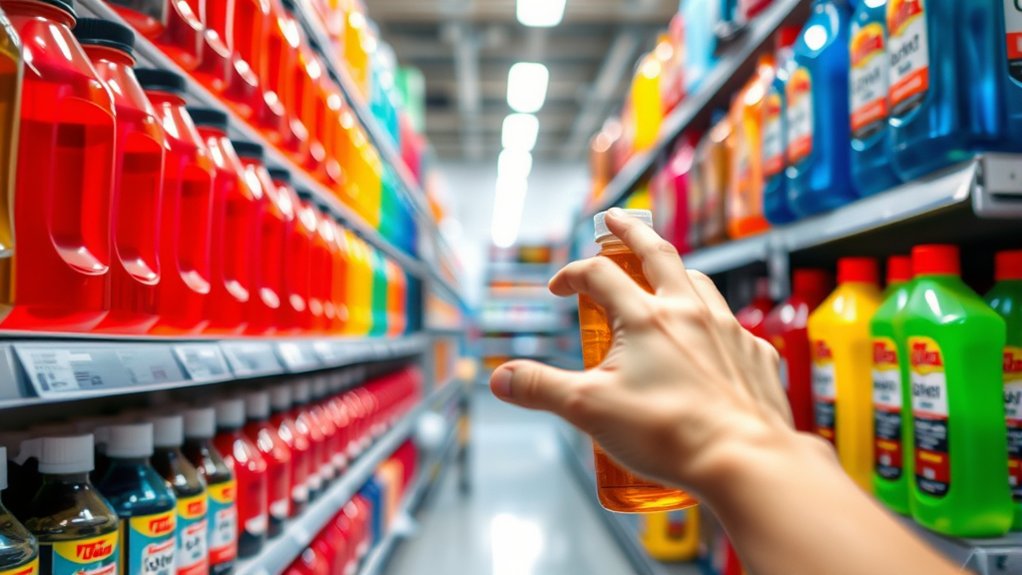
When shopping for coolant, big-box stores and superstores often provide a wide selection of brands and formulations to suit various vehicle requirements. You’ll find options ranging from conventional ethylene glycol to advanced hybrid organic acid technology (HOAT) coolants.
It’s essential to review product labels carefully for coolant compatibility with your engine type. Use two word discussion ideas like “vehicle specifications” and “manufacturer recommendations” to guide your choice.
These stores offer the convenience of purchasing coolant alongside other automotive supplies, saving you time. However, always verify the coolant’s freeze and boil-over protection levels to ensure optimal performance.
Finding Coolant Online: Trusted Marketplaces and Brands
While big-box stores offer immediate access to various coolant types, shopping online expands your options to include specialized brands and formulations that may not be available locally. When selecting coolant online, prioritize brand reputation to ensure product reliability and adherence to industry standards.
Confirm recycling compatibility to align with environmental guidelines and local disposal regulations. Use trusted marketplaces that verify seller credentials and provide transparent product details. Here are key considerations when finding coolant online:
- Choose platforms with verified customer reviews for unbiased feedback.
- Verify product specifications, including OEM approvals and additive packages.
- Select brands known for consistent quality and robust corrosion inhibitors.
- Ensure packaging meets environmental standards and supports safe recycling.
This approach helps you buy coolant that meets technical requirements and supports responsible disposal.
How to Compare Coolant Prices and Quality Before Buying
How do you effectively balance cost and quality when selecting coolant? Start by understanding pricing basics: coolant prices vary by formulation, volume, and additive package. Compare unit prices to identify true value rather than just sticker price.
Next, evaluate brand differences. Established brands often invest in superior corrosion inhibitors and extended-life formulas, which can justify higher costs. Check technical specifications like freeze point, boiling point, and compatibility with your vehicle.
Read independent reviews and manufacturer datasheets to verify performance claims. Avoid compromising quality for a lower price; substandard coolant can cause engine damage, leading to costly repairs.
Frequently Asked Questions
How Often Should I Change My Vehicle’s Coolant?
Picture your engine as a roaring furnace; you should change your vehicle’s coolant every 30,000 miles or every two years to prevent engine overheating.
Don’t fall for coolant myths. Regular changes keep your engine running smoothly and efficiently.
Can I Mix Different Types of Coolant Safely?
You shouldn’t mix varieties of coolant unless they’re explicitly compatible. Mixing varieties risks chemical reactions that reduce effectiveness and cause corrosion.
Always check coolant compatibility charts or manufacturer guidelines to guarantee safe, peak performance.
What Are the Signs of Coolant Leaks?
You’ll spot coolant leak indicators like puddles under your vehicle, engine overheating, or a sweet smell.
Regular cooling system maintenance helps you catch leaks early, ensuring your engine stays protected and runs efficiently.
Is It Safe to Use Water Instead of Coolant?
Like Icarus flying too close to the sun, using water instead of coolant risks overheating and corrosion.
You must consider coolant compatibility and proper coolant storage to ensure your engine’s longevity and optimal performance.
How Do I Properly Dispose of Used Coolant?
You should follow your local disposal method for used coolant, typically involving hazardous waste facilities. Proper disposal minimizes environmental impact by preventing toxic chemicals from contaminating soil and water.
Never pour coolant down drains or on the ground.