Are rav4 4 Wheel Drive
If you drive a Toyota RAV4, you’ll want to know if the RAV4 is 4 wheel drive. Most recent models come with all-wheel drive (AWD), not true four-wheel drive (4WD). AWD automatically adjusts power to wheels for better traction in everyday conditions like rain or light snow.
Genuine 4WD, which you control manually for rugged off-road use, is mostly found in older or specific market trims. To understand how these systems impact performance and which trim suits your needs, keep exploring the details ahead.
Key Takeaways
- Most recent Toyota RAV4 models feature AWD, not true 4WD, with automatic power distribution for everyday driving conditions.
- Genuine 4WD is typically available only in older RAV4 generations or specific international markets.
- AWD in RAV4 adjusts torque automatically, while 4WD requires manual engagement for tougher off-road terrain.
- TRD Off-Road and Adventure trims offer enhanced AWD systems with improved off-road capabilities, but not traditional 4WD.
- Marketing sometimes blurs AWD and 4WD distinctions in newer RAV4s, though their drivetrain systems differ fundamentally.
Which Toyota RAV4 Models Come With Four-Wheel Drive?
Which Toyota RAV4 models come with four-wheel drive? You’ll find that Toyota offers specific trims equipped with four-wheel drive, often labeled as “4WD” or “4×4” in earlier models. More recent RAV4s, however, primarily feature all-wheel drive (AWD) rather than true four-wheel drive, which causes some confusion.
This has led to dubious marketing claims, where AWD is sometimes touted as equivalent to 4WD, sparking conspiracy theories among enthusiasts about transparency. Typically, the TRD Off-Road and Adventure trims in recent years provide a more rugged AWD system with off-road capabilities but not traditional 4WD.
If you want a genuine 4WD RAV4, you may need to explore older generations or specific international markets where Toyota still offers dedicated 4WD variants.
How Does Four-Wheel Drive Differ From All-Wheel Drive in the RAV4?
You’ll find that four-wheel drive (4WD) in the RAV4 is designed for off-road conditions, providing power to all wheels only when you engage it. In contrast, all-wheel drive (AWD) automatically distributes power to all wheels for improved traction on various surfaces without driver input. Understanding these systems helps you see how each affects performance and benefits your driving experience.
Four-Wheel Drive Explained
How exactly does four-wheel drive differ from all-wheel drive in the Toyota RAV4? Four-wheel drive (4WD) systems are designed to provide power to all four wheels simultaneously, typically activated manually for off-road or tough conditions.
This differs from all-wheel drive (AWD), which automatically distributes power based on traction needs. It’s important not to confuse this with irrelevant topics or unrelated issues like vehicle size or engine type.
| Feature | Four-Wheel Drive (4WD) | All-Wheel Drive (AWD) |
|---|---|---|
| Activation | Manual switch or lever | Automatic |
| Purpose | Off-road, low-traction | On-road, varying traction |
| Power Delivery | Equal to all wheels | Variable, front/rear biased |
| Typical Use | Rough terrain, snow | Everyday driving conditions |
All-Wheel Drive Features
Why does the Toyota RAV4 use an all-wheel drive system instead of a traditional four-wheel drive? The RAV4’s all-wheel drive (AWD) employs a sophisticated approach, dynamically distributing torque between the front and rear wheels.
Unlike four-wheel drive, which often locks power equally to all wheels, AWD adjusts based on driving conditions, reducing irreversible bias where power loss occurs in fixed mechanical linkages. This system enhances traction without driver input, maintaining stability and responsiveness.
Though not literally involving quantum entanglement, the AWD’s real-time torque management mirrors that concept metaphorically by instantly coordinating wheel power to optimize grip. So, when you drive a RAV4, its AWD system intelligently balances power distribution, ensuring smoother handling and safer driving compared to the rigid engagement of traditional four-wheel drive systems.
Performance Differences and Benefits
What sets four-wheel drive apart from all-wheel drive in the RAV4 lies primarily in their power delivery and intended use. Four-wheel drive (4WD) engages all wheels equally, designed for off-road or low-traction scenarios, offering maximum control when you need it most.
All-wheel drive (AWD), by contrast, automatically adjusts power distribution between front and rear wheels, enhancing on-road handling and traction in varied conditions. When evaluating performance differences and benefits, you might find insufficient data in some sources or encounter unrelated topics that blur the distinction.
For your purposes, understand that 4WD provides rugged capability for challenging terrains, while AWD suits everyday driving with improved stability. Knowing these differences helps you choose the RAV4 drivetrain that matches your driving needs accurately and confidently.
Key Features of the RAV4’s Four-Wheel Drive System
You’ll find the RAV4’s four-wheel drive system offers dynamic torque distribution to optimize power between the front and rear wheels. It also includes Multi-Terrain Select modes that adjust performance based on road conditions. Plus, enhanced traction control helps maintain stability on various surfaces.
Dynamic Torque Distribution
How does the RAV4’s four-wheel drive system adapt to changing road conditions? It uses dynamic torque distribution to automatically adjust power between the front and rear wheels, enhancing traction and stability. Unlike an irrelevant topic or random discussion, this feature is essential for real-world driving.
With this system, you benefit from:
- Responsive torque shifts that optimize grip on slippery or uneven surfaces
- Improved control during acceleration, reducing wheel slip
- Enhanced stability when cornering or driving on varied terrain
Multi-Terrain Select Modes
Where can the RAV4’s four-wheel drive really shine? It’s in the Multi-Terrain Select modes that tailor traction to differing surfaces like mud, sand, or rocks. By choosing the appropriate mode, you optimize power distribution and braking to maintain control and stability.
This feature isn’t an unrelated topic or off topic idea; it’s central to the RAV4’s capability in challenging conditions. You won’t have to guess which settings work best since the system adjusts throttle response and torque automatically.
This precise control helps you confidently navigate uneven or slippery terrain, making the RAV4 more than just a casual all-wheel-drive vehicle. Understanding these modes lets you leverage the full potential of the four-wheel drive system without confusion or trial and error.
Enhanced Traction Control
Building on the advantages of Multi-Terrain Select, the RAV4’s Enhanced Traction Control system sharpens your ability to maintain grip across varying road conditions. This feature elevates the four wheel drive experience by actively monitoring wheel spin and adjusting power distribution to optimize traction.
When you drive on slippery or uneven surfaces, the system intervenes seamlessly to prevent loss of control.
Key benefits include:
- Immediate response to wheel slip, ensuring stability
- Adaptive power delivery tailored to each wheel’s grip
- Improved handling on wet, icy, or loose terrain
Benefits of Four-Wheel Drive for Off-Road and Rough Terrain
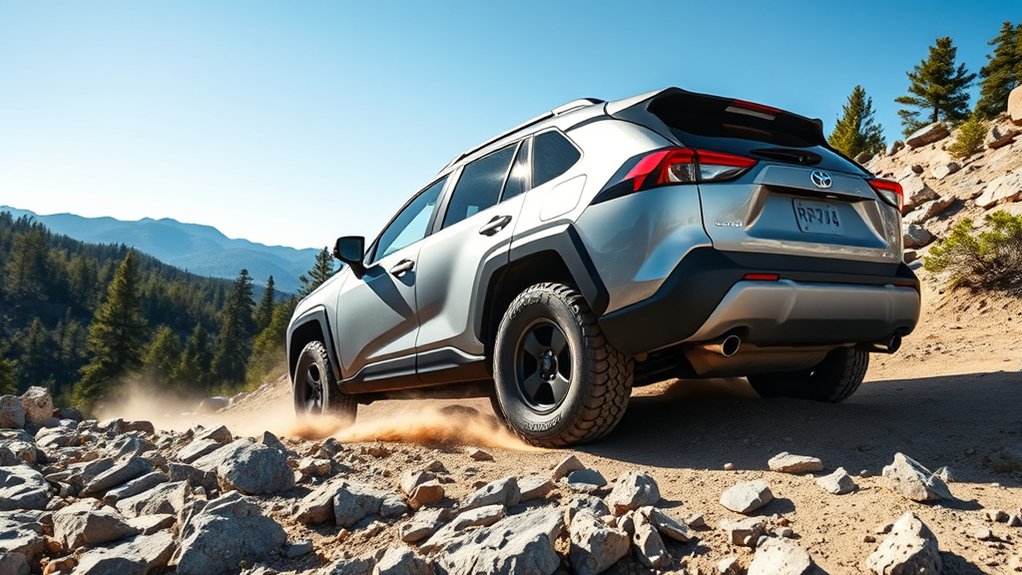
Why choose four-wheel drive when tackling off-road and rough terrain? Four-wheel drive (4WD) enhances your vehicle’s capability by distributing power evenly to all wheels, improving traction on uneven or slippery surfaces.
This means you can confidently navigate mud, rocks, and steep inclines that would challenge two-wheel drive systems. Beyond performance, 4WD models often maintain driving aesthetics by integrating robust design elements without compromising interior comfort.
You’ll enjoy the same smooth ride quality and ergonomic features, ensuring your cabin remains a pleasant space even during rugged excursions. With 4WD, you get the best of both worlds: superior off-road functionality paired with a comfortable and stylish interior, making it an excellent choice for adventurous drivers who don’t want to sacrifice daily driving comfort for capability.
Is All-Wheel Drive Better for Everyday Driving?
While four-wheel drive excels in challenging off-road conditions, all-wheel drive (AWD) often proves more practical for everyday driving scenarios. If you drive mostly on paved roads, AWD offers consistent traction without requiring driver intervention, enhancing safety in variable weather.
It also improves your vehicle’s curb appeal and resale value, since many buyers appreciate the added confidence AWD provides.
Consider these AWD advantages for daily use:
- Seamless power distribution adjusts automatically to road conditions
- Lower maintenance compared to four-wheel drive systems
- Better fuel efficiency supports everyday commuting
How Four-Wheel Drive Affects RAV4 Performance in Snow and Rain
How does four-wheel drive influence the RAV4’s handling in snow and rain? Four-wheel drive (4WD) enhances the vehicle’s snow performance by delivering power to all four wheels, improving traction on slippery surfaces. This system helps you maintain better control during acceleration and reduces the chances of wheel slippage on icy or snow-covered roads.
In terms of rain handling, 4WD distributes torque evenly, allowing the RAV4 to grip wet pavement more effectively. This results in increased stability and confidence when navigating through heavy rain or puddles. However, while 4WD improves traction, it doesn’t replace the need for cautious driving in adverse weather.
Choosing the Right RAV4 Trim for Your Driving Needs
When selecting a RAV4 trim, what factors should you consider to match your driving habits and needs? Understanding drivetrain slang helps you decide between front-wheel drive, all-wheel drive, or the hybrid’s electric motor support. Battery concerns are crucial if you lean toward the hybrid trims, as battery life affects long-term performance and cost. Consider these points:
- Driving Environment: Choose AWD for rough terrain or snowy conditions; FWD suffices for city driving.
- Fuel Efficiency: Hybrid trims offer better mileage but require awareness of battery maintenance.
- Budget and Features: Higher trims provide advanced safety and tech but come at a higher price.
Analyze your typical routes and priorities, then pick a trim that balances capability, efficiency, and cost without compromising your driving experience.
Tips for Maintaining Your RAV4’s Four-Wheel Drive System
Why should you prioritize maintaining your RAV4’s four-wheel drive system? Proper upkeep guarantees optimal performance, prevents costly repairs, and extends your vehicle’s lifespan. Ignoring maintenance can lead to off-topic issues like drivetrain wear, which may seem irrelevant but directly affect your 4WD’s reliability.
Here are key tips to keep your system in check:
| Maintenance Task | Frequency | Benefit |
|---|---|---|
| Fluid Check & Change | Every 30,000 miles | Prevents gear wear |
| Inspect CV Joints | Every 15,000 miles | Avoids drivetrain damage |
| Clean Transfer Case | Annually | Ensures smooth operation |
Stay focused on these tasks. Avoid distractions with irrelevant topic advice that doesn’t apply to your RAV4’s four-wheel drive system. This keeps your 4WD functioning smoothly and safely.
Frequently Asked Questions
Can I Convert a Two-Wheel Drive RAV4 to Four-Wheel Drive?
You can’t easily convert a two-wheel drive RAV4 to four-wheel drive. Convertibility myths aside, it requires extensive modifications and increases maintenance costs considerably, making it impractical compared to buying a factory-built AWD model.
Does Four-Wheel Drive Affect Fuel Efficiency in the RAV4?
Fuel efficiency falls slightly with four-wheel drive, since drivetrain maintenance demands increase and added components weigh more. However, you’ll enjoy enhanced off-road performance, making the trade-off practical if you frequently tackle tough terrain.
How Much Does a Four-Wheel Drive RAV4 Cost Compared to Two-Wheel Drive?
When you compare prices, the four-wheel-drive RAV4 typically costs about $1,500 to $2,000 more than the two-wheel-drive model. Consider potential cost savings from better traction and resale value before deciding.
Are There Any Insurance Differences for Four-Wheel Drive RAV4 Models?
Insurance premiums for four-wheel-drive RAV4s often climb like rugged hills, slightly higher than two-wheel models due to increased ownership costs and repair complexity.
You’ll want to compare quotes to see how much more you might pay.
Can the Four-Wheel Drive System Be Turned off in the RAV4?
Yes, you can turn off the four-wheel drive system in the RAV4 to optimize fuel efficiency. This helps maintain off-road capability while reducing maintenance considerations related to constant four-wheel engagement.
Conclusion
When weighing whether the RAV4’s four-wheel drive fits your needs, consider its capability to conquer challenging conditions with confidence. Four-wheel drive delivers dependable traction and durability, especially off-road or in snow, while all-wheel drive offers adaptable everyday ease.
By choosing the right trim and maintaining your drivetrain diligently, you’ll maximize performance and protect your investment. Stay savvy, select smartly, and steer securely to savor every safe, smooth, and satisfying drive.
In conclusion, understanding if the RAV4 is four wheel drive will help you make the best choice for your driving needs.