Can You Use a Tonneau Cover With a Toolbox
Yes, you can use a tonneau cover with a toolbox, but it requires careful planning and accurate measurements to avoid interference and water leaks. Choosing a compatible toolbox with the appropriate height is essential to ensure proper clearance.
Opt for a cover style—soft or hard—that suits your toolbox design and installation needs. Secure installation and regular maintenance are key to keeping everything protected and accessible.
With the right approach, you’ll balance tool access, weather protection, and styling seamlessly. Exploring the details will help you get the best fit and function for your setup.
Using a Tonneau Cover With a Toolbox: Is It Possible?
Using a tonneau cover with a toolbox is definitely possible, but it requires careful consideration of both your truck bed setup and the type of cover you choose. You might hear installation myths suggesting these two won’t work together, but that’s not entirely true.
The key is understanding tool compatibility, ensuring your toolbox fits securely without interfering with the cover’s attachment points or operation. Avoid models that block access or create gaps where water or debris can enter.
When planning, measure your toolbox dimensions and check how the cover seals around it. Proper alignment and secure mounting prevent damage and maintain weather protection. So, don’t let installation myths discourage you; with the right approach, your tonneau cover and toolbox can coexist efficiently and safely.
Tonneau Cover Types and Toolbox Compatibility
When choosing a tonneau cover for your truck, you’ll need to weigh whether a soft or hard cover works best with your toolbox’s height. The mounting style also affects how well the cover fits and seals around the toolbox. Understanding these factors helps guarantee a secure fit that protects your tools without interfering with access.
Soft vs Hard Covers
How do you decide between a soft or hard tonneau cover when you have a toolbox in your truck bed? It comes down to soft coverage flexibility versus hard compatibility with toolbox shapes. Soft covers mold easily around your toolbox, offering quick access and weather protection but may sag or wear faster.
Hard covers provide a rigid, secure fit, enhancing durability and security, yet they require precise measurements to ensure they fit over or around your toolbox.
Consider these points:
- Soft coverage lets you roll or fold the cover, ideal for frequent toolbox access.
- Hard compatibility ensures a snug fit, preventing gaps that expose your tools.
- Installation ease varies. Soft covers usually mount faster than hard covers, which may demand professional fitting.
Toolbox Height Considerations
Why does your toolbox’s height matter so much when choosing a tonneau cover? It directly affects block clearance and overall fit. If your toolbox sits too high, it can prevent a hard tonneau cover from closing properly or cause damage.
Soft covers typically offer better soft compatibility because they can flex and accommodate taller toolboxes without compromising the seal. When measuring, ensure you account for the toolbox’s full height, including any handles or latches, to avoid clearance issues.
Choosing a cover that matches your toolbox height prevents gaps where water or debris could enter. So, before buying, measure carefully and prioritize covers designed for higher profiles if your toolbox is bulky, ensuring secure coverage and durability.
Mounting Style Impact
Which mounting style you choose can make a big difference in how well your tonneau cover works with a toolbox. Different tonneau covers have unique attachment methods that impact feasibility questions, especially when combined with a toolbox.
You need to consider weight distribution and clearance carefully.
Here are three mounting styles to evaluate:
- Rail-mounted: These attach to the bed rails, often allowing room for a toolbox underneath but may interfere with taller toolboxes.
- Clamp-on: Easy to install, but clamps can conflict with toolbox edges, affecting fit and security.
- Flush-mounted: Provides a clean look and better weight distribution but requires precise measurements to avoid clearance issues.
Choosing the right style ensures your tonneau cover and toolbox coexist without compromising function or safety.
Best Toolboxes for Use With Tonneau Covers
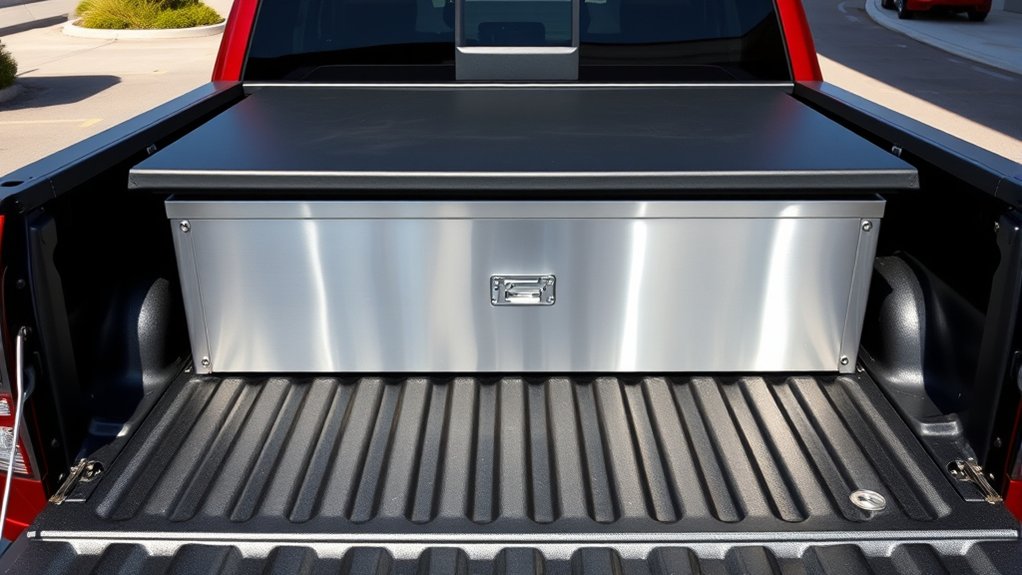
When selecting a toolbox to pair with your tonneau cover, you need to contemplate both compatibility and functionality. Look for low-profile toolboxes designed specifically for use with tonneau covers, as they won’t interfere with the cover’s closure or create gaps.
Aluminum or composite models with weather-resistant seals provide durability and protect your tools from stray imagery caused by sunlight or rain. Avoid unrelated topic toolboxes that are bulky or mount too high, as they can prevent your cover from sealing properly.
Cross-bed toolboxes that mount behind the cab often work well, leaving enough space for the cover to roll or fold without obstruction. Choosing the right toolbox ensures you keep your gear secure while maintaining the clean, streamlined look of your truck bed with a tonneau cover.
Measuring Your Truck Bed for Toolbox and Cover Fit
Start by measuring your truck bed’s length, width, and height to ensure both the toolbox and tonneau cover fit properly. Pay close attention to the clearance needed between the toolbox and the cover to avoid any interference when opening or closing. Accurate measurements will help you choose compatible accessories that work seamlessly together.
Measuring Truck Bed Dimensions
How do you guarantee your toolbox and tonneau cover fit perfectly in your truck bed? Start by accurately measuring your truck bed dimensions using reliable measuring tools like tape measures or laser distance meters. Follow installation guides provided by manufacturers to ensure precision.
Focus on these key measurements:
- Length – Measure from the bulkhead to the tailgate, ensuring no obstructions.
- Width – Measure between the inner walls at multiple points to account for tapering.
- Height – Measure from the bed floor to the top edges, essential for clearance.
Taking these measurements accurately helps you select a toolbox and tonneau cover that fit snugly without interference. Always double-check your numbers against installation guides before purchasing to avoid costly mistakes.
Toolbox Clearance Considerations
Why is considering toolbox clearance critical before installing a tonneau cover? Without proper clearance, your cover might not close properly or could get damaged.
Start by measuring the height and width of your toolbox, then compare those dimensions to your truck bed’s width and height. Don’t skip this step, as ignoring toolbox clearance can lead to guessing fit, which wastes time and money.
Be sure to check the mounting style of both the toolbox and tonneau cover; some covers require more space to latch securely. Avoid unrelated discussion about aesthetics or brand names here; focus solely on precise measurements and compatibility.
Taking these practical steps ensures your toolbox and tonneau cover coexist without issues, maximizing functionality and protecting your gear.
Installing a Toolbox With a Tonneau Cover
When installing a toolbox with a tonneau cover, you’ll need to carefully plan the placement to guarantee both items fit securely without interfering with each other’s function. Proper toolbox installation ensures you maintain tonneau aesthetics and enjoy full access to your tools and truck bed.
Follow these steps for an efficient setup:
- Position the toolbox close to the cab to maximize bed space and avoid lifting issues with the tonneau.
- Check the tonneau cover’s opening mechanism to confirm it clears the toolbox without obstruction.
- Securely mount the toolbox using the manufacturer’s recommended hardware, ensuring it doesn’t shift under load.
Common Problems When Combining a Toolbox and Tonneau Cover
When you combine a toolbox with a tonneau cover, you might face clearance issues that prevent the cover from closing properly. Water leakage is another common problem, especially around the toolbox edges where seals can struggle to keep moisture out. You’ll also want to consider accessibility challenges, since the toolbox can limit how easily you open or reach under the cover.
Clearance Issues
How much space do you really need between your toolbox and tonneau cover? Clearance issues often arise when the toolbox sits too close to the cover, affecting both function and appearance. You want to maintain toolbox aesthetics while ensuring tonneau compatibility.
Too little space can cause rubbing, damage, or difficulty opening either component. To avoid problems, consider these points:
- Measure the height and width of your toolbox relative to the tonneau’s frame to ensure smooth coverage.
- Check if your tonneau cover design accommodates toolboxes with raised lids or angled surfaces.
- Allow at least 2-3 inches of gap to prevent contact during driving or cover operation.
Water Leakage Risks
Maintaining proper clearance between your toolbox and tonneau cover helps prevent physical damage, but it doesn’t fully address the risk of water leakage. When you combine these two, the seal integrity can be compromised if the cover can’t lay flat or seal tightly around the toolbox edges.
This vulnerability lets water seep in, reducing water protection and potentially damaging your tools.
| Issue | Impact on Water Protection |
|---|---|
| Poor Seal Fit | Allows water to enter |
| Toolbox Height | Prevents cover from sealing fully |
| Material Wear | Weakens seal over time |
| Improper Installation | Creates gaps for leakage |
To avoid water leakage risks, ensure the tonneau cover is compatible with your toolbox size and maintain seals regularly to preserve their integrity.
Accessibility Challenges
Why does combining a toolbox with a tonneau cover often lead to accessibility challenges? When you install both, you may face difficulties reaching your tools quickly and efficiently. The tonneau cover can block easy access to the toolbox, creating frustration.
Here are common accessibility issues to watch for:
- Limited space to open toolbox lids fully without interfering with the tonneau cover.
- Difficulty reaching tools if the cover needs to be removed or folded back first.
- Increased effort to access tools during emergencies, reducing efficiency.
These problems highlight how unrelated topic considerations, like focusing solely on security or appearance, can distract from practical usability. Avoid off topic concepts and prioritize accessibility when combining these accessories to keep your truck functional.
Securing Your Toolbox Without Damaging the Tonneau Cover
Where should you start when securing your toolbox without damaging your tonneau cover? Begin by selecting an off road mounting system designed to minimize direct pressure on the cover. These mounts distribute weight evenly and reduce wear from vibrations.
Next, focus on weatherproofing considerations. Ensure your toolbox seals tightly to prevent water from pooling and seeping under the cover. Use protective padding between the toolbox and tonneau to avoid scratches or tears.
When tightening bolts or clamps, avoid over-torquing, which can deform the cover’s surface. Regularly inspect mounting points to catch any early signs of damage. By carefully choosing mounting hardware and prioritizing weatherproofing, you can secure your toolbox firmly while preserving the integrity and appearance of your tonneau cover.
How to Maintain Your Tonneau Cover With a Toolbox Installed
How often should you check your tonneau cover when a toolbox is installed? Ideally, inspect it every few weeks to catch any wear caused by the toolbox. Regular maintenance prevents damage and keeps your cover functional.
Focus on these key tasks:
- Clean the cover and toolbox edges to remove dirt and debris that could cause abrasion.
- Inspect seals and mounting points for signs of wear or loosening, avoiding any unrelated topic or tangent discussion about unrelated truck accessories.
- Apply a UV protectant designed for tonneau covers to prevent cracking or fading.
Styling Your Truck: Choosing Tonneau Covers and Toolboxes That Match
Keeping your tonneau cover in good shape alongside a toolbox sets the foundation for not only durability but also style. When styling your truck, focus on matching materials and finishes to create a cohesive look.
For instance, if your toolbox is matte black, opt for a tonneau cover with a similar matte finish. Avoid the unused topic of mixing vastly different colors or textures, as this often leads to an irrelevant idea of style that clashes rather than complements.
Consider the height and design of both components to ensure they align smoothly, preventing an awkward appearance. By choosing tonneau covers and toolboxes that harmonize in color, texture, and profile, you enhance your truck’s aesthetic appeal while maintaining functionality.
Resources for Finding Compatible Toolboxes and Tonneau Covers
Finding the right combination of a tonneau cover and toolbox can be simpler than you might think when you know where to look. To ensure accessories compatibility and address mounting considerations, you’ll want to use reliable resources. Here are three practical options:
- Manufacturer Websites. They often provide detailed specs and compatibility charts that help you match tonneau covers and toolboxes precisely.
- Online Forums and Communities. Engage with other truck owners who share real-world experiences about which setups work best.
- Specialty Retailers. Experts at these stores can recommend products based on your truck’s model and the mounting style you need.
Frequently Asked Questions
Can a Tonneau Cover Improve My Truck’s Fuel Efficiency?
Yes, a tonneau cover can improve your truck’s fuel efficiency by enhancing aerodynamics, but don’t expect huge gains.
It’s not about weight; fuel economy myths often overlook how smoother airflow reduces drag effectively.
Are Tonneau Covers Waterproof for All Weather Conditions?
Tonneau covers offer good waterproof performance, but their weather sealing varies by material and design. You’ll want to check for tight seals and quality construction to guarantee they protect your truck bed in all weather conditions effectively.
How Secure Are Tonneau Covers Against Theft?
You shouldn’t trust security myths; tonneau covers offer basic protection but aren’t foolproof. Their lock mechanisms deter casual theft but won’t stop determined thieves.
For better security, combine covers with alarms or reinforced locks.
Can I Install a Tonneau Cover Myself Without Professional Help?
You can definitely handle DIY installation of a tonneau cover yourself, but you’ll need to check toolbox compatibility first.
Detailed instructions and basic tools make the process practical, saving you time and professional costs.
Do Tonneau Covers Affect My Truck’s Resale Value?
Yes, tonneau covers can boost your truck’s resale value by protecting the bed and cargo. Quality truck accessories like these appeal to buyers, showing you cared for your truck.
They also enhance its overall condition and practicality.
Conclusion
So, can you use a tonneau cover with a toolbox? Absolutely—you just need to pick the right types and measure carefully. By choosing toolboxes designed for compatibility and installing them properly, you’ll protect your gear without damaging your cover.
Plus, regular maintenance keeps everything in great shape. With a bit of planning, you can have a stylish, functional setup that fits your truck perfectly.
Ready to upgrade your truck bed smartly? Using a tonneau cover with a toolbox is a practical way to keep your equipment secure and your truck looking great.