What Does a Bad Wheel Bearing Sound Like
You’ll notice a bad wheel bearing by a rhythmic grinding or low-pitched humming sound that rises with your vehicle’s speed. This distinct noise is a key indicator of a failing wheel bearing and should not be ignored.
The sound often changes when you turn, getting louder on one side as the load shifts to the outside wheel. It differs from tire or brake sounds because it’s consistent and tied directly to wheel rotation.
You can pinpoint it using a mechanic’s stethoscope or by checking for wheel play. To fully understand these noises and their implications, keep exploring.
How to Identify Wheel Bearing Noise
How can you pinpoint the specific noise caused by a failing wheel bearing? First, eliminate unrelated topics like tire noise or brake issues, which often cause confusion. Focus on sounds that correlate directly with wheel rotation. Typically, this is a rhythmic grinding or humming that intensifies with speed.
Avoid chasing off topic ideas such as engine or transmission noises, which won’t vary with wheel movement. To isolate the noise, conduct a controlled test by driving in circles, noting if the sound changes when turning left or right. Bearing noise usually grows louder on one side due to shifting load.
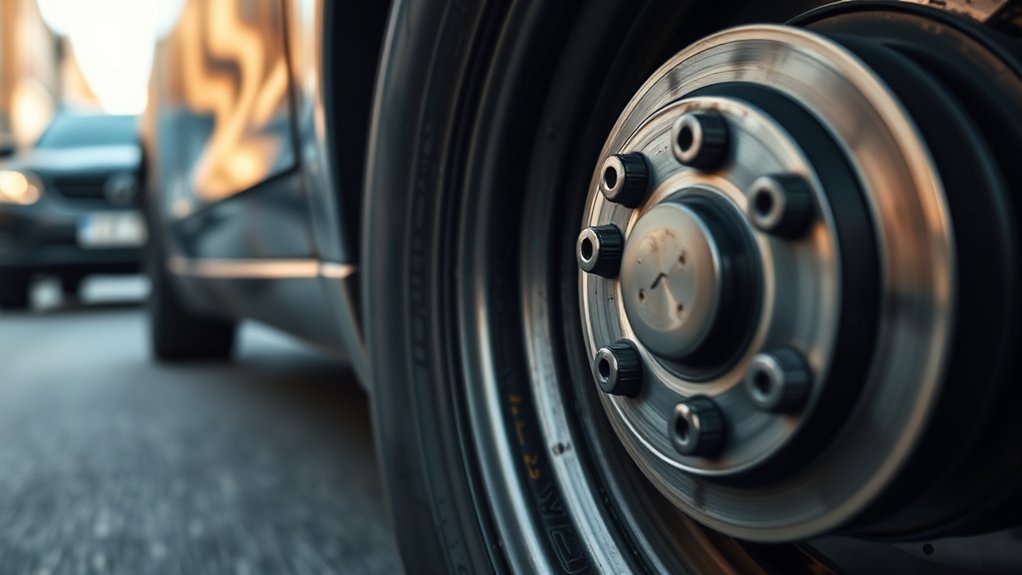
Use a mechanic’s stethoscope or a long screwdriver pressed against the hub to audibly detect bearing noise. This precise approach helps you confidently identify wheel bearing issues without distraction.
Common Wheel Bearing Sounds and What They Mean
What distinct sounds should you listen for when diagnosing wheel bearing issues? Typically, you’ll notice a low-pitched growling or humming noise that changes with vehicle speed. This noise frequency often increases as the bearing deteriorates, indicating metal-on-metal contact inside the bearing assembly.
Another common sound is a rhythmic clicking or popping, which suggests damaged bearing rollers or cage. When performing bearing diagnostics, pay attention to how the noise varies with turning; a bad outer bearing often gets louder when turning away from the affected side, while an inner bearing noise intensifies when turning toward it.
These specific sounds provide critical clues to the bearing’s condition, helping you pinpoint the exact nature and severity of the failure before it leads to more serious mechanical issues.
How to Tell Wheel Bearing Noise From Other Wheel Sounds
Recognizing the unique auditory signatures of a failing wheel bearing is one thing, but distinguishing those sounds from other wheel-related noises can be challenging. When diagnosing, focus on the consistent, rhythmic grinding or humming that intensifies with vehicle speed yet remains unaffected by road texture. This contrasts with noises caused by tire tread issues or brake components.
Avoid going off on an unrelated topic, such as engine noises or suspension creaks, which can lead you down a random tangent. Use a systematic approach: isolate the wheel by lifting it and manually checking for play or roughness. This method helps confirm if the noise originates from the bearing rather than other wheel elements like CV joints or brake pads, ensuring precise identification without confusion.
How Wheel Bearing Noise Changes With Speed and Turns
When does a wheel bearing noise become more noticeable during your drive? Typically, the speed influence on the noise is clear: as your vehicle accelerates, the bearing’s grinding or humming intensifies. This happens because higher speeds increase the rotational velocity, amplifying the sound caused by worn or damaged components inside the bearing.
Additionally, turning effects play a pivotal role. When you take a turn, the load shifts to the wheel on the outside of the curve, often making the noise louder or changing its pitch. These variations occur because the bearing experiences uneven pressure during cornering, stressing damaged areas and producing distinct sound patterns.
Understanding these speed influence and turning effects helps you diagnose wheel bearing issues more accurately during your drive.
Why Wheel Bearings Make Noise: Common Causes
Several factors cause wheel bearings to produce noise, typically stemming from internal wear or external contamination. When the bearing’s lubrication deteriorates or leaks, friction increases, generating a growling or humming sound.
Dirt, water, or debris intrusion accelerates wear by damaging the bearing surfaces. You might also notice rare tire vibrations or uneven road feedback, indicating uneven bearing rotation or damage to the bearing races.
Corrosion and pitting on the bearing components further disrupt smooth operation, causing consistent noise that varies with speed and load. Additionally, improper installation or inadequate preload can lead to premature bearing failure and noise.
Risks of Ignoring Noisy Wheel Bearings
Ignoring the noises caused by worn or damaged wheel bearings can quickly escalate from a minor annoyance to a serious safety hazard. When you neglect these sounds, you risk accelerated wear on fragile tires and compromised brake function, leading to noisy brakes and reduced stopping power.
The imbalance caused by faulty bearings stresses suspension components, increasing failure chances.
| Risk | Consequence |
|---|---|
| Fragile tires wear | Reduced traction and blowouts |
| Noisy brakes | Decreased braking efficiency |
| Suspension damage | Unstable handling and vibrations |
Addressing noisy wheel bearings promptly helps you avoid costly repairs and maintain optimal vehicle control, ensuring your safety on the road.
When to Check or Replace Your Wheel Bearings
How do you determine the right time to check or replace your wheel bearings? You don’t want to confuse it with an unrelated concept like tire wear or an off topic idea such as brake noise. Focus on specific indicators directly tied to bearing health.
Know when to check wheel bearings by focusing on signs directly linked to their health, not unrelated issues.
Watch for these signs:
- Persistent grinding or humming noises, especially when turning
- Excessive play or looseness in the wheel hub
- Uneven tire wear not connected to alignment issues
- Vibration or wobbling felt through the steering wheel
- ABS sensor warnings without electronic faults
Checking your wheel bearings promptly when these symptoms arise prevents further damage and maintains vehicle safety. Regular inspection intervals outlined in your vehicle manual also guide timely replacement, ensuring you avoid mixing unrelated concepts or off topic ideas during diagnosis.
Frequently Asked Questions
How Much Does It Cost to Replace a Wheel Bearing?
You’ll typically pay $150 to $400 to replace a wheel bearing, depending on labor and parts. Don’t ignore misleading odors or steering misalignment. They often signal bearing issues that require precise, technical attention for safe driving.
Can a Bad Wheel Bearing Affect Fuel Efficiency?
Yes, a bad bearing affects your vehicle’s fuel efficiency by increasing rolling resistance. This forces your engine to work harder, consuming more fuel.
Addressing worn bearings promptly helps maintain optimal fuel economy and performance.
Are Wheel Bearing Noises Covered by Car Warranties?
You know what they say: “An ounce of prevention is worth a pound of cure.”
What warranty covers wheel bearing noises depends on your vehicle; some cover cost coverage under drivetrain or bumper-to-bumper warranties, so check specifics carefully.
Can I Drive Long Distances With a Bad Wheel Bearing?
You shouldn’t drive long distances with a bad wheel bearing due to serious driving hazards. Its compromised reliability demands a thorough inspection and prompt replacement to guarantee safety. This helps prevent further mechanical damage or failure on the road.
What Tools Are Needed to Replace a Wheel Bearing?
You’ll need bearing tech tools like a bearing puller, torque wrench, socket set, and press, each essential for wheel assembly safety. Without them, replacing a wheel bearing feels like moving mountains with bare hands. Stay precise!
Conclusion
If you catch your wheel bearing whispering warnings, don’t let it keep you guessing. Those subtle hums or growls are your car’s polite way of asking for attention before things escalate. Ignoring these hints could invite more serious mechanical moods, affecting safety and performance.
Stay proactive—schedule a check or replacement when needed to keep your ride smooth, secure, and quietly confident. Your wheels will thank you with seamless precision and peace of mind.
Remember, recognizing what a bad wheel bearing sounds like can save you from costly repairs and ensure your vehicle remains safe on the road.