
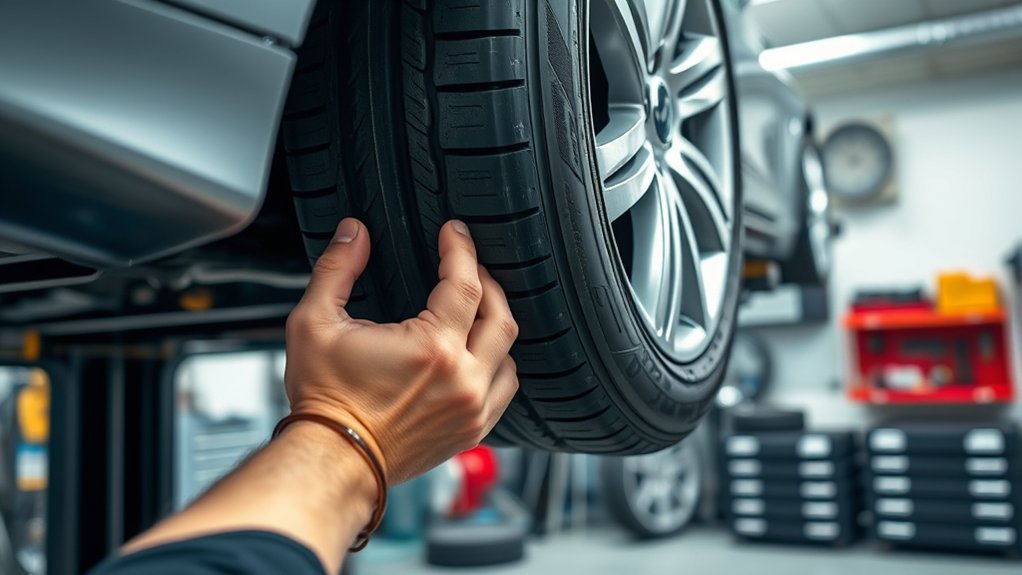
What Is a Tire Rotation
Tire rotation is the process of systematically moving your tires between positions to ensure even tread wear. This essential maintenance task helps maintain traction, prevents vibration, and supports suspension health.
Rotating your tires every 5,000 to 8,000 miles optimizes tire lifespan, performance, and fuel efficiency while reducing maintenance costs. Skipping rotation risks uneven wear and can destabilize your vehicle.
You’ll also learn how different rotation patterns and vehicle types influence when and how to rotate your tires for the best results. Proper tire rotation is key to safe and efficient driving.
Key Takeaways
- Tire rotation systematically changes tire positions to promote even tread wear and extend tire life.
- It maintains consistent traction and vehicle stability by balancing tread depth across all tires.
- Regular rotation prevents vibration, reduces suspension stress, and supports overall vehicle performance.
- Recommended every 5,000 to 8,000 miles or during seasonal tire changes to optimize safety and efficiency.
- Rotation patterns vary by vehicle and tire type, often requiring front-to-rear or cross rotation methods.
What Is Tire Rotation and Why It Matters
Although tire rotation may seem like a routine maintenance task, it plays an essential role in extending the lifespan of your tires and ensuring even wear. When you rotate your tires, you systematically change their positions on your vehicle to equalize tread wear.
This process helps maintain consistent tread depth across all tires, which is crucial for traction and safety. Uneven tread depth can cause imbalanced handling and premature tire replacement.
Additionally, proper tire rotation supports maintaining tire balance, preventing vibrations and uneven stress on suspension components. By rotating your tires regularly, you optimize performance, improve fuel efficiency, and reduce tire-related issues.
Skipping this maintenance risks uneven wear patterns, which can compromise your vehicle’s stability and increase overall maintenance costs.
When Should You Rotate Your Tires
You should rotate your tires every 5,000 to 8,000 miles to ensure even wear and extend their lifespan. Seasonal tire rotation is also important if you switch between summer and winter tires. Additionally, watch for signs like uneven tread wear or vibrations, which indicate it’s time to rotate.
Recommended Mileage Intervals
When should you rotate your tires to maximize their lifespan and ensure even wear? Most manufacturers recommend rotating your tires every 5,000 to 7,500 miles. This interval aligns well with regular maintenance schedules, such as oil changes, making it easier to remember.
Regular rotation helps balance tread wear caused by factors like tyre pressure variations and wheel alignment differences. If you notice uneven tread wear or experience handling issues, check your tyre pressure and wheel alignment immediately, as these can accelerate uneven wear.
Adhering to these mileage intervals prevents premature tire replacement and maintains optimal vehicle performance. Always consult your vehicle’s owner manual for specific recommendations, as some models may require different intervals based on drivetrain or tire type.
Seasonal Tire Rotation
Maintaining even tire wear through regular rotations is key, but seasonal tire rotation adds another layer of care tailored to changing driving conditions. When you switch between summer and winter tires, you must rotate them to account for differences in tire design and tread compounds.
Winter tires typically have softer tread compounds and deeper grooves optimized for snow and ice, while summer tires use harder compounds for better dry traction. Rotating these tires seasonally ensures uniform wear across all four tires, preserving performance and safety.
Additionally, seasonal rotation helps balance the unique stresses each tire endures due to temperature fluctuations and road conditions. To maximize tire lifespan and maintain optimal handling, rotate tires every time you change them for the season.
Signs Tires Need Rotation
How can you tell if your tires need rotation? Identifying uneven tire wear is crucial to maintaining optimal tread depth and extending tire life. Here are three key signs indicating it’s time to rotate your tires:
- Uneven Tire Wear: Inspect all tires for irregular tread depth, such as more wear on one side or the center. This imbalance signals uneven tire wear.
- Vibrations While Driving: Noticeable vibrations or shaking can result from uneven tread wear, indicating misalignment or rotation needs.
- Mileage Interval: Follow your vehicle manufacturer’s recommendation, typically every 5,000 to 8,000 miles, to rotate tires before wear becomes problematic.
Monitoring these signs helps you maintain balanced tire wear, ensuring safer handling and maximizing tire lifespan.
Signs Your Tires Need Immediate Rotation
Why should you pay close attention to uneven tire wear? Ignoring this isn’t an irrelevant topic or an off topic idea. It’s a critical safety concern. Uneven wear indicates that your tires need immediate rotation to avoid compromised handling or premature replacement.
Look out for signs like cupping, feathering, or bald spots.
| Sign | Description | Potential Cause |
|---|---|---|
| Cupping | High and low points on tread | Suspension issues |
| Feathering | Tread ribs worn sharp on one side | Misalignment |
| Bald Spots | Smooth patches on tread | Lack of rotation |
| Vibration | Noticeable steering wheel shake | Tire imbalance or wear |
Address these signs promptly to maintain optimal tire performance and vehicle safety.
How to Rotate Your Tires: Common Patterns
You’ll typically use either the front-to-rear pattern or the cross rotation method when rotating your tires. The front-to-rear pattern moves tires straight between the front and rear axles, maintaining the same side. The cross rotation method swaps tires diagonally, which helps even out wear on front-wheel-drive vehicles.
Front-To-Rear Pattern
The front-to-rear pattern involves swapping the tires on the same side of the vehicle between the front and rear axles. This method addresses common tire rotation misconceptions, such as the belief that tires only wear evenly without regular repositioning.
By using the front to rear pattern, you maintain balanced tire wear, enhancing performance and longevity.
Follow these steps for an effective front-to-rear rotation:
- Remove the front left tire and move it to the rear left position.
- Take the rear left tire and place it at the front left position.
- Repeat the process on the right side.
This pattern suits vehicles with directional tires or those with different front and rear tire sizes, ensuring consistent tread wear without cross-swapping.
Cross Rotation Method
A cross rotation method involves moving tires diagonally across the vehicle, placing front tires to opposite rear positions and vice versa. This pattern ensures even tire wear by balancing the stress each tire endures during driving.
When you use this method, it’s essential to consider the tire manufacturing specifications, as some tires are directional or asymmetric and may not be suited for cross rotation. Additionally, after rotating your tires, check and adjust the wheel alignment to maintain optimal handling and extend tire life.
Cross rotation is especially effective for vehicles with non-directional tires and can help you maximize traction and performance. Following the proper rotation intervals and techniques will protect your investment and promote safer driving conditions.
Why Rotating Tires Helps Them Last Longer
How does rotating your tires extend their lifespan? By regularly shifting their positions, you ensure even wear, which enhances durability. Uneven wear results from factors like weight distribution and driving habits, but rotation counteracts this by equalizing usage across all tires.
- Balancing tread wear: Rotation distributes tread degradation evenly, preventing premature replacement.
- Mitigating weather impacts: Tires exposed to varying road conditions wear differently; rotation helps balance exposure, especially if some tires face harsher elements due to vehicle design or tire storage conditions.
- Maintaining optimal performance: Equal wear preserves traction and handling, crucial for safety and efficiency.
Essential Tools for Tire Rotation
Which tools do you need to perform an effective tire rotation? First, a reliable jack is essential to lift your vehicle safely. Use jack stands to secure it before working on the tires.
A lug wrench, preferably a torque wrench, helps you remove and tighten lug nuts to the manufacturer’s specified torque settings. While rotating tires, you should also consider tools for checking tire balance and wheel alignment.
A tire balancer ensures your tires spin evenly, preventing vibration and uneven wear. Wheel alignment tools or professional alignment machines help maintain proper suspension geometry, which complements tire rotation by promoting even tread wear.
Having these precise tools ensures your tire rotation contributes effectively to your vehicle’s performance and tire longevity.
How to Rotate Tires Yourself
When should you rotate your tires to maximize their lifespan and maintain optimal performance? Typically, every 5,000 to 7,500 miles is ideal. To rotate tires yourself, follow these steps:
Rotate your tires every 5,000 to 7,500 miles to maximize lifespan and maintain performance.
- Prepare and lift: Loosen lug nuts, use a jack to lift the vehicle, and secure it with jack stands.
- Swap tires: Move front tires to the rear on the same side, and rear tires to the front on the opposite side, following a recommended rotation pattern.
- Reinstall and check: Tighten lug nuts in a star pattern, then verify tire pressure and inspect wheel alignment to ensure even wear and safe handling.
Maintaining correct tire pressure and proper wheel alignment during rotation prevents uneven wear, ensuring optimal tire performance and safety.
Adjusting Tire Rotation Frequency by Tire Type and Vehicle
Why does tire rotation frequency vary depending on tire type and vehicle? Different tires and vehicles impose unique stress patterns, affecting tire wear rates and tread depth unevenly.
For example, performance tires on rear-wheel-drive cars often experience faster wear on the rear due to increased torque and traction demands. Conversely, all-season tires on front-wheel-drive vehicles typically wear more on the front edges due to steering forces.
You should adjust rotation intervals accordingly; high-performance or softer compound tires may require rotations every 5,000 miles, while harder compounds can extend to 7,500 miles. Additionally, heavier vehicles exert more load, accelerating tire wear, demanding more frequent rotations.
Monitoring tread depth regularly helps you identify uneven wear early, allowing you to adjust rotation schedules, maximizing tire lifespan and ensuring balanced tire performance across all positions.
Frequently Asked Questions
Can Tire Rotation Improve Fuel Efficiency?
Yes, rotating your tires helps even out tire wear patterns, reducing rolling resistance. This balanced wear improves fuel economy by ensuring your vehicle uses less energy to move, ultimately saving you money on gas over time.
Does Tire Rotation Affect Vehicle Warranty?
Yes, your tire rotation warranty may depend on following the manufacturer’s maintenance policy. Skipping rotations can void coverage, so you should adhere strictly to the recommended schedule to keep your warranty valid and ensure optimal vehicle performance.
How Much Does Professional Tire Rotation Cost?
A professional tire rotation typically costs $20 to $50, reflecting service pricing trends. This routine act symbolizes balance, addressing uneven tire wear discussion.
Ultimately, it extends tire life and ensures your vehicle’s reliable performance with precise, technical care.
Are Tire Rotations Necessary for Electric Vehicles?
Yes, tire rotations are necessary for electric vehicle maintenance. They ensure even tire wear, enhancing safety and performance.
Regular rotations maximize tire rotation benefits, extending tire life and maintaining optimal traction for your electric vehicle.
Can Uneven Tire Wear Cause Alignment Issues?
You’d think uneven wear could single-handedly wreck your entire suspension! While it doesn’t directly cause alignment issues, uneven wear signals misalignment or suspension problems.
Conclusion
Regular tire rotation can extend your tire life by up to 20%, saving you money and improving safety. By rotating your tires every 5,000 to 7,500 miles, you ensure even wear across all tires, enhancing traction and performance.
Whether you do it yourself or visit a professional, following proper rotation patterns is crucial. Stay proactive—consistent tire rotation helps maintain vehicle stability and maximizes your tires’ lifespan efficiently.
In conclusion, understanding what is a tire rotation and practicing it regularly is key to getting the best performance and durability from your tires.