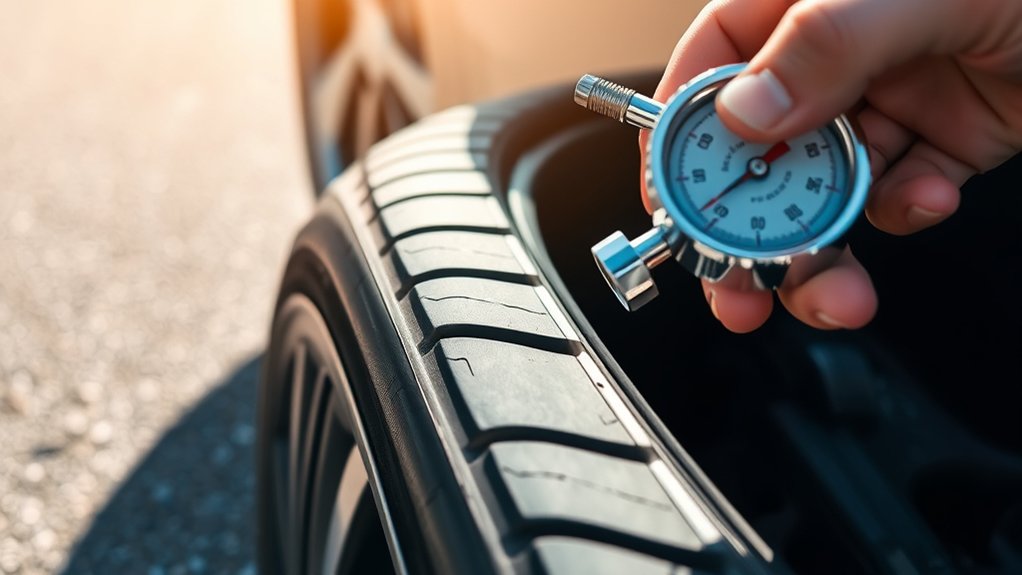
What Should My Tire Pressure Be
You should always use the tire pressure specified by your vehicle’s manufacturer, which is the key to knowing what your tire pressure should be. This information is typically found on the driver’s door jamb or in the owner’s manual.
Measure pressure when tires are cold to ensure accuracy since temperature affects readings. Avoid relying on tire sidewall maximums, as they’re safety limits, not daily targets.
Proper tire pressure ensures safety, tire longevity, and fuel efficiency. Adjust for conditions like weather or load, and maintain regular checks for optimal performance. There’s more to understand about keeping your tires in top shape.
Key Takeaways
- Use the manufacturer-recommended tire pressure found on the driver’s side door jamb or owner’s manual for accurate values.
- Check tire pressure when tires are cold for precise measurement, ideally after three hours of rest or before driving.
- Do not use the tire sidewall maximum pressure; it is a safety limit, not the daily operating pressure.
- Maintain recommended pressure for optimal safety, fuel efficiency, tire life, and handling performance.
- Regularly check pressure monthly, before long trips, and during temperature changes to ensure safe and efficient driving.
How to Find the Manufacturer-Recommended Tire Pressure for Your Car
Where can you find the exact tire pressure your car needs? The manufacturer-recommended tire pressure is typically listed on a sticker inside the driver’s side door jamb or in your owner’s manual. This value results from careful calibration considering your vehicle’s weight, suspension, and tire anatomy.
The tire’s structure, including sidewalls, tread, and internal plies, responds differently to pressure variations, affecting performance and safety. By following the specified pressure, you ensure optimal contact between the tire and road surface, maximizing handling, fuel efficiency, and tire lifespan.
Avoid guessing or relying on tire sidewall markings, as they indicate maximum inflation, not the calibrated pressure tailored for your car’s unique specifications. Always use a reliable gauge to verify and maintain the recommended pressure.
Why Tire Sidewall Numbers Don’t Show Correct Tire Pressure
While the tire sidewall displays important information, it does not provide the correct tire pressure for your vehicle. The tire labels and sidewall numbers you see are often misunderstood as pressure guidelines, but they serve different purposes. Here’s why:
- Maximum Pressure Indicated: Sidewall numbers list the tire’s maximum inflation pressure, not the recommended operating pressure for your car.
- Generic Specification: Tire labels are standardized for the tire model, not customized for your specific vehicle’s weight or design.
- Safety Margin: The maximum pressure is a safety limit to prevent tire damage, not a target for everyday driving.
You should always refer to the vehicle manufacturer’s recommended tire pressure, found on the door jamb or owner’s manual, rather than relying on tire sidewall numbers.
How Tire Pressure Affects Safety, Fuel Economy, and Tire Life
How does maintaining the correct tire pressure influence your vehicle’s performance and longevity? Proper tire pressure ensures optimal contact between the tire and road, preserving essential safety margins.
When pressure is too low, increased tire wear occurs on the edges, reducing tire life and raising rolling resistance, which negatively impacts fuel economy. Conversely, overinflated tires concentrate wear in the center tread, compromising traction and stability.
Both extremes diminish safety margins, increasing the risk of blowouts or loss of control. Maintaining the manufacturer-recommended pressure optimizes load distribution, minimizing uneven tire wear and maximizing fuel efficiency.
When Should You Check Your Tire Pressure and How to Do It Right?
You should check your tire pressure when the tires are cold, ideally before driving or after the vehicle has been parked for at least three hours. Use a reliable tire pressure gauge to get accurate readings, avoiding built-in gauges that may be less precise. Follow a systematic approach: remove the valve cap, press the gauge firmly onto the valve stem, and compare the reading to the manufacturer’s recommended pressure.
Best Times To Check
When is the ideal moment to check your tire pressure? You want to measure it when the tires are cold because heat from driving increases tire pressure, giving inaccurate readings. Use reliable tire gauges or digital displays for precise measurements.
Check your tire pressure:
- Before driving, ideally after the vehicle has been parked for at least three hours or driven less than a mile.
- Monthly, as ambient temperature changes affect tire pressure notably.
- Before long trips or when carrying extra loads to ensure safety and peak performance.
Regular checks during these times help maintain proper inflation, improve fuel efficiency, and extend tire life. Always refer to the manufacturer’s recommended pressure, found on the door placard or owner’s manual, for accurate reference.
Tools Needed For Accuracy
Accurate tire pressure readings depend on using the right tools designed for precision. You’ll need a reliable tire pressure gauge compatible with your vehicle’s valve types. Schrader or Presta valves each require specific attention.
Digital gauges offer high accuracy and ease of reading, while dial and stick gauges provide solid performance if calibrated properly. Consider tire brands too; some may recommend specific gauge types or pressure ranges, so choose tools that align with manufacturer guidelines.
Avoid relying on built-in tire pressure monitoring systems (TPMS) alone, as they often provide approximate values. To ensure consistent accuracy, regularly calibrate your gauge and inspect valve stems for damage or leaks.
Using proper tools tailored to your tire brands and valve types ensures you maintain optimal pressure for safety and performance.
Step-By-Step Checking Guide
Maintaining proper tire pressure starts with knowing the right times and methods for checking it. You should check your tire pressure at least once a month and before long trips. Use a reliable pressure gauge or tire pressure alternatives like digital monitors for accuracy.
Follow these steps:
- Make sure tires are cold. Check pressure before driving or after the vehicle has been parked for three hours.
- Remove the valve cap and press the gauge firmly onto the valve stem to get a precise reading.
- Adjust pressure using an air compressor, keeping in mind regular compressor maintenance to ensure consistent performance.
Consistently following this guide helps optimize tire lifespan, fuel efficiency, and safety.
Adjusting Tire Pressure for Different Driving Conditions
You’ll need to adjust your tire pressure based on driving conditions to maintain optimal performance and safety. For off-road driving, lowering pressure can improve traction, while highway driving requires higher pressure for fuel efficiency and stability. Cold weather also affects tire pressure, so you should check and adjust it more frequently during colder months.
Pressure for Off-Road
How does tire pressure affect your off-road performance? Properly adjusting tire pressure optimizes traction, flotation, and control on uneven terrain.
When you lower tire pressure off road, the tire’s contact patch increases, improving grip and reducing ground pressure. However, too low pressure risks bead unseating and tire damage.
Aim for these adjustments:
- Decrease tire pressure between 15-20 psi for sand and soft soil to maximize flotation.
- Drop pressure to 20-25 psi on rocky or uneven trails to enhance traction without sacrificing tire integrity.
- Avoid going below 12 psi to prevent bead loss and rim damage.
Highway Driving Adjustments
Why adjust tire pressure when driving on the highway? Proper tire pressure maintenance ensures product contact with the road, improving fuel efficiency, handling, and tire longevity.
Contrary to tire pressure myths, you shouldn’t inflate tires beyond the vehicle manufacturer’s recommended levels just because you’re driving faster. Excessive pressure can reduce traction and cause uneven wear. Instead, check and maintain the recommended pressure when tires are cold for accurate readings.
High-speed highway driving generates heat, which naturally increases tire pressure; consequently, avoid adjusting pressure immediately after driving. Focus on consistent pressure maintenance before your trip to prevent blowouts and ensure stability.
In short, maintain recommended cold tire pressures, disregard myths about overinflation for speed, and monitor pressure regularly to adapt safely to highway conditions.
Cold Weather Considerations
While maintaining proper tire pressure is important year-round, colder temperatures introduce specific challenges that affect tire performance and safety. You need to understand common tire pressure misconceptions and cold weather myths to make accurate adjustments. Here’s what to consider:
- Air contracts in cold weather, causing tire pressure to drop approximately 1 psi for every 10°F decrease in temperature. Don’t assume your tires are properly inflated without checking.
- Avoid overinflating tires based on cold weather myths; excessive pressure reduces traction and increases wear.
- Use the manufacturer’s recommended tire pressure, usually found on the driver’s door jamb, and adjust accordingly after measuring pressure when tires are cold.
Easy Tips to Keep Your Tire Pressure Right All Year Long
When should you check your tire pressure to maintain optimal performance and safety? You should monitor it at least once a month and before any long trip. Temperature fluctuations affect pressure, so regular checks are crucial, especially during seasonal changes.
Check tire pressure monthly and before long trips to ensure safety and adapt to temperature changes.
Use a reliable gauge and measure when tires are cold for accuracy. If you engage in off road basics, adjust pressure according to terrain. Lower for better traction on soft surfaces, higher for stability on hard ground.
Remember, proper tire styling influences pressure recommendations; consult your vehicle’s manual for specific values. Keep a portable gauge and inflator handy to make quick adjustments.
Consistent monitoring prevents uneven wear, improves fuel efficiency, and ensures safe handling year-round.
Frequently Asked Questions
Can Overinflated Tires Cause Uneven Wear?
Yes, overinflation wear causes uneven tread wear by concentrating pressure on the tire’s center. You’ll notice faster wear in the middle compared to edges, reducing tire life and compromising handling and safety.
How Does Altitude Affect Tire Pressure Readings?
Wondering how altitude effects pressure readings? As you climb higher, atmospheric pressure drops, causing your tire pressure gauge to show higher readings than actual.
You’ll need to adjust accordingly to maintain safe, accurate tire inflation.
What Tools Can Monitor Tire Pressure in Real Time?
You can monitor tire pressure in real time using tire sensors integrated with your vehicle’s system or external pressure gauges.
Tire sensors provide continuous data, while pressure gauges offer precise manual readings for accurate tire maintenance.
Are Tire Pressure Recommendations Different for Electric Vehicles?
Like tuning a guitar, electric tires need precise pressure to avoid range impact. You’ll find recommendations differ slightly, optimizing efficiency and safety due to electric vehicles’ weight and torque characteristics.
Always follow manufacturer specs closely.
How Does Tire Pressure Affect Braking Distance?
You’ll find tire pressure directly impacts braking distance; underinflated tires generate excessive tire heat, reducing grip.
Braking science shows optimum pressure maintains contact patch integrity, ensuring efficient heat dissipation and shorter stopping distances for safer, controlled deceleration.
Conclusion
Now that you know how to find and maintain the correct tire pressure, why risk your safety or waste fuel? Keeping your tires properly inflated not only maximizes tire life but also enhances vehicle handling and fuel efficiency.
Check your tire pressure regularly, especially before long trips or seasonal changes, and adjust it based on driving conditions.
With these simple steps, you’ll ensure optimal performance and safety every time you hit the road. Remember, knowing what should my tire pressure be is key to driving safely and efficiently.