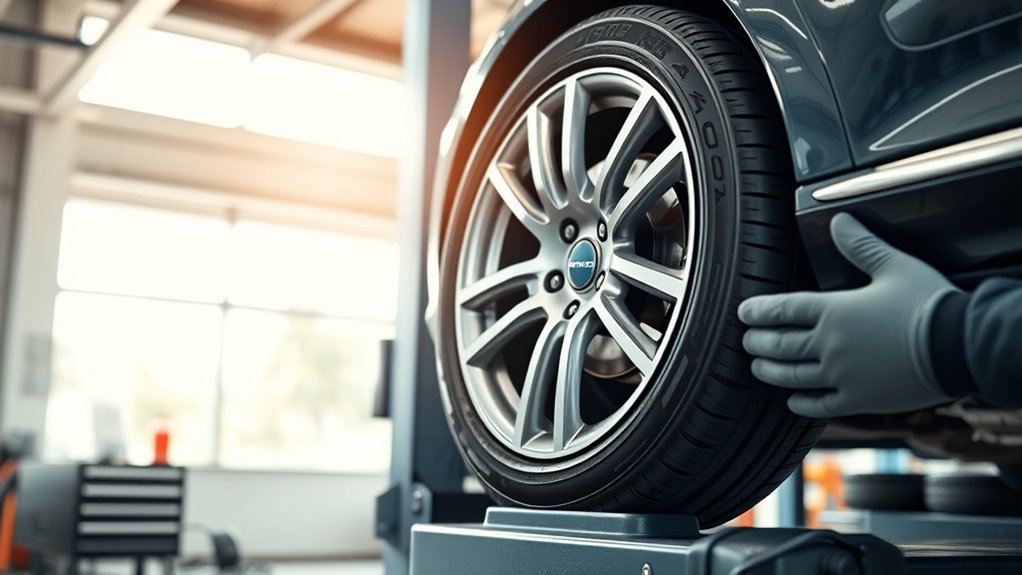
How Often Tire Rotation
You should rotate your tires every 5,000 to 7,500 miles to ensure even tread wear and maintain traction, handling, and braking efficiency. Tire rotation is essential for prolonging tire life and enhancing vehicle safety. Your driving habits, like aggressive turns or heavy loads, might require more frequent rotations.
Watch for signs like uneven tread, vibrations, or pulling to know if you need an early rotation. Different drivetrains require specific rotation patterns, so it’s important to follow the correct procedure for your vehicle. Skipping rotations can shorten tire life and compromise safety.
Exploring these factors will help you optimize your tire care and maintain peak performance on the road. Regular tire rotation is a simple step that can save you money and improve driving comfort.
Key Takeaways
- Rotate tires every 5,000 to 7,500 miles to ensure even tread wear and maintain vehicle safety.
- Adjust rotation frequency based on driving habits, such as aggressive driving or heavy loads, which increase wear.
- Check for early signs like uneven tread wear, vibration, or pulling to determine if rotation is needed sooner.
- Follow drivetrain-specific rotation patterns: front-to-back for front-wheel drive, X-pattern for rear/four-wheel drive.
- Skipping rotations reduces tire lifespan, decreases traction, and increases the risk of blowouts and handling issues.
How Often Should You Rotate Your Tires?
How often should you rotate your tires to maintain peak performance and safety? Generally, you should rotate your tires every 5,000 to 7,500 miles. This interval helps ensure even tire tread wear, which directly affects traction, handling, and braking efficiency.
Uneven tread wear can result from differences in wheel alignment or road conditions, so regular rotation helps balance these effects. Neglecting tire rotation can lead to premature tire replacement and compromised vehicle safety.
When you rotate your tires, it’s also a good opportunity to check your wheel alignment, as misalignment can accelerate uneven tread wear. Following this schedule maintains your tires’ lifespan and optimizes your vehicle’s overall performance on the road.
How Driving Habits Affect Tire Rotation Frequency
Because your driving habits directly influence tire wear patterns, they also determine how often you should rotate your tires. Aggressive driving styles, frequent sharp turns, and heavy load weight accelerate uneven tire wear, necessitating more frequent rotations.
Conversely, smooth driving with moderate loads can extend intervals between rotations.
| Driving Style | Load Weight | Recommended Rotation Interval |
|---|---|---|
| Aggressive | Heavy | Every 3,000-4,000 miles |
| Aggressive | Light | Every 4,000-5,000 miles |
| Smooth | Heavy | Every 5,000-6,000 miles |
| Smooth | Light | Every 6,000-7,000 miles |
Adjust your rotation schedule based on these factors to optimize tire longevity and performance effectively.
Signs You Need an Early Tire Rotation
When should you consider rotating your tires earlier than the recommended interval? Pay close attention to uneven tread wear patterns, which often indicate the need for an early tire rotation. If you notice one tire wearing faster or differently than the others, it’s a clear sign to act.
Additionally, if you experience vibration or pulling while driving, it may be time to rebalance tires and rotate them to ensure optimal contact with the road. Keep in mind that your driving habits affect rotation frequency. Aggressive acceleration, frequent sharp turns, or heavy loads accelerate uneven wear.
Addressing these signs promptly helps maintain tire performance, extends lifespan, and improves safety. Don’t wait for scheduled maintenance if these indicators appear; an early tire rotation can prevent costly damage and uneven tread deterioration.
Which Tire Rotation Pattern Is Best for Your Vehicle?
Which tire rotation pattern suits your vehicle depends largely on its drivetrain and tire type. For front-wheel-drive vehicles, the front-to-back pattern moves front tires straight back and crosses rear tires to the front, promoting even wear.
Rear-wheel and four-wheel-drive vehicles benefit from the X-pattern, which swaps tires diagonally, balancing wear across all positions. If your tires are directional, stick to the front-to-back pattern without crossing sides to maintain tread direction.
For staggered setups, where front and rear tires differ in size, rotation options may be limited to side-to-side swaps only, if at all. Choosing the correct tire rotation pattern optimizes tire life and performance, making it a critical aspect of vehicle maintenance.
Always consult your owner’s manual for manufacturer-recommended patterns tailored to your specific vehicle.
What Happens If You Skip Tire Rotations Too Long?
Selecting the appropriate tire rotation pattern helps distribute wear evenly, but neglecting regular rotations can still cause uneven tire degradation. If you skip tire rotations too long, the tires on specific positions, like the front or rear, will wear faster due to differing loads and steering forces.
This uneven wear reduces tire lifespan and compromises handling stability. Over time, long term wear leads to vibration issues, decreased traction, and increased risk of blowouts. Ignoring maintenance timing disrupts your vehicle’s optimal performance and safety.
While some might consider tire rotation an unrelated topic to immediate vehicle function, it’s critical for preserving tire integrity. Staying consistent with rotation intervals prevents premature replacement costs and maintains balanced tire wear, ensuring safer, smoother driving conditions.
Frequently Asked Questions
Can I Rotate Tires Myself or Should a Professional Do It?
You can rotate tires yourself with proper tools and knowledge, making DIY tire care feasible. However, a professional ensures precise alignment and checks wear indicators accurately. This prevents uneven wear and extends tire life effectively.
Does Tire Rotation Affect My Vehicle’s Warranty?
Yes, rotating your tires regularly helps maintain your tire warranty and guarantees proper maintenance coverage.
Skipping rotations can void warranty claims due to uneven wear, so following the manufacturer’s rotation schedule is essential for preserving coverage.
How Much Does a Typical Tire Rotation Service Cost?
You’ll typically pay $20 to $50 for a tire rotation service, which often includes tire balance and tread depth inspection. These steps ensure even wear and optimal vehicle performance, extending tire life and safety.
Can Uneven Tire Wear Damage My Suspension?
Yes, uneven wear increases suspension stress by causing imbalanced forces on components. This accelerates wear on shocks, struts, and bushings, reducing suspension lifespan and performance.
You should monitor tire condition to prevent costly damage.
Are Tire Rotations Necessary for All Types of Vehicles?
Tire rotations are the backbone of vehicle maintenance, necessary for most vehicles to make certain even wear. Proper tire storage and disposal prevent premature damage, helping you maximize tire life and avoid costly issues down the road.
Conclusion
You should treat tire rotation like a heartbeat for your vehicle’s health—regular and steady. Typically, rotating every 5,000 to 7,500 miles keeps wear even and extends tire life. Your driving habits, like sharp turns or heavy loads, might demand more frequent attention.
Ignoring rotations risks uneven tread wear, compromising safety and performance. Stay proactive, follow recommended patterns, and keep your tires balanced to ensure smooth, efficient driving.
To maintain optimal safety and prolong tire life, understanding how often tire rotation should be done is essential.