How to Reset Tire Pressure Light
To reset your tire pressure light, first inflate all tires to the manufacturer’s recommended PSI using a reliable gauge. This step ensures the tire pressure monitoring system (TPMS) can accurately detect the correct pressure.
Then, turn the ignition to the “On” position without starting the engine. Next, drive for 10 to 15 minutes at speeds above 30 mph to allow the TPMS to recalibrate.
If the light remains on, you may need to repeat the process or consult your manual. Keep following this guide to understand advanced steps and troubleshooting tips.
Key Takeaways
- Inflate all tires to the manufacturer’s recommended pressure using a reliable tire pressure gauge.
- Turn the ignition to the On position without starting the engine to prepare for reset.
- Drive the vehicle for 10 to 15 minutes at speeds above 30 mph to allow TPMS recalibration.
- Check if the tire pressure light turns off after driving; repeat the process if it remains on.
- Consult the vehicle manual or a professional if the light won’t reset or reoccurs despite correct pressure.
Why Does Your Tire Pressure Light Come On?
Why does your tire pressure light come on? This indicator activates when the tire pressure monitoring system (TPMS) detects that one or more tires have pressure significantly below the manufacturer’s recommended level.
It’s important to understand that this warning is specific to tire pressure issues; discussing unrelated concepts such as engine performance or brake systems is an irrelevant topic here.
The light can also illuminate if the TPMS sensors malfunction or if there’s a sudden temperature drop causing pressure changes. Avoid confusing this with other dashboard alerts, as each serves a distinct function.
Recognizing this distinction helps you focus on the actual problem—low or imbalanced tire pressure—without veering into unrelated concepts or irrelevant topics that don’t address your tire pressure light issue.
How to Check Your Tire Pressure Correctly
How do you ensure your tire pressure readings are accurate? First, check your tires when they’re cold, ideally after the vehicle has been parked for at least three hours. Use a reliable tire pressure gauge, avoiding any cheap or damaged tools that can cause errors.
Remove the valve cap, press the gauge firmly onto the valve stem, and note the reading quickly to prevent air loss. Repeat this process for all tires. Don’t let irrelevant discussion about tire brands or types distract you from this essential step.
When and Why Should You Reset the Tire Pressure Light?
When should you reset the tire pressure light to maintain peak vehicle safety and performance? You should reset it immediately after correcting tire pressure discrepancies, such as inflating or deflating tires to the manufacturer’s recommended PSI. Resetting ensures the monitoring system accurately reflects current tire conditions, preventing false alerts.
Ignoring this step may cause you to overlook genuine pressure issues, compromising safety.
Avoid confusing this with an unrelated topic, like budgeting tires, which involves cost management rather than safety protocols. Resetting the tire pressure light is a technical necessity following any tire maintenance to keep your vehicle’s safety systems fully operational.
Proper reset procedures help maintain optimal traction, fuel efficiency, and tire longevity, supporting overall vehicle performance and safety compliance.
Step-by-Step: Resetting Your Tire Pressure Light
Wondering what steps you need to take to reset your tire pressure light? Follow these precise instructions and avoid any irrelevant topic or unrelated concept that might confuse you.
First, ensure all tires are inflated to the manufacturer’s recommended pressure using a reliable gauge. Next, turn your ignition to the “On” position without starting the engine.
Begin by inflating all tires to the recommended pressure, then turn the ignition to “On” without starting the engine.
Then, drive your vehicle for about 10 to 15 minutes at speeds above 30 mph; this allows the system to recalibrate sensors. Finally, check if the tire pressure light has turned off.
If it remains on, repeat the process or consult your vehicle’s manual for specific reset procedures. Steering clear of unrelated concept distractions ensures you reset the light correctly and safely.
How to Use Your Car’s TPMS Reset Button
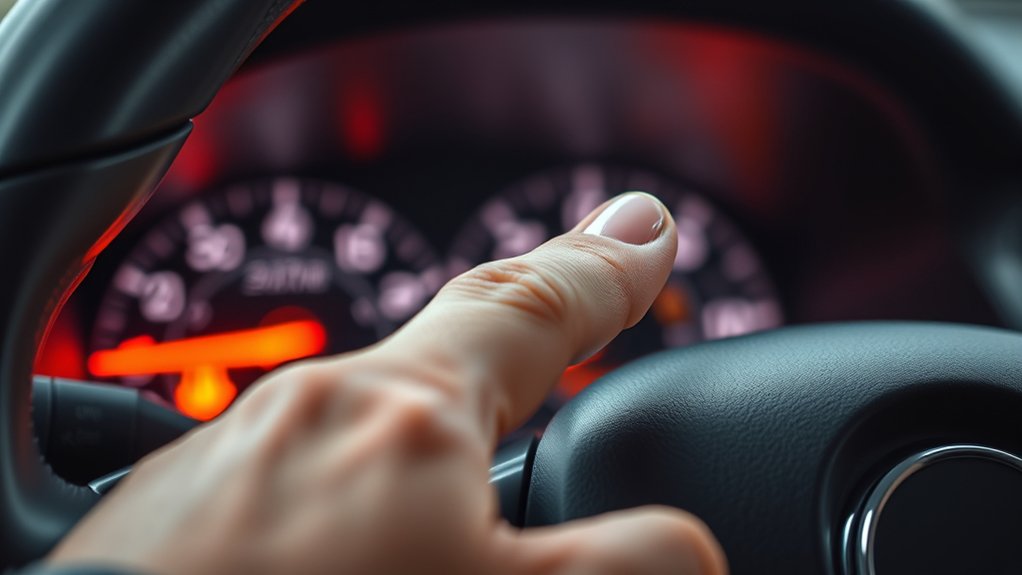
Where can you find the TPMS reset button in your vehicle, and how do you use it effectively? Typically, the TPMS reset button is located beneath the steering wheel or inside the glove compartment.
After replacing tires or adjusting tire pressure, ensure the ignition is on but the engine is off. Press and hold the reset button until the tire pressure light blinks three times, then release it. Drive the vehicle at speeds above 20 mph for 10 minutes to recalibrate the system.
What to Do If the Tire Pressure Light Won’t Reset
If pressing the TPMS reset button and driving at the recommended speed doesn’t turn off the tire pressure light, you’ll need to troubleshoot further. Avoid getting distracted by irrelevant topics or unrelated concepts like unrelated dashboard warnings. They won’t fix your TPMS issue. Instead, follow these steps:
- Check each tire’s pressure manually with a gauge to confirm accuracy.
- Inspect the TPMS sensors for damage or battery failure.
- Verify that the spare tire isn’t triggering the system if it has a sensor.
- Consult your vehicle’s manual for specific reset procedures or error codes.
If these steps don’t resolve the problem, professional diagnostics may be necessary to address sensor faults or wiring issues precisely.
How to Prevent the Tire Pressure Light From Coming Back on
How can you keep the tire pressure light from coming back on after a reset? First, regularly check and maintain correct tire pressure using a reliable gauge, as fluctuating or low pressure triggers the sensor.
Avoid ignoring slow leaks or punctures; repair or replace damaged tires promptly. Don’t dismiss sensor calibration. Ensure your vehicle’s TPMS is properly reset and functioning after any tire service.
Steering clear of irrelevant topics and unrelated ideas, focus solely on tire maintenance and sensor care to prevent false alerts. Additionally, keep tire valves clean and replace faulty valve stems to maintain sensor accuracy.
When to See a Mechanic for Tire Pressure Problems
Maintaining proper tire pressure and sensor functionality helps minimize false alerts, but certain issues require professional attention. You should see a mechanic when:
- Tire pressure light stays on after you’ve checked and adjusted all tires, indicating a possible sensor malfunction.
- You notice uneven tire wear or vibration, which could compromise rotation safety.
- The system frequently triggers alerts despite normal pressure, signaling potential electronic faults.
- You lack the tools or knowledge for TPMS recalibration, ensuring consumer awareness about your vehicle’s safety.
Addressing these concerns promptly prevents tire damage and maintains accurate tire pressure monitoring. A mechanic can diagnose sensor failures, recalibrate the system, and verify rotation safety, providing peace of mind and optimal performance. Don’t ignore persistent warnings; professional evaluation safeguards your vehicle and driving experience.
Frequently Asked Questions
Can Winter Tires Affect Tire Pressure Sensor Accuracy?
Yes, winter tires can cause sensor drift, affecting tire pressure sensor accuracy. You should recalibrate the sensors after installing winter tires to guarantee precise readings and avoid false alerts caused by temperature fluctuations and tread differences.
Does Tire Pressure Light Reset After Changing Tires?
Your tire pressure light may not reset automatically after changing tires; you’ll need to perform specific changes needed like manually resetting or recalibrating the system.
Don’t fall for maintenance myths assuming it resets itself.
How Long Does It Take for the TPMS to Recalibrate?
It usually takes 20 to 30 minutes of driving for the TPMS sensor calibration during tire maintenance.
Keep your speed above 50 mph to guarantee accurate recalibration and the tire pressure light turns off promptly.
Can Aftermarket Wheels Cause Tire Pressure Light Issues?
Yes, aftermarket wheels can cause tire pressure light issues if sensor compatibility is off. Using winter tires might affect TPMS accuracy.
Always verify sensor fitment and follow the reset procedure to ensure proper system function.
Is It Safe to Drive With the Tire Pressure Light On?
It’s not safe driving with the tire pressure light on; low pressure affects handling and tire wear.
Check and inflate tires promptly to ensure safe driving and prevent sensor battery life drain from continuous warning signals.
Conclusion
Think of your tire pressure light as a lighthouse guiding you through foggy roads—ignoring it can lead you astray. By regularly checking and resetting your tire pressure, you keep your vehicle’s foundation steady and safe. Use your TPMS reset button as your compass, and if the light won’t reset, seek a mechanic’s expertise.
Staying proactive prevents surprises, ensuring your journey remains smooth and secure, just like a well-charted voyage. Remember, the key to a safe drive is knowing how to reset tire pressure light whenever it signals. This simple step helps maintain your vehicle’s performance and your peace of mind on every trip.