How to Let Air Out of Tire
To let air out of your tire safely, first check the cold tire pressure using a calibrated gauge and confirm the recommended PSI on your vehicle placard. This initial step ensures you have an accurate starting point before making any adjustments.
Use the proper valve core removal tool to slowly depress the valve pin, releasing air gradually while monitoring pressure. Avoid makeshift tools and rapid deflation to prevent valve or tire damage.
After reaching the desired pressure, securely replace the valve cap and recheck the tire. Following these steps ensures accurate adjustment and tire safety. Exploring further covers finer details and precautions.
Key Takeaways
- Ensure tires are cold and measure current pressure with a calibrated gauge before releasing air.
- Park on a level surface, remove the valve cap, and use a valve core remover or small tool to depress the valve pin gradually.
- Release air slowly while continuously monitoring tire pressure to avoid sudden pressure drops or damage.
- Replace the valve cap securely after reaching the desired pressure to prevent dirt or moisture entry.
- Recheck pressure with the gauge, inspect tire and valve condition, and seek professional help if pressure loss persists or damage is visible.
How to Check Your Tire Pressure Before Letting Air Out
How do you guarantee your tire pressure is accurate before letting air out? First, ensure your tire fitment matches manufacturer specifications; improper fitment can skew pressure readings. Use a calibrated tire pressure gauge to measure the current pressure when the tires are cold, ideally before driving or after sitting for at least three hours.
Check the tread depth simultaneously; uneven wear may indicate inflation issues or alignment problems. Compare your readings to the recommended PSI listed on your vehicle’s placard, not the tire sidewall. Accurate pressure ensures safety, optimal performance, and extends tire life.
Avoid releasing air without precise measurement. Underinflation compromises handling and increases wear. By confirming pressure and assessing tread depth first, you maintain proper tire function and prevent premature damage.
What Tools You Need to Let Air Out of Your Tire
Which tools do you need to safely and accurately let air out of your tire? First, a reliable tire pressure gauge is essential to measure current pressure and avoid underinflation. Choose a gauge compatible with your wheel type, whether tubeless or tube-type, since valve stems differ accordingly.
Next, a valve core remover tool helps release air efficiently by depressing the valve pin without damaging it. If your tire color is dark, use a flashlight to clearly see the valve and ensure precise tool placement.
Additionally, having a small screwdriver or specialized deflation tool can aid in slow, controlled air release. Avoid makeshift tools to prevent valve damage. These precise instruments ensure you deflate your tires accurately, maintaining safety and preserving tire integrity.
How to Let Air Out of Your Tire Safely
With the right tools in hand, you can proceed to release air from your tire safely and effectively. First, ensure the vehicle is parked on a level surface and the tire is cool to prevent injury.
Having the right tools and a cool tire ensures safe, effective air release from your tire.
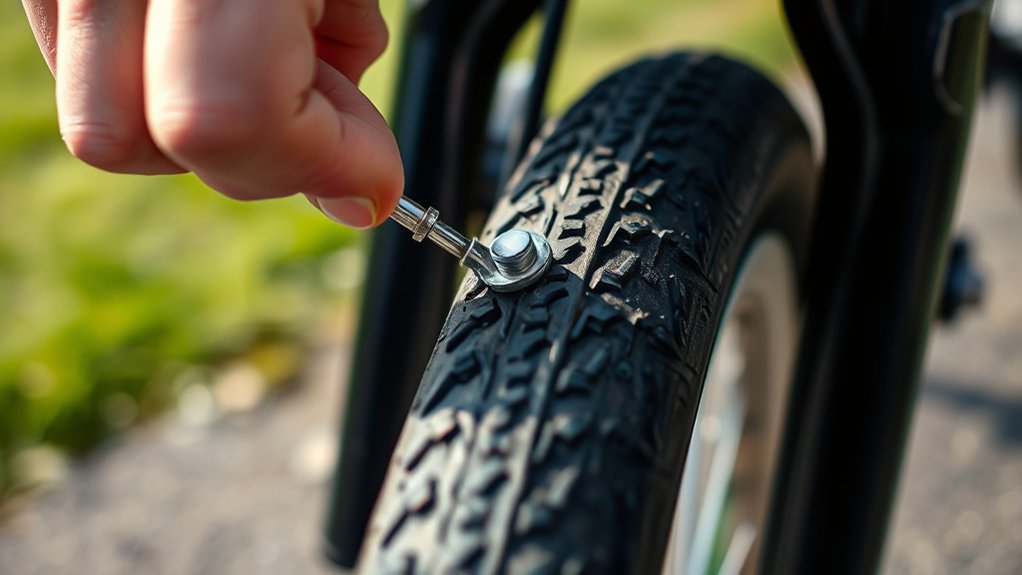
Locate the valve stem and remove the cap without damaging it. Use a proper valve core tool or depress the valve pin carefully to allow air to escape gradually. Avoid applying excessive force to prevent irreversible damage to the valve or tire.
Monitor the pressure with a reliable gauge to achieve the desired level accurately. Once done, replace the valve cap securely to protect the valve from dirt and moisture.
Properly deflated tires can be recycled efficiently, so handle them with care to support tire recycling efforts and environmental safety.
Avoiding Tire and Valve Damage When Letting Air Out
To prevent damage when letting air out, use the proper valve tools designed for your tire type. Release air gradually to avoid sudden pressure changes that can harm the valve or tire structure. Always inspect the tire condition before and after to catch any signs of wear or damage early.
Use Proper Valve Tools
How can you prevent damage to your tire valve while letting air out? First, use the correct valve core remover tool designed specifically for your valve type. This tool allows you to unscrew the valve core safely without bending or breaking it.
Avoid makeshift tools that can damage the valve core threads or housing. Always check the valve core’s condition before and after air release to ensure it’s properly seated. Use a pressure gauge before and after deflation to monitor accurate pressure changes and avoid over-deflation.
Handle the valve core gently to maintain its seal integrity, preventing leaks. Proper tools and careful handling extend the valve’s lifespan and ensure reliable tire inflation and deflation.
Release Air Gradually
Why should you release air gradually from your tire? Rapid deflation can cause sudden pressure drops that stress the tire’s structure and valve stem, increasing the risk of damage.
Understanding air pressure fundamentals is essential. Air inside the tire compresses and expands with temperature changes. Tire temperature effects mean that hot tires contain higher pressure; releasing air too quickly when the tire is hot can lead to inaccurate pressure adjustments and potential valve damage.
Inspect Tire Condition
When was the last time you closely examined your tire before letting air out? Inspecting the tire condition is essential to avoid valve damage and guarantee safety.
Start by checking the tire tread depth; uneven wear may indicate poor wheel alignment, which can affect tire performance and longevity. Look for cracks, bulges, or embedded objects that could compromise the tire’s integrity.
Also, inspect the valve stem for signs of wear or corrosion, as a damaged valve can cause improper air release or leaks. If you notice any abnormalities in the tire tread or valve, address them before adjusting air pressure.
Proper inspection helps you maintain tire health, ensures accurate air pressure adjustments, and prevents further damage during the deflation process.
How Much Tire Air to Let Out for Different Conditions
What impact does adjusting your tire pressure have on performance and safety? Properly releasing air helps manage tire temperature and tread wear, improving grip and longevity. Too low pressure increases heat buildup, accelerating tread wear, while too high pressure reduces contact area, compromising traction.
Here’s a quick guide for how much air to let out based on conditions:
| Condition | PSI Reduction | Notes |
|---|---|---|
| Off-road | 5-10 PSI | Enhances traction on loose soil |
| Hot weather driving | 2-4 PSI | Compensates for increased tire temperature |
| Heavy loads | 1-3 PSI | Prevents excessive tread wear |
Adjust carefully; these values balance safety and performance by optimizing tire temperature and tread wear.
How to Recheck and Adjust Tire Pressure After Letting Air Out
After releasing air, you need to recheck the tire pressure with an accurate gauge to ensure it matches your target. If the pressure is still too high, release small amounts incrementally, then measure again. Continue this process until the tire pressure is properly adjusted for your specific needs.
Checking Pressure Accuracy
How can you guarantee your tire pressure is accurate once you’ve let air out? Begin by performing hover testing: briefly lift the tire slightly off the ground to ensure even pressure distribution.
Next, use a calibrated pressure gauge to measure the tire’s PSI precisely. Don’t skip valve maintenance. Inspect the valve stem for damage or debris that could cause leaks or false readings.
Clean or replace the valve core if necessary to maintain airtight integrity. After measuring, compare the reading with your target pressure. If the pressure remains off, repeat the process to confirm accuracy.
This systematic approach ensures your tire pressure is reliable and consistent, preventing under- or over-inflation risks and optimizing performance and safety.
Adjusting Air Volume
Verifying your tire’s pressure with a calibrated gauge sets the foundation for precise adjustments. After letting air out, immediately recheck the pressure to confirm it aligns with the manufacturer’s recommended PSI.
If the value deviates, adjust incrementally, either release more air or add it back, until the target pressure is met. Pay attention to the tire color; faded or cracked tires may indicate age-related pressure loss, requiring frequent checks.
Also, inspect the rim style for any damage or corrosion that could affect the seal and pressure retention. Use a consistent technique to avoid inaccurate readings. Accurate pressure ensures optimal performance and safety, maintaining the correct tire color appearance and preserving the rim style’s integrity during operation.
Common Mistakes to Avoid When Letting Air Out of Tires
Why do so many people struggle with letting air out of tires correctly? One common issue is getting sidetracked by unrelated topics or random tangents, which distract from the task. You need to focus strictly on the valve stem and pressure gauge without overcomplicating the process.
Avoid releasing air too quickly; it can lead to inaccurate pressure readings and potential tire damage. Also, don’t neglect safety. Always use proper tools and ensure the vehicle is stationary.
Another mistake is failing to check the recommended tire pressure beforehand, which can result in underinflation or overcorrection. Lastly, avoid guessing pressure levels; use a reliable gauge for precision.
Staying concise and methodical helps you avoid these pitfalls and maintain optimal tire performance.
When to Let a Pro Handle Your Tire Pressure
When should you let a professional handle your tire pressure instead of doing it yourself? If you notice persistent pressure loss despite adjustments, or if your tires show visible damage, it’s best to consult a pro.
Professionals have calibrated gauges and diagnostic tools that ensure accurate pressure readings, especially critical during dry weather and summer heat, when tire pressure fluctuates rapidly. Handling tire pressure under these conditions requires expertise to prevent underinflation or overinflation, which can lead to premature tire wear or blowouts.
Additionally, if your vehicle uses specialized tires, such as run-flats or those with sensors, a technician can safely manage the pressure without damaging components. To maintain optimal performance and safety, trust a professional when uncertainty or complex conditions arise.
Frequently Asked Questions
Can I Let Air Out of My Tire in Cold Weather?
You can let air out in cold weather, but remember cold weather tips: tire pressure drops with temperature, so check pressure after warming tires.
Release air slowly to avoid over-deflation and ensure optimal performance and safety.
How Often Should I Check My Tire Pressure?
You should check your tire pressure monthly; underinflated tires reduce fuel efficiency by up to 3%. Proper time management in regular checks ensures optimal performance, safety, and fuel savings, preventing premature tire wear and improving vehicle handling.
Does Altitude Affect Tire Pressure Readings?
Yes, altitude effects impact tire pressure readings because atmospheric pressure decreases with elevation. You’ll notice the gauge shows higher pressure at higher altitudes, so always adjust your tire pressure based on local altitude for accuracy.
Can Overinflated Tires Cause Uneven Wear?
Yes, overinflated tires cause uneven tire wear by concentrating pressure on the center tread, increasing overinflation risks like reduced traction and premature wear.
You should maintain recommended pressure to ensure even tire wear and optimal safety.
What Are Signs of a Damaged Tire Valve?
You’ll notice valve corrosion causing air leaks, while a loose stem makes the valve wobble or pop off easily.
Both signs mean your tire valve’s compromised and needs inspection or replacement to ensure safe tire pressure.
Conclusion
Now that you know how to safely let air out of your tire, are you ready to take control of your vehicle’s performance? Remember to check the pressure first, use the right tools, and avoid valve damage. Adjusting air pressure precisely ensures better handling and tire longevity.
If you’re unsure, don’t hesitate to consult a professional. Proper tire maintenance isn’t just a task—it’s a critical step for your safety and efficiency on the road. Learning how to let air out of a tire correctly can make all the difference in your driving experience.