How Do Tire Pressure Sensors Work
Tire pressure sensors use a pressure transducer inside each tire to convert pressure into an electrical signal, which is then processed and compared to calibrated thresholds accounting for temperature and conditions. These sensors communicate continuously with your vehicle’s system via radio signals, ensuring real-time monitoring.
When pressure drops too low, the sensor triggers a warning, giving you timely alerts to prevent safety risks and tire damage. Understanding how tire pressure sensors operate helps you optimize tire performance and safety effectively.
By keeping track of your tire pressure, these sensors contribute to better fuel efficiency, improved handling, and extended tire life. This technology provides peace of mind by alerting you before minor issues become major problems.
Key Takeaways
- Tire pressure sensors use pressure transducers to convert tire pressure into electrical signals for monitoring.
- Sensors continuously measure pressure and compare it against calibrated thresholds to detect underinflation.
- Data is encoded into RF signals and transmitted to the vehicle’s onboard computer for real-time pressure display.
- Direct sensors measure actual pressure inside tires, while indirect sensors estimate pressure using wheel speed data.
- Proper sensor calibration is essential for accuracy, timely alerts, and preventing false warnings.
How Tire Pressure Sensors Know When Your Tires Are Low
How exactly do tire pressure sensors detect when your tires are low? These sensors continuously monitor the internal air pressure through precise measurements enabled by advanced tire technology.
Each sensor contains a pressure transducer that converts pressure into an electrical signal. This signal is then processed and compared against pre-set thresholds determined during sensor calibration.
When the pressure drops below the calibrated limit, the sensor triggers a warning. The calibration ensures accuracy by compensating for environmental variables like temperature fluctuations that affect tire pressure.
Types of Tire Pressure Sensors and How They Work
You’ll encounter two main types of tire pressure sensors: direct and indirect. Direct sensors measure pressure inside each tire using internal sensors, while indirect sensors rely on wheel speed data to estimate pressure. Understanding these systems also means looking at how sensors are installed, either inside the tire or integrated with the valve stem.
Direct Tire Pressure Sensors
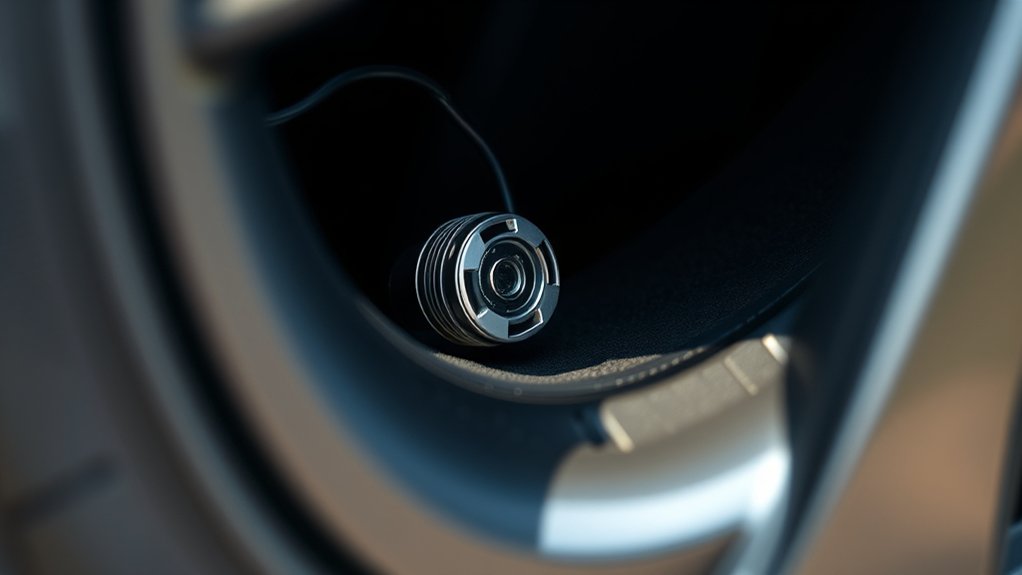
What makes direct tire pressure sensors a critical component in modern vehicle safety systems? These sensors measure the actual pressure inside each tire by using a pressure-sensitive transducer attached to the valve stem or embedded in the tire.
Given the varying tire composition, such as rubber blends and internal reinforcement, sensor calibration is essential to accurately interpret pressure changes under different conditions. The sensor transmits real-time data to the vehicle’s onboard computer, allowing precise monitoring and immediate alerts if pressure deviates from optimal levels.
This direct measurement method ensures accuracy and responsiveness, enhancing safety and fuel efficiency. You rely on direct tire pressure sensors for exact, dynamic feedback that supports preventive maintenance and reduces the risk of tire failure or accidents caused by underinflation.
Indirect Tire Pressure Sensors
Why do some vehicles rely on indirect tire pressure sensors instead of direct ones? Indirect sensors use indirect measurement by analyzing wheel speed data from the ABS system rather than measuring pressure inside the tire. This method deduces tire pressure changes from variations in rotational speed caused by tire wear or underinflation.
Indirect sensors offer benefits such as lower cost due to no physical pressure sensors, no need for battery-powered components, easier integration with existing ABS systems, reduced maintenance requirements, and real-time detection of tire wear affecting pressure.
While less precise than direct sensors, indirect systems effectively monitor tire pressure through tire wear patterns and rotational behavior, providing a cost-efficient alternative for maintaining optimal tire performance and safety.
Sensor Installation Methods
While indirect tire pressure sensors rely on analyzing wheel speed data, direct tire pressure sensors measure the actual air pressure inside each tire, requiring specific installation methods. You’ll encounter two primary types: valve stem-mounted sensors and band-mounted sensors.
Valve stem-mounted sensors replace the valve core, integrating pressure measurement directly at the air inlet. Band-mounted sensors clamp around the rim’s inner surface, ideal for larger tires but necessitating precise calibration. Installation demands careful handling to avoid sensor damage and ensure airtight seals.
Unlike unrelated topic installations, such as unrelated topic electronics, tire sensors require torque-controlled fastening and alignment to maintain accuracy. Understanding these two word discussion ideas—sensor type and mounting technique—helps you optimize sensor performance and reliability in your vehicle’s tire pressure monitoring system.
How Tire Pressure Sensors Send Data to Your Car
How exactly do tire pressure sensors communicate the critical data they collect? These sensors use radio frequency (RF) signals to transmit real-time tire pressure information to your vehicle’s onboard computer. Understanding this process helps debunk maintenance myths, such as the idea that sensor calibration is rarely needed.
Tire pressure sensors send real-time data via RF signals, highlighting the importance of proper calibration.
In reality, accurate data transmission depends on proper calibration and signal integrity.
Here’s how the data flow works:
- Sensors measure internal tire pressure continuously.
- An internal microcontroller processes the measurement.
- Data is encoded into an RF signal.
- The vehicle’s receiver antenna picks up the signal.
- The onboard computer decodes and displays the pressure reading.
This precise communication ensures you receive timely alerts, enabling effective tire maintenance and safety monitoring.
Why Maintaining Correct Tire Pressure Matters for Safety and Efficiency
When you maintain the correct tire pressure, you optimize both safety and fuel efficiency. Proper tire pressure ensures maximum contact between the tire and road, improving traction and handling, which reduces the risk of accidents. It also minimizes uneven tire wear, extending tire lifespan.
Additionally, correct tire pressure decreases rolling resistance, leading to better fuel economy. Your tire pressure sensors play a critical role here; they continuously monitor pressure levels and alert you to deviations. However, sensor calibration is essential for accurate readings. Miscalibrated sensors can provide false data, compromising your ability to maintain optimal pressure.
Regularly checking and calibrating these sensors ensures reliable monitoring, enabling you to respond promptly and maintain tire performance, safety, and efficiency effectively.
What Happens When Tire Pressure Is Too Low or Too High
When your tire pressure is too low, you increase rolling resistance, which leads to higher fuel consumption and uneven tire wear. Conversely, excessive pressure reduces the tire’s contact patch, compromising traction and increasing the risk of blowouts. Understanding these effects helps you respond quickly when sensors alert you to pressure anomalies.
Effects Of Low Pressure
Why does maintaining proper tire pressure matter so much? Low pressure undermines your tire’s structural integrity and performance. When you run tires underinflated, you risk uneven tire wear and compromised handling.
Here’s what low pressure causes:
- Increased tire wear on the shoulders due to excessive flexing
- Higher rolling resistance, reducing fuel efficiency
- Heat buildup inside the tire, accelerating material degradation
- Reduced vehicle stability and longer braking distances
- Greater risk of tire failure from structural stress
Your tire pressure sensor alerts you to these risks, helping prevent damage and maintain safety. Keeping pressure within recommended limits optimizes tire lifespan, fuel economy, and overall vehicle control, ensuring you drive efficiently and securely.
Risks Of High Pressure
How does overinflating your tires impact vehicle performance and safety? When tire pressure exceeds manufacturer recommendations, it creates a highRisk environment. Excessive pressure reduces the tire’s contact patch with the road, diminishing traction and increasing braking distances.
This pressureHazard also causes uneven tread wear, primarily in the center, which shortens tire lifespan and compromises handling. Overinflated tires become more susceptible to damage from road hazards and potholes, raising the likelihood of blowouts.
Additionally, the stiffer tire sidewalls transmit more road shock to the suspension, degrading ride quality and potentially stressing suspension components. By maintaining proper tire pressure, you minimize these highRisk conditions and ensure optimal vehicle performance and safety.
Tire pressure sensors play a crucial role in alerting you before pressureHazard levels become dangerous.
Signs Your Tire Pressure Sensor Is Faulty
Although tire pressure sensors typically operate reliably, certain indicators can reveal when they’ve malfunctioned. Recognizing these signs is essential for maintaining accurate tire pressures and extending the sensor lifespan. You should watch for:
- Persistent warning light despite correct tire pressures
- Inconsistent or fluctuating pressure readings on the dashboard
- Failure of the sensor to communicate with the vehicle’s onboard system
- Sudden loss of tire pressure data from one or more tires
- Sensor alerts immediately after sensor replacement, indicating possible installation issues
These symptoms often point to sensor damage, battery depletion, or signal interference. Addressing faults promptly ensures you maintain peak tire pressures, enhancing safety and tire longevity. Monitoring these signs lets you diagnose sensor problems before they compromise your vehicle’s performance.
How to Install and Maintain Tire Pressure Sensors
Proper installation and regular maintenance of tire pressure sensors are critical for ensuring their accurate performance and longevity. When installing, you must carefully consider the tire design to select compatible sensors that won’t interfere with internal components.
Mount sensors securely on the valve stem, ensuring a proper seal to prevent air leaks. After installation, verify wheel balance, as incorrect balancing can cause sensor damage or inaccurate readings.
Regularly inspect sensors for corrosion, physical damage, and battery life, replacing them as needed. Use diagnostic tools to recalibrate sensors following tire rotations or replacements, maintaining system precision.
What to Do When Your Tire Pressure Sensor Alerts You
When your tire pressure sensor alerts you, promptly evaluating the cause is essential to maintain vehicle safety and performance. Ignoring the warning can lead to tire damage or compromised handling. Begin by verifying the actual tire pressure with a reliable gauge.
If the pressure is off, adjust it to the manufacturer’s recommended level. Next, inspect the tires for punctures or leaks that may cause pressure loss. Consider whether recent tire changes require sensor calibration to ensure accurate readings.
If the sensor continues to alert without pressure issues, the sensor itself may be faulty or need recalibration.
Follow these steps:
- Check tire pressure manually with a gauge
- Inflate or deflate tires to correct pressure
- Inspect tires for damage or leaks
- Perform sensor calibration after tire replacement
- Consult a technician if the alert persists despite correct pressure
Frequently Asked Questions
Can Tire Pressure Sensors Be Recalibrated After Tire Rotation?
You can perform calibration after rotation to ensure accuracy, which helps maintain sensor longevity. Proper recalibration realigns the sensors with the vehicle’s system, preventing false alerts and preserving reliable tire pressure monitoring over time.
Do Tire Pressure Sensors Affect Tire Balancing?
Tire pressure sensors don’t directly affect tire balancing, but improper sensor calibration can cause inaccurate readings. You should guarantee sensor calibration after tire rotation to maintain reliable pressure data, which indirectly supports prime tire performance and safety.
How Long Do Tire Pressure Sensors Typically Last?
Wondering about tire sensor longevity? Typically, they last 5-10 years depending on conditions. You’ll need calibration after rotation to maintain accuracy.
Regular checks assure optimal performance and prevent unexpected failures during your drives.
Are Tire Pressure Sensors Compatible With All Vehicle Models?
You’ll find tire pressure sensor compatibility varies, so addressing compatibility questions is indispensable. Sensor limitations depend on vehicle make, model, and year, meaning not all sensors fit every car without proper calibration or specific hardware requirements.
Can Extreme Weather Conditions Damage Tire Pressure Sensors?
Yes, extreme weather can damage tire pressure sensors by pushing them beyond calibration limits. You’ll notice reduced accuracy or sensor failure if temperatures or humidity levels exceed the device’s specified operational range.
Conclusion
Understanding how tire pressure sensors work empowers you to maintain optimal tire safety and efficiency. While some believe these sensors can predict tire failure before pressure drops, their true function is to monitor real-time pressure changes accurately.
By regularly checking sensor alerts and maintaining correct tire pressure, you ensure reliable performance and avoid premature tire wear. Trust the data these sensors provide—they are precise tools designed to keep you safe on the road.
In conclusion, understanding how tire pressure sensors work is essential for maximizing tire longevity and driving safety.