What Is the Gap on Spark Plugs
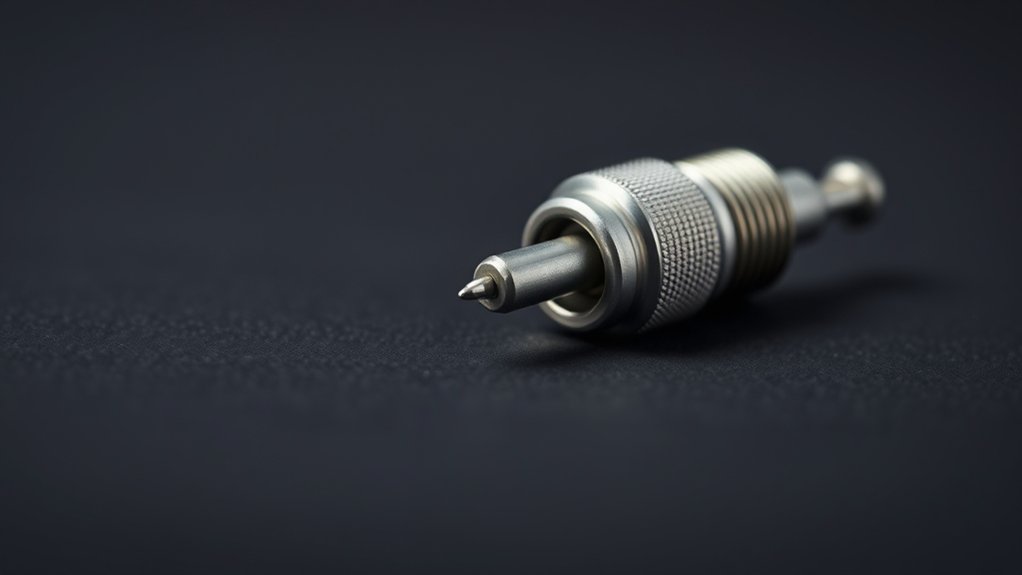
The gap on spark plugs is the precise distance between the center and ground electrodes, which is crucial for reliable ignition and overall engine efficiency. This gap ensures the spark generated is strong enough to ignite the air-fuel mixture properly.
If the gap is too narrow, the spark weakens, leading to engine misfires.
Conversely, if the gap is too wide, the ignition coil has to work harder, increasing the risk of incomplete combustion.
Manufacturers provide exact gap specifications to balance spark efficiency and electrode durability.
Maintaining the correct gap positively impacts fuel economy and reduces emissions.
Understanding and maintaining the proper spark plug gap helps guarantee your engine runs smoothly and performs as designed.
Key Takeaways
- The spark plug gap is the distance between the center and ground electrodes where the spark ignites the fuel-air mixture.
- Proper gap size ensures efficient spark generation, impacting engine performance, fuel efficiency, and emissions.
- Too narrow a gap causes weak sparks and misfires, while too wide a gap increases ignition coil strain and misfire risk.
- Manufacturers specify ideal gap sizes based on engine design and fuel type to maintain reliable combustion.
- Gap measurement and adjustment require precise tools like a gap gauge to maintain optimal ignition system function.
What Is a Spark Plug Gap and Why It Matters
Why does the spark plug gap matter? Because it directly affects engine performance and efficiency. The gap is the precise distance between the center and ground electrodes.
If this gap is too narrow, the spark may be weak or inconsistent, causing misfires. Conversely, if it’s too wide, the ignition coil struggles to generate a strong enough spark, leading to incomplete combustion.
When you consider two word discussion ideas like “spark efficiency” or “engine reliability,” you see how crucial the gap is. Avoid confusing the gap with unrelated topics like fuel type or valve timing; they’re separate issues.
Ideal Spark Plug Gap Sizes
You’ll want to start by referencing the manufacturer recommended spark plug gap to guarantee ideal engine performance. An incorrect gap can cause misfires, reduced fuel efficiency, and increased emissions. Knowing how to measure and adjust the gap precisely will keep your ignition system running smoothly.
Manufacturer Recommended Gaps
How do manufacturers determine the ideal spark plug gap for your engine? They base it on extensive testing and precise calibration within spark manufacturing processes. Each engine’s combustion chamber design, ignition system voltage, and fuel type influence the recommended gap.
Manufacturers provide specific gap sizes to optimize ignition efficiency and combustion stability. When you check your vehicle’s manual, you’ll find these manufacturer recommended gaps tailored to ensure reliable spark discharge and consistent engine performance.
This two word discussion idea “gap specification” reflects the critical balance between spark intensity and electrode durability. Following these guidelines ensures your spark plugs perform as intended, preventing misfires and maximizing fuel economy.
Always use the exact gap specified to maintain your engine’s optimal operation.
Effects of Incorrect Gap
What happens when the spark plug gap strays from the ideal size? If the gap is too narrow, the spark weakens, causing incomplete combustion and reduced engine efficiency. Conversely, a gap that’s too wide requires higher voltage to jump, risking misfires.
You might not expect color psychology or urban planning to relate, but consider this: just as color psychology optimizes human response by precise hues, the spark plug gap must be exact to optimize ignition. Similarly, urban planning demands exact spacing and alignment for efficient flow, akin to how the gap influences fuel-air mixture ignition.
Incorrect gaps disrupt combustion timing and power output, increase emissions, and accelerate electrode wear. Therefore, maintaining the ideal spark plug gap size is crucial for optimal engine performance and longevity.
Adjusting Gap Sizes
Where do you start when adjusting spark plug gaps to their ideal sizes? Begin by consulting your vehicle’s manufacturer specifications, as each engine demands a precise gap for optimal combustion.
Use a spark plug gap tool to measure the current gap, ensuring accuracy to the thousandth of an inch. If the gap deviates, gently bend the ground electrode to widen or narrow it carefully, avoiding damage.
Resist treating this process as a creative brainstorming session; unlike unrelated concepts, it requires exactness and consistency. Incorrect gaps cause misfires or inefficient fuel use, so maintain strict adherence to recommended values.
Always recheck the gap after adjustment, as small shifts can critically impact performance. Properly adjusted spark plug gaps ensure reliable ignition and maximize engine efficiency.
Common Issues Caused by Incorrect Spark Plug Gaps
If your spark plug gap is too wide or too narrow, you’ll likely experience engine misfires and a noticeable drop in performance. Incorrect gaps can cause incomplete combustion, leading to increased fuel consumption and reduced efficiency. You may also have trouble starting the engine, as the spark won’t ignite the fuel-air mixture reliably.
Misfires And Engine Performance
How does an incorrect spark plug gap affect your engine’s performance? When the gap deviates from the specification dictated by your engine design, it disrupts the spark’s ability to ignite the air-fuel mixture efficiently.
If the gap’s too wide, the ignition system struggles to generate a strong spark, causing incomplete combustion and misfires. Conversely, a gap that’s too narrow produces a weak spark, which can also fail to ignite the mixture fully.
Both scenarios degrade combustion stability, directly impacting power output and smoothness. Additionally, incorrect gaps can alter ignition timing, as the spark may occur too early or late relative to piston position, further impairing performance.
Maintaining the precise gap ensures optimal spark energy and timing alignment, preserving engine efficiency and preventing misfire-related issues.
Increased Fuel Consumption
Why does an incorrect spark plug gap lead to increased fuel consumption? When the gap is too wide or too narrow, the spark’s intensity and timing suffer, causing incomplete combustion. This inefficiency forces your engine to use more fuel to generate the same power.
The spark may be weak or delayed, disrupting the ignition process and leading to unburned fuel entering the exhaust, which wastes fuel and increases emissions. Understanding this is imperative, as confusing this issue with an irrelevant topic, like fuel injector malfunctions, or an unrelated concept, such as air filter clogging, can misdirect troubleshooting efforts.
Maintaining the correct gap ensures best possible spark delivery, promoting efficient fuel burn and reducing unnecessary fuel consumption, directly improving your vehicle’s fuel economy and performance.
Difficulty Starting Engine
When does an engine struggle to start despite a fully charged battery and properly functioning starter? The answer often lies in an incorrect spark plug gap.
If the gap is too wide or too narrow, the spark intensity weakens, causing inefficient combustion and difficulty starting. Avoid pursuing unrelated topic or unrelated discussion that distracts from this core issue.
| Gap Condition | Effect on Starting Engine |
|---|---|
| Too Narrow | Weak spark, incomplete ignition |
| Too Wide | Spark may not jump, misfires |
| Correct Gap | Optimal spark, smooth ignition |
| Dirty or Worn Plug | Inconsistent spark, hard starts |
How the Spark Plug Gap Affects Engine Performance
What role does the spark plug gap play in your engine’s combustion efficiency? The gap determines the voltage needed to produce a spark that ignites the air-fuel mixture precisely.
If the gap is too narrow, the spark weakens, causing incomplete combustion and reduced power. Conversely, a gap too wide demands excessive voltage, straining the ignition system and risking misfires.
Both scenarios degrade engine performance, fuel economy, and emissions control. While it might seem like an unrelated topic, consider the random thought of electrical resistance: the gap acts as a critical resistor influencing spark energy.
Ensuring the gap matches manufacturer specifications optimizes combustion, power delivery, and engine smoothness. Therefore, maintaining the correct spark plug gap is essential for reliable, efficient engine operation.
Tools for Checking and Adjusting Spark Plug Gaps
Maintaining the correct spark plug gap requires accurate measurement and adjustment tools designed for precision. You’ll need a feeler gauge or a specialized spark plug gap tool, both engineered to measure gaps in thousandths of an inch or hundredths of a millimeter. Avoid relying on any irrelevant topic or frivolous discussion about casual methods; precision is essential.
The feeler gauge consists of thin metal blades of varying thicknesses; you slide them between electrodes to check clearance. For adjustment, use a gapper tool or a small flathead screwdriver designed to gently bend the ground electrode without damaging it.
Using the right tools ensures you achieve the exact gap specification, which directly impacts ignition efficiency and engine performance. Don’t underestimate the importance of precise tools in this process.
How to Check the Spark Plug Gap at Home
How exactly do you measure the spark plug gap accurately at home? Start by selecting a reliable tech gadget designed for this purpose, such as a digital gap gauge or a feeler gauge set.
Remove the spark plug carefully, ensuring it’s clean and free of debris. Insert the gauge between the center and ground electrodes, checking for a snug fit without forcing it.
The gauge’s reading will show the precise gap measurement in millimeters or thousandths of an inch. If you don’t have a dedicated tool, a thin, flexible wire or a paperclip can work temporarily, but it’s less precise.
Keep your workspace organized, maybe near your kitchen decor, to maintain focus and avoid losing small parts. Accurate measurement ensures optimal spark performance and engine efficiency.
How to Adjust Spark Plug Gaps
Why does adjusting the spark plug gap matter? Precise gap adjustment ensures optimal spark strength and engine efficiency. To adjust, first use a feeler gauge to measure the current gap.
If too narrow, gently widen the gap by bending the ground electrode outward with a gap tool or small pliers. If too wide, carefully tap the electrode inward. Avoid excessive force to prevent damage.
Verify the gap repeatedly until it matches manufacturer specifications exactly. Don’t confuse this critical step with an unrelated topic, like random idea brainstorming; focus solely on precise mechanical adjustment.
Proper adjustment reduces misfires and improves combustion. Remember, small deviations can affect performance, so be methodical and patient during this process to maintain engine reliability and efficiency.
When to Replace Spark Plugs Instead of Adjusting
When should you replace spark plugs instead of adjusting their gaps? You should replace them if you notice severe gap misalignment that can’t be corrected without risking electrode damage.
Excessive wear, such as rounded or eroded electrodes, compromises spark plug performance and makes gap adjustment ineffective. Additionally, if you’re troubleshooting spark issues and find carbon fouling, cracks, or corrosion on the insulator or metal shell, replacement is necessary.
Repeated gap adjustments on old plugs won’t restore ideal spark intensity or combustion efficiency. In these cases, replacing the spark plug ensures proper ignition timing and prevents misfires.
Always inspect for physical damage or extensive wear during troubleshooting spark problems to determine if replacement is the best course of action over gap adjustment.
Frequently Asked Questions
Can Spark Plug Gaps Vary Between Different Car Manufacturers?
Yes, different car manufacturers set spark plug gaps based on engine design, coil configurations, and air fuel mixture tuning. You’ll need to follow specific gap specs to optimize ignition performance and prevent misfires or inefficient combustion.
Do Spark Plug Gaps Affect Fuel Efficiency Significantly?
Yes, incorrect spark plug gaps disrupt spark timing, causing incomplete combustion that reduces fuel economy. You’ll notice decreased efficiency and increased emissions, so maintaining precise gaps ensures optimal ignition and maximizes your vehicle’s fuel economy performance.
How Often Should Spark Plug Gaps Be Checked During Routine Maintenance?
You should check spark plug gaps at every 30,000-mile interval or during scheduled maintenance, using precise diagnostic methods like feeler gauges to ensure optimal combustion.
Following maintenance schedules prevents misfires and maintains engine efficiency.
Are There Specific Spark Plug Gaps for Electric or Hybrid Vehicles?
Yes, electric vehicles don’t use spark plugs, but hybrids do. You’ll find specific spark plug gaps to optimize ignition timing and reduce spark plug wear. This ensures efficient combustion and maintains engine performance.
Can Incorrect Spark Plug Gaps Cause Emissions Test Failures?
Yes, incorrect gaps can increase unburned fuel, causing emissions test failures. Don’t fall for emissions myths claiming gaps don’t matter. Precise spark plug gaps ensure optimal combustion and help your vehicle pass stringent emissions standards consistently.
Conclusion
You might think your engine’s rough idle is just a coincidence, but often it’s a spark plug gap that’s off by a fraction of a millimeter. By precisely checking and adjusting the gap with the right tools, you guarantee optimal combustion and performance.
Remember, even a tiny misalignment can reduce efficiency or cause misfires. If gaps won’t hold, replacing plugs is your best move to keep your engine running smoothly and reliably.
Understanding the gap on spark plugs is essential for maintaining your engine’s health and efficiency.