How to Tighten Oil Filter
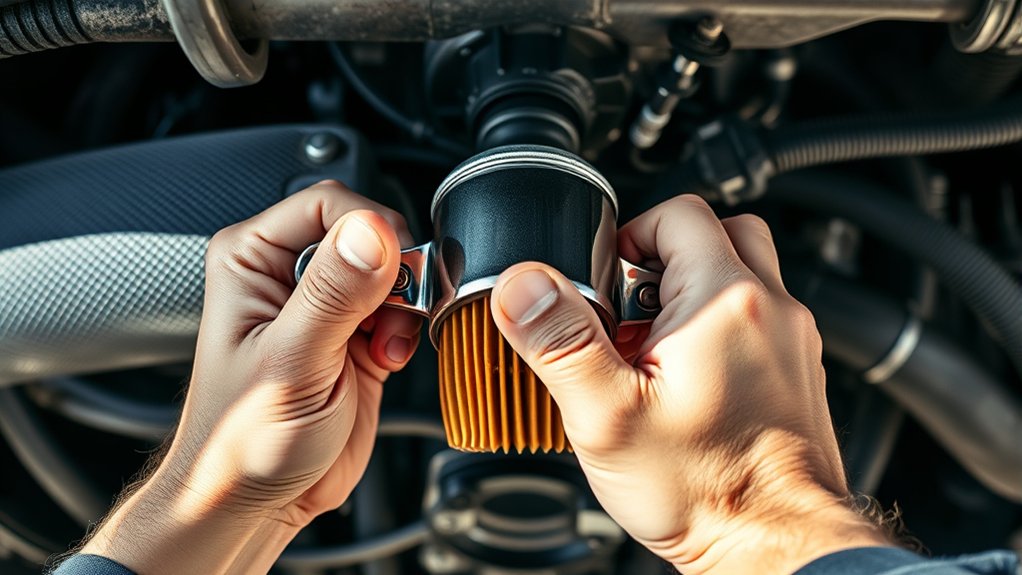
To tighten your oil filter correctly, first lubricate the new gasket with a thin layer of clean engine oil. This step is essential to ensure a proper seal and prevent leaks. Screw the filter on by hand until the gasket contacts the mounting surface.
Then, turn the filter an additional 3/4 to 1 full rotation. For a more precise fit, use a torque wrench to finish tightening to your vehicle’s specified torque, typically between 15 and 30 Nm. This ensures a secure seal without over-tightening.
Using the proper technique prevents leaks and damage to your engine. Explore further for detailed tips and best practices to maintain your vehicle’s performance and longevity.
Key Takeaways
- Apply a thin, even layer of clean engine oil to the new filter gasket before installation to ensure a proper seal and easier removal.
- Screw the oil filter on by hand until the gasket contacts the mounting surface evenly, then tighten an additional 3/4 to 1 full turn by hand.
- Use a torque wrench to finish tightening, applying the manufacturer’s recommended torque typically between 15–30 Nm, avoiding over-tightening.
- After tightening, start the engine and inspect for leaks around the filter to confirm a secure fit and proper sealing.
- Always follow the vehicle’s service manual torque specifications and use steady, controlled pressure to prevent damage or leaks.
Why Tightening Your Oil Filter Correctly Prevents Leaks
Ensuring you tighten your oil filter correctly creates a secure seal that prevents oil from leaking. When you apply the right torque, you compress the gasket adequately, eliminating gaps where oil could escape.
Improper tightening risks either under-tightening, which allows leaks, or over-tightening, which can damage the gasket or filter housing. Be mindful that oil viscosity affects sealing performance; thicker oil requires a precise seal to avoid seepage under pressure.
Additionally, different filter branding may specify unique tightening guidelines due to variations in gasket materials and filter design. Always follow manufacturer torque specifications to maintain optimal sealing integrity.
Correct tightening maintains system pressure, avoids contamination, and prolongs engine life, making it essential for reliable oil filtration and preventing costly damage from leaks.
Preparing Your Tools and Workspace for Oil Filter Replacement
Before replacing your oil filter, gather all essential tools, including a wrench, drain pan, and gloves. Set up a clean, well-lit workspace with stable footing to prevent accidents. Prioritize safety by wearing protective gear and ensuring proper ventilation.
Essential Tools Checklist
What tools do you need to tighten an oil filter properly? Start with an oil filter wrench designed for your specific oil filter type, whether strap, cap, or plier style, ensuring a secure grip without damage.
A torque wrench is essential to apply the precise torque guidelines recommended by your vehicle’s manufacturer, preventing over- or under-tightening. You’ll also need a clean rag for wiping the oil filter mounting surface and a small container to catch residual oil.
Familiarize yourself with oil filter terminology, such as gasket, canister, and bypass valve, to identify components accurately. Having these tools ready and understanding torque specifications guarantees a proper seal and reliable oil filter installation, critical for engine performance and leak prevention.
Workspace Safety Tips
A well-organized and clean workspace reduces risks and streamlines oil filter replacement. Before starting, clear the area of clutter and ensure adequate lighting to prevent accidents.
Arrange your tools within easy reach to avoid unnecessary movement during oil changes. Use protective gloves and safety glasses to guard against hot oil and debris.
Place a drip pan under the vehicle to catch spills, minimizing slip hazards and simplifying filter disposal. After removal, immediately seal the used oil filter in a leak-proof container to prevent contamination and comply with environmental regulations.
Keep absorbent materials handy for quick cleanup of any oil drips. By preparing your workspace methodically, you’ll maintain safety, improve efficiency, and ensure proper handling of waste during oil filter tightening and replacement.
Safely Removing the Old Oil Filter
Before removing the old oil filter, gather the proper removal tools like a strap wrench or oil filter pliers to avoid damage. Apply steady, controlled force to loosen the filter, turning it counterclockwise. Make sure to position a drain pan underneath to catch any residual oil during removal.
Preparing Removal Tools
How do you guarantee a smooth removal of the old oil filter without causing damage or spills? Start by preparing the right tools, considering pre installation cautions and brand specific recommendations. Using appropriate tools minimizes risk and ensures efficiency.
| Tool | Purpose | Notes |
|---|---|---|
| Oil Filter Wrench | Grip and turn filter | Match wrench size to filter |
| Drain Pan | Collect draining oil | Use a large-capacity pan |
| Gloves | Protect hands | Use oil-resistant gloves |
| Rags | Clean spills | Keep several on hand |
| Safety Glasses | Eye protection | Prevent oil splashes |
Ensure tools are in good condition. Consult your vehicle’s manual for brand specific recommendations before starting. This preparation aligns with pre installation cautions and sets the stage for safe removal.
Loosening Techniques
Loosening the old oil filter requires controlled force and the right technique to prevent damage or spills. Begin by applying steady torque in the counterclockwise direction, considering the frictional dynamics between the filter’s rubber gasket and the engine surface.
Excessive force can deform the gasket, causing leaks upon reinstallation. Understand the thread pitch of your filter; a finer pitch demands more precise torque application to avoid cross-threading.
Use an appropriate oil filter wrench to maximize grip while minimizing slippage. If the filter is stuck due to hardened oil residues, apply penetrating oil and allow it to seep into the threads for several minutes.
Always drain residual oil carefully to prevent spills. By respecting frictional dynamics and thread pitch, you assure safe and efficient removal, preparing the system for proper tightening of the new filter.
Cleaning the Mounting Surface Before Installing a New Filter
Why is cleaning the mounting surface critical before installing a new oil filter? Proper cleaning ensures a tight seal, preventing leaks and maintaining oil pressure.
Start by inspecting the mounting surface for old gasket material, dirt, or oil residue. Use a clean rag and a solvent suitable for your engine to perform the cleaning surface task. Avoid abrasive tools that might damage the surface.
Thorough mounting prep includes confirming the surface is completely dry and smooth, allowing the new filter to seat evenly. Neglecting this step can cause improper filter alignment, leading to oil leaks or filter failure.
Take your time with cleaning the mounting surface to guarantee a secure, leak-free oil filter installation every time.
Applying Oil to the New Oil Filter Gasket
Before installing the new oil filter, you need to lubricate the gasket to ensure a proper seal and prevent damage during tightening. Use clean engine oil for this step, as other lubricants can cause leaks or gasket failure. Apply a thin, even layer of oil to the gasket surface, avoiding excess that could drip onto the engine.
Importance Of Gasket Lubrication
How exactly does applying oil to the new oil filter gasket improve installation? Gasket lubrication ensures the rubber gasket seats evenly against the engine surface, preventing binding or twisting during tightening.
When you apply a thin layer of clean engine oil to the gasket, you reduce friction, allowing the filter to turn smoothly. This helps you achieve the correct torque specification without over-tightening or under-tightening, both of which can cause leaks or damage.
Without proper gasket lubrication, the gasket may pinch or deform, compromising the seal integrity. Always use fresh engine oil for lubrication, not grease or other substances, to maintain compatibility and durability.
Proper gasket lubrication is a critical step to ensure a secure, leak-free oil filter installation that meets manufacturer torque requirements.
Choosing The Right Oil
Selecting the appropriate oil for lubricating the new oil filter gasket is essential to ensure a proper seal and prevent leaks. The right oil supports optimal oil filtration and contributes to effective engine maintenance.
When choosing oil for the gasket, consider these factors:
- Use fresh engine oil compatible with your vehicle’s specifications to maintain seal integrity.
- Avoid contaminated or used oil, as it can compromise gasket elasticity and cause leaks.
- Select oil with appropriate viscosity to ensure smooth application and effective lubrication.
Applying the correct oil ensures the gasket seats properly, preventing damage during tightening and promoting a leak-free seal. This step is critical for maintaining consistent oil filtration performance and overall engine health during routine maintenance.
Proper Application Techniques
Why is applying oil to the new oil filter gasket crucial? Proper application ensures a secure seal, preventing leaks and facilitating easier removal during your next oil change.
Before installing the filter, use your finger to evenly coat the gasket with a thin layer of clean engine oil. This two word discussion idea, “gasket lubrication,” is crucial for reducing friction between the gasket and the engine surface.
Avoid excess oil, which can cause slippage or attract dirt. Proper application also helps the gasket conform to the mounting surface, ensuring optimal compression. By following these steps, you’ll maintain the integrity of the oil filter seal and protect your engine from potential damage caused by leaks or improper installation.
How to Properly Hand-Tighten Your Oil Filter
When tightening your oil filter by hand, what level of force should you apply to assure a secure fit without causing damage? Avoid overtightening despite misleading marketing claims pushing excessive torque. Focus on brand compatibility to ensure the filter’s seal matches your engine’s specifications.
To hand-tighten properly:
To hand-tighten properly, screw until gasket contacts surface, then turn 3/4 to 1 full rotation by hand.
- Screw the filter on until the gasket contacts the mounting surface evenly.
- Turn the filter an additional 3/4 to 1 full rotation by hand for a snug seal.
- Stop when you feel increased resistance; excessive force risks gasket deformation or thread damage.
This approach guarantees a secure fit while preventing leaks or damage. Relying on feel rather than force protects your engine and respects manufacturer guidelines, avoiding issues caused by improper tightening.
Using a Wrench to Finish Tightening Your Oil Filter
How much additional torque should you apply with a wrench after hand-tightening your oil filter? Typically, you only need to turn the wrench an additional 1/4 to 1/2 turn beyond hand-tight. This ensures a secure seal without over-tightening, which can damage the filter or gasket.
When using the wrench, apply steady, controlled pressure to avoid slipping or stripping the filter’s surface. Avoid engaging in unrelated topic or random discussion during this step, as focus is critical to prevent errors.
What’s the Right Torque to Tighten Your Oil Filter?
Exactly how snug should you tighten your oil filter to ensure a proper seal without risking damage? Proper torque calibration is crucial in oil filtration systems, as overtightening can damage the filter’s gasket and housing, while undertightening risks leaks. Manufacturers typically specify torque values for your oil filter, usually between 15 to 30 Nm (Newton-meters).
Proper oil filter torque is vital—too tight damages seals, too loose causes leaks. Typically 15–30 Nm recommended.
To get it right, follow these guidelines:
- Use a torque wrench for precise calibration, avoiding guesswork.
- Refer to your vehicle’s service manual for the exact torque specification.
- After hand-tightening, apply an additional 3/4 to 1 full turn or tighten to the recommended torque.
Applying correct torque ensures optimal oil filtration performance and prevents leaks or damage during engine operation.
Common Oil Filter Tightening Mistakes to Avoid
Why do so many oil filter installations fail? Often, you overtighten the filter, stripping the gasket or making future removal difficult. Conversely, under-tightening causes leaks and potential engine damage.
Another mistake is neglecting to lubricate the gasket with clean oil before installation, which compromises the seal. Also, reusing old filters or gaskets can lead to improper sealing and contamination.
When removing your old oil filter, handle oil filter disposal responsibly; do not discard filters with residual oil in general waste. Instead, follow local regulations for oil filter recycling to prevent environmental hazards.
Avoid these common errors to ensure a secure fit, maintain engine integrity, and promote safe, eco-friendly oil filter disposal and recycling practices.
How to Check for Oil Leaks After Installation
After tightening the oil filter correctly and ensuring the gasket is properly lubricated, the next step is to verify that no oil is leaking from the installation site. Effective leak detection requires a systematic approach.
First, perform torque verification to confirm the filter is tightened to the manufacturer’s specified torque, preventing under- or over-tightening. Then, start the engine and let it run at idle to pressurize the oil system. Carefully inspect the filter area for any signs of oil seepage or drips. Use these steps for thorough leak detection:
Verify proper torque, run the engine at idle, and carefully inspect for any oil leaks or drips.
- Wipe the filter and surrounding area dry before inspection.
- Check for fresh oil accumulation around the gasket and base.
- Monitor for leaks after a short drive to ensure the seal holds under operating conditions.
This process ensures a secure, leak-free oil filter installation.
How Often to Replace and Tighten Your Oil Filter
Regularly replacing and properly tightening your oil filter is essential to maintaining prime engine performance and preventing leaks. You should replace the oil filter every time you change your engine oil, typically every 3,000 to 7,500 miles, depending on manufacturer recommendations and driving conditions.
Tighten the filter according to the specified torque or hand-tighten it about 3/4 to 1 full turn after the gasket contacts the mounting surface. Avoid overtightening, which can damage the filter or cause leaks.
Discussing unrelated concepts like irrelevant topic or unrelated concept in this context is unnecessary; focus solely on following your vehicle’s service manual. Adhering to this schedule ensures effective filtration, prolongs engine life, and prevents oil loss.
Neglecting timely replacement or proper tightening risks engine damage and operational inefficiency.
Frequently Asked Questions
Can I Reuse an Old Oil Filter Gasket?
You shouldn’t reuse gasket material from an old oil filter because it risks leaks and engine damage. Proper oil filter disposal includes removing and replacing the gasket to ensure a secure, leak-free seal every time you change filters.
What Type of Oil Filter Wrench Is Best?
Choosing oil filter wrenches is like picking a key that fits perfectly; a cap-style wrench offers precise grip and torque control.
Always follow torque recommendations to avoid overtightening or damage during removal or installation.
How Do Different Oil Filters Affect Engine Performance?
Different filtration media in oil filters directly impact engine efficiency by controlling contaminants. You’ll experience improved lubrication and reduced wear with high-quality filters. Inferior ones may compromise engine performance and longevity due to inadequate filtration.
Can Overtightening Damage the Oil Filter Housing?
You might think over tighten risks are minor, but yes, overtightening can cause filter housing damage and gasket failure. Use the correct oil filter wrench type, avoid reusing gaskets, and drain oil properly to protect engine performance.
Is It Necessary to Drain Oil Before Removing the Filter?
You don’t always need to drain before removal, but it’s best practice to partially drain oil to prevent spills.
Also, check the filter gasket use carefully to avoid leaks or damage when replacing the oil filter.
Conclusion
Tightening your oil filter correctly is the final lock in the chain that keeps your engine running smoothly. Think of it as securing an essential puzzle piece—too loose invites leaks, too tight risks damage. With the right tools and torque, you guarantee a perfect seal every time.
Stay vigilant for leaks and replace filters regularly to keep your engine’s heartbeat steady and strong. Precision here protects your ride’s long-term health. Remember, proper tightening of the oil filter is key to maintaining your engine’s performance and longevity.