How to Tell if Brake Pads Are Worn
You can tell your brake pads are worn by checking their thickness through the wheel spokes or after removing the wheel. Brake pad thickness less than 3mm means you need replacement.
Look for uneven wear, noise like high-pitched squeals, vibrations, or grinding sounds when braking. Use a flashlight for a clear view, and measure thickness safely with proper tools on a flat surface.
If you want to understand more about inspection and maintenance, there’s plenty to explore.
Key Takeaways
- Visually inspect brake pad thickness through wheel spokes; replace if thickness is less than 3mm or about 1/4 inch.
- Listen for high-pitched squealing sounds during braking, indicating pads are near the end of their service life.
- Check for uneven wear, noise, or vibration while braking as signs of worn or damaged brake pads.
- Use a caliper or brake pad gauge for accurate thickness measurement every 10,000 to 15,000 miles or before long trips.
- Consult a mechanic if unsure about inspection accuracy or if the vehicle has ABS or advanced braking systems.
How To Tell If Your Brake Pads Are Worn
How can you quickly determine if your brake pads are worn? First, locate the brake pads through the wheel spokes or remove the wheel for better access. Examine the thickness of the friction material; if it’s below 3mm, replacement is necessary.
Using how to photography techniques, snap clear close-up images to compare wear over time or consult with a technician. Understanding brake pad history helps—you should track mileage and replacement dates to anticipate wear.
Visually inspecting the pads regularly allows you to catch deterioration early. Also, check for uneven wear, which may indicate caliper or rotor issues. By combining visual checks, photographic documentation, and knowledge of your brake pad history, you can confidently assess when it’s time to replace your brake pads, ensuring safe braking performance.
What Sounds Mean Your Brake Pads Need Replacing
Certain sounds from your brakes signal that your brake pads need replacing. The most common sound indicator is a high-pitched squeal when you apply the brakes. This noise, caused by a built-in wear indicator, alerts you to thinning pads before metal contacts the rotor.
If you hear persistent squeal symptoms, don’t ignore them; they mean your brake pads are near the end of their service life. Additionally, a grinding or growling noise suggests the pads have worn away completely, causing metal-to-metal contact that damages rotors.
Another sound indicator is a clicking or clunking noise, which may point to loose brake components but often coincides with worn pads. Recognizing these auditory signs early helps you avoid costly repairs and ensures safe braking performance.
How To Visually Inspect Brake Pads At Home
Auditory cues can alert you to brake pad wear, but a direct visual inspection provides confirmation and more detailed insight. To start, position your vehicle on a flat surface and engage the parking brake.
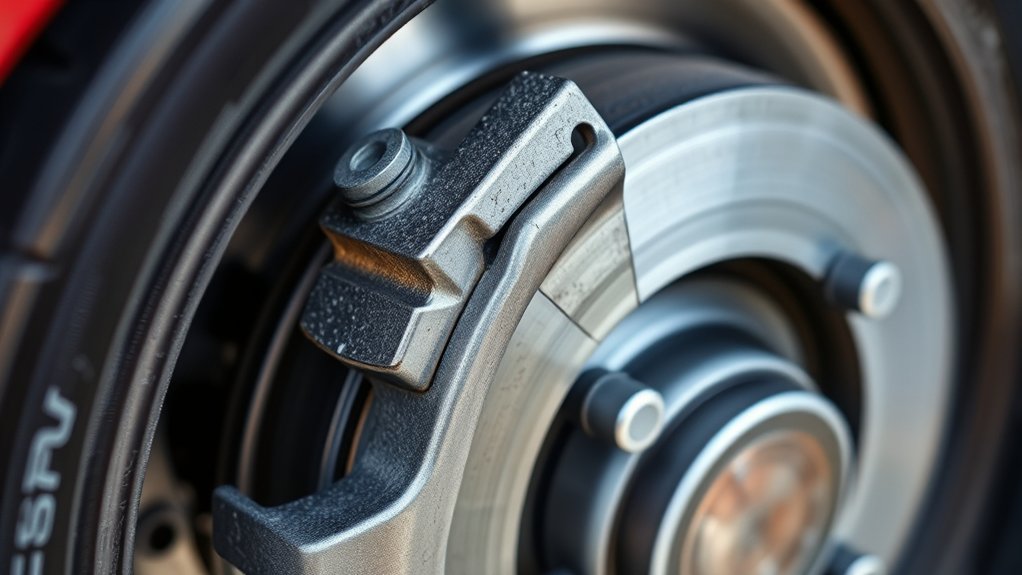
Make eye contact with the brake caliper through the wheel spokes. You’re looking for the brake pad material between the metal backing plate and the rotor. If the pad appears less than a quarter-inch thick, it’s time to contemplate replacement.
This quick assessment can save you from brake failure during a road trip. Keep in mind, dirt and grime may obscure your view, so a flashlight helps.
Regular visual checks complement auditory signals, ensuring your brake system stays reliable without waiting for warning sounds that might compromise safety.
When And How To Check Brake Pad Thickness Safely
You should check your brake pad thickness during regular maintenance or if you notice braking issues. Use a caliper or a brake pad gauge to measure thickness accurately. Always ensure the vehicle is securely lifted and the parking brake is engaged before inspecting.
Ideal Times To Inspect
When should you inspect your brake pads to ensure safety and performance? Ideally, check them every 10,000 to 15,000 miles or during routine maintenance like oil changes. Pay special attention if you notice unusual noises, decreased braking efficiency, or vibration. These are signs warranting immediate inspection.
Prioritize inspection before long trips or after heavy towing to prevent unexpected failures. Use two word discussion ideas such as “service intervals” and “wear indicators” to guide your brake pad replacement decisions.
Always inspect both front and rear pads, as uneven wear can affect vehicle handling. By establishing regular inspection habits, you’ll catch wear early, ensuring optimal braking performance and safety without waiting for symptoms to appear.
Tools For Measuring Thickness
Accurate measurement of brake pad thickness guarantees timely replacement and safe vehicle operation. To check thickness, you’ll need specific tools measurement devices like a caliper or a dedicated thickness gauge. These tools provide precise readings, helping you decide if pads require replacement.
Use the thickness gauge by placing it against the pad surface and noting the measurement. Regular checks prevent brake failure and maintain performance.
| Tool Type | Measurement Range (mm) | Usage Tip |
|---|---|---|
| Vernier Caliper | 0-150 | Measure pad thickness directly |
| Thickness Gauge | 0-10 | Designed for brake pad checks |
| Ruler (Not ideal) | N/A | Use only for rough estimation |
Choose the right tool for accurate, consistent pad thickness measurement.
Safety Precautions During Checks
How often should you check brake pad thickness to guarantee safety? Ideally, inspect them every 10,000 miles or during routine maintenance.
Always ensure the vehicle is on a flat surface, engage the parking brake, and use wheel chocks to prevent movement. When removing wheels, wear gloves and eye protection to avoid injury.
Be cautious not to damage brake pad materials during inspection, as rough handling can accelerate irreversible wear. Use appropriate tools like a micrometer or gauge for accurate measurement without compromising the pads.
Avoid pressing the brake pedal repeatedly before checking, as this can cause pads to heat up, affecting thickness readings. Following these precautions ensures you assess brake pads safely and accurately, preventing premature failure and maintaining optimal braking performance.
How Brake Pad Performance Changes As They Wear
Why does your braking feel different over time? As brake pads wear down, their ability to increase adhesion diminishes, leading to reduced stopping power. New pads have a thicker friction material that effectively grips the rotor, ensuring optimal performance and noise reduction.
Over time, the friction layer thins, causing less consistent contact with the rotor and increasing the likelihood of squealing or grinding noises. Additionally, worn pads generate more heat due to decreased material, which can reduce braking efficiency.
You’ll notice longer stopping distances and a less responsive pedal feel. Monitoring these changes helps you maintain safe braking performance. Regularly checking pad thickness and listening for abnormal noise can alert you before performance significantly degrades, ensuring your brakes continue to operate effectively and quietly.
What Happens If You Ignore Worn Brake Pads
If you ignore worn brake pads, you risk compromising your vehicle’s braking system and overall safety. Continued use of worn pads reduces braking efficiency, increases stopping distances, and can lead to brake rotor damage. This damage often results in costly repairs and potential brake failure.
Ignoring worn brake pads endangers your safety, reduces braking efficiency, and can cause expensive rotor damage.
It’s critical to avoid irrelevant discussion and off topic dialogue when assessing brake health; focus solely on pad thickness and braking response. Ignoring wear indicators or unusual noises is risky.
Worn pads can cause metal-to-metal contact, generating heat and vibrations that degrade system components. Promptly addressing pad wear preserves brake performance and prevents cascading damage.
Staying vigilant about brake conditions ensures your safety and vehicle reliability. Don’t let off topic dialogue delay necessary maintenance.
How Your Driving Habits Affect Brake Pad Lifespan
Where you drive and how you brake substantially influence your brake pads’ lifespan. Your driving cadence and the road conditions play critical roles in wear rate. Abrupt stops or riding the brakes accelerate pad degradation.
Consider these factors to optimize brake pad longevity:
- Maintain a smooth driving cadence, avoid sudden braking to reduce heat and friction.
- Adapt to road conditions, gravel or hilly terrain demand more frequent braking.
- Use engine braking on declines to lessen pad usage.
- Avoid excessive speed in urban areas to minimize stop-and-go braking.
When To Replace Brake Pads Yourself Or See A Mechanic
How do you decide whether to replace brake pads yourself or consult a mechanic? If you have basic mechanical skills, proper tools, and experience with vehicle maintenance, replacing brake pads during dry weather and after highway cruising is manageable.
Dry conditions reduce complications like rust or stuck components, making the job smoother. However, if you notice uneven pad wear, noise, or vibration, or if you’re uncertain about inspection accuracy, it’s safer to see a mechanic.
Professional service ensures precise measurements and proper installation, especially when ABS or advanced braking systems are involved. Also, if your driving frequently involves stop-and-go traffic or wet conditions, which accelerate wear, expert evaluation is advisable.
Ultimately, choose DIY only if confident in your skills and conditions, otherwise rely on a mechanic for safety.
Frequently Asked Questions
What Types of Brake Pads Are Best for Different Driving Conditions?
You’ll want ceramic pads for quiet, everyday driving conditions, semi-metallic for high performance and heat resistance, and organic pads for light, low-speed use.
Choose based on brake material performance suited to your driving conditions.
How Do Ceramic and Metallic Brake Pads Compare in Performance?
Think of ceramic vs metallic pads as a smooth jazz solo versus a heavy metal riff. You’ll get quieter, less dust with ceramic, but metallic pads deliver superior heat handling and stopping power under extreme conditions.
Can Worn Brake Pads Damage Other Brake System Components?
Yes, worn pads can cause brake damage by exposing the metal backing plate, which grinds against the rotor. This leads to rotor scoring, reduced braking efficiency, and costly repairs. You should replace worn pads promptly.
What Is the Average Cost of Replacing Brake Pads?
You’ll typically encounter an average cost of $150 to $300 for brake pad replacement. Keep in mind, driving conditions heavily influence this range, as aggressive or frequent braking can increase wear and service frequency.
How Often Should Brake Fluid Be Changed Alongside Brake Pads?
You should perform brake fluid replacement every 2 years or 30,000 miles, typically alongside brake pad life expectancy checks. This ensures ideal braking performance and prevents moisture buildup that can degrade braking efficiency.
Conclusion
Regularly checking your brake pads is essential, as worn pads can reduce braking efficiency by up to 30%, increasing stopping distances and risking safety. By visually inspecting pad thickness and listening for warning sounds, you can catch wear early and maintain peak performance.
Remember, neglecting worn brake pads not only damages your braking system but also jeopardizes your safety. If you’re unsure, it’s best to consult a mechanic rather than delay replacement.
In conclusion, knowing how to tell if brake pads are worn is crucial for keeping your vehicle safe and reliable on the road.