When to Change Brake Pads Mm
You should change your brake pads when their thickness drops to about 3 millimeters to ensure safe stopping performance.
Knowing when to change brake pads mm is crucial for maintaining your vehicle’s safety.
New pads typically measure around 10 to 12 millimeters in thickness.
As they wear down, braking efficiency decreases, which increases the risk of accidents.
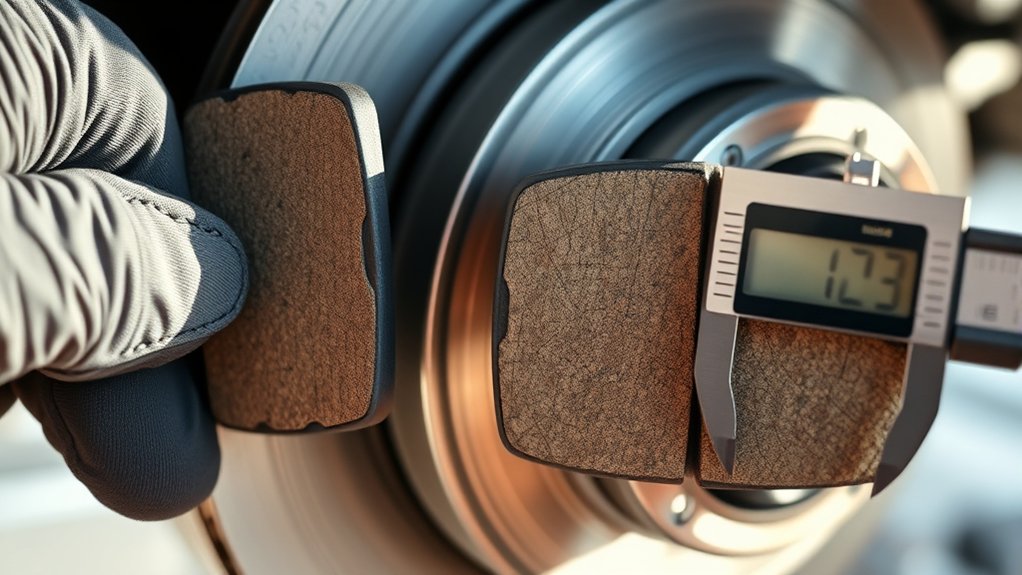
Measuring the thickness accurately requires a caliper and inspecting the friction material, not the backing plates.
Regular checks every 10,000 to 15,000 miles help catch wear early before it becomes a safety concern.
Understanding the factors that affect brake pad wear and following proper maintenance routines will help keep your braking system reliable and effective.
This proactive approach ensures your vehicle stops safely under all conditions.
Key Takeaways
- Replace brake pads when friction material thickness reaches about 3 millimeters for optimal safety and performance.
- New brake pads typically measure 10 to 12 millimeters thick; measure thickness in millimeters for accuracy.
- Inspect brake pad thickness every 10,000 to 15,000 miles or when braking performance changes.
- Thinner pads below 3 mm increase stopping distances, risk rotor damage, and reduce braking effectiveness.
- Measure friction material thickness using a caliper, not including the metal backing plate or rotor surface.
What Are Brake Pads and Why Thickness Matters
What exactly are brake pads, and why does their thickness play a critical role in vehicle safety? Brake pads are friction components that press against the brake rotors to slow or stop your vehicle.
Their thickness determines the effectiveness of this friction; as pads wear down, their ability to generate sufficient stopping force decreases. Ignoring brake pad thickness or confusing it with an unrelated topic, such as tire tread depth, is an irrelevant concept that can compromise safety.
You need to monitor thickness precisely because worn pads increase stopping distances and risk brake failure. Understanding this technical aspect ensures you maintain optimal braking performance.
Avoid mixing unrelated topics when assessing brake health, and focus strictly on pad thickness, as this directly impacts your vehicle’s braking reliability and overall safety.
What Is the Ideal Brake Pad Thickness in Millimeters?
Maintaining the correct brake pad thickness guarantees your vehicle stops efficiently and safely. Typically, new brake pads measure around 10 to 12 millimeters thick.
Experts recommend replacing them when thickness falls to approximately 3 millimeters to maintain peak performance. Using improper terminology, such as referring to thickness in inches or vague terms like “thin,” can lead to misunderstandings during maintenance or inspections.
Always measure in millimeters to ensure accuracy. Cost considerations also play a role; delaying replacement beyond the ideal thickness can cause rotor damage, increasing repair expenses markedly.
Signs Your Brake Pads Are Too Thin to Drive Safely
How can you tell if your brake pads are too thin to drive safely? Recognizing these signs early helps prevent brake failure and costly repairs. You shouldn’t ignore this line of warning indicators or dismiss symptoms as irrelevant ideas.
- Squealing or screeching noise during braking, signaling wear indicators contacting the rotor
- Reduced braking responsiveness or increased stopping distance
- Vibration or pulsation in the brake pedal when applied
- Visible thinning of brake pad material below manufacturer’s recommended minimum thickness
- Dashboard brake warning light illumination
If you notice any of these, your brake pads are likely too thin, compromising safety. Addressing these signs promptly ensures braking efficiency and vehicle control remain intact.
How to Measure Brake Pad Thickness Accurately
Recognizing the warning signs of worn brake pads is only the first step; accurately measuring their thickness confirms whether replacement is necessary. To do this, remove the wheel and inspect the brake pads through the caliper.
Use a precise measuring tool, such as a vernier caliper or a brake pad gauge, to measure the friction material thickness, not the metal backing plate. Avoid confusing this measurement with an unrelated topic like rotor thickness or an irrelevant concept such as pad surface texture.
Ensure you measure at several points for accuracy. If the thickness is below the manufacturer’s minimum specification, usually around 3 mm, it’s time to replace the pads. Accurate measurement helps prevent unsafe driving conditions and costly damage.
How Often Should You Check Brake Pad Thickness?
When should you check your brake pad thickness to ensure best safety and performance? Regular inspections are crucial; ignoring this can turn a vital maintenance step into an irrelevant topic or unused concept in your routine.
Regularly checking brake pad thickness is essential for safety and maintaining optimal vehicle performance.
Most manufacturers recommend checking every 10,000 to 15,000 miles, but conditions vary. You should also inspect pads:
- Before long trips or heavy driving
- After driving in harsh conditions (mountains, heavy traffic)
- When you notice braking performance changes
- During routine oil changes or tire rotations
- If warning indicators or noises appear
Risks of Driving With Brake Pads Below Recommended Thickness
If your brake pads fall below the recommended thickness, you’ll experience increased stopping distances that compromise your safety. Worn pads also risk damaging other brake components, leading to costly repairs. Understanding these risks helps you prioritize timely maintenance.
Increased Stopping Distance
How much longer can you safely stop your vehicle with worn brake pads? As their thickness falls below recommended levels, your stopping distance increases greatly, which compromises safety. This isn’t an irrelevant topic or unrelated subject; it directly affects your ability to control the vehicle during emergency braking.
Reduced friction surface means your brakes take longer to engage fully, which extends the distance required to halt.
Key factors contributing to increased stopping distance include:
- Decreased friction efficiency
- Heat buildup reducing braking performance
- Longer pedal travel time
- Diminished responsiveness on wet or slippery roads
- Reduced ability to absorb braking force evenly
Ignoring these signs risks accidents, so monitoring brake pad thickness is critical for maintaining optimal stopping performance.
Brake System Damage
Beyond the increased stopping distance caused by worn brake pads, continuing to drive with pads below the recommended thickness can inflict serious damage on your brake system. When pads wear down excessively, the metal backing plate contacts the rotor, leading to scoring and warping.
This damage requires costly rotor replacement or resurfacing. A comparative analysis reveals that ignoring pad wear accelerates deterioration of calipers and brake lines due to excess heat and vibration.
While some might consider pad wear an irrelevant topic compared to other vehicle maintenance, its impact on overall brake system integrity is critical. Driving with compromised pads reduces braking efficiency and increases the risk of hydraulic failure.
To prevent extensive repairs and ensure safety, replace brake pads promptly when they approach the minimum thickness specified by the manufacturer.
When to Replace Brake Pads Based on Thickness and Driving Conditions
You should replace your brake pads once they reach the minimum thickness specified by the manufacturer, typically around 3 millimeters. Keep in mind that driving conditions, such as frequent stop-and-go traffic or mountainous terrain, can accelerate pad wear. Monitoring both thickness and your driving environment ensures timely, safe replacements.
Minimum Brake Pad Thickness
Understanding the minimum brake pad thickness is essential for maintaining safe braking performance. Brake pads wear down due to friction chemistry and the specific pad materials used. As the pad thickness reduces, braking efficiency declines, increasing stopping distances and risk.
Most manufacturers recommend replacing pads when thickness reaches 3 mm or less to ensure optimal function and safety.
Key points to consider include:
- Minimum thickness varies by pad materials (organic, semi-metallic, ceramic)
- Friction chemistry affects wear rate and heat tolerance
- Pads thinner than 3 mm risk metal-to-rotor contact
- Consistent monitoring prevents brake failure
- Professional inspection verifies thickness and wear patterns
Impact Of Driving Conditions
How do varying driving conditions influence when you should replace your brake pads? Different environments impose distinct stresses on brake components, affecting wear rates.
For example, frequent stop-and-go urban driving accelerates pad wear compared to highway cruising. Similarly, mountainous terrain demands more braking force, reducing pad thickness faster.
Ignoring these factors and focusing on an irrelevant topic, like aesthetic pad qualities, distracts from proper maintenance timing. You should also avoid nonessential discussion about pad materials unrelated to your driving context.
Instead, monitor thickness regularly and adjust replacement intervals based on your specific conditions. By aligning brake pad replacement with actual wear influenced by your driving habits, you maintain optimal braking performance and safety without unnecessary early changes or risking failure.
How Different Vehicles Affect Brake Pad Wear Rates
Why do brake pads wear out faster on some vehicles compared to others? It primarily comes down to vehicle design, weight, and brake system characteristics. Different vehicles generate varying levels of abrasive wear and heat generation, which directly impact brake pad longevity.
Factors influencing brake pad wear include:
- Vehicle weight: Heavier vehicles increase abrasive wear on brake pads.
- Brake system type: Disc vs. drum brakes affect heat dissipation rates.
- Driving dynamics: Sporty vehicles often have aggressive braking, raising heat generation.
- Suspension setup: Influences brake load distribution and pad wear.
- Brake pad material compatibility: Pads designed for specific vehicles optimize wear rates.
Understanding how your vehicle’s design affects brake pad wear helps you anticipate replacement intervals accurately and maintain optimal braking performance.
Front vs. Rear Brake Pad Thickness: What’s the Difference?
Vehicle design and braking dynamics not only influence overall brake pad wear but also determine differences in front and rear brake pad thickness. Typically, front brake pads endure more stress due to weight transfer during braking, causing accelerated front pad wear. As a result, front pads are often thicker initially to compensate for this increased demand.
Conversely, rear pads experience less force, which affects rear pad feel and results in slower wear rates. This means rear pads generally start thinner and last longer. Understanding these differences is crucial when assessing brake system health.
When inspecting, pay close attention to front pad thickness since it depletes faster, while rear pad feel may signal wear through pedal feedback rather than visual cues. Differentiating wear patterns helps ensure timely, balanced replacements for optimal vehicle safety.
How Brake Pad Thickness Affects Your Vehicle’s Stopping Power
When does brake pad thickness begin to compromise your car’s stopping power? As the brake pads wear down, their ability to generate friction decreases, directly impacting your vehicle’s braking efficiency.
You must monitor thickness because relying on an irrelevant topic like brake fluid levels won’t help here. Thin pads reduce stopping power by:
- Lowering friction surface area
- Increasing heat buildup and fade
- Causing uneven wear and vibration
- Lengthening stopping distances
- Raising risk of rotor damage
Understanding this is essential since confusing it with an unrelated concept such as tire tread depth can mislead your maintenance priorities. Maintaining adequate brake pad thickness ensures consistent, reliable braking performance, keeping you safe on the road.
Once pads reach around 3 mm, it’s time to replace them to avoid compromised stopping power.
Tips for Maintaining Brake Pads to Extend Their Lifespan
You should schedule regular brake inspections to monitor pad wear and identify issues early. Adopting proper driving habits, like gradual braking, reduces excessive heat and friction on the pads. Also, replace your brake pads promptly once they reach the minimum thickness to maintain optimal performance and safety.
Regular Brake Inspections
How often do you inspect your brake pads to guarantee peak performance? Regular brake inspections are essential for identifying wear early and preventing costly repairs.
By incorporating routine checks into your maintenance budgeting, you can extend your brake pads’ lifespan and maintain safe driving etiquette. During inspections, focus on:
- Measuring pad thickness against manufacturer specifications
- Checking for uneven wear or glazing
- Inspecting rotors for scoring or warping
- Listening for unusual noises during braking
- Evaluating brake fluid levels and condition
Consistent inspections help you detect issues before they compromise safety or performance. Remember, proactive maintenance is key to avoiding unexpected failures and maximizing your vehicle’s braking efficiency.
Integrate these inspections into your schedule to uphold both safety and cost-effectiveness.
Proper Driving Habits
Why do proper driving habits markedly impact the lifespan of your brake pads? Because consistent application of good driving etiquette reduces unnecessary brake wear and heat buildup.
You should anticipate stops and decelerate gradually instead of abrupt braking, which generates excessive friction and accelerates pad degradation. Maintaining steady speeds and avoiding tailgating also minimizes frequent brake engagements.
Additionally, proper driving habits improve your vehicle’s fuel economy by reducing aggressive acceleration and braking cycles, which consume more fuel. By adopting smooth, predictable driving patterns, you not only extend the durability of your brake pads but also enhance overall vehicle efficiency.
Prioritizing these habits helps you avoid premature brake replacements and ensures safer, more cost-effective vehicle operation over time.
Timely Pad Replacement
When should you replace your brake pads to ensure optimal performance and safety? Timely pad replacement is crucial to avoid brake failure and costly repairs. Monitor pad thickness regularly; most manufacturers recommend replacement at 3mm to 4mm remaining. Ignoring this leads to metal-on-metal contact, reducing braking efficiency.
To extend your brake pads’ lifespan, consider these tips:
- Inspect pads every 10,000 km or during routine maintenance
- Avoid aggressive braking, which accelerates wear
- Keep braking system components clean and lubricated
- Replace pads in pairs to maintain balanced braking
- Address unusual noises or vibrations promptly
Staying focused on brake maintenance prevents discussions from veering into unrelated topics or off topic discussion that could distract from vehicle safety.
Frequently Asked Questions
Can Brake Pad Thickness Affect Fuel Efficiency?
Yes, brake pad thickness can affect fuel efficiency because thinner pads generate more brake pad heat, increasing friction. You’ll notice your engine works harder, reducing fuel efficiency, so maintaining proper pad thickness is essential for best performance.
Do Brake Pad Materials Impact Wear Rates?
Yes, brake materials considerably impact wear rates. Durability tests show that ceramic pads last longer than organic ones, while metallic pads balance performance and lifespan.
You should choose materials based on your driving conditions and longevity needs.
How Does Weather Influence Brake Pad Lifespan?
Think of weather as a silent sculptor. Its impact shapes your brake pads’ lifespan. Rain, snow, and temperature swings accelerate seasonal wear, increasing friction and corrosion.
You’ll need to inspect and replace pads more frequently in harsh climates.
Are Aftermarket Brake Pads Reliable for Thickness Standards?
Aftermarket reliability varies, so you should verify thickness standards carefully. Some brands meet or exceed OEM specs, but inconsistent quality means you must measure pads precisely to ensure safe, effective braking performance and compliance with thickness standards.
Can Brake Pad Thickness Sensors Fail or Give False Readings?
Brake pad sensors can act like faulty sentinels, sometimes giving unreliable readings. You shouldn’t fully trust their reliability readings alone; always visually inspect your brake pads to ensure accurate thickness assessment and safe braking performance.
Conclusion
Now that you know how essential brake pad thickness is, don’t wait until it’s dangerously low. Imagine driving with pads so thin they barely grip—your stopping power compromised, your safety at risk.
Regularly measuring and maintaining those millimeters can mean the difference between control and catastrophe. Stay vigilant, check often, and act promptly.
Your brakes aren’t just parts; they’re your lifeline on the road. Don’t gamble with that. Knowing when to change brake pads mm is crucial for safe driving.