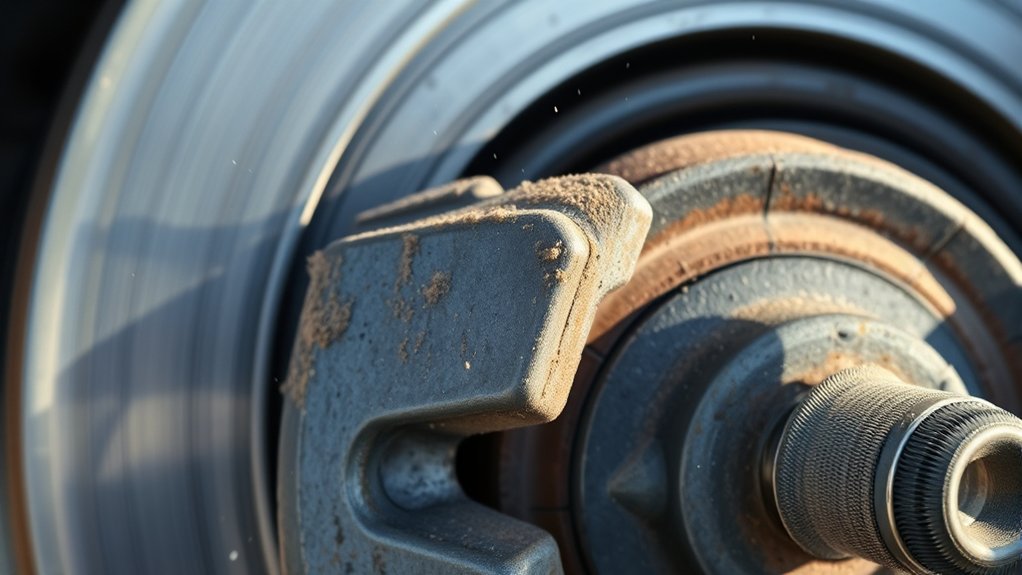
Do You Need to Change Rotors With Brake Pads
You need to change rotors with brake pads if the rotors show excessive wear, warping, cracks, or damage beyond the minimum thickness. Worn rotors reduce braking efficiency and cause vibrations, making it essential to address these issues promptly.
Installing new pads on damaged rotors shortens pad life and degrades overall brake performance. Always inspect the rotor surface condition and thickness during pad replacement to ensure safety and optimal braking.
Understanding when to replace versus resurface rotors can help maintain reliable brake function and safety. Regular checks will keep your braking system functioning effectively and prevent costly repairs.
Key Takeaways
- Change rotors with pads if rotors are excessively worn, warped, cracked, or below minimum thickness to ensure safe braking performance.
- Installing new pads on damaged or uneven rotors shortens pad life and reduces braking efficiency.
- Inspect rotors visually and measure thickness during every pad replacement to determine if rotor replacement is necessary.
- Resurface rotors only if they have minor wear and remain above minimum thickness without cracks or heat damage.
- Prompt rotor replacement prevents vibrations, noises, and compromised braking safety caused by damaged or warped rotors.
When to Change Rotors Alongside Brake Pads
When should you change rotors alongside brake pads? You need to replace rotors if they show signs of excessive wear, warping, or damage beyond the minimum thickness specified for the rotor materials. Thin or cracked rotors compromise braking efficiency and can cause vibrations.
Also, if your rotors have uneven surfaces due to poor pad bedding or glazing, resurfacing is sometimes possible, but replacement is often more reliable.
When installing new pads, pairing them with worn rotors can reduce the pad’s lifespan and degrade braking performance. Always inspect rotor material condition during pad replacement to decide if rotor change is necessary.
Proper rotor and pad pairing ensures consistent pad bedding, maximizing braking efficiency and safety.
Why Rotors Matter for Brake Safety and Performance
You rely on your rotors to convert brake pad pressure into the friction needed to slow your vehicle effectively. If the rotors are worn or damaged, your braking efficiency drops considerably, increasing stopping distances. Understanding their role is key to maintaining both brake safety and overall performance.
Rotor Function Importance
How does a rotor contribute to your vehicle’s braking system? The rotor serves as the friction surface against which brake pads clamp, converting kinetic energy into heat to slow your vehicle. Its metallurgy directly affects heat dissipation and wear resistance, ensuring consistent braking performance under varied conditions.
Proper rotor metallurgy reduces the risk of warping and cracking during intense braking. Additionally, the rotor’s surface plays a critical role in brake pad bedding, the process where pads conform to the rotor’s texture for optimal contact. A well-bedded brake pad paired with a quality rotor enhances stopping power and reduces noise and vibration.
Ignoring rotor condition can compromise this bedding process, leading to uneven pad wear and diminished brake reliability. Understanding rotor function underscores their importance in maintaining brake safety and performance.
Impact on Braking Efficiency
The condition and quality of rotors directly influence your vehicle’s braking efficiency by affecting heat management and friction consistency. When rotors degrade, rotor efficiency drops, compromising pad compatibility and overall braking performance. You need to understand how this impacts safety:
- Heat Dissipation: Worn or warped rotors fail to dissipate heat evenly, causing brake fade during repeated stops.
- Friction Surface: Uneven or scored rotors reduce the contact area, diminishing the friction needed for effective braking.
- Pad Wear: Poor pad compatibility with damaged rotors accelerates pad wear, leading to reduced stopping power and potential noise or vibration.
Maintaining rotor integrity ensures optimal contact with brake pads, preserving braking responsiveness and vehicle control. Ignoring rotor condition can severely compromise brake safety and performance.
How to Inspect Rotors for Wear and Damage
When should you inspect rotors for wear and damage? Ideally, you should check them during every brake pad replacement, as rotor metallurgy affects durability and performance. Begin by visually examining the rotor surface for grooves, scoring, or rust, which can compromise brake pad bedding.
Next, measure rotor thickness with a micrometer to ensure it meets manufacturer specifications. Lastly, check for warping by using a dial indicator to detect lateral runout.
| Inspection Step | Tool Needed | What to Look For |
|---|---|---|
| Visual Surface Check | Flashlight | Grooves, scoring, rust |
| Thickness Measure | Micrometer | Minimum thickness specifications |
| Warping Check | Dial indicator | Lateral runout, uneven surface |
Following these steps ensures optimal rotor condition and brake performance.
Warning Signs You Need to Replace Rotors Immediately
If you notice visible rotor damage like deep grooves or cracks, you need to replace the rotors immediately to maintain safe braking performance. Unusual noises such as squealing or grinding during braking also indicate rotor issues that require prompt attention. Ignoring these signs can lead to decreased braking efficiency and potential safety hazards.
Visible Rotor Damage
To determine if your rotors show visible damage that requires immediate replacement, watch for these indicators of compromised braking performance and safety risks:
- Deep grooves or rotor surface scoring. These clearly indicate that debris or worn pads have gouged the rotor, reducing smooth contact and braking power.
- Cracks or heat spots. Look for discoloration or fractures from excessive heat, which weakens rotor integrity.
- Warping or uneven thickness. This causes vibrations during braking and signals uneven wear that can’t be corrected by resurfacing.
If you notice any of these visible rotor damage signs, replacing the rotors right away is essential to maintain top braking performance and safeguard your safety on the road.
Unusual Braking Noises
Visible rotor damage often accompanies or precedes unusual braking noises that signal rotor replacement needs. When you hear grinding, squealing, or pulsating sounds during braking, don’t dismiss them as unrelated topic or random chatter.
These noises indicate rotor surface irregularities, warping, or excessive wear. Grinding usually means metal-to-metal contact, a clear sign your rotors are compromised. Squealing might suggest glazing or contamination, while pulsation often points to rotor unevenness.
Ignoring these auditory warnings risks reduced braking efficiency and safety hazards. To ensure optimal performance, inspect rotors immediately upon noticing such noises.
Replacing rotors along with brake pads prevents damage escalation and maintains smooth, reliable braking. Don’t confuse these critical sounds with non-mechanical noises; prompt action protects your vehicle and your safety.
When and How to Resurface Rotors Instead of Replacing
When should you consider resurfacing your brake rotors instead of replacing them? Resurfacing is viable when the rotor materials, typically cast iron or composites, aren’t worn beyond resurfacing limitations. You should resurface if:
- The rotor thickness exceeds the minimum manufacturer specification after shaving.
- Surface irregularities like minor grooves or uneven wear cause vibration but aren’t too deep.
- The rotor shows no cracks or severe heat damage compromising structural integrity.
To resurface, a lathe removes a thin layer, restoring a smooth, flat surface for effective pad contact. Keep in mind that each rotor material responds differently; some composite rotors can’t be resurfaced. Always measure thickness accurately and assess damage extent. Resurfacing extends rotor life only if these technical criteria are met, ensuring safety and optimal braking performance.
Costs and Benefits of Changing Rotors With Brake Pads
Many mechanics recommend changing rotors with brake pads to ensure consistent braking performance and safety. When you replace both components simultaneously, you avoid mismatches in rotor coating wear and pad friction characteristics that can degrade braking efficiency.
From a cost perspective, changing rotors alongside pads increases upfront expenses due to rotor material and labor costs. However, it often reduces long-term maintenance by preventing uneven wear.
Replacing rotors with pads raises initial costs but can lower future maintenance by avoiding uneven wear.
Metallurgy comparison between old and new rotors reveals advances in heat dissipation and corrosion resistance, which can enhance durability and braking response. Retaining old rotors may save money initially but risks compromised safety and performance if the rotor coating is uneven or damaged.
Ultimately, weighing these costs and benefits helps you make an informed decision tailored to your vehicle’s braking system requirements.
Tips to Extend the Life of Your Rotors and Brake Pads
How can you maximize the lifespan of your rotors and brake pads while maintaining optimum braking performance? Focus on proper maintenance and material compatibility. First, ensure you select brake pad compounds compatible with your rotor material; mismatched materials accelerate wear.
Second, avoid aggressive braking to reduce heat buildup, which can cause rotor warping and pad glazing. Third, inspect and clean components regularly to remove debris that accelerates abrasion.
- Choose brake pads designed for your rotor’s material. Ceramic pads suit cast iron rotors, while metallic pads may better match steel rotors.
- Practice smooth braking to prevent excessive thermal stress on rotors and pads.
- Schedule routine checks to identify uneven wear or damage early, extending component life and ensuring consistent braking efficiency.
Frequently Asked Questions
Can Different Rotor Materials Affect Braking Performance?
Yes, different rotor materials impact braking performance by interacting uniquely with brake pad materials. You’ll notice variations in heat dissipation and rotor surface finish, which affect friction, wear rates, and overall stopping power during braking.
How Do Weather Conditions Impact Rotor Wear?
Like a sponge soaking up water, rainy weather and snow conditions accelerate rotor wear by causing wet braking, which reduces road grip and increases friction.
You’ll notice faster rotor degradation under these slippery, moisture-heavy environments.
Are Aftermarket Rotors as Reliable as OEM Rotors?
Aftermarket rotors can match OEM reliability if you choose reputable brands with precise manufacturing standards. You’ll ensure optimal performance by verifying material quality, balancing, and compatibility with your vehicle’s braking system before installation.
Does Rotor Thickness Affect Brake Pad Lifespan?
Yes, rotor thickness directly affects pad lifespan. Thinner rotors dissipate heat less efficiently, causing increased pad wear and reduced braking performance.
Maintaining proper rotor thickness ensures optimal pad lifespan and consistent, safe braking operation.
Can Driving Habits Influence Rotor and Brake Pad Replacement Frequency?
Your driving style is the engine’s rhythm, directly affecting rotor and brake pad wear. Aggressive braking accelerates replacement frequency, so sticking to a consistent maintenance schedule guarantees optimal performance.
This approach extends component lifespan efficiently.
Conclusion
You might hesitate to change rotors with brake pads, thinking it’s unnecessary or costly. Yet, worn rotors can undermine your new pads, risking safety and performance. Ignoring rotor wear saves money now but invites costly repairs later.
By inspecting and replacing rotors when needed, you ensure reliable braking and extend component life. Balancing cost and safety, changing rotors alongside pads isn’t just maintenance—it’s smart protection for you and your vehicle.
In conclusion, do you need to change rotors with brake pads? Yes, it’s essential for maintaining optimal brake function and ensuring your safety on the road.