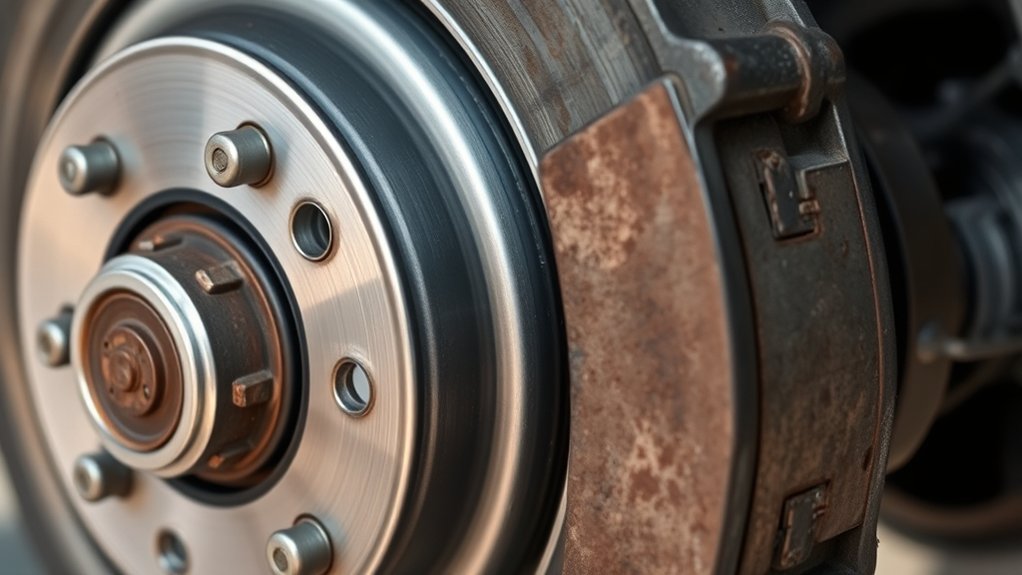
How Many Miles to Change Brake Pads
You should change your brake pads every 30,000 to 70,000 miles, depending on your driving style, vehicle type, and pad material. How many miles to change brake pads varies because aggressive braking and stop-and-go traffic wear pads faster, while highway driving extends their life.
Ceramic pads last longer than organic ones but cost more. Pay attention to squealing noises or reduced braking responsiveness as signs to replace them. Proper maintenance protects your rotors and brake system.
Understanding these factors helps you maintain the most favorable brake performance. Regular inspections ensure your brakes remain safe and effective on the road.
Key Takeaways
- Brake pads typically need replacement between 30,000 and 70,000 miles depending on materials and driving conditions.
- Aggressive driving and frequent stop-and-go traffic shorten brake pad lifespan significantly.
- Ceramic pads last longer (50,000 to 70,000 miles) compared to semi-metallic (30,000 to 50,000) and organic pads (20,000 to 40,000).
- Visual inspection showing pad thickness below 3 mm or squealing noises indicate it’s time to replace brake pads.
- Regular brake inspections help determine exact replacement timing and prevent costly rotor or caliper damage.
How Many Miles Do Brake Pads Typically Last?
How long do brake pads typically last before you need to replace them? Generally, brake pads endure between 30,000 and 70,000 miles, depending on factors like driving style, vehicle type, and pad material.
It’s crucial to focus on these variables rather than irrelevant topics or random chatter about unrelated maintenance issues. For example, aggressive driving or frequent city stop-and-go traffic shortens pad lifespan significantly. Conversely, highway driving tends to extend it.
You shouldn’t rely on generic mileage figures alone; instead, consider your specific conditions. Avoid distractions by ignoring irrelevant topic discussions and random chatter that don’t address brake pad wear directly.
Staying informed about your brake pads’ expected mileage helps you plan timely replacements, ensuring your vehicle’s braking system remains safe and efficient.
How to Tell When Your Brake Pads Need Replacing
Several clear signs indicate when your brake pads require replacement. First, listen for a high-pitched squealing noise during braking; this sound originates from a built-in wear indicator designed to alert you.
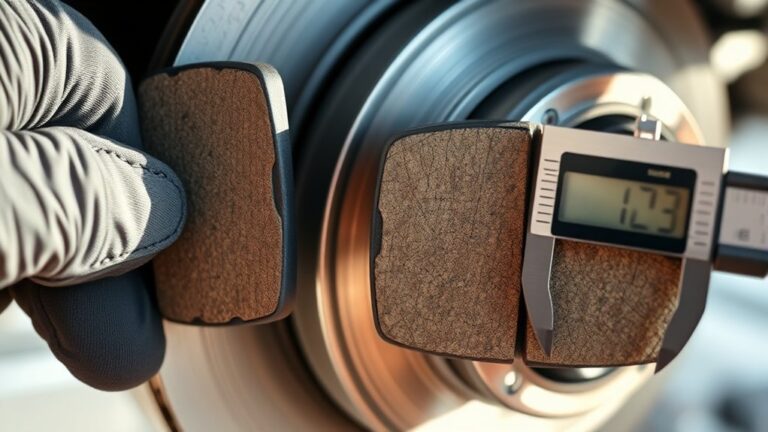
Next, perform brake pad testing by visually inspecting the pad thickness through the wheel spokes. If the friction material measures less than 3mm, replacement is necessary.
You might also notice reduced braking responsiveness or a longer stopping distance. Additionally, check for vibrations or pulsations in the brake pedal, which signal uneven pad wear or rotor issues.
When servicing, use synthetic lubricants on caliper pins and contact points to ensure smooth operation and prevent premature wear. Regular brake pad testing combined with proper lubrication helps maintain optimal braking performance and safety.
How Driving Habits Affect Brake Pad Lifespan
Why do some brake pads wear out faster than others? Your driving habits play a pivotal role in brake pad lifespan. Aggressive braking and frequent stop-and-go traffic increase friction, accelerating pad wear.
Understanding driving psychology helps you recognize how habits like tailgating or abrupt stops contribute to excessive brake use. Conversely, smooth, gradual braking reduces heat buildup and prolongs pad life.
Efficient driving not only preserves brake components but also enhances fuel efficiency by minimizing energy loss. By adjusting your braking technique, anticipating stops, and easing off the accelerator, you optimize both brake pad durability and overall vehicle performance.
In short, your approach behind the wheel directly influences how often you’ll need to replace brake pads, making driving psychology a key factor in maintenance planning.
How Road and Weather Conditions Affect Brake Pad Wear
You’ll notice that rough or uneven road surfaces increase brake pad abrasion, causing them to wear faster. Wet or icy conditions force you to brake more frequently and with greater force, accelerating pad degradation. Understanding how these factors affect wear helps you anticipate when to inspect or replace your brake pads.
Impact of Road Surfaces
How do different road surfaces and weather conditions influence the rate at which your brake pads wear down? Understanding how road surfaces affect brake pad wear is essential for accurate maintenance. Rough or uneven surfaces increase friction, accelerating pad degradation.
Conversely, smooth asphalt reduces abrasive wear, extending pad life. Here are some two word discussion ideas related to road surfaces impacting brake pads:
- Gravel roads: cause high abrasion, increasing wear rate
- Wet pavement: reduces friction but can lead to inconsistent braking
- Urban streets: frequent stops cause rapid pad wear
- Highway driving: steady speeds result in minimal brake use
Weather Effects on Pads
Alongside road surface types, weather conditions significantly influence brake pad wear by altering friction levels and exposure to corrosive elements. You’ll notice that in humid or rainy weather patterns, moisture accelerates pad degradation and promotes corrosion on metal components, reducing overall pad life.
Conversely, dry, hot climates increase friction and heat buildup, which can cause pad cracking and compromise braking efficiency. Frequent temperature fluctuations also contribute to thermal stress, exacerbating pad cracking and wear.
Additionally, road salt used in winter can chemically erode brake components, demanding more frequent inspections and replacements. To maintain optimal brake performance, you should monitor your brake pads closely if you drive in extreme or variable weather conditions, as these factors directly impact how soon you’ll need to change your brake pads.
How Brake Pad Materials Impact Their Lifespan
You’ll find brake pads made from organic, semi-metallic, and ceramic materials, each with distinct durability characteristics. Organic pads wear faster but provide quieter braking, while ceramic pads last longer and handle heat better. Understanding these material differences helps you predict when to replace your brake pads accurately.
Common Brake Pad Materials
Why do brake pad materials matter when determining their lifespan? Understanding materials helps you avoid confusing unrelated topics or spurious concepts that don’t affect performance. Brake pads come in specific compositions, each influencing wear rates and braking efficiency.
Here are the common brake pad materials you’ll encounter:
- Ceramic: Offers low noise and minimal dust but costs more.
- Semi-metallic: Provides excellent heat dissipation, ideal for heavy-duty use.
- Organic (Non-asbestos organic): Quieter and softer but wears faster.
- Low-metallic NAO: Balances heat transfer with quieter operation.
Each material affects how often you’ll need to replace your pads, impacting maintenance schedules. Knowing these options lets you make informed choices tailored to your driving needs and vehicle type.
Material Durability Differences
How do different brake pad materials influence their durability and replacement intervals? Material composition directly affects how long your brake pads last.
Durability testing reveals that semi-metallic pads wear faster than ceramic ones due to their abrasive components. Organic pads offer quieter braking but degrade quickly under high stress. Understanding these differences helps you anticipate replacement needs accurately.
| Material Type | Average Lifespan (miles) | Durability Testing Result |
|---|---|---|
| Semi-metallic | 30,000 – 50,000 | Moderate wear rate |
| Ceramic | 50,000 – 70,000 | High durability |
| Organic | 20,000 – 40,000 | Low durability |
Choose your brake pad based on this data to optimize safety and cost efficiency.
How to Measure Brake Pad Thickness at Home
When should you check your brake pad thickness to ensure safe driving? Regular inspections are essential, especially since new pad materials vary in wear rates. You can measure thickness at home using simple testing methods.
Regularly check brake pad thickness at home to ensure safety, as wear rates vary with different materials.
First, park your car on a level surface and remove the wheel for clear access. Then, locate the brake pads through the caliper opening. Use a ruler or a specialized brake pad gauge to measure the friction material thickness, not the backing plate.
Keep these tips in mind:
- Measure thickness every 10,000 miles or during routine tire rotations
- Replace pads if thickness is 3mm or less
- Compare measurements against new pad materials specifications
- Use consistent testing methods for accurate tracking
This process helps you maintain optimal brake performance and safety.
When to Replace Brake Pads Versus Rotors
Determining whether to replace brake pads or rotors depends on the condition and wear of each component. You should replace brake pads when the friction compounds have worn down to the manufacturer’s minimum thickness, as thinner pads reduce braking efficiency and risk damage to the rotors.
Rotors require replacement or resurfacing if you notice rotor glazing, an overly smooth, shiny surface caused by excessive heat, which compromises the pad’s ability to generate friction. Additionally, check for deep grooves, warping, or thickness below the minimum specification.
If the rotor surface is damaged but thickness remains adequate, resurfacing may restore proper contact. However, severely glazed or warped rotors demand replacement to maintain braking performance and prevent accelerated pad wear. Accurately assessing both parts ensures optimal safety and longevity.
How Regular Brake Inspections Save You Money
You can catch brake issues early with regular inspections, preventing damage from worsening. Identifying worn pads or rotor problems before they escalate helps you avoid costly repairs. Staying proactive with brake checks ultimately reduces your maintenance expenses.
Early Problem Detection
How often do you check your brakes for early signs of wear or damage? Detecting problems early prevents minor issues from escalating into costly repairs.
Regular inspections help you avoid focusing on unrelated topics or irrelevant concepts that don’t impact your brake system’s health. Instead, you’ll identify critical warning signs such as:
- Unusual noises like squealing or grinding
- Reduced brake responsiveness or increased stopping distance
- Uneven brake pad wear or visible thinning
- Vibrations or pulsations when applying brakes
Lower Repair Costs
Why wait for brake problems to worsen when regular inspections can catch issues early and save you money? By scheduling routine brake inspections, you identify worn pads, leaking brake fluid, or warped rotors before they cause extensive damage.
Addressing these issues promptly prevents costly repairs like rotor replacement or brake caliper failure. Ignoring brake maintenance based on irrelevant topics or unrelated concepts, such as mileage myths, can lead to premature wear and expensive repairs.
Instead, rely on professional inspections that assess pad thickness, brake performance, and system integrity. This proactive approach reduces the risk of complete brake system failure, minimizes downtime, and extends component lifespan.
Ultimately, regular brake inspections translate to lower repair costs and enhanced vehicle safety, ensuring your brake system functions optimally without unnecessary expense.
What Happens If You Ignore Worn Brake Pads
What risks arise when worn brake pads go unchecked? Ignoring them leads to serious safety and mechanical issues. You risk reduced braking efficiency, which increases stopping distance and accident likelihood.
Worn pads can damage rotors, causing costly repairs that exceed the cost of new pads. Additionally, neglect invites topic drift and unrelated chatter from mechanics, distracting you from core maintenance needs.
Here’s what happens if you ignore worn brake pads:
- Brake fade reduces control during emergency stops.
- Metal-on-metal contact damages rotors, requiring replacement.
- Increased noise from screeching or grinding sounds.
- Brake fluid contamination can cause system failure.
Don’t let worn pads compromise your vehicle’s performance or your safety. Address brake pad wear promptly to avoid escalating problems.
Choosing the Right Brake Pads for Your Vehicle
Addressing worn brake pads promptly means selecting the right replacement to maintain optimal braking performance. You need to consider your vehicle’s make, model, and driving conditions when choosing brake pads.
Choosing the right brake pads based on your vehicle and driving needs is key to maintaining optimal braking performance.
Different materials, such as organic, semi-metallic, and ceramic, offer varying resistance to irreversible wear and heat. Ceramic pads excel in minimizing wear on the braking system while providing consistent stopping power, but they may cost more.
Semi-metallic pads offer durability and better heat dissipation, ideal for heavy-duty use but can cause more rotor wear. Organic pads are quieter and gentler on the braking system but wear out faster.
Always verify that the brake pads meet your vehicle’s specifications to avoid compromising safety and performance. Selecting the right brake pads ensures reliable braking and extends the lifespan of your braking components.
How Mechanics Know When Your Brake Pads Need Replacing
How can you tell when your brake pads need replacing? Mechanics rely on specific signs and measurements to determine this critical maintenance step. They inspect the brake pads’ thickness and listen for warning sounds during a test drive.
They also assess brake fluid condition and consider recent tire rotation intervals, as both affect braking efficiency. Here’s what they look for:
- Brake pad thickness below 3mm, indicating wear beyond safe limits
- Squealing or grinding noises caused by worn pads contacting the rotor
- Deteriorated brake fluid, which can reduce hydraulic pressure and braking power
- Uneven wear patterns linked to improper tire rotation or brake system issues
Frequently Asked Questions
Can I Replace Brake Pads Myself or Should I Hire a Mechanic?
You can replace brake pads yourself, but consider DIY safety vs. professional install. Different brake pad materials require precise handling.
If unsure about tools or material specifics, hiring a mechanic ensures proper, safe installation.
How Much Does It Typically Cost to Replace Brake Pads?
You’ll typically pay $100 to $300 per axle for brake pad replacement. OEM pads cost more but offer consistent quality, while aftermarket options vary in brake pad materials, affecting durability and performance. Choose based on your needs.
Are Brake Pads Covered Under Vehicle Warranties?
Warranty coverage varies, warranty coverage depends; generally, brake pad coverage isn’t included under standard vehicle warranties because they’re wear-and-tear items.
You should check your specific warranty terms to confirm if brake pad coverage applies in your case.
Do All Vehicles Use the Same Type of Brake Pads?
No, you won’t find all vehicles using the same type of brake pads. Different materials suit various brake systems, like ceramic, metallic, or organic pads. Each type is designed for specific performance, durability, and noise reduction requirements.
How Long Does It Take to Replace Brake Pads?
You’ll typically spend 30-60 minutes replacing brake pads, depending on your vehicle’s complexity.
Focus on two-word ideas like torque specs and pad alignment, avoiding unrelated topics such as engine tuning or tire rotation.
Conclusion
You’ve learned how brake pad lifespan varies with miles, driving habits, and conditions. So, why risk your safety and wallet by ignoring worn pads? Regular inspections and choosing the right pads can save you from costly repairs and dangerous driving.
By staying proactive, you guarantee your brakes perform at their best every time you hit the road. Don’t wait for the warning signs—maintain your brake system to protect yourself and others. Understanding how many miles to change brake pads is key to keeping your vehicle safe and reliable.