How Thick Are New Brake Pads
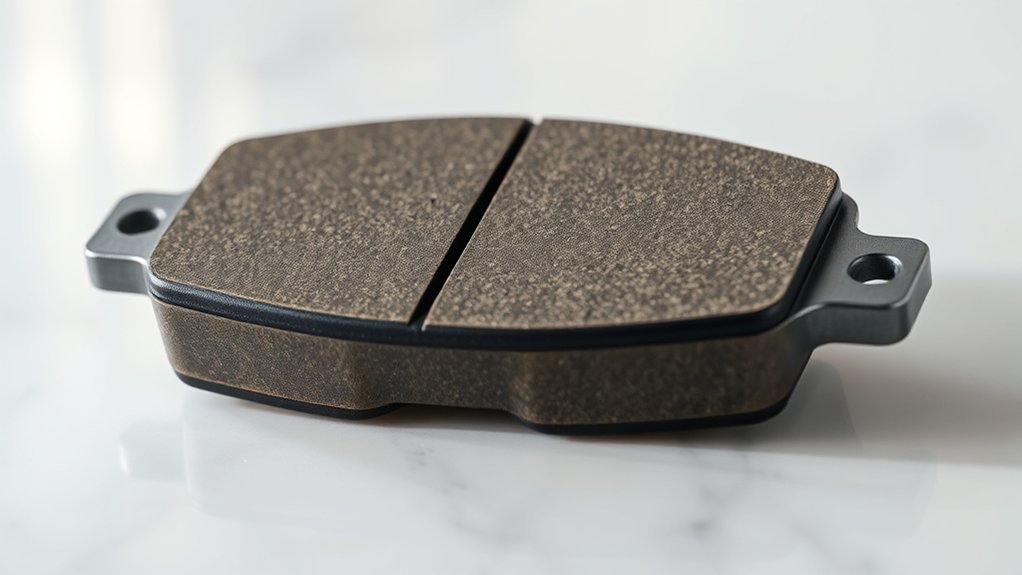
New brake pads generally measure between 10 and 12 millimeters thick, focusing specifically on the friction material rather than the backing plate. This thickness varies slightly depending on the pad’s material—ceramic, semi-metallic, or organic—which affects durability and wear rates. Front pads usually start thicker than rear ones due to higher heat and force demands.
Maintaining proper thickness is critical for braking efficiency and safety. To ensure optimal performance and longevity, understanding pad composition and wear indicators is essential.
Key Takeaways
- New brake pads typically measure between 10 to 12 millimeters thick, including friction material and backing plate.
- Thickness measurement should focus on the friction material, excluding the backing plate thickness.
- Thickness can slightly vary depending on manufacturer specifications and pad material composition.
- Front brake pads generally start thicker than rear pads due to higher heat and force demands.
- Pads thinner than 3 millimeters require replacement to maintain safe braking performance.
How Thick Are New Brake Pads When Installed?
Exactly how thick are new brake pads when you install them? Typically, new brake pads measure between 10 to 12 millimeters in thickness, including the friction material and the metal backing plate.
New brake pads usually measure 10 to 12 millimeters thick, including friction material and backing plate.
To determine the exact thickness, you need to know how to measure accurately using a caliper or micrometer, focusing on the friction material rather than the backing metal. Thickness can vary slightly based on the manufacturer’s specifications and material compositions, which affect density and wear rates.
Understanding these dimensions is critical because it impacts the pad’s lifespan and braking performance. When measuring, ensure the pad surface is clean and free from contaminants for precise readings.
This measurement precision helps maintain optimal safety standards and ensures you install pads that meet your vehicle’s brake system requirements.
How Brake Pad Materials Influence Thickness and Durability
How do different brake pad materials affect their thickness and durability? Understanding this is crucial for evaluating brake thickness and wear rates. Each material composition influences pad longevity and performance under stress.
Semi-metallic pads offer higher initial thickness but wear faster due to abrasive metal fibers, impacting durability.
Ceramic pads maintain consistent brake thickness longer, resist heat efficiently, and provide smoother wear patterns.
Organic pads start thinner, wear evenly, but typically require more frequent replacement due to softer compounds.
These two word discussion ideas, “material composition,” “wear resistance,” and “thermal stability,” are essential when analyzing brake pad thickness. By assessing these factors, you can predict durability more accurately and select materials that balance performance with lifespan, avoiding premature brake system failures or insufficient brake thickness during operation.
How Front and Rear Brake Pad Thickness Differ
You’ll notice front brake pads typically start thicker than rear pads due to higher heat and force demands. Rear brake pads are thinner since they handle less braking load and generate less friction. Understanding these thickness differences helps you assess wear patterns and maintenance needs accurately.
Front Brake Pad Thickness
Why do front brake pads typically start thicker than rear pads? It’s because front pads handle the majority of braking force due to weight transfer during deceleration. Unlike rear drums, front pads endure higher friction and heat, requiring extra material thickness to ensure durability and safety.
Consider these factors:
- Front pads withstand greater mechanical stress, necessitating more robust construction.
- Increased thermal load on front pads demands thicker friction material to prevent premature wear.
- The design differences between front pads and rear drums influence their initial thickness specifications.
Understanding front brake pad thickness helps you appreciate why maintenance schedules differ, ensuring optimal stopping performance and vehicle safety.
Rear Brake Pad Thickness
While front brake pads carry most of the braking load and start thicker to handle greater stress and heat, rear brake pads are designed with different operational demands in mind. Typically, rear brake pads have a thinner pad thickness at installation, reflecting their reduced role in braking force distribution.
When performing a rear assessment, you should note that rear pads experience less friction and heat, which influences their wear pattern and replacement intervals. Understanding this distinction helps you accurately evaluate rear pad thickness against manufacturer specifications.
This precise approach ensures that you don’t mistake thinner rear pads for excessive wear, preventing unnecessary replacements. Ultimately, knowing how rear brake pad thickness differs from the front aids in maintaining balanced braking performance and vehicle safety through informed inspection and maintenance.
How Manufacturers Decide Brake Pad Thickness
When you examine brake pad thickness, you’ll see manufacturers base their decisions largely on the material composition, as different compounds wear at different rates. They also have to ensure each pad meets strict safety standards to provide reliable performance under various driving conditions. Understanding these factors helps clarify why thickness specifications vary across brake pad models.
Material Composition Impact
How do manufacturers determine the optimal thickness for new brake pads? They analyze the material composition closely, as it directly affects performance and wear. Different new materials exhibit unique wear patterns and heat dissipation characteristics, which influence how thick the pads need to be initially.
You’ll find thickness decisions hinge on factors like:
- The friction coefficient of the material, affecting stopping power and heat generation
- The expected wear rate based on lab-tested wear patterns under variable conditions
- The structural integrity needed to prevent deformation or cracking during operation
Safety Standards Compliance
Why do manufacturers set specific thickness requirements for new brake pads? They base these standards on rigorous analysis of braking dynamics to ensure optimal performance and safety. You must understand that appropriate thickness accounts for effective heat dissipation, friction consistency, and structural integrity during operation.
Manufacturers also factor in material aging, which degrades pad effectiveness over time. By establishing minimum thickness standards, they guarantee that pads maintain sufficient friction material to handle wear and temperature fluctuations without compromising stopping power.
These compliance metrics align with regulatory safety protocols and industry testing, ensuring each brake pad meets durability and reliability benchmarks. When you select brake pads, recognizing these thickness standards helps you maintain vehicle safety and performance throughout the product’s lifecycle.
How Brake Pad Thickness Impacts Braking Performance
What role does brake pad thickness play in your vehicle’s stopping power? Contrary to common braking myths and pad myths, thickness directly affects the friction material’s ability to dissipate heat and maintain consistent contact with the rotor. Thicker pads provide a larger friction surface, enhancing the braking force and reducing fade under heavy use.
Consider these technical factors:
- Heat dissipation efficiency improves with increased pad thickness, preventing brake fade.
- Thicker pads sustain optimal friction over longer periods before performance degrades.
- Pad thickness influences the hydraulic system’s responsiveness by maintaining proper caliper clearance.
Understanding how thickness impacts braking performance helps you avoid misconceptions and ensures you maintain effective stopping power for safety and reliability.
How Quickly Does Brake Pad Thickness Wear Down?
Brake pad thickness diminishes steadily with use, influenced by driving habits, vehicle type, and operating conditions. You’ll notice that the rate of wear depends largely on how materials in the brake pads interact with the rotor surface.
Organic pads wear faster but generate less noise, while semi-metallic and ceramic pads offer greater durability. Aggressive braking, frequent stop-and-go traffic, and heavy loads accelerate the reduction in thickness. Understanding how materials affect wear helps you predict maintenance needs accurately.
Prioritizing how safety factors into brake performance means you shouldn’t let pads wear below the manufacturer’s minimum thickness. Monitoring this ensures optimal friction and heat dissipation, maintaining braking efficiency. Ultimately, how quickly your brake pads wear down depends on a precise balance of these variables.
Signs Your Brake Pads Need Replacing
How can you tell when your brake pads are nearing the end of their lifespan? Recognizing these signs is essential for effective new car maintenance and safety. Brake pads wear down over time, and ignoring early indicators can lead to decreased braking efficiency.
Look out for these important signs:
- Persistent brake noises: Squealing or grinding sounds indicate worn pads or exposed metal components.
- Reduced responsiveness: A spongy brake pedal or increased stopping distance signals friction material loss.
- Visual inspection: If you see less than 3 millimeters of pad thickness through the wheel spokes, replacement is imminent.
Monitoring these factors helps you maintain top braking performance and prevents damage to rotors. Addressing brake pad wear promptly ensures your vehicle remains safe and reliable on the road.
When Is Brake Pad Thickness Too Low for Safe Driving?
You should replace your brake pads when their thickness falls below the manufacturer’s minimum standard, typically around 3 millimeters. Pay close attention to signs like squealing noises or reduced braking response, which indicate excessive wear. Driving with pads thinner than this increases stopping distances and the risk of brake failure, compromising your safety.
Minimum Thickness Standards
When does brake pad thickness become dangerously low for safe operation? You need to monitor the minimum thickness standards to maintain the friction coefficient essential for effective braking. Most manufacturers recommend replacing pads once they wear down to 3mm or less.
At this point, rotor compatibility becomes a concern, as excessively thin pads can cause uneven rotor wear or overheating.
Key considerations include:
- Maintaining friction coefficient: Thin pads reduce material contact, lowering braking efficiency.
- Rotor compatibility: Worn pads risk damaging rotors, increasing replacement costs.
- Safety regulations: Many regions set legal minimum thickness to ensure safe stopping distances.
Signs of Worn Pads
Why does identifying worn brake pads matter for your vehicle’s safety? Because as the pad thickness decreases below recommended limits, the friction coefficient drops markedly, impairing braking efficiency.
When pads wear thin, their ability to maintain ideal heat transfer diminishes, causing excessive heat buildup that accelerates material degradation. You’ll notice signs such as increased stopping distances, a spongy brake pedal, or audible squealing, indicators that the friction material is compromised.
Additionally, visual inspection reveals pads thinner than 3mm, a critical threshold where safe driving becomes questionable. Monitoring these signs is essential to ensure your braking system operates within designed friction and thermal parameters, preventing performance loss before it escalates into hazardous conditions.
Regularly checking pad thickness helps maintain reliable friction coefficient and efficient heat transfer for safe driving.
Safety Risks Explained
Understanding the safety risks associated with brake pad thickness requires recognizing the minimum material limits that maintain braking performance. When pad thickness drops below approximately 3mm, your vehicle’s ability to stop efficiently diminishes, increasing the risk of brake fade and longer stopping distances.
Brake pad testing helps determine these critical thresholds, ensuring pads meet safety standards before installation. Additionally, noise diagnostics can alert you to worn pads through squealing or grinding sounds, signaling that thickness is dangerously low.
Ignoring these signs compromises your control and elevates accident risk.
Key safety considerations include:
- Reduced friction efficiency leading to impaired braking response
- Increased heat buildup causing brake fade under stress
- Potential rotor damage from exposed metal components
How to Measure Brake Pad Thickness Yourself
How can you accurately measure the thickness of your brake pads to ensure optimal performance? First, locate the brake caliper and visually inspect the pad through the caliper’s opening.
Use a brake pad gauge or a vernier caliper to measure the friction material thickness precisely. Avoid measuring the backing plate. New brake pads typically start around 10-12 mm thick. If your pads measure below 3 mm, replacement is necessary to prevent brake chatter caused by excessive wear or pad glazing from overheating.
Ensure your vehicle is on a flat surface with the wheels secure before measuring. Consistent, precise measurements help detect early signs of uneven wear, which can contribute to performance issues. Accurate thickness assessment ensures you maintain braking efficiency and avoid costly damage.
How to Extend Brake Pad Thickness Lifespan
Measuring brake pad thickness accurately helps you identify when pads approach their wear limits, but maintaining that thickness over time requires deliberate care. To extend brake pad thickness lifespan, you need to analyze your driving habits, ensure proper installation, and monitor for brake pad defects that could accelerate wear.
Additionally, understanding your warranty coverage can provide recourse if premature wear occurs.
Key steps to extend brake pad thickness lifespan include:
- Adopt smooth braking techniques to minimize uneven pad wear.
- Schedule regular inspections to detect defects early and maintain optimal performance.
- Verify installation accuracy to prevent misalignment that causes rapid degradation.
Frequently Asked Questions
Can I Replace Brake Pads Without Special Tools?
You can replace brake pads without special tools by using basic hand tools and a C-clamp. Learn how to inspect pad wear carefully, follow safety tips like securing the vehicle properly, and double-check caliper alignment.
Are Ceramic Brake Pads Quieter Than Metallic Ones?
Ceramic brakes generate less noise compared to metallic ones, offering a quieter ride. Their advanced composition reduces vibration and squeal, making noise comparison favor ceramics for noise-sensitive drivers.
Metallic pads excel in high-performance braking scenarios.
How Much Do Brake Pads Typically Cost?
Brake pad costs typically range from $30 to $80 per set, depending on material quality. You’ll need pad replacement tools like a caliper piston tool and wrench, ensuring precise, efficient installation without damaging components.
Can Worn Brake Pads Damage the Rotors?
Like sandpaper grinding wood, worn brake pads cause rotor wear by scraping metal surfaces.
You’ll see brake pad damage accelerate rotor deterioration, leading to costly repairs if you don’t replace pads promptly to avoid uneven rotor wear.
How Often Should I Have My Brakes Inspected?
You should have your brakes inspected every 10,000 to 15,000 miles, considering brake pad longevity varies by driving habits.
Regular inspection intervals ensure early detection of wear, preventing rotor damage and maintaining optimal braking performance.
Conclusion
When you install new brake pads, expect a thickness around 10 to 12 millimeters—roughly the width of three stacked nickels. This precise measurement ensures ideal braking performance and safety.
Remember, once your pads wear down to about 3 millimeters, their effectiveness drops markedly. Regularly measuring thickness can prevent dangerous situations, helping you maintain control and extend pad lifespan through timely replacements and proper driving habits.
Keeping an eye on how thick new brake pads are is essential for maintaining safe and efficient braking.