How to Install Brake Pads
To install brake pads, start by lifting your vehicle securely with a jack and supports on a flat surface. Then, remove the wheel and unbolt the caliper using the correct socket wrench.
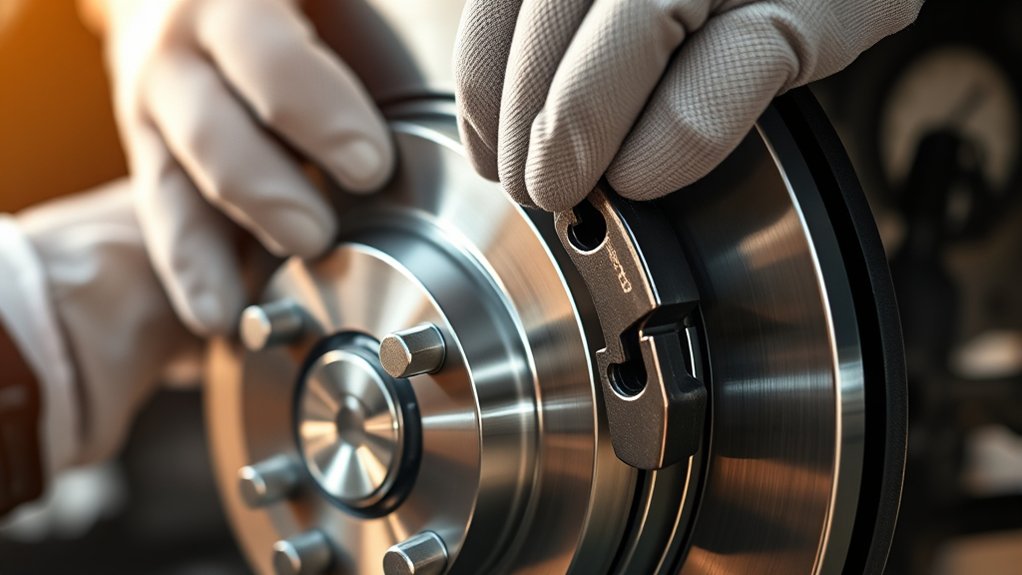
Next, compress the caliper piston fully with a C-clamp to create clearance for the new pads. Position the brake pads with the friction material facing the rotor and secure the retaining clips.
Torque the caliper bolts to the specified settings. Reassemble the wheel carefully, check the brake fluid level, and test the brake system for proper function.
Following these precise steps ensures safe and effective braking. Explore detailed guidance to master the full process.
Key Takeaways
- Lift the vehicle safely using a hydraulic jack, wheel chocks, and jack stands before removing the wheel and caliper.
- Compress the caliper piston fully with a C-clamp or brake caliper tool to fit the new brake pads.
- Position new brake pads correctly with friction material facing the rotor and align anti-rattle clips or shims precisely.
- Reinstall the caliper over the pads and rotor, then torque caliper bolts to manufacturer specifications.
- Perform post-installation checks including ABS recalibration, brake fluid inspection, and a low-speed brake response test.
How to Tell When Brake Pads Need Replacing
Brake pad wear indicators provide clear signs that your brake pads need replacing. These indicators are small metal tabs that contact the rotor once the pad material wears down to a specific thickness, creating a distinct squealing noise.
You should listen carefully for this sound during braking, as it signals immediate attention. Additionally, visually inspect the brake pads through the wheel spokes; if the friction material is less than 3 millimeters thick, it’s time to replace them.
Avoid getting distracted by two word discussion ideas unrelated to brake pad wear. Remember, subtopic not relevant to wear indicators, like tool selection, should be reserved for later. Consistently monitoring these signs ensures safety and optimal brake performance before installation.
How to Choose the Right Tools for Brake Pad Installation
You’ll need specific tools like a C-clamp, lug wrench, and socket set to install brake pads correctly. Choose tools made from high-quality materials to guarantee durability and reliable performance. Using the right, sturdy tools helps prevent damage and speeds up the installation process.
Essential Tools Overview
Selecting the right tools is essential for a successful brake pad installation and guarantees both safety and efficiency throughout the process. Begin by ensuring tool compatibility with your vehicle’s specifications; mismatched tools can damage components or impair installation.
You’ll need a reliable socket wrench set for removing caliper bolts and a C-clamp or brake caliper tool to compress the piston precisely. Additionally, a torque wrench is critical to tighten bolts to the manufacturer’s torque specification, preventing under- or over-tightening that could compromise brake function.
Don’t overlook basic hand tools like screwdrivers and pliers, which assist in removing clips or retaining pins. By assembling tools designed for your brake system and adhering to torque specs, you streamline the installation and maintain optimal brake performance.
Tool Quality and Durability
Having the right tools on hand is only part of the equation; their quality and durability directly affect the installation process and final outcome. When selecting tools for brake pad installation, prioritize those that have passed rigorous durability tests to ensure they withstand repeated use without failure.
High tool quality means precise fit and torque application, reducing the risk of damage to brake components. Inspect tools for solid construction, corrosion resistance, and ergonomic design to maintain control and safety during installation.
Avoid low-grade tools that may slip or break under pressure, compromising both your work and safety. Investing in certified, tested tools ensures consistent performance and protects your vehicle’s braking system integrity throughout the installation process.
How to Safely Lift Your Vehicle for Brake Pad Installation
Begin by positioning your vehicle on a flat, stable surface and engaging the parking brake to prevent any movement. For safe vehicle lifting, use a quality hydraulic jack and place wheel chocks behind the wheels remaining on the ground.
Locate the manufacturer’s recommended lifting points to avoid damage and ensure pad material compatibility by minimizing stress on the braking system during installation.
| Step | Detail |
|---|---|
| Surface | Flat, stable |
| Tools | Hydraulic jack, wheel chocks |
| Lifting Points | Manufacturer’s specified points |
Always support the vehicle with jack stands after lifting. Never rely solely on the jack. Confirm the vehicle is stable before starting brake pad installation.
How to Remove Old Brake Pads Step-by-Step
How exactly do you remove old brake pads without causing damage to the braking system? First, secure the vehicle on jack stands, then remove the wheel to expose the brake assembly. Use a socket wrench to carefully unbolt the caliper, supporting it to avoid strain on the brake line.
Slide the caliper off the rotor gently, as if handling ancient pottery. You want to prevent any impact that could crack or warp components. Next, extract the old brake pads from the caliper bracket, noting their orientation.
Avoid using excessive force; treat this step with the precision of mindful gardening, where careful, deliberate movements prevent harm. Finally, clean the caliper and bracket surfaces before proceeding to install new pads.
How to Inspect Brake Rotors After Removing Pads
Why inspect the brake rotors immediately after removing the pads? Because any damage or wear on the rotors directly affects braking performance and pad longevity.
Start by visually examining the rotor surface for scoring, grooves, or cracks. Use a micrometer to measure rotor thickness and compare it to the manufacturer’s minimum specification.
If the rotors are dirty or have brake dust buildup, learn how to wash rotors properly using brake cleaner and a lint-free cloth to avoid contamination.
Also, check for warping by spinning the rotor and observing any wobble. If you have spare pads, store them in a clean, dry place away from contaminants to maintain their quality.
Thorough rotor inspection ensures safe, efficient braking and prevents premature pad wear.
Getting Your New Brake Pads Ready for Installation
Before installing your new brake pads, carefully inspect them for any manufacturing defects or damage. Make sure you have all the necessary tools ready, including a C-clamp and brake cleaner. Preparing properly will ensure a smooth and safe installation process.
Inspect Brake Pad Quality
Although new brake pads typically come pre-inspected, you should carefully examine them yourself to confirm there are no defects or damage that could compromise performance. Start by visually inspecting the pad quality. Look for cracks, uneven surfaces, or irregular wear patterns.
Ensure the friction material is firmly bonded to the backing plate without separation or gaps. Verify the material composition matches your vehicle’s specifications, as improper composition can reduce braking efficiency and increase wear.
Check for uniform thickness across all pads to guarantee consistent contact with the rotor. If you detect any abnormalities, do not proceed with installation; replace the pads to maintain safety and optimal braking performance.
A thorough inspection now prevents costly repairs and ensures reliable brake function once installed.
Prepare Necessary Tools
A well-organized set of tools guarantees a smooth brake pad installation process. Before you begin, ensure your equipment calibration is up to date to avoid inaccuracies during the procedure. Gather all necessary instruments to maintain efficiency and precision. Essential tools include:
- A reliable torque wrench calibrated to the manufacturer’s torque specs
- Brake caliper piston tool for proper pad seating
- Jack and jack stands for secure vehicle elevation
- Lug wrench for wheel removal and reinstallation
Having these tools ready minimizes interruptions and ensures you meet exact specifications. Proper torque application prevents component damage and enhances safety. Double-check each tool’s functionality before starting to maintain a controlled workflow.
Preparing thoroughly sets the foundation for a successful brake pad replacement with consistent, professional results.
How to Install New Brake Pads Correctly
Installing new brake pads correctly requires careful attention to detail and adherence to proper procedures. Begin by verifying the brake pad chemistry matches your vehicle specifications; this ensures optimal friction and wear characteristics.
Inspect the rotors closely. If they show grooves or uneven surfaces, rotor resurfacing is essential before pad installation to guarantee uniform contact. Compress the caliper piston fully using a suitable tool to accommodate the new pads.
Position the brake pads correctly, ensuring the friction material faces the rotor, and align any anti-rattle clips or shims precisely. Avoid contaminating the pads with grease or brake fluid, as this compromises performance.
Double-check all components for correct orientation and secure fitting before proceeding to reassemble, ensuring safety and brake efficiency.
How to Reassemble Brake Components After Installation
Once you’ve positioned the new brake pads correctly, you’ll need to carefully reassemble the brake components to restore full function. Begin by aligning the caliper over the pads and rotor, ensuring it seats properly without forcing. Secure the caliper bolts to the manufacturer’s torque specifications to prevent loosening.
Reattach any retaining clips or pins used to hold the pads in place. Next, reconnect the brake line if it was disconnected, and check the brake fluid reservoir; top it off if necessary to maintain proper hydraulic pressure.
Finally, recalibrate the ABS system according to your vehicle’s manual to ensure the anti-lock braking functionality remains accurate and responsive. Remember these key steps:
- Torque caliper bolts precisely
- Reinstall retaining clips/pins
- Check and refill brake fluid
- Perform ABS calibration
Following these steps ensures safe and effective brake reassembly.
How to Test Your Brakes After Brake Pad Installation
After installing your brake pads, you need to test the initial brake response by applying pressure gradually and feeling for firmness. Listen carefully for any unusual noises or vibrations that could indicate installation issues. Finally, assess the stopping distance at low speed to ensure the brakes engage effectively and safely.
Initial Brake Response
Regularly testing your brakes immediately following brake pad installation is essential to guarantee proper function and safety. To assess the initial brake response, you need to evaluate how the brake pad chemistry interacts with the rotor surface under real conditions. Use these steps as a guide:
Perform a low-speed stop in a safe area to feel the brake engagement and pressure consistency. Monitor pedal firmness and responsiveness to detect any irregularities.
Check for immediate brake fade or sluggishness that may indicate improper bedding. Note any unusual resistance or grab, which can hint at chemical incompatibility or installation errors.
Noise and Vibration Check
A critical step in verifying your brake installation is conducting a noise and vibration check. Begin by driving at low speed in a safe area, applying the brakes gently to identify any unusual sounds.
Perform a noise comparison between your current brakes and known normal operation to detect scraping, squealing, or grinding. Pay close attention to vibration sources; these often stem from uneven pad wear, rotor irregularities, or improper caliper function.
Use your hands on the steering wheel and brake pedal to feel for pulsations or shaking during braking. If you detect abnormal noise or vibration, stop and inspect the brake components for installation errors or defects.
This diagnostic process ensures your brake system operates smoothly and safely before proceeding to more advanced tests.
Stopping Distance Assessment
If your brake system passes the noise and vibration check, the next step is to evaluate stopping distance to confirm brake effectiveness. Perform this test in a safe, open area with minimal traffic. Accelerate to a moderate speed and apply the brakes firmly, noting the distance required to stop. Repeat several times to detect any signs of brake fade, which can indicate overheating or improper pad installation.
Follow these steps to assess stopping distance accurately:
- Measure distance from initial brake application to complete stop.
- Compare results with manufacturer’s specifications.
- Watch for increased stopping distances indicating brake fade.
- Ensure consistent performance across multiple stops.
This procedure verifies your brake pads function correctly and provides confidence in your vehicle’s safety.
How to Avoid Common Brake Pad Installation Mistakes
How can you guarantee your brake pad installation goes smoothly without costly errors? First, always clean the caliper and mounting bracket to prevent uneven pad bedding, which can cause premature rotor wear. Avoid installing pads with contaminated surfaces. Oil or grease reduces friction and compromises braking efficiency.
Make sure to compress the caliper piston properly to fit the new pads without forcing components, which can damage seals. Check that anti-rattle clips and hardware are correctly positioned to prevent noise and uneven pressure. Don’t neglect to torque all fasteners to manufacturer specifications to ensure safety and performance.
Finally, after installation, perform a controlled pad bedding process by gradually increasing braking force to properly seat the pads, minimizing rotor wear and optimizing brake responsiveness.
How to Maintain Brake Pads for Longer Life
Proper maintenance of brake pads markedly extends their lifespan and guarantees consistent braking performance. To maintain optimal function, you must consider the brake pad materials and their friction coefficients, as these directly affect wear rates and heat tolerance.
Maintaining brake pad materials and friction coefficients is essential for durability and reliable braking performance.
Follow these key steps:
- Regularly inspect pads for uneven wear or contamination that alters friction coefficients.
- Clean calipers and sliders to ensure smooth pad movement and prevent premature wear.
- Avoid aggressive braking to reduce heat buildup, which degrades brake pad materials.
- Use compatible brake fluids and replace them as recommended to maintain hydraulic system integrity.
Frequently Asked Questions
Can I Install Brake Pads Without Professional Mechanical Experience?
You can install brake pads without professional experience if you carefully follow detailed guides, use proper tools, and prioritize safety. However, ensure you understand the procedure fully to avoid compromising your vehicle’s braking performance.
How Long Does a Typical Brake Pad Installation Take?
Tick-tock, time’s your enemy. You’ll spend about 30 to 45 minutes per wheel, depending on skill and tools.
Are There Specific Brands of Brake Pads Recommended for Safety?
You should choose brands for safety like Brembo or Bosch, known for reliable materials. Avoid brake pads containing asbestos or low-quality metallic compounds, as these materials compromise performance and increase wear.
This risks your vehicle’s braking efficiency and safety.
What Are the Signs of Defective Brake Pads After Installation?
You’ll notice signs of pad wear like squealing, reduced braking power, or a vibrating pedal. Always check these indicators after installation to guarantee installation safety and maintain optimal brake performance.
Don’t ignore any unusual noises or sensations.
Can Weather Conditions Affect Brake Pad Installation Quality?
You should know 38% of brake failures link to improper installation. Weather impact creates installation challenges like moisture causing corrosion or dirt contamination, which compromise brake pad adhesion and longevity.
Always install in dry, controlled conditions for optimal results.
Conclusion
Properly installing brake pads is essential for your safety, especially since worn pads cause 70% of brake failures. By following each step—from recognizing pad wear to testing brakes after installation—you guarantee optimal performance and longevity.
Using the right tools, lifting your vehicle safely, and inspecting components carefully will help you avoid costly mistakes. Regular maintenance extends pad life, keeps your braking system reliable, and protects you on every drive.
Stay precise and thorough for best results. Proper brake pad installation ensures your vehicle stops effectively and keeps you safe on the road.