What Tools Do I Need to Change Brake Pads
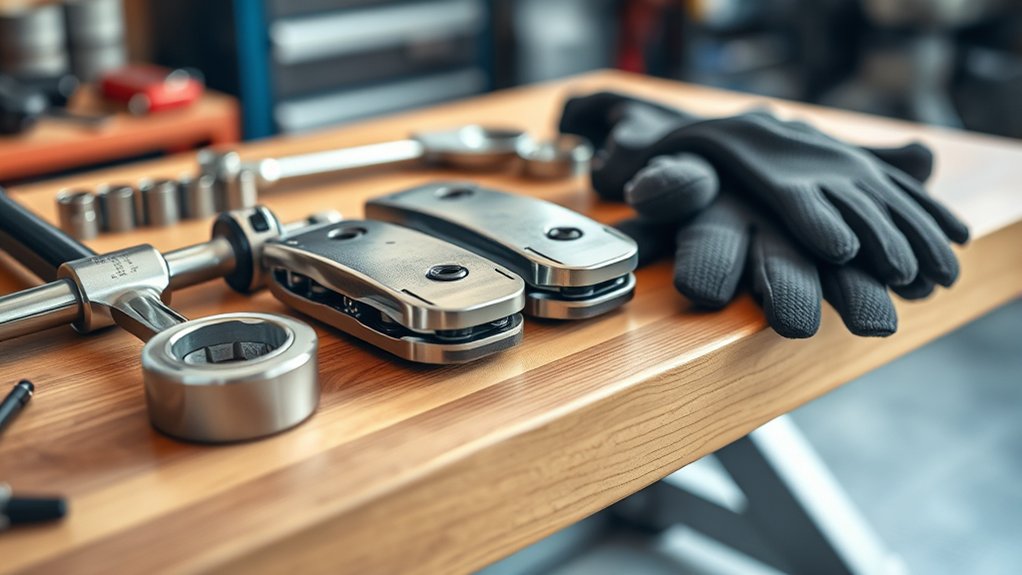
You’ll need essential hand tools to change brake pads, such as a socket set and ratchet for caliper bolts, a torque wrench to tighten correctly, and a C-clamp or brake caliper tool to compress the piston.
Measurement tools help verify pad thickness and rotor condition, while brake cleaner and lubricants ensure clean, smooth operation. Specialty tools like piston rewind devices can speed the job up.
There are also budget-friendly sourcing options available. Keep following to understand how to choose and use these tools effectively.
Key Takeaways
- Socket set and ratchet are essential for removing caliper bolts and wheel lug nuts during brake pad replacement.
- A C-clamp or brake caliper tool compresses the piston to fit new brake pads properly.
- A torque wrench ensures bolts are tightened to manufacturer specifications for safe and effective brake function.
- Brake cleaner and a flat-head screwdriver help clean components and remove old pads or wear indicators.
- Optional tools like piston rewind devices and impact wrenches can speed up the process but are not always necessary.
Essential Hand Tools Needed to Change Brake Pads
What tools do you need to change brake pads efficiently? Start with a reliable socket set to remove caliper bolts and wheel lug nuts accurately. A C-clamp or brake caliper tool is essential for compressing the caliper piston back into its housing.
Begin with a reliable socket set and a C-clamp to remove bolts and compress the caliper piston.
Don’t forget a torque wrench to tighten bolts to manufacturer specifications, ensuring safety. To assess your progress, use a brake pad gauge for brake pad measurements, confirming if the pads meet minimum thickness requirements.
A flat-head screwdriver or pry bar helps carefully remove the old pads and access rotor wear indicators, which signal rotor surface condition and replacement needs. Lastly, have a wire brush ready to clean caliper brackets, ensuring smooth brake operation.
These tools will keep your brake pad replacement precise and efficient.
Choosing the Right Jack and Stands for Brake Pad Replacement
Alongside the hand tools needed for brake pad replacement, selecting the proper jack and stands substantially impacts your safety and efficiency during the job. Choose a hydraulic floor jack rated for your vehicle’s weight to ensure stable lifting.
Pair it with high-quality, adjustable jack stands that securely support the vehicle once lifted. Always position the jack and stands under manufacturer-specified lifting points to prevent damage and maintain garage safety.
Use a controlled lifting technique by raising the vehicle slowly and checking stability before working underneath. Avoid relying solely on the jack; always set the vehicle on stands to eliminate risk of collapse.
Proper equipment and technique not only protect you but also streamline brake pad replacement, making your work safer and more precise.
Specialized Tools for Brake Pad Replacement
You’ll need specialized tools like a brake caliper compressor to safely retract the piston without damaging the system. Essential brake tools also include a quality set of wrenches and a C-clamp or piston rewind tool to ensure proper pad installation. Using the right equipment makes the job safer and more efficient.
Essential Brake Tools
A set of specialized tools is essential for efficiently replacing brake pads and ensuring safety throughout the process. You’ll need the right equipment not only to complete the job but also to maintain tool longevity through proper tool maintenance and organized tool storage.
Here are the essential brake tools you should have:
- Socket set and ratchet for removing caliper bolts.
- Torque wrench to tighten bolts to manufacturer specifications.
- Brake cleaner to remove dust and contaminants.
- C-clamp or brake piston tool to retract the caliper piston.
- Flathead screwdriver or pry bar to remove old pads and clips.
Proper storage and routine maintenance of these tools will guarantee their performance and extend their service life.
Caliper Compression Devices
While standard tools like a C-clamp can retract caliper pistons in many cases, certain brake systems require specialized caliper compression devices to safely and effectively compress the piston without damaging components. These devices ensure precise caliper compression during brake pad removal, preventing piston or seal damage.
Using the correct tool streamlines the process and maintains system integrity.
| Device Type | Application | Key Feature |
|---|---|---|
| Piston Wind-Back | Rear disc brakes with screw-in pistons | Rotates piston as it compresses |
| Caliper Spreader | General caliper compression | Even force distribution |
| Adjustable C-Clamp | Universal use | Versatile and affordable |
| Piston Rewind Tool | Complex brake systems | Specialized for specific calipers |
| Lever-Type Press | Quick compression | Simple mechanical leverage |
Why Brake Cleaner and Lubricants Matter
You need brake cleaner to remove dust, grease, and contaminants that compromise braking performance. Applying the right lubricants prevents noise and assures smooth movement of brake components. Skipping these steps can lead to premature wear and reduced safety.
Importance of Brake Cleaner
Effective brake maintenance hinges on the proper use of brake cleaner and lubricants. Brake cleaner removes contaminants like grease, brake dust, and oils that compromise pad performance. When using brake cleaner, observe brake cleaner safety: work in a well-ventilated area and avoid skin contact.
It evaporates quickly, leaving no residue, which helps ensure brake components function optimally.
Keep these points in mind:
- Choose a brake cleaner compatible with your brake system materials.
- Avoid cleaners that leave oily residues.
- Use gloves and eye protection.
- Confirm lubricant compatibility with brake components.
- Dispose of used cleaner according to local regulations.
Proper cleaning prevents noise, uneven pad wear, and braking inefficiency, making brake cleaner indispensable for safe, reliable brake pad replacement.
Role of Lubricants
A critical component in brake pad replacement is the proper application of lubricants, which complement the cleaning process by ensuring smooth mechanical function. After using brake cleaner for surface preparation, applying the correct lubricant type prevents noise, reduces wear, and enhances performance.
You’ll typically use high-temperature brake grease on caliper pins and anti-seize on metal-to-metal contact points.
| Lubricant Type | Application Area |
|---|---|
| High-Temperature Grease | Caliper Pins |
| Anti-Seize Compound | Metal Contact Surfaces |
| Silicone-Based Lubricant | Sliding Components |
Selecting the right lubricant type and applying it precisely ensures longevity and reliability in your brake system. Avoid contaminating the brake pad surface to maintain braking efficiency.
Optional Tools That Speed Up Brake Pad Replacement
Several optional tools can substantially reduce the time and effort required to replace brake pads. Using these tools helps you avoid common newbie mistakes, such as improper pad alignment or insufficient piston retraction, often caused by relying solely on basic hand tools.
While budget tools serve well for occasional use, investing in certain optional tools streamlines the process significantly.
Consider adding these to your toolkit:
- Brake caliper piston compressor: Ensures smooth, even piston retraction without damage.
- Impact wrench: Speeds up lug nut removal and installation.
- Brake bleeder kit: Facilitates efficient brake fluid bleeding post-replacement.
- C-clamp with swivel head: Offers better control compressing pistons in tight spaces.
- Torque wrench: Guarantees correct bolt tightness, preventing future issues.
These tools improve precision and reduce job time, making brake pad replacement safer and more efficient.
Where to Find Quality Brake Pad Replacement Tools on a Budget
Where can you find durable brake pad replacement tools without overspending? Start by exploring online marketplaces like Amazon and eBay, where budget friendly brake pad tools often come with user reviews that verify quality.
Find durable, budget-friendly brake pad replacement tools on Amazon and eBay with helpful user reviews to guide quality choices.
Specialty automotive websites also offer competitive pricing on DIY brake tools on a budget, frequently bundling essential items for cost savings. Avoid generic, low-quality kits; instead, look for trusted brands known for durable materials and precise engineering.
Local auto parts stores sometimes provide sales or clearance deals, giving you access to professional-grade tools at reduced prices. Additionally, consider secondhand tools from reputable sellers or community swap groups, which can offer reliable equipment at a fraction of the retail cost.
Prioritize tool functionality and durability to ensure safe, effective brake pad replacement without breaking your budget.
Frequently Asked Questions
How Often Should I Change My Brake Pads?
You should change your brake pads every 30,000 to 70,000 miles, depending on driving habits. Use timing frequency and two word discussion ideas like “wear indicators” to monitor pad thickness and ensure safety consistently.
Can I Reuse Old Brake Pads Safely?
You shouldn’t reuse old brake pads due to safety concerns; worn material reduces braking efficiency. Only reusable pads designed for multiple uses are safe.
Always inspect thickness and surface condition before considering reuse to ensure optimal safety.
What Are the Signs of Worn Brake Pads?
Imagine your brake pads like worn-out shoe soles; the signs of wear include squealing noises and reduced brake pad thickness below 3mm. Checking this thickness accurately helps you avoid dangerous braking failures and maintain vehicle safety.
How Long Does a Brake Pad Replacement Take?
How long does it take to replace brake pads? Typically, brake pad timing ranges from 30 to 60 minutes per axle, depending on your skill level and vehicle type.
Efficient preparation and proper tools streamline the process considerably.
Are Brake Pads Different for Front and Rear Wheels?
Yes, front vs rear brake pads differ due to material differences; fronts handle more heat and stress. Don’t worry, using the correct pads guarantees safety and optimal performance, so always match pads to their specific wheel position.
Conclusion
Now that you know the essential tools—from a reliable jack to specialized brake caliper tools—you’re set to tackle brake pad replacement confidently. Imagine saving hours and avoiding costly shop fees, just like Sarah, who replaced her pads using basic hand tools and a quality brake cleaner.
With the right equipment, you’ll guarantee safety and efficiency, making your brake maintenance both precise and cost-effective. Don’t skip the lubricants—they prevent noise and wear, extending pad life.
Using the proper tools is key to a successful brake pad replacement. Ensuring you have everything on your list will make the process smoother and help you complete the job with ease. When it comes to changing brake pads, having the right tools is essential for safety and effectiveness.