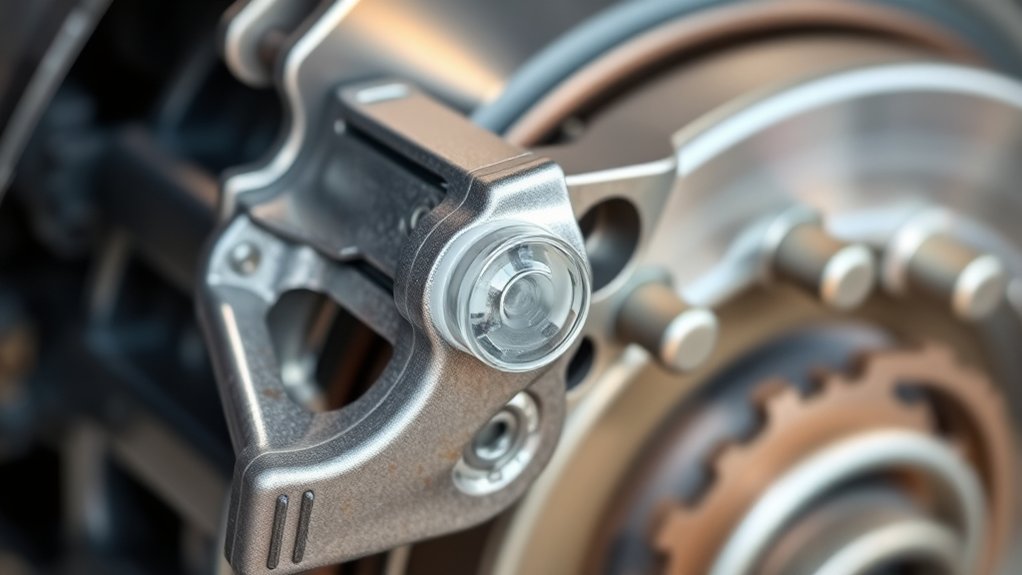
Where to Lubricate Brake Pads
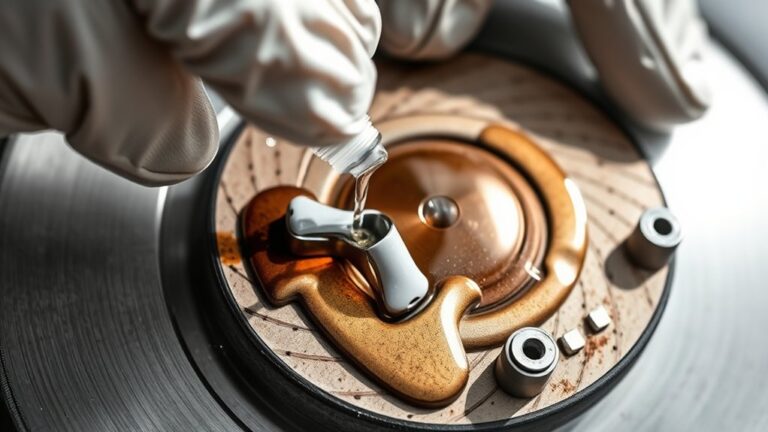
You should only lubricate brake pads at the caliper pins and the backing plate contact points, never on the friction surfaces.
Proper lubrication of brake pads is essential for maintaining smooth brake operation and preventing noise.
Use a high-temperature, brake-specific grease and apply a thin, even layer after cleaning off old lubricant and debris.
Avoid excessive lubricant to prevent noise and reduced braking efficiency.
Proper lubrication reduces vibration and ensures smooth brake operation.
To get the full scope on choosing the right lubricant and maintaining brake health, keep exploring the best practices and common mistakes.
Key Takeaways
- Apply high-temperature brake lubricant only to caliper pins and backing plates, avoiding friction surfaces on brake pads.
- Lubricate pad edges and backs sparingly to reduce vibration and edge chatter, never on the friction material itself.
- Avoid applying lubricant directly on the rotor-contacting surfaces or friction material to prevent noise and braking inefficiency.
- For drum brakes, lubricate backing plate contact points, adjuster threads, levers, and anchor pins to ensure smooth operation.
- Clean all lubrication points thoroughly before applying brake-specific grease, and reapply after pad replacement or when noise occurs.
Why Lubricating Your Brake Pads Matters
Although brake pads operate under extreme friction and heat, you shouldn’t overlook lubricating their contact points. Proper lubrication minimizes metal-to-metal contact, reducing wear and preventing squeaking noises.
It also ensures smoother brake operation by allowing components to move freely without sticking or seizing. When you skip lubrication, you risk accelerated pad deterioration and compromised braking efficiency.
Avoid mixing unrelated topics like brake fluid maintenance or tire care when addressing lubrication; focus strictly on the specific areas where friction occurs, such as the caliper pins and backing plates. Understanding these two word ideas, “contact points” and “component movement,” helps you target lubrication effectively.
Choosing the Right Lubricant for Your Brake Pads
How do you choose the right lubricant for your brake pads? Focus on selecting a high-temperature, brake-specific lubricant designed to withstand friction and heat without breaking down. Avoid using general-purpose greases, as these can introduce stray lubricant to braking surfaces, impairing performance.
Remember, applying lubricant to irrelevant topic areas like the brake rotor or pad friction surface is a common mistake. Instead, choose silicone-based or synthetic brake lubricants that resist washing off and don’t attract dirt.
These products prevent seizing and reduce noise without compromising braking efficiency. Using the wrong lubricant risks contamination, leading to brake fade or failure. So, stay precise—apply only where necessary with a lubricant formulated specifically for brake components to maintain optimal function and safety.
Preparing Brake Components: How to Clean Before Lubrication
Where should you start when preparing your brake components for lubrication? Begin by thoroughly cleaning the caliper, piston, and slider pins to remove dirt, brake dust, and old grease. Use a brake cleaner spray and a clean rag or brush to ensure no contaminants remain.
Avoid mixing this process with irrelevant topics, such as unrelated concepts like general automotive maintenance, which don’t affect brake lubrication. Focus strictly on cleaning surfaces where the lubricant will be applied.
Pay attention to hard-to-reach areas, ensuring all corrosion or debris is eliminated. Proper cleaning prevents lubricant contamination and ensures optimal brake function.
Where to Apply Brake Pad Lubricant on Disc Brakes
You should apply brake pad lubricant to the caliper slide pins to ensure smooth movement and prevent seizing. Also, lubricate the backing plate contact points where the pad edges rest to reduce noise and wear. Finally, coat the pad edges and backs lightly to minimize vibration and sticking without contaminating the friction surface.
MODIFIED TEXT:
Caliper Slide Pin Lubrication
Why is lubricating the caliper slide pins essential for disc brake maintenance? Proper caliper lubrication ensures smooth pin movement, preventing uneven brake pad wear and brake drag.
Neglecting pin maintenance causes corrosion and binding, compromising braking efficiency and safety. When applying brake pad lubricant, focus on the slide pins by cleaning off old grease and debris first.
Use a high-temperature, brake-specific lubricant to coat the pins evenly.
Key points for effective caliper slide pin lubrication:
- Remove the pins and clean thoroughly to eliminate rust and dirt.
- Apply a thin, uniform layer of brake grease designed for high heat.
- Reinstall pins carefully to maintain proper caliper alignment and free movement.
Consistent pin maintenance extends caliper life and preserves braking performance.
Backing Plate Contact Points
How do you ensure optimal brake pad movement and reduce noise in disc brakes? Focus on applying brake pad lubricant precisely at the backing plate contact points. These are the areas where the pad backing plate interfaces with the caliper bracket or carrier.
Proper lubrication here minimizes vibration and prevents squealing without compromising braking performance. Avoid misleading lubrication by not applying grease on the friction surface or piston face, which are unrelated braking topics.
Use a high-temperature brake lubricant sparingly and only on these metal-to-metal contact points to maintain pad alignment and smooth retraction. Over-application or incorrect placement can cause contamination, leading to reduced braking efficiency or noise.
Stay focused on these critical backing plate points to enhance brake function and longevity effectively.
Pad Edges And Backs
Where exactly should brake pad lubricant be applied on the pad edges and backs? Focus on critical contact areas without contaminating the friction surface. Apply lubricant sparingly on:
- Pad edges: Lightly coat to reduce edge chatter and vibration.
- Backs fibers: Target the metal backing plate’s fibers to minimize noise caused by friction between the pad and caliper.
- Avoid varnish buildup: Clean any varnish buildup before applying lubricant to ensure proper adhesion and prevent uneven braking.
Ensure you don’t get lubricant on the friction material itself, as this compromises braking performance. Proper application on pad edges and backs reduces noise and wear, extending pad life and maintaining optimal brake function. Use a high-temperature brake-specific lubricant for best results.
Where to Apply Brake Pad Lubricant on Drum Brakes
When lubricating drum brakes, focus on applying brake pad lubricant to the contact points where the shoes touch the backing plate. Avoid getting any lubricant on the friction surfaces, as this will reduce braking efficiency. Proper placement ensures smooth operation without compromising safety.
Contact Points Lubrication
Why is proper lubrication at the contact points essential for drum brakes? It reduces noise, prevents wear, and ensures smooth operation. When you apply brake pad lubricant, focus on these critical spots:
- Backing plate contact points: Apply lubricant where the brake shoes touch the backing plate to minimize vibration.
- Adjuster threads and levers: Lubricate these to maintain free movement and consistent adjustment.
- Anchor pin area: Proper lubrication here prevents binding and uneven pad wear.
Avoiding Friction Surfaces
Proper lubrication at contact points helps maintain smooth brake operation, but you must be careful to keep lubricant off friction surfaces. Applying lubricant to drum brake friction areas, such as the lining or drum interior, can cause slippage, reduced braking efficiency, and safety hazards.
This is a common maintenance myth; lubricant should only go on backing plate contact points, shoe edges, and adjuster threads. When servicing, focus on these areas to avoid contamination. Avoid discussion ideas that suggest applying grease directly on friction surfaces, as this compromises performance.
Use high-temperature brake grease sparingly and precisely. Always clean friction surfaces thoroughly before reassembly. By strictly avoiding lubricant on friction surfaces, you ensure consistent brake engagement, reduce wear, and uphold system reliability.
Understanding these boundaries clarifies many maintenance myths and improves your drum brake service outcomes.
How Much Brake Pad Lubricant to Use and When to Reapply
How much brake pad lubricant should you apply to ensure optimal performance without causing excess buildup? Use a thin, even layer only where the pad contacts the caliper or backing plate, not on friction surfaces. Over-application leads to contamination and reduced braking efficiency.
Know when to reapply lubricant for consistent performance:
- After every brake pad replacement or maintenance service.
- If you notice squeaking noises or uneven pad movement during operation.
- Following exposure to extreme conditions like heavy rain or off-road use.
Avoid unrelated topic tangents or random exploration in your maintenance routine; focus specifically on brake pad areas needing lubrication. This precision prevents mistakes and ensures effective, safe braking. Remember, less is more when applying brake pad lubricant.
Brake Lubrication Mistakes to Avoid
What common errors do technicians make when lubricating brake pads? One frequent mistake is applying lubricant directly onto the friction surface, which causes brake noise and reduces stopping efficiency. Avoid this by focusing lubrication only on the caliper pins and backing plates.
Applying lubricant to friction surfaces causes noise and reduces braking efficiency; lubricate only caliper pins and backing plates.
Another error is using excessive lubricant, leading to contamination and component degradation. Apply a thin, even layer to prevent buildup. Also, don’t neglect cleaning surfaces before lubrication; dirt and old grease compromise adhesion and function.
Finally, avoid using the wrong lubricant type. Always select a high-temperature brake-specific grease. These two word discussion ideas, “contamination risks” and “lubricant selection,” highlight critical points to consider.
Steering clear of these mistakes ensures proper brake function and minimizes brake noise, enhancing both safety and performance.
Signs Your Brake Pads Need Relubrication or Replacement
When should you consider relubricating or replacing your brake pads? Pay attention to these critical indicators that signal the need for brake pad lubrication or replacement, especially with drum brakes lubrication.
Squeaking or grinding noises: Persistent sounds often indicate worn pads or dried-out lubrication, reducing effectiveness.
Reduced braking performance: If your brakes feel less responsive, the friction material may be compromised, or lubrication has failed.
Uneven pad wear or vibration: This suggests improper contact caused by insufficient brake pad lubrication or damaged components.
Ignoring these signs risks brake failure and costly repairs. Regular inspection focusing on lubrication points and pad condition ensures optimal safety and performance.
Maintaining Smooth and Quiet Brakes: Tips for Long-Term Care
Recognizing signs like squeaking or uneven wear is just the start; maintaining smooth and quiet brakes requires consistent care beyond immediate fixes. To minimize brake noise and extend pad life, regularly clean caliper slides and apply appropriate high-temperature brake lubricant to contact points.
Inspect for debris buildup, especially after off-road braking, which accelerates wear and noise issues. Ensure rotor surfaces remain smooth and free of scoring to prevent uneven pad wear.
Periodically check pad thickness and replace when nearing minimum specs to avoid metal-on-metal contact. Bleed the brake system to maintain hydraulic efficiency and prevent spongy pedal feel.
Frequently Asked Questions
Can Lubricating Brake Pads Improve Braking Performance?
You won’t see a direct braking performance impact from brake pad lubrication, but it reduces noise and prevents squealing. Proper lubrication guarantees smooth pad movement, indirectly supporting consistent braking performance and extending component lifespan.
Is It Safe to Use Household Oils on Brake Pads?
You shouldn’t use household oils on brake pads; oil contamination causes inconsistent braking and reduces friction.
Only use specialized brake lubricants designed to withstand high temperatures and avoid compromising braking safety and performance.
How Often Should Brake Pads Be Inspected for Wear?
You should perform inspection intervals every 10,000 to 15,000 miles to ensure brake safety. Regular wear assessment helps identify pad thinning or damage, preventing brake failure and maintaining optimal braking performance.
Can Brake Pad Lubricant Cause Brake Failure?
Brake pad lubrication, when misapplied, increases brake failure risk. Studies show improper pad surface interaction causes 20% of braking issues. You must avoid lubricating friction surfaces to maintain safety and optimal brake performance consistently.
Are There Specific Lubricants for Different Vehicle Types?
Yes, you’ll find specific lubricants designed for different vehicle types to optimize performance and compatibility. Using the correct lubricant guarantees proper brake function and prevents damage.
Always match the lubricant to your vehicle’s brake system.
Conclusion
You might think your brakes don’t need lubrication—after all, they’re designed to stop, not slide smoothly. But skipping this step means inviting noise, wear, and costly repairs.
Applying lubricant precisely where the pads contact caliper slides or backing plates isn’t just a suggestion; it’s essential.
So, if you enjoy squealing brakes and premature replacements, by all means, ignore lubrication. Otherwise, keep it clean, apply correctly, and enjoy quiet, efficient stopping every time. Remember, knowing where to lubricate brake pads is key to maintaining your braking system’s performance.