Can Spark Plugs Cause Car Not to Start
Yes, spark plugs can definitely cause your car not to start if they are faulty. They create the essential spark that ignites the air-fuel mixture in the engine. Without a strong spark, the engine won’t fire up properly.
If spark plugs are worn, fouled, or have incorrect gaps, they fail to deliver a strong spark. This can lead to misfires, rough idling, or no ignition at all.
Testing and inspecting your spark plugs can help pinpoint these issues quickly. Exploring spark plug care and related troubleshooting will help you resolve starting problems effectively.
Key Takeaways
- Faulty or worn spark plugs can cause weak or no spark, leading to difficulty or failure in starting the car engine.
- Fouled spark plugs coated with oil or carbon prevent proper ignition spark formation, causing the engine not to start.
- Incorrect spark plug gap disrupts spark consistency, reducing ignition reliability and causing starting problems.
- Cracked insulators on spark plugs cause arcing outside the chamber, preventing proper combustion and engine start.
- Regular inspection and timely replacement of spark plugs prevent ignition failure and ensure the car starts smoothly.
How Spark Plugs Start Your Car
How exactly do spark plugs start your car? They create the essential spark that ignites the air-fuel mixture inside the engine’s cylinders. When you turn the key, the ignition system sends an electric charge to the spark plugs.
This charge jumps the gap at the plug’s tip, producing a spark that triggers combustion. Without this precise ignition, your engine won’t run smoothly or start at all.
Think of it like vacation planning: just as you need the right timing and coordination for a trip to go smoothly, your engine requires perfectly timed sparks to operate efficiently. Funny anecdotes aside, understanding this process helps you diagnose issues accurately and appreciate the spark plug’s vital role in your car’s ignition system.
Common Spark Plug Problems That Stop Your Car From Starting
Since spark plugs generate the spark that ignites your engine’s fuel, any malfunction directly affects your car’s ability to start. Common spark plug problems include fouling, where deposits like oil or carbon coat the electrodes, preventing proper spark formation.
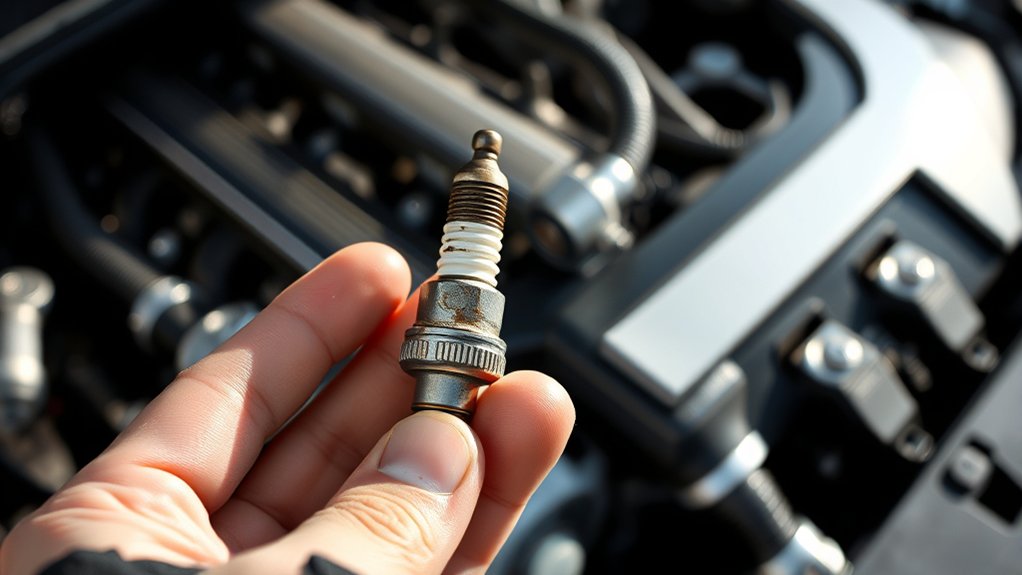
Worn electrodes reduce spark intensity, causing weak ignition or misfires. Incorrect gap size disrupts the spark’s consistency, leading to start failure. Additionally, cracked insulators can cause arcing outside the combustion chamber, rendering the spark ineffective.
Regular car maintenance should include inspecting and replacing spark plugs per manufacturer guidelines to avoid these issues. Neglecting spark plug condition compromises ignition reliability, especially in cold starts or high-load scenarios.
Diagnosing spark plug faults early can save you from inconvenient no-start conditions and costly repairs down the line.
Signs Your Spark Plugs Are Failing
Why do your spark plugs fail and how can you tell before your car won’t start? Spark plugs degrade due to carbon buildup, electrode wear, or improper gap, impairing ignition. Early detection helps avoid a dead car battery from repeated failed starts.
Look out for these signs indicating failing spark plugs:
1. Engine Misfires
Irregular combustion causes rough idling and hesitation.
2. Poor Fuel Economy
Incomplete ignition wastes fuel, lowering efficiency.
3. Difficulty Starting
Weak sparks struggle to ignite the air-fuel mixture, stressing the car battery.
4. Engine Surging or Stalling
Uneven power delivery signals inconsistent spark plug performance.
Monitoring these symptoms lets you address spark plug issues proactively, preventing starter motor strain and battery drain.
How to Test Spark Plugs When Your Car Won’t Start
Start by removing the spark plugs and inspecting them for fouling, cracks, or excessive wear. Next, perform a spark plug spark test by reconnecting the plug to the ignition coil and grounding it to the engine block while cranking the engine. This will help you determine if the spark plugs are generating the necessary spark to ignite the fuel-air mixture.
Visual Spark Plug Inspection
How can you quickly determine if a spark plug is causing your car not to start? Begin with a visual inspection to assess the spark plug’s visual health, which can reveal issues impacting ignition timing and engine performance. Follow these steps:
- Remove the spark plug using a socket wrench and examine the electrode for wear or damage.
- Check for carbon deposits, oil fouling, or corrosion that could disrupt proper ignition timing.
- Inspect the ceramic insulator for cracks or chips, which impair electrical insulation.
- Measure the electrode gap with a feeler gauge to ensure it matches manufacturer specifications.
Any abnormalities found during this visual spark plug inspection strongly indicate a faulty plug, likely causing starting failures. Replace defective plugs to restore optimal ignition timing and engine function.
Spark Plug Spark Test
When was the last time you verified that your spark plugs are producing a strong, consistent spark? Performing a spark plug spark test is a critical diagnostic method when your car won’t start.
First, disconnect the spark plug wire and remove the spark plug. Reconnect the spark plug wire to the plug, then ground the plug’s metal body against the engine block.
Have someone crank the engine while you observe the spark plug’s electrode gap. A bright, blue spark indicates the plug is functioning correctly; a weak or no spark signals a faulty spark plug or ignition issue.
This test isolates spark plug performance, helping you determine if replacement or further ignition system diagnostics are necessary to resolve starting problems effectively.
Other Causes to Check If Spark Plugs Aren’t the Problem
If your spark plugs check out fine, the next step is to examine the battery and electrical system for voltage drops or faulty connections. You should also inspect the fuel delivery system, including the fuel pump and injectors, to guarantee proper pressure and flow. Addressing these areas will help pinpoint why your car isn’t starting.
Battery And Electrical Issues
Why might your car fail to start even when the spark plugs are in good condition? Battery and electrical issues often cause this problem, unrelated to spark plugs or non vehicle topics. You should systematically diagnose these components to rule out electrical faults.
- Battery Charge: Check if the battery holds adequate voltage; a weak battery won’t provide sufficient current to start the engine.
- Corroded Terminals: Inspect terminals for corrosion, which can obstruct electrical flow.
- Starter Motor: Test the starter motor’s functionality as failure here can prevent engine cranking.
- Fuses and Relays: Examine relevant fuses and relays; a blown fuse disrupts the electrical circuit needed for ignition.
Address these factors precisely before exploring fuel or ignition components further.
Fuel System Problems
How do you pinpoint fuel system problems when spark plugs aren’t the issue? First, check for fuel delivery failures. Clogged filters, faulty pumps, or injectors can block fuel flow. Use a fuel pressure gauge to verify pressure is within manufacturer specs. Avoid unrelated or off-topic discussion like electrical issues here; focus strictly on fuel diagnostics.
| Symptom | Possible Cause |
|---|---|
| Engine cranks, no start | Fuel pump failure |
| Rough idle | Dirty fuel injectors |
| Stalling | Clogged fuel filter |
Systematic testing ensures you isolate fuel system faults efficiently without veering into unrelated topics. Confirming fuel delivery integrity is critical before ruling out spark plugs or electrical causes, saving diagnostic time and effort.
How to Clean Spark Plugs to Fix Starting Issues
Where should you start when addressing spark plug-related starting issues? Begin by inspecting and cleaning the spark plugs to restore optimal performance. Cleaning removes deposits that hinder ignition, unlike unrelated topic ideas that don’t affect spark plugs directly.
Follow these steps:
- Remove the spark plugs carefully with a socket wrench.
- Inspect for damage or excessive wear; if damaged, cleaning won’t help.
- Use a wire brush or spark plug cleaner to remove carbon buildup and debris.
- Check the electrode gap with a feeler gauge and adjust to manufacturer specs.
After cleaning, reinstall the plugs securely. This diagnostic approach can resolve ignition problems caused by fouled spark plugs, improving your car’s ability to start reliably without immediately replacing components.
When and Why to Replace Spark Plugs for Reliable Starts
When should you replace your spark plugs to maintain reliable engine starts? Typically, replacing spark plugs every 30,000 to 50,000 miles is essential for optimal performance, but this varies by vehicle and plug type.
During routine car maintenance or a scheduled tune up, inspect plugs for wear indicators like electrode erosion, carbon buildup, or cracking. Worn plugs cause weak sparks, misfires, and increased starting difficulty.
If your engine struggles to start or runs rough, suspect degraded spark plugs. Proactively replacing them prevents ignition failure and ensures consistent combustion. Don’t wait for total failure. Timely replacement during your tune up sustains reliable starts and efficient fuel combustion, ultimately protecting your engine’s longevity and performance.
Choosing the Right Spark Plugs for Your Vehicle
Selecting the right spark plugs substantially impacts your engine’s performance and longevity. Just as you carefully plan travel planning details or choose efficient kitchen appliances, selecting spark plugs requires precision to match your vehicle’s specifications.
Here’s how to choose correctly:
- Check Manufacturer Specs: Always start with your vehicle’s manual; it specifies the correct heat range and type.
- Consider Material: Copper plugs offer good conductivity, while iridium or platinum plugs last longer and resist fouling.
- Assess Driving Conditions: Frequent short trips or extreme climates may need spark plugs with specific heat dissipation characteristics.
- Match Thread Size and Reach: Incorrect size can damage the engine or reduce performance.
How Faulty Spark Plugs Affect Car Starting
Although spark plugs are small components, their condition directly influences your engine’s ability to start. When spark plugs are faulty, worn, fouled, or damaged, they fail to generate the necessary spark to ignite the air-fuel mixture in the combustion chamber.
This leads to incomplete combustion or no combustion at all, causing your car to struggle or completely fail to start. Diagnosing faulty spark plugs is essential; overlooking this can result in off topic discussion about unrelated topic areas like fuel delivery or battery issues, which might not be the root cause.
Keep Your Car Starting Smoothly With Spark Plug Care
How often do you check your spark plugs to ensure reliable engine starts? Neglecting them can lead to misfires and no-start conditions, so regular care is essential. Avoid confusing spark plug maintenance with an unrelated topic or unrelated concept like fuel system issues.
To keep your car starting smoothly, follow these steps:
- Inspect spark plugs every 30,000 miles for wear or carbon buildup.
- Clean or replace plugs based on manufacturer specifications.
- Check spark plug gaps with a feeler gauge to ensure optimal ignition.
- Use the correct spark plug type and heat range for your engine.
Troubleshooting Tips Beyond Spark Plugs
If your car won’t start despite healthy spark plugs, you should check the battery’s voltage and connections first. Next, inspect the fuel system for blockages or pump failures that could disrupt fuel delivery. Finally, test the starter motor to ensure it’s engaging properly and supplying sufficient torque.
Battery Health Check
Where should you look when your car won’t start despite having good spark plugs? Start by checking your battery health, as a weak or dead battery can disrupt ignition timing and prevent engine start. Follow these steps:
- Measure the battery voltage with a multimeter; a healthy battery reads around 12.6 volts.
- Inspect battery terminals for corrosion or loose connections that impair current flow.
- Perform a load test to determine if the battery can maintain voltage under strain.
- Verify the alternator output to ensure it’s charging the battery properly.
Addressing battery health issues ensures the ignition system receives consistent power, which is essential for proper ignition timing and engine startup. This diagnostic step often reveals why spark plugs alone aren’t the problem.
Fuel System Inspection
Why isn’t your car starting even when the battery and spark plugs seem fine? The issue might lie within the fuel system. Begin by inspecting the fuel injectors, as clogged or malfunctioning injectors can prevent proper fuel delivery, causing a non ignition condition despite good spark.
Check fuel pressure with a gauge to confirm adequate flow to the injectors. Look for leaks, blockages, or faulty fuel pumps that compromise fuel supply. Additionally, verify the fuel filter isn’t clogged, restricting flow.
Use diagnostic tools to confirm injector pulse signals from the ECU. If fuel injectors fail to deliver fuel correctly, the engine won’t start regardless of spark plug condition. A precise fuel system inspection is crucial to isolate non ignition causes beyond spark plug failure.
Starter Motor Issues
How can you pinpoint starter motor problems when the battery and spark plugs check out fine? Non starter diagnostics become essential to isolate the issue beyond common ignition myths.
Start by verifying the starter motor’s electrical connections for corrosion or looseness. Next, listen for a clicking sound when you turn the key, indicating the solenoid is engaging but the motor isn’t spinning.
Then, test the starter motor directly by supplying power to bypass the ignition switch. Finally, inspect the starter relay and fuses to rule out control circuit failures.
These steps help you accurately diagnose starter motor issues without wasting time on spark plug replacements or battery tests, ensuring you address the real cause of the no-start condition efficiently.
Frequently Asked Questions
Can Using the Wrong Spark Plug Gap Damage My Engine?
Yes, using the wrong plug gap creates a wrong olap that disrupts combustion timing, causing misfires and poor engine performance. You’ll risk damage from incomplete combustion and increased stress on ignition components.
Adjust gaps correctly.
How Often Should Spark Plugs Be Inspected if I Don’T Drive Much?
Think of idle management as your engine’s heartbeat; if you don’t drive much, inspect spark plugs every 12 months or 10,000 miles. This diagnostic approach guarantees precise maintenance scheduling and prevents unnoticed degradation affecting performance.
Do Spark Plugs Affect Fuel Efficiency or Just Starting?
Yes, spark plug materials directly influence fuel economy by optimizing combustion efficiency. Using high-quality plugs helps maintain proper ignition timing, improving fuel atomization and reducing misfires.
This enhances both fuel efficiency and engine performance consistently.
Can Bad Spark Plugs Cause Engine Misfires While Driving?
Yes, bad spark plugs can cause engine misfires while driving. You should also check for a bad battery or dead alternator, as these electrical issues might mimic or worsen misfire symptoms during operation.
Are There Specific Spark Plugs Recommended for Cold Weather Starting?
Yes, cold weather spark plugs have specialized materials and heat ranges to improve ignition. You’ll want to guarantee plug gap compatibility with your engine specs to optimize cold starts and prevent misfires in low temperatures.
Conclusion
Just like a key that fails to turn the lock, faulty spark plugs can leave your engine silent and unresponsive. If your car won’t start, checking those tiny ignition points should be your first diagnostic step.
Remember, worn or dirty plugs disrupt the spark needed to ignite fuel, halting your car’s heartbeat. Stay proactive with proper spark plug care and testing to keep your engine firing smoothly.
This way, you can avoid the frustration of an unexpected stall and understand how spark plugs cause car not to start issues.