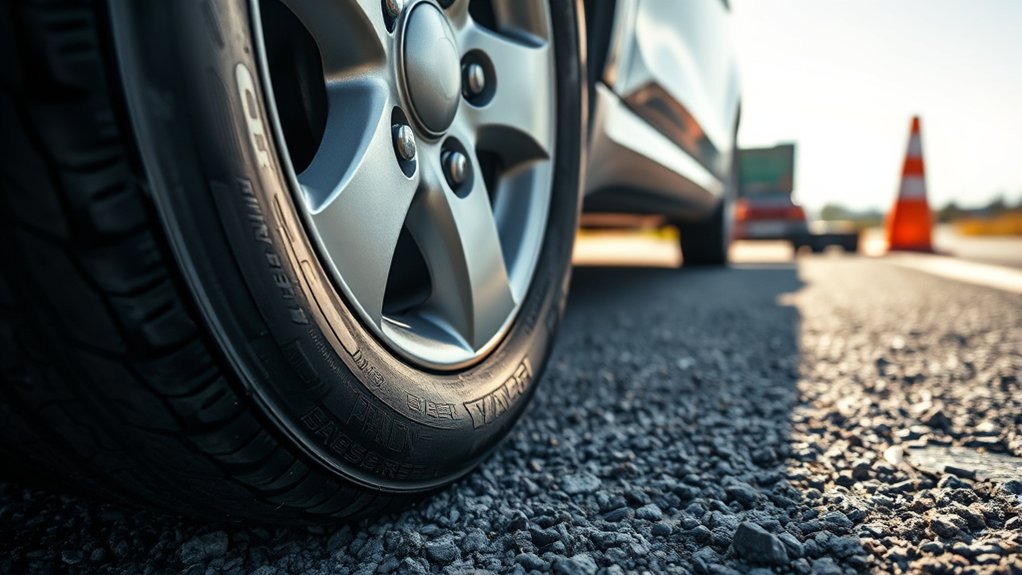
Can You Drive on a Flat Tire
You shouldn’t drive on a flat tire except for a very short distance at low speed to reach safety or a repair facility. Driving longer risks sidewall collapse, rim and suspension damage, loss of control, and costly repairs.
Run-flat tires may allow limited extended driving, but even they have strict limits. Immediate action—stop, change to a spare, or call roadside assistance—is best.
Understanding the risks and proper responses helps protect your vehicle and safety.
Key Takeaways
- Driving on a flat tire risks rim damage, vehicle instability, and costly suspension repairs, so it should be avoided whenever possible.
- If necessary, drive only a few hundred feet at very low speeds to reach safety or a repair location.
- Run-flat tires may allow limited driving up to 50 miles at reduced speeds, depending on the tire model.
- Immediate actions include safely pulling over, engaging the parking brake, and either changing to a spare or calling roadside assistance.
- Prolonged driving on a flat compromises vehicle control, increases fuel consumption, and accelerates mechanical wear and tire damage.
Can You Drive on a Flat Tire? Risks and Consequences
How long can you safely drive on a flat tire? The answer is very limited. Driving on a flat can cause severe damage within just a few moments. When you continue driving, the tire’s sidewalls collapse, leading to burnout tires that are unusable and unsafe.
This damage extends beyond the tire itself. A flat tire disrupts your vehicle’s balance, increasing rolling resistance and drastically reducing fuel efficiency. Additionally, the wheel rim and suspension components can suffer costly damage from contact with the road.
You risk losing control, especially at higher speeds, which poses a significant safety hazard. For these reasons, you shouldn’t attempt to drive on a flat tire except for very short distances at low speeds, ideally to reach a safe spot or repair facility.
How Far Can You Safely Drive on a Flat Tire?
Determining the safe distance you can drive on a flat tire depends on several factors, including the tire type, vehicle weight, and driving conditions. Generally, you should limit driving on a flat tire to no more than a few hundred feet at very low speeds to ensure driving safety.
Some vehicles equipped with run-flat tires allow you to drive up to 50 miles at reduced speeds (usually under 50 mph), but this varies by manufacturer and tire model. Regardless, any extended driving on a flat compromises tire maintenance and vehicle control.
Your best course of action is to stop immediately, replace the flat with a spare, or call roadside assistance. Prioritizing prompt tire repair preserves your safety and prevents further complications on the road.
Why Driving on a Flat Tire Can Damage Your Vehicle
Why does driving on a flat tire cause significant damage to your vehicle? When you drive with a flat, the tire loses its ability to support the vehicle’s weight properly, causing the rim to make direct contact with the road. This contact leads to irreversible damage to the wheel, suspension components, and alignment.
The flat tire also reduces shock absorption, increasing stress on your vehicle’s chassis and steering system. Additionally, a compromised tire affects tire safety by impairing handling, braking, and overall stability, raising the risk of accidents.
Continuing to drive on a flat accelerates wear and tear not only on the tire but also on critical mechanical parts, resulting in costly repairs. Prioritizing tire safety preserves both your vehicle’s integrity and your personal safety.
Signs Your Tire Is Flat and Needs Immediate Attention
When should you act if you suspect a flat tire? Immediate action is crucial to maintain road safety. Key signs include a sudden loss of vehicle stability or a noticeable pulling to one side.
You might also feel vibrations through the steering wheel or hear unusual thumping sounds. Visually inspect the tire: if it appears visibly deflated, bulging, or if the sidewall looks damaged, you’re dealing with a flat tire.
Additionally, check your tire pressure monitoring system (TPMS) alerts. Ignoring these signs compromises control, increases stopping distances, and risks further damage.
Always pull over safely and address a flat tire promptly to ensure your safety and prevent hazardous driving conditions. Recognizing these indicators early is essential for maintaining optimal vehicle performance and road safety.
Flat Tire vs. Blowout: What’s the Difference?
How can you tell the difference between a flat tire and a blowout while driving? A flat tire results from gradual air loss, causing the tire to deflate over time. You’ll notice a steady drop in tire pressure, often accompanied by a thumping sound or sluggish handling.
A blowout is sudden and violent. The tire bursts due to a rapid loss of air pressure, often triggered by impact or over-inflation. This causes an immediate change in vehicle control, with a sharp pull to one side and a loud bang.
Understanding these differences is crucial because a flat tire allows limited control briefly, while a blowout demands instant corrective action to avoid loss of control. Both require prompt attention, but their onset and impact on driving dynamics vary significantly.
What to Do When You Get a Flat Tire
Facing a flat tire demands immediate, calm action to maintain safety and prevent further damage. First, reduce speed gradually without sudden braking, and steer your vehicle to a safe, level area away from traffic.
Turn on your hazard lights to alert other drivers, prioritizing roadside safety. Once stopped, engage the parking brake and place wheel wedges to prevent rolling.
Assess the flat tire carefully, avoiding driving further on it to minimize rim damage. Retrieve your vehicle’s jack, lug wrench, and spare tire if you plan to change it yourself.
If conditions or location compromise safety, stay inside the vehicle with seatbelt fastened and call for professional assistance. Properly addressing a flat tire promptly ensures your safety and prevents costly repairs.
Spare Tire or Roadside Help: When to Choose Which
You should use a spare tire when you have the tools and skills to change it safely, as it allows you to quickly resume driving. Opt for roadside assistance if you lack the equipment, are in an unsafe location, or the damage is beyond a simple tire change. Assess your situation carefully to decide the most practical and secure option.
Spare Tire Benefits
When should you rely on a spare tire instead of calling roadside assistance? Utilizing a spare tire offers immediate mobility, ensuring you maintain control and safety on the road without waiting for help.
The spare tire benefits include a reliable tire safety backup that can minimize downtime and reduce emergency costs.
Consider these factors when choosing to use a spare tire:
- You have the knowledge and tools to change the tire safely.
- The spare tire is properly inflated and in good condition.
- The flat occurs in a safe location where you can work.
- You need to reach a nearby service station promptly.
Using a spare tire effectively provides a practical, technical solution, enhancing your tire safety backup during unforeseen tire failures.
Roadside Assistance Scenarios
Knowing how to use a spare tire effectively sets the stage for deciding when to handle a flat tire yourself or call roadside assistance. If you have the proper tools, a well-maintained spare, and feel confident in your ability, replacing the tire on-site can be quicker and safer.
However, prioritize driving safety. If you’re on a busy highway, at night, or unsure about your tire maintenance knowledge, it’s best to call for professional help. Roadside assistance can prevent accidents and improper installations that compromise vehicle control.
Evaluate your environment and skill level before proceeding. Remember, a spare tire is a temporary solution; timely tire repair or replacement is essential for maintaining long-term driving safety and proper tire maintenance.
Tips for Preventing Flat Tires While Driving
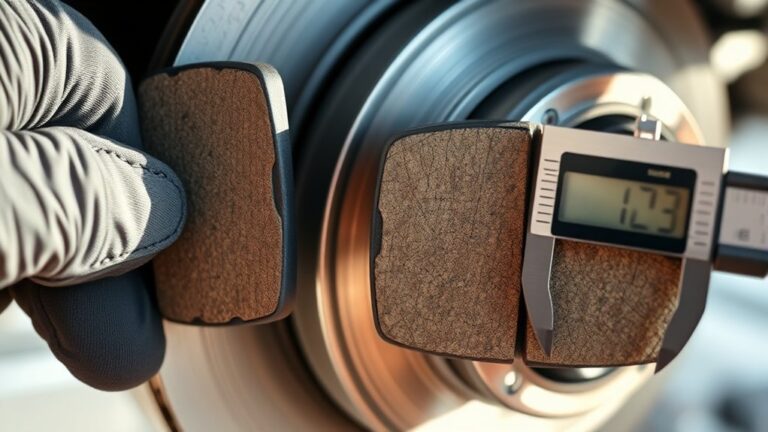
How can you minimize the risk of experiencing a flat tire while driving? Preventive measures focus on vehicle maintenance and road awareness. First, regularly check your tire’s tread depth; insufficient tread compromises grip and increases puncture risk.
Minimize flat tire risks by regularly checking tire tread depth and staying aware of road conditions.
Second, maintain proper tire pressure to avoid uneven wear and blowouts. Third, inspect tires for embedded debris or damage before every trip. Fourth, practice cautious driving by avoiding potholes, sharp objects, and rough terrain that can cause flats.
While bike safety principles differ slightly, the emphasis on tread depth and regular inspection remains vital for both two- and four-wheeled vehicles. By following these steps, you reduce tire failure likelihood, ensuring safer, uninterrupted travel.
Prioritize these technical checks routinely to uphold tire integrity and enhance overall driving safety.
How to Repair or Replace a Flat Tire
First, inspect the tire carefully to determine if it can be repaired or needs replacement. If repair is possible, you can use methods like patching or plugging the puncture. Otherwise, safely remove the flat and install your spare tire following proper procedures.
Assess Tire Damage
A thorough inspection of the tire’s condition is essential before deciding whether to repair or replace it. Don’t let an unrelated topic or random focus distract you; concentrate solely on the tire damage. Follow these steps precisely:
- Examine the tread depth and sidewall for cuts, bulges, or punctures larger than ¼ inch.
- Check for embedded objects like nails or glass. Removal might cause further damage.
- Assess the tire’s age; tires older than six years often require replacement regardless of visible damage.
- Inspect the bead area for damage, as it affects the tire’s seal to the rim.
If damage compromises structural integrity or safety, replace the tire. Minor punctures in the tread may be repairable, but sidewall or severe damage calls for replacement.
Use a Spare Tire
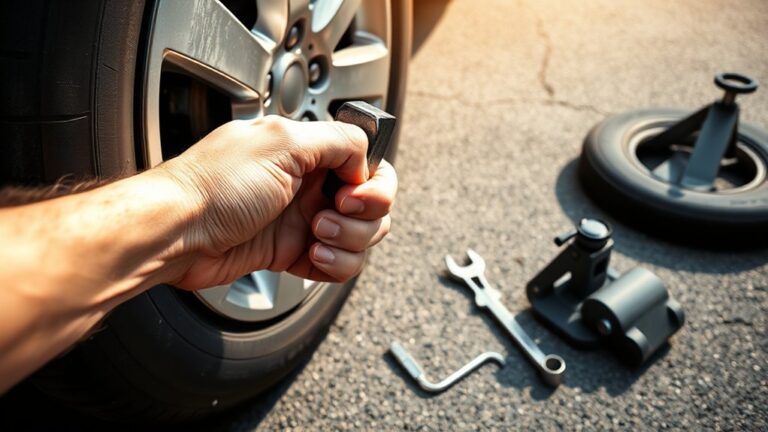
Where should you start when you need to replace a flat tire? First, locate your vehicle’s spare tire and necessary tools, including the jack, lug wrench, and wheel chocks.
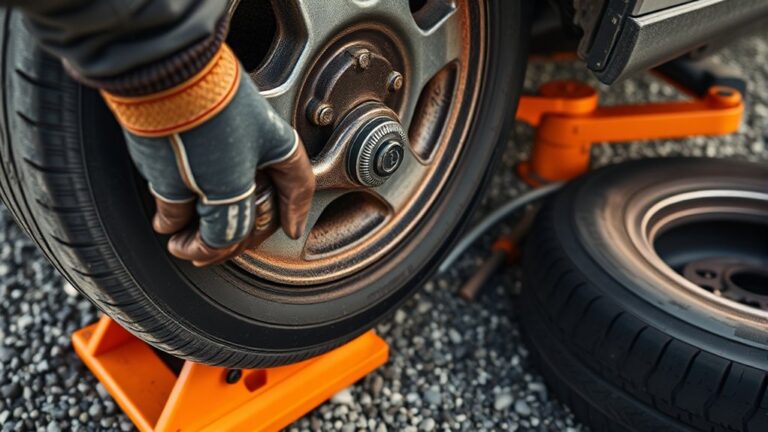
Ensure your car is parked on a flat, stable surface and engage the parking brake. Use wheel chocks to prevent movement. Loosen lug nuts slightly before lifting the car with the jack at the manufacturer’s recommended lift point.
Remove the lug nuts entirely, take off the flat tire, and mount the spare tire. Tighten the lug nuts by hand initially. Lower the vehicle carefully and then fully tighten the lug nuts in a star pattern to ensure even torque.
If you feel unsure or lack proper tools, call roadside help for assistance to avoid damage or injury.
Tire Repair Techniques
After fitting your spare tire, you’ll need to address the damaged tire itself to ensure your vehicle’s safety and performance. Proper tire repair techniques are critical. Start by inspecting the tire for punctures or visible damage. Then, follow these steps:
- Remove the tire and clean the puncture area thoroughly.
- Apply tire patching kits designed for the specific puncture type.
- Reinstall the tire and inflate it, ensuring precise air pressure management to manufacturer specifications.
- Monitor the repaired tire closely for pressure retention and structural integrity before resuming normal use.
Frequently Asked Questions
How Often Should I Check My Tire Pressure?
You should check tire pressure at least once a month and before long trips. Regular pressure monitoring guarantees optimal performance, safety, and fuel efficiency.
It also prevents uneven wear and potential tire failures. Don’t skip this essential maintenance step.
What Type of Tire Sealant Is Safe to Use?
Don’t throw caution to the wind. Choose tire sealants that follow compatibility guidelines with your tire type and vehicle. Prioritize non-toxic, ammonia-free formulas to ensure tire sealant safety and avoid damage or reduced performance.
Can Cold Weather Cause Tires to Go Flat?
Yes, cold weather impact causes tires to lose pressure as temperature fluctuation effects contract air inside. You’ll notice your tires go flat faster, so regularly check and adjust pressure to maintain optimal performance and safety.
How Long Do Spare Tires Typically Last?
You should replace your spare tire after 6-10 years or once tread wear becomes noticeable. Avoid speeding risks, as spares aren’t designed for high speeds or long distances, ensuring your safety and optimal tire performance.
Are Run-Flat Tires Worth the Investment?
Yes, run-flat tires can be worth the investment if you value convenience and safety. They debunk run flat myths and tire pressure myths by maintaining stability after punctures.
However, they usually cost more and offer a stiffer ride.
Conclusion
You shouldn’t drive on a flat tire; it can cause severe damage to your wheel and suspension. Studies show that 70% of tire-related breakdowns result from ignoring early signs. Instead, stop immediately, assess the situation, and either use a spare tire or call roadside assistance.
Prioritize safety and vehicle integrity by addressing flats promptly. Regular tire maintenance and awareness can help prevent costly repairs and keep you on the road without interruption. Remember, understanding why you shouldn’t drive on a flat tire is key to maintaining your vehicle’s safety and performance.