Do Brake Pads Come in Pairs
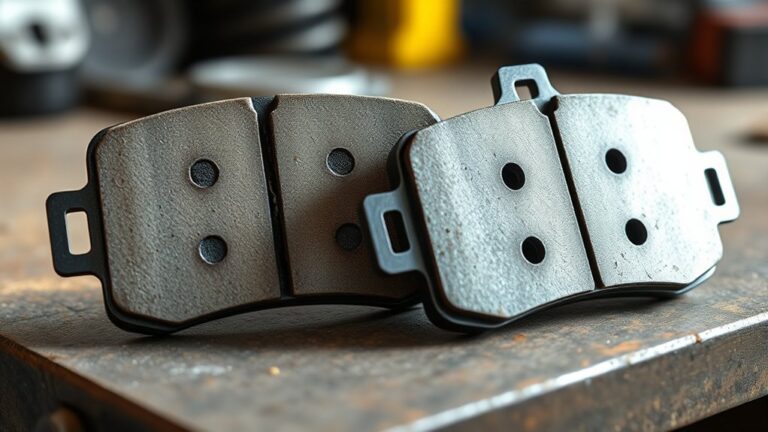
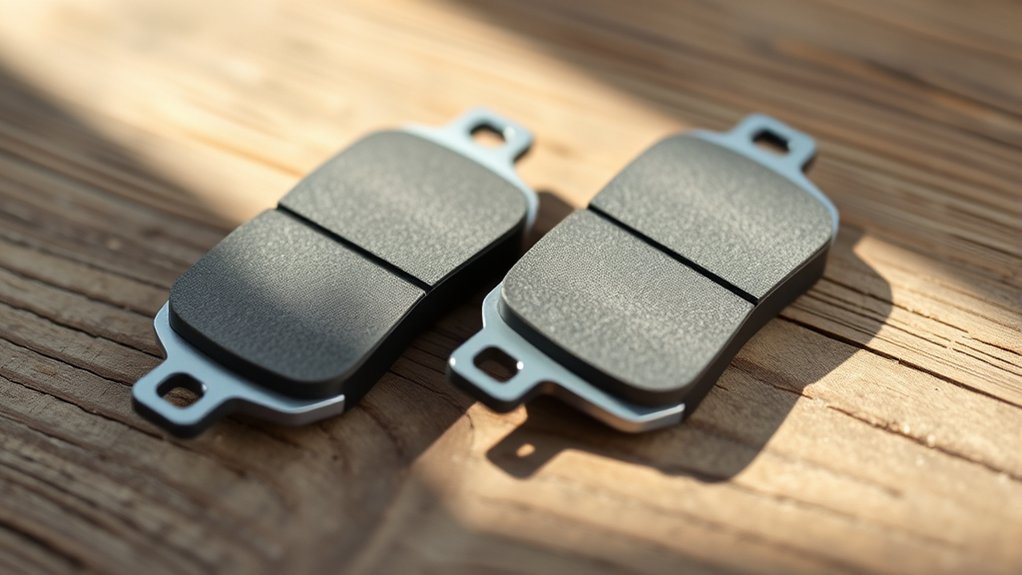
Yes, brake pads come in pairs because the two pads on the same axle work together to apply even pressure on the rotor. Replacing both ensures balanced friction and consistent braking force. This prevents uneven wear that can reduce control or damage components.
Using mismatched pads can lead to vibrations, pulling, and a shorter lifespan. For optimal safety, performance, and longevity, you should replace brake pads in pairs. You’ll find more details on why this practice matters and how to maintain your brakes effectively.
Key Takeaways
- Brake pads are typically replaced in pairs on the same axle to ensure balanced braking performance and even wear.
- Uneven pad thickness causes imbalanced pressure, reducing braking efficiency and vehicle stability.
- Manufacturer guidelines recommend pair replacement to maintain consistent friction and prevent rotor damage.
- Replacing only one pad can cause vibrations, pulling, and premature component wear.
- Paired replacement extends brake system lifespan and supports optimal safety and stopping power.
Should You Replace Brake Pads in Pairs?
Why should you replace brake pads in pairs? When one pad wears down, the opposing pad remains thicker, causing uneven pressure distribution during braking. This imbalance disrupts braking balance, leading to reduced control and increased stopping distances.
Additionally, worn pads can cause irreversible wear on the rotor surface, damaging components and raising repair costs. By replacing both pads simultaneously, you guarantee symmetrical friction material thickness, preserving consistent braking force and preventing rotor damage.
Neglecting to replace pads in pairs risks uneven pad wear and compromised performance. Maintaining braking balance is indispensable for safety and longevity of the braking system, so replacing brake pads in pairs is a technical necessity rather than just a precaution.
You’ll optimize performance and avoid premature component failure by adhering to this practice.
Why Brake Pads Work Together on an Axle
You rely on brake pads working in unison on an axle to deliver coordinated braking force, which helps maintain control during stops. When both pads share the load evenly, they wear at a similar rate, preventing uneven performance. This balance also enhances vehicle stability, especially during sudden or hard braking.
Coordinated Braking Force
How do brake pads on the same axle work together to guarantee balanced stopping power? They engage in coordinated braking, applying equal pressure to both sides of the rotor simultaneously. This synchronization ensures that the braking force is distributed evenly across the axle, allowing your vehicle to stop smoothly and predictably.
If one pad applied more force than the other, it could lead to uneven wear, compromising braking efficiency and potentially causing rotor damage. Coordinated braking also helps maintain vehicle stability during deceleration by preventing one side from grabbing harder, which could pull the vehicle off course.
Even Wear Distribution
When do brake pads truly fulfill their role in maintaining vehicle safety? They do so by wearing evenly, which is why brake pads always come in pairs on the same axle.
You might encounter quirky myths suggesting you can replace just one pad to save money, but uneven wear leads to imbalanced braking force, reducing efficiency and risking damage to rotors.
By installing pads as pairs, you ensure that both sides apply consistent pressure and wear at the same rate. This approach isn’t just a safety standard—it’s a practical budget hack.
Even wear distribution extends the lifespan of your braking system components, preventing premature failure and costly repairs. So, replacing brake pads in pairs is essential for optimal performance and cost-effectiveness.
Enhanced Vehicle Stability
Consistent brake pad wear not only preserves component longevity but also directly impacts vehicle stability during braking. When brake pads on the same axle wear evenly, you maintain balanced braking performance and avoid uneven wear that can cause vehicle pull or instability.
Here’s why brake pads work together for enhanced stability:
- Balanced friction force: Both pads generate equal braking force, preventing the car from veering to one side.
- Uniform heat distribution: This reduces the risk of warping rotors, which can cause vibrations and loss of control.
- Predictable response: Even pad wear ensures consistent pedal feel, allowing you to modulate braking precisely.
What Happens When Brake Pads Wear Unevenly
Why do unevenly worn brake pads pose a serious safety risk? When one pad wears faster than its pair, it disrupts the uniform braking force essential for vehicle control. This imbalance can cause the car to pull to one side, increasing the likelihood of accidents.
Uneven wear often results from caliper malfunctions or misaligned components, not an unrelated topic like tire pressure or engine performance, which are completely irrelevant here. Additionally, uneven pads can overheat, reducing friction efficiency and damaging rotors prematurely.
You’ll also notice increased vibration or noise during braking, signaling uneven pressure distribution. Addressing uneven wear promptly ensures consistent stopping power and maintains your vehicle’s stability. Ignoring it compromises safety and may lead to costly repairs down the line.
Can You Replace Just One Brake Pad on an Axle?
Uneven brake pad wear highlights the importance of balanced replacement, raising the question: can you replace just one brake pad on an axle? Technically, you can replace a single brake pad, but it’s not recommended due to three critical factors:
- Uneven wear: Replacing one pad disrupts the wear balance, causing uneven friction and braking performance.
- Brake pad material: Pads on the same axle should share consistent material composition to ensure uniform heat dissipation and wear rates.
- Brake system integrity: Mismatched pads can lead to vibrations or pulling during braking, compromising safety.
For optimal braking efficiency and longevity, it’s best to replace both brake pads on an axle simultaneously, ensuring even wear and consistent brake pad material properties.
Risks of Replacing Brake Pads One at a Time
If you replace brake pads one at a time, you risk causing uneven brake wear that can compromise your vehicle’s braking balance. This imbalance may reduce stopping efficiency and increase safety hazards during emergency braking. You should always replace pads in pairs to maintain consistent performance and control.
Uneven Brake Wear
How does replacing brake pads one at a time affect your vehicle’s braking system? Opting for a single pad replacement often causes uneven wear, leading to imbalanced braking performance.
When one brake pad is new and the other is worn, the system struggles to apply consistent pressure. This imbalance can result in:
- Unequal friction: The new pad grips more effectively than the worn one, causing the rotor to wear unevenly.
- Increased stress: The caliper piston may extend unevenly, putting additional strain on components.
- Accelerated wear: The older pad wears out faster due to compensating for the new pad’s efficiency.
To maintain optimal braking efficiency and prevent uneven wear, it’s crucial to replace brake pads in pairs rather than individually.
Safety Hazards Increase
Failing to replace brake pads in pairs doesn’t just cause uneven wear. It also compromises your vehicle’s safety. When you replace only one brake pad, the braking force becomes unbalanced, increasing the risk of unpredictable stopping behavior.
This imbalance can lead to longer stopping distances and reduced control during emergency braking. Pair maintenance ensures both sides exert equal pressure on the rotors, maintaining stability and optimal performance. Ignoring pair maintenance elevates the safety impact by causing uneven heat distribution.
Uneven heat distribution may warp rotors or cause premature component failure. You should always replace brake pads in pairs to preserve consistent braking efficiency and minimize hazards. Prioritizing this practice is essential for maintaining the structural integrity of your braking system and safeguarding your driving experience.
How Mechanics Decide When to Replace Brake Pads in Pairs
When do mechanics determine that brake pads should be replaced in pairs? They evaluate several factors before choosing between pair vs single replacement. Here’s how they decide:
- Wear Uniformity: Mechanics inspect both brake pads on an axle. If one pad is significantly more worn, replacing both ensures balanced braking performance.
- Cost Comparison: Replacing pads in pairs often reduces labor costs compared to separate service visits, making it more economical over time.
- Safety and Performance Standards: Mechanics follow manufacturer guidelines that typically recommend pair replacement to maintain consistent friction and avoid uneven braking.
Signs You Need to Replace Both Brake Pads
You need to replace both brake pads if you notice uneven pad wear, as this can cause imbalanced braking and increased rotor damage. Reduced braking performance, such as longer stopping distances or a spongy pedal, also indicates both pads require replacement. Addressing these signs promptly ensures consistent braking efficiency and safety.
Uneven Pad Wear
How can you tell if uneven pad wear signals the need to replace both brake pads? Uneven wear shortens the pad lifespan and compromises braking safety. You should replace both pads if you notice:
- One pad is markedly thinner than its counterpart, indicating uneven wear that stresses the braking system.
- Visible scoring or glazing on one pad, which reduces friction consistency and accelerates wear discrepancies.
- The vehicle pulls to one side during braking, suggesting imbalanced pad thickness affecting brake force distribution.
Uneven wear often points to caliper or hardware issues, so replacing both pads ensures balanced performance and prolongs overall pad lifespan. Addressing uneven wear promptly prevents further damage and maintains optimal braking efficiency.
Reduced Braking Performance
Why does your vehicle take longer to stop or require greater pedal effort? Reduced braking performance often signals irreversible wear on your brake pads or a synchronization issue between the pads on each wheel.
When pads wear unevenly or one set is compromised, your braking system can’t work efficiently, increasing stopping distances and pedal pressure.
| Symptom | Cause |
|---|---|
| Increased stopping distance | Irreversible wear on pads |
| Harder brake pedal | Synchronization issue |
| Brake noise | Uneven pad contact |
| Vibration during braking | Warped rotors from imbalance |
| Warning light activation | Sensor detecting pad failure |
Replacing both brake pads at once ensures balanced braking, restoring optimal performance and safety.
How Replacing Brake Pads in Pairs Improves Safety
What risks do uneven brake pad wear pose to your vehicle’s safety? When you replace brake pads individually, you risk creating imbalanced braking forces. This imbalance can lead to several side effects affecting your control and stopping distance.
To ensure optimal safety, always replace brake pads in pairs:
- Consistent Braking Force: Matching brake pads maintain equal friction on both sides, preventing the vehicle from pulling to one side.
- Reduced Wear and Tear: Even pad wear minimizes stress on related components, avoiding damage unrelated topics like rotor warping.
- Improved Stability: Balanced braking ensures predictable handling during emergency stops, reducing accident risk.
Tips to Extend the Life of Your Brake Pads
When should you perform routine maintenance to maximize your brake pads’ lifespan? Ideally, inspect your brake pads every 6,000 to 8,000 miles or during quick maintenance sessions such as oil changes. Regular checks allow you to identify wear early and prevent damage to rotors.
Additionally, ensure your tires maintain proper tire compatibility with your vehicle, as mismatched tires can alter braking dynamics, increasing pad wear. Adjust your driving habits by avoiding excessive hard braking and coasting to reduce friction.
Keep the braking system clean, free of dust and debris, to prevent uneven pad degradation. Following these technical guidelines will extend the service life of your brake pads, improve braking efficiency, and maintain safety without requiring premature replacements.
How to Save Money Buying Brake Pads in Pairs
Regularly inspecting and maintaining your brake pads not only enhances safety but also highlights opportunities to reduce costs, especially when it comes time for replacement. Buying brake pads in pairs can save you money and ensure consistent performance. Here’s how to maximize savings:
Regular brake pad checks improve safety and reveal cost-saving chances, especially when purchasing replacements in pairs.
- Compare aftermarket options: These often offer cost-effective, durable brake pads compatible with your vehicle’s specifications and off road compatibility requirements.
- Purchase complete sets: Buying front or rear pairs together reduces per-unit costs and ensures synchronized wear, enhancing braking efficiency.
- Factor labor costs: Replacing both pads simultaneously minimizes mechanic fees and downtime, preventing premature wear on the opposite pad.
Frequently Asked Questions
What Materials Are Brake Pads Typically Made From?
You’ll find brake pad metallurgy primarily includes semi-metallic, ceramic, and organic friction material compositions, each balancing heat resistance, wear, and noise. Understanding this helps you choose pads matching your vehicle’s performance and longevity needs precisely.
How Often Should Brake Pads Be Inspected for Wear?
You should perform brake inspection every 10,000 miles or during routine maintenance. Regular two word ideas like “brake inspection” help spot wear early, ensuring safety and optimal brake pad performance before they become dangerously thin.
Can Worn Brake Pads Damage the Brake Rotors?
Imagine sandpaper scraping wood. Worn brake pads do that to rotors.
If you ignore brake pad pairing and don’t replace both sides, you increase rotor wear risk. This leads to costly damage and compromised braking efficiency.
What Are the Signs of Brake Pad Glazing?
You’ll notice glazing symptoms like a shiny, hardened pad surface damage, reduced braking efficiency, and squealing noises. These signs indicate your brake pads have overheated and need inspection or replacement to restore proper function.
How Do Brake Pad Thickness Indicators Work?
Brake pad indicators work by sensing material wear; as your brake pad thins, these indicators contact the rotor, producing a noise or triggering a sensor.
This alerts you to replace pads before performance degrades dangerously.
Conclusion
Replacing brake pads in pairs isn’t just a recommendation—it’s essential for safety and performance. Did you know that uneven brake pad wear can reduce braking efficiency by up to 30%? By swapping both pads on an axle simultaneously, you guarantee balanced braking force, prevent premature rotor damage, and maintain vehicle stability.
Don’t risk compromised stopping power or costly repairs. Always replace brake pads in pairs to keep your braking system operating at peak efficiency. This practice ensures your vehicle brakes evenly and safely every time.