Do Ceramic Brake Pads Squeak
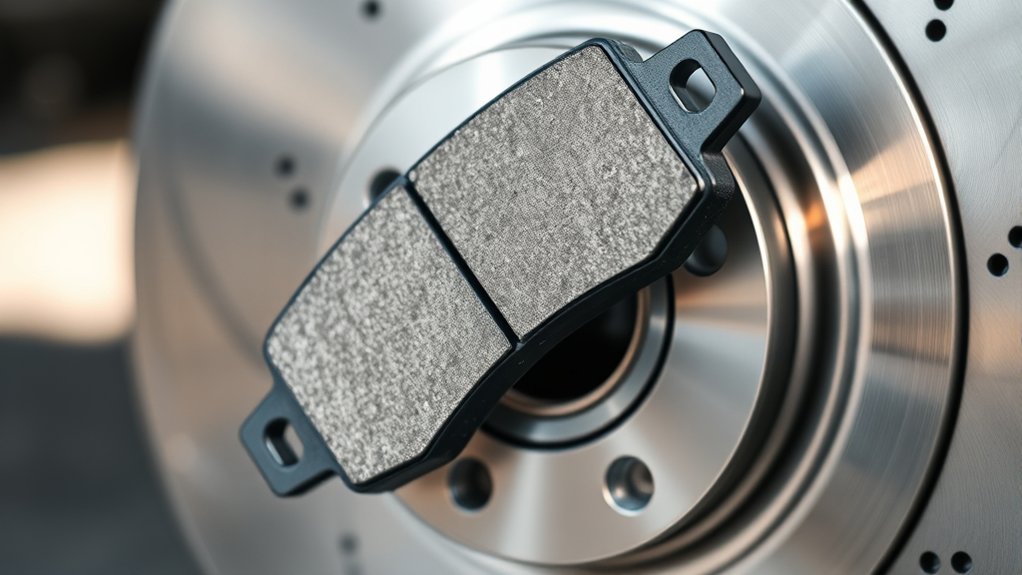
Ceramic brake pads can squeak, especially if contamination like dust, oil, or debris builds up on the pad or rotor. This buildup causes uneven friction and vibrations that lead to noise.
Improper installation, such as missing shims or misaligned pads, also contributes to squeaking by increasing mechanical stress. Additionally, glazing from overheating creates a hard, smooth surface that amplifies these sounds.
While ceramic pads are generally quieter than other types, understanding these contributing factors helps you keep your brakes silent and effective. Explore how conditions and maintenance impact their noise levels.
Key Takeaways
- Ceramic brake pads can squeak due to contamination, improper installation, or rotor surface issues despite generally producing less noise than other pad types.
- Dust, oil, or debris on pads or rotors create irregular friction patterns that lead to high-frequency squealing sounds.
- Misaligned pads, missing shims, or loose hardware increase vibrations and cause persistent brake squeaks.
- Glazing from excessive heat or contaminants hardens pad surfaces, reducing friction variation and causing squeaking.
- Regular cleaning, correct installation, and rotor maintenance minimize ceramic brake pad squeak and ensure quiet braking.
What Causes Ceramic Brake Pads to Squeak?
Although ceramic brake pads are designed to minimize noise, they can still squeak due to several factors. One primary cause is improper installation, where installation pitfalls like misaligned pads or missing shims generate vibrations, leading to high-frequency squeals.
Compared to organic or semi-metallic pads, ceramic materials have a harder, denser composition, which affects noise comparison. Ceramics generally produce less noise but are more sensitive to mounting precision.
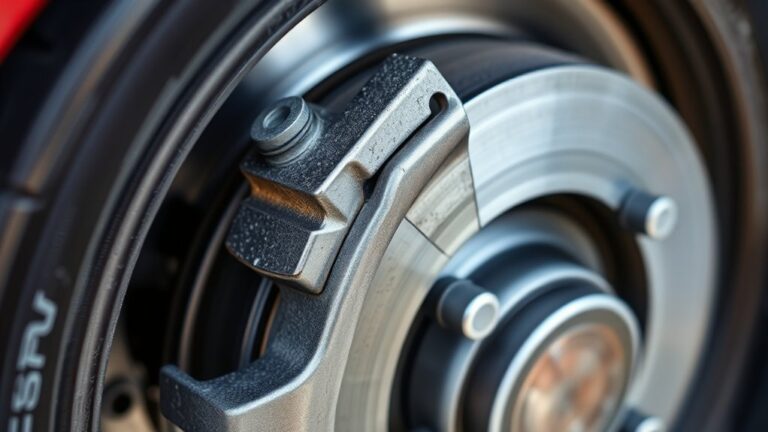
Additionally, glazing of the pad surface from excessive heat or contamination can create a smooth, hard layer that increases friction-induced noise. You should also consider rotor surface condition; uneven rotors amplify squeaking by disrupting pad contact.
Understanding these technical causes helps you troubleshoot and prevent squeaky ceramic brake pads effectively.
When Should You Worry About Squeaky Ceramic Brake Pads?
If your ceramic brake pads produce persistent squeaking despite normal conditions, you should closely inspect for underlying mechanical issues like glazing or uneven wear. Ignoring continuous noise can indicate compromised braking efficiency, which directly impacts your vehicle’s safety. You need to address these symptoms promptly to avoid potential brake failure or reduced stopping power.
Causes Of Persistent Noise
Why does your ceramic brake pad keep squeaking despite regular maintenance? Persistent noise often results from factors like glazing, where excessive heat hardens the pad surface, causing vibrations.
Contaminants such as oil or grease create irregular friction, producing high-frequency sounds. Misalignment or uneven rotor wear leads to inconsistent contact, amplifying squeaks.
It’s important to note that attributing persistent brake noise to an unrelated topic like tire issues or a random concept such as suspension play can mislead diagnostics. Instead, focus strictly on the brake assembly’s condition.
Worn shims, loose hardware, or inadequate lubrication of brake components also contribute to continuous squeaking. Identifying these precise causes helps determine if professional intervention is necessary or if simple adjustments suffice to silence the noise.
Safety Implications To Consider
When your ceramic brake pads start squeaking, you need to evaluate whether the noise signals a safety concern or a minor annoyance. Not all squeaks indicate urgent issues, but ignoring persistent sounds may compromise safety.
Here are key safety considerations to guide your assessment:
- Brake Performance: If squeaking accompanies reduced stopping power or a spongy brake pedal, it demands immediate inspection.
- Wear Indicators: Some pads have built-in indicators that produce noise when pads are worn thin, signaling replacement is necessary.
- Environmental and Installation Factors: Moisture or improper installation can cause noise without safety risks, but persistent squeaks after cleaning or adjustment warrant professional evaluation.
These discussion ideas help you prioritize actions, ensuring your brake system’s integrity while distinguishing harmless noises from potential hazards.
How Dust and Debris Make Ceramic Brake Pads Squeak
How exactly do dust and debris cause ceramic brake pads to squeak? When dust buildup accumulates on the pad surface or rotor, it creates an abrasive layer that interferes with smooth friction. This contamination disrupts the uniform contact between the ceramic pad and the rotor, generating high-frequency vibrations that manifest as squeaking noises.
Debris intrusion, such as small stones or metallic particles, can embed into the pad material or rotor grooves, acting like tiny grinding agents. These foreign particles increase surface roughness, leading to inconsistent braking pressure and noise. Because ceramic brake pads rely on precise frictional characteristics, any contamination alters their performance and acoustic signature.
Regular cleaning to remove dust buildup and inspection to prevent debris intrusion are essential to maintaining quiet, effective ceramic brake operation.
Can Improper Installation Cause Ceramic Brake Pads to Squeak?
Can incorrect alignment or insufficient securing of ceramic brake pads lead to squeaking? Absolutely. Improper installation disrupts the brake system’s harmony, causing friction and vibration. For instance, failing to install a brake pad shim correctly can generate metal-on-metal contact, resulting in persistent noise.
Incorrect alignment or missing shims in ceramic brake pads can cause friction and persistent squeaking noise.
Key factors include:
- Misaligned pads causing uneven wear and vibration.
- Loose caliper bolts or clips allowing excessive pad movement.
- Absence or incorrect placement of brake pad shim, leading to insufficient noise dampening.
When you install ceramic brake pads, ensure precise alignment and secure fastening. Use the correct brake pad shim designed for your model to minimize vibrations. Ignoring these installation details can cause squeaking despite the inherent quiet nature of ceramic pads. Proper procedure guarantees optimal performance and noise reduction.
Why Do Glazed Ceramic Brake Pads Squeak?
Improper installation isn’t the only cause of squeaking in ceramic brake pads; glaze buildup on the pad surface can also produce persistent noise. When ceramic brake pads overheat, the resin binder hardens, forming a smooth, glass-like layer called glazing. This glazed ceramic surface reduces friction variability, causing a high-frequency vibration known as brake pad squeak.
| Cause | Effect on Pad Surface | Resulting Noise Characteristic |
|---|---|---|
| Overheating | Resin hardens | Smooth glaze forms |
| Glazed ceramic layer | Reduced friction | High-pitched squeaking |
| Contaminants | Adhere to glaze | Persistent noise |
| Surface smoothness | Low friction variance | Vibration-induced squeak |
| Pad wear | Exposes fresh layer | Squeak may reduce |
To eliminate brake pad squeak, you need to remove the glaze through sanding or replacement.
How Weather and Driving Habits Affect Ceramic Brake Pad Noise
Why does your ceramic brake pad noise change with the seasons or driving style? The weather impact and driving habits directly influence the friction characteristics and pad surface condition.
Cold, damp environments increase moisture accumulation on the pads, leading to temporary squeaking until heat dissipates the moisture. Similarly, aggressive driving habits cause excessive heat, potentially glazing the pad surface and increasing noise.
Cold, damp conditions cause moisture buildup and squeaking, while aggressive driving heats and may glaze brake pads, increasing noise.
Consider these factors:
- Moisture retention: Cold or wet weather causes condensation, increasing initial brake noise.
- Temperature fluctuations: Rapid heating and cooling affect pad material expansion, altering noise levels.
- Driving intensity: Frequent hard braking generates heat, modifying friction behavior and sound emission.
Understanding these elements helps you anticipate when your ceramic brake pads may squeak under varying weather and driving conditions.
How to Stop Ceramic Brake Pads From Squeaking
To stop ceramic brake pads from squeaking, you need to identify common causes like glazing, improper installation, or lack of lubrication. You can reduce noise effectively by applying anti-squeal compounds and ensuring proper bed-in procedures. Regular maintenance, including cleaning and inspecting hardware, helps maintain quiet braking performance.
Common Causes Explained
How do ceramic brake pads end up squeaking despite their design for quieter performance? The answer lies in factors often overlooked in two word discussion ideas unrelated to brake pad composition. You might not realize how these technical nuances affect noise generation.
Common causes include:
- Contamination buildup: Dust, oil, or debris on the pad or rotor surface creates irregular friction patterns, causing vibrations and squeal.
- Improper installation: Misaligned pads or missing shims increase mechanical stress, leading to noise.
- Rotor surface condition: Uneven wear or glazing changes the contact interface, producing high-frequency vibrations.
Effective Noise Reduction
Addressing the factors that cause ceramic brake pads to squeak requires targeted interventions focusing on contamination control, installation accuracy, and rotor maintenance. To reduce noisy brake issues, guarantee the rotor surface is clean and free of debris or oil residues that can trigger squeaky performance.
During installation, apply a high-temperature brake lubricant to the backplate to dampen vibrations without contaminating the friction surface. Verify that the pads fit snugly within the caliper to prevent movement-induced noise.
Additionally, inspect the rotor for glazing or uneven wear, which can amplify noise; resurfacing or replacing the rotor may be necessary. By systematically controlling these variables, you’ll effectively minimize squeaking, ensuring quieter and more reliable ceramic brake operation.
Maintenance Tips Overview
Why do ceramic brake pads squeak despite their advanced design? The answer lies in factors like contamination, wear, and improper installation. To prevent squeaking, you must adhere to a consistent maintenance cadence and ensure coating compatibility between pads and rotors.
Here’s what you should focus on:
- Clean pads and rotors regularly to remove dust and debris that cause noise.
- Inspect pad thickness frequently and replace before wear reaches critical levels.
- Use anti-squeal compounds compatible with ceramic materials to reduce vibrations.
Comparing Ceramic Brake Pads to Other Brake Materials for Noise
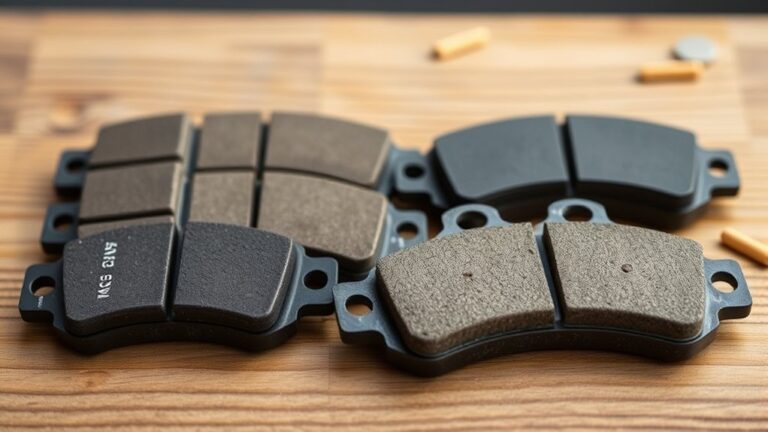
Although all brake pads generate some level of noise during operation, ceramic brake pads tend to produce markedly less squeaking compared to organic and semi-metallic pads. When you compare quiet brake pads, ceramic variants use dense, fine ceramic fibers and filler materials that help absorb vibrations responsible for noise.
Organic pads, made from resins and rubber, often emit higher squeal due to softer compounds wearing unevenly. Semi-metallic pads contain metal particles that enhance performance but frequently generate more noise from metal-to-metal contact.
In a noise comparison, ceramic brake pads deliver a smoother, quieter braking experience, reducing high-frequency squeaks. Consequently, if minimizing noise is your priority, ceramic brake pads outperform other materials in maintaining low operational sound levels under typical driving conditions.
Tips to Choose the Quietest Ceramic Brake Pads
How can you ensure you pick the quietest ceramic brake pads for your vehicle? Start by focusing on specific technical features rather than unrelated two word discussion ideas or subtopic irrelevant details. Pay attention to the pad’s formulation and construction, as these directly affect noise levels.
Consider these key factors:
- Material Composition: Opt for pads with high-quality ceramic blends designed to minimize vibrations and squeal.
- Shim and Backing Plate: Look for pads featuring noise-dampening shims and robust backing plates to absorb sound.
- Manufacturer Reputation: Choose brands with proven low-noise performance validated through rigorous testing and customer feedback.
Frequently Asked Questions
Are Ceramic Brake Pads More Expensive Than Other Types?
Yes, ceramic brake pads are generally more expensive due to their advanced materials and manufacturing. You’ll face expensive tradeoffs, balancing durability and performance against noise considerations, as ceramics typically produce less squeaking compared to other pad types.
How Long Do Ceramic Brake Pads Typically Last?
You’ll get 30,000 to 70,000 miles from ceramic brake pads, bearing wear considered. Though quieter than metallic pads, noise tradeoffs exist under extreme conditions. Their precise composition minimizes wear while balancing performance and sound effectively.
Do Ceramic Brake Pads Perform Well in Wet Conditions?
You’ll find ceramic brake pads offer excellent wet performance due to their stable friction coefficient. Compared to other materials, their durability comparison shows less wear and consistent stopping power, even in wet or humid conditions.
Can Ceramic Brake Pads Damage Rotors?
Ceramic brake pads won’t cause rotor damage when you use them properly, maintain them regularly, and avoid aggressive braking. Their composition reduces wear, so you can trust ceramic brake pads for smooth, safe rotor performance over time.
Are Ceramic Brake Pads Environmentally Friendly?
You’ll find ceramic brake pads more environmentally friendly due to lower wear emissions, but consider ecological tradeoffs like energy-intensive manufacturing and disposal.
Evaluating lifecycle impacts helps ensure you choose sustainable braking components effectively.
Conclusion
When ceramic brake pads squeak, it’s like a sharp whisper from your car’s braking system, signaling dust buildup, glazing, or installation issues. Don’t let this noise become a persistent echo; address it promptly to maintain optimal performance.
By understanding the subtle interplay of materials, environment, and wear, you can ensure your brakes operate silently and efficiently. This approach helps turn that grating sound into a smooth, confident stop every time you press the pedal.
Ultimately, keeping ceramic brake pads squeak-free is key to enjoying a quiet and reliable braking experience.