Do Different Material Spark Plugs Affect Performance
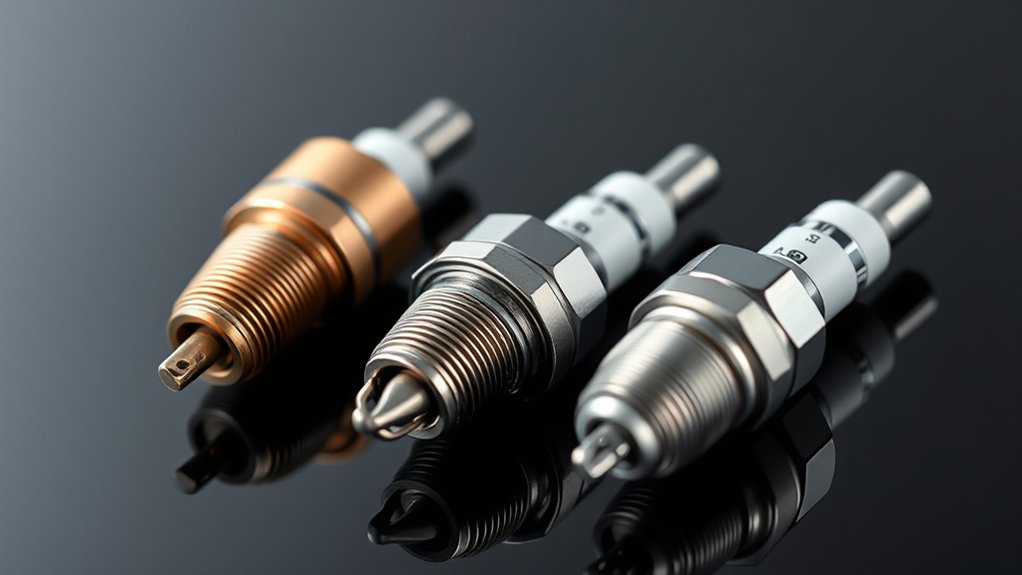
Yes, different material spark plugs affect engine performance by influencing conductivity, heat dissipation, and electrode durability. Copper spark plugs offer excellent electrical conductivity but tend to wear out more quickly.
On the other hand, platinum and iridium spark plugs provide superior wear resistance and better heat management, which enhances ignition consistency and extends lifespan.
Iridium plugs, known for their hardness and fine electrode tips, deliver optimal precision and durability, making them ideal for high-performance engines. Selecting the right spark plug material should align with your engine’s thermal requirements and maintenance schedule.
Keep exploring to find the best match for your vehicle.
Key Takeaways
- Spark plug materials impact conductivity, affecting spark intensity and ignition consistency.
- Copper plugs provide excellent conductivity but wear faster, reducing long-term performance.
- Platinum and iridium enhance durability and maintain spark gap integrity, improving reliability.
- Better heat handling by iridium and platinum prevents overheating and pre-ignition issues.
- Choosing the right material balances cost, engine type, and maintenance intervals for optimal performance.
Spark Plug Materials: Impact on Engine Performance
How do different spark plug materials influence your engine’s performance? The material composition directly affects conductivity, heat dissipation, and electrode wear, all critical for optimal combustion.
Spark plug materials determine the intensity and consistency of the spark, which impacts ignition timing and fuel efficiency. For example, materials with higher thermal conductivity prevent overheating, reducing pre-ignition risks and ensuring stable engine performance.
Spark plug materials influence spark quality, ignition timing, and fuel efficiency by managing heat and preventing pre-ignition.
Durability also varies; harder materials resist erosion, maintaining precise spark gaps that preserve combustion quality over time. Choosing the right spark plug materials means balancing electrical efficiency and thermal management to optimize engine performance.
Understanding these material properties helps you select plugs that enhance ignition reliability, fuel economy, and overall engine responsiveness without compromising longevity or maintenance intervals.
Comparing Copper, Platinum & Iridium Spark Plugs
Why does the choice between copper, platinum, and iridium spark plugs matter for your engine? Each material influences ignition efficiency, heat dissipation, and longevity differently.
Understanding copper vs platinum highlights key differences: copper offers excellent conductivity but shorter lifespan; platinum provides better wear resistance and longer service intervals. Iridium combines superior hardness with fine electrode tips, enhancing spark precision and combustion.
Consider these factors when selecting spark plugs:
- Electrical conductivity: copper leads, improving initial performance.
- Electrode wear: platinum resists erosion better than copper.
- Spark gap consistency: iridium maintains gap longer due to iridium durability.
- Cost-to-performance ratio: copper is economical but requires frequent replacement.
Your choice impacts engine responsiveness, fuel economy, and maintenance frequency.
Which Spark Plug Material Is Most Durable?
When determining which spark plug material is most durable, you need to evaluate how each metal withstands extreme heat, electrical erosion, and mechanical wear over time. In a durability comparison, iridium stands out due to its exceptional hardness and resistance to electrode degradation, maintaining stable performance longer than platinum or copper.
Platinum offers good durability with superior heat resistance compared to copper but wears faster than iridium under sustained stress. Copper, while providing excellent conductivity, exhibits the lowest durability because it erodes quickly and degrades under continuous electrical discharge and mechanical stress.
Therefore, if durability is your priority, iridium spark plugs are the optimal choice, balancing heat resistance and erosion resistance effectively to extend service life and preserve ignition reliability under demanding conditions.
Which Spark Plugs Handle Heat Best?
Which spark plugs handle heat best depends largely on the materials used and their thermal conductivity properties. When assessing which heat tolerance a spark plug exhibits, you need to consider how well the material dissipates heat to prevent overheating and electrode erosion. Material durability directly impacts this capability.
Key factors influencing heat handling include:
- Material composition: Iridium and platinum offer superior heat resistance compared to copper.
- Thermal conductivity: High conductivity materials transfer heat efficiently, reducing wear.
- Electrode design: Smaller electrodes with high melting points withstand thermal stress better.
- Insulator material: Advanced ceramics improve heat dissipation and resist thermal shock.
How to Choose the Right Spark Plug Material
Understanding how different materials manage heat sets the foundation for selecting the right spark plug material for your engine. You need a material that balances thermal conductivity and durability to minimize spark plug oxidation and electrode wear.
For example, iridium and platinum offer superior resistance to oxidation and slower electrode wear compared to copper, making them ideal for high-performance or long-interval applications. Copper, while excellent at heat dissipation, wears faster and oxidizes more readily under extreme conditions.
Consider your engine’s operating temperature, combustion characteristics, and maintenance intervals. If you prioritize longevity and consistent spark delivery, iridium or platinum plugs are optimal. For cost-effectiveness and efficient heat handling in standard engines, copper plugs suffice.
Ultimately, choosing the right material depends on matching these factors to maintain optimal combustion and prevent premature spark plug failure.
Frequently Asked Questions
How Often Should I Replace Spark Plugs Regardless of Material?
You should follow the manufacturer’s recommended replacement interval, typically between 30,000 to 100,000 miles, to maintain optimal spark plug efficiency.
Regular inspection ensures consistent ignition and prevents performance drops due to wear or fouling.
Can Spark Plug Material Affect Fuel Efficiency?
You can improve fuel efficiency by up to 4% using advanced spark plug materials like iridium, which ensure better ignition and combustion.
Choosing the right spark plug materials optimizes engine performance and maximizes fuel efficiency consistently.
Do Different Spark Plug Materials Influence Engine Noise?
Yes, different spark plug materials influence spark plug noise by affecting combustion consistency. You’ll notice that higher material durability reduces misfires, consequently lowering engine noise and improving overall operational smoothness and sound quality.
Are There Environmental Impacts of Using Certain Spark Plug Materials?
You’ll picture a spark plug’s environmental lifecycle, from raw material extraction to disposal. Using recyclable materials like iridium reduces landfill waste and energy use. You can minimize environmental impacts by prioritizing spark plugs designed for efficient material recycling.
Can Spark Plug Material Affect Cold Starting Performance?
Yes, spark plug materials can affect cold start performance. You’ll notice that iridium and platinum plugs provide more reliable ignition at low temperatures due to their efficient heat conduction and durability, improving engine start-up consistency.
Conclusion
Choosing the right spark plug material is like selecting the perfect tool for a precise job—it directly influences your engine’s efficiency and longevity. Copper offers excellent conductivity but wears faster, while platinum and iridium provide superior durability and heat resistance. Understanding your engine’s demands will help you optimize performance and maintenance intervals.
By matching spark plug material to your specific needs, you ensure consistent ignition quality and maximize overall engine reliability. Different material spark plugs affect performance in distinct ways, so choosing the appropriate type is key to achieving the best results for your engine.