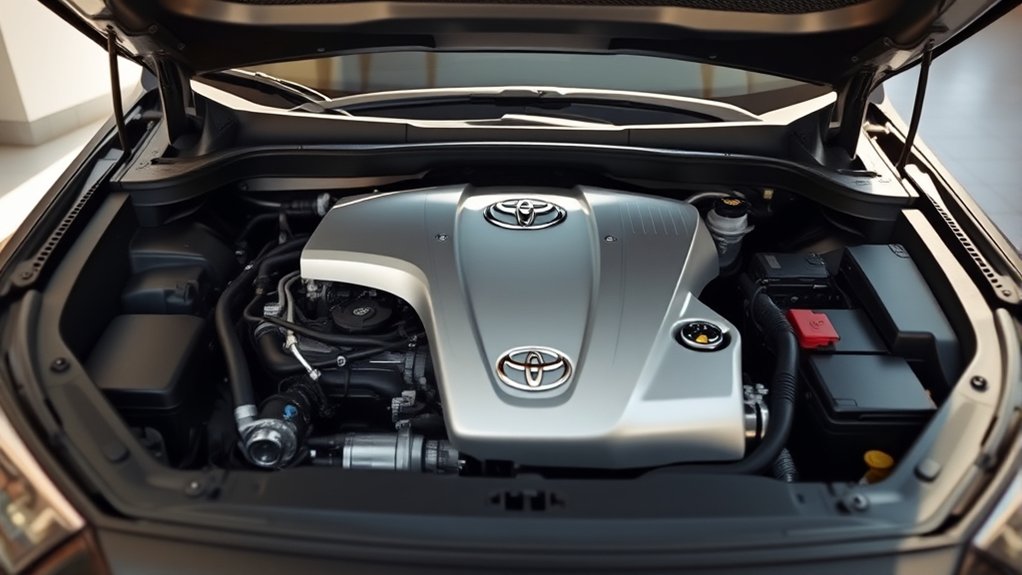
Does rav4 Have Cvt Transmission
Yes, the Toyota RAV4 does have a CVT transmission in many of its recent models, particularly in the hybrids and the RAV4 Prime. These models use a continuously variable transmission (CVT) to enhance fuel efficiency and provide smooth acceleration.
Unlike traditional automatic transmissions with fixed gears, the CVT uses a belt and pulley system to deliver seamless ratio changes. This design optimizes engine performance by continuously adjusting the gear ratio to the driving conditions.
The CVT offers a quieter and more responsive driving experience. However, it may require higher maintenance costs if not properly cared for. Understanding these details helps you appreciate the RAV4’s transmission options and their effects on performance and ownership.
Key Takeaways
- Many recent Toyota RAV4 models, especially hybrids and the RAV4 Prime plug-in hybrid, use CVT transmissions for better fuel efficiency.
- Traditional automatic transmissions are more common in earlier RAV4 models and towing-focused trims.
- The RAV4’s CVT uses a belt and pulley system to provide smooth, continuous gear ratio changes without shift shocks.
- CVTs in RAV4s optimize engine performance and fuel economy by maintaining ideal power ranges during driving.
- Proper maintenance, including recommended fluid changes, is essential for CVT durability and performance in RAV4 models.
Does the Toyota RAV4 Have a CVT Transmission?
Does the Toyota RAV4 come equipped with a CVT transmission? Yes, many recent RAV4 models utilize a Continuously Variable Transmission (CVT) to optimize fuel efficiency and smooth acceleration.
When you evaluate transmission durability, the CVT in the RAV4 is engineered with high-strength steel belts and advanced electronics, which enhance longevity compared to older CVT designs. However, its complexity means that repair cost can be higher than traditional automatic transmissions if issues arise, especially after extended use or improper maintenance.
To maintain transmission durability, you should follow Toyota’s recommended service intervals closely. Understanding these factors helps you anticipate performance and potential expenses, ensuring informed decisions about ownership and maintenance of your RAV4’s CVT-equipped drivetrain.
Which RAV4 Models Use a CVT vs. Traditional Automatic?
Which Toyota RAV4 models come equipped with a CVT versus a traditional automatic transmission depends largely on the model year and powertrain configuration. Generally, recent gasoline-powered RAV4s, especially those with the hybrid powertrain, use a CVT to optimize fuel efficiency and smooth acceleration.
Traditional automatic transmissions are more common in earlier models and certain trims focused on towing capacity, as they handle heavier loads better. For example, the RAV4 Prime plug-in hybrid, which supports EV charging, employs a sophisticated CVT to balance electric and gasoline power seamlessly.
If you prioritize towing capacity, you might prefer models with traditional automatics, as they offer more robust torque management. Understanding these distinctions helps you choose a RAV4 that fits your driving needs and efficiency preferences.
How Does the RAV4’s CVT Work Compared to a Traditional Automatic?
You’ll find that the RAV4’s CVT uses a belt and pulley system to provide seamless gear ratio changes, unlike the fixed gear sets in a traditional automatic transmission. This design allows for smoother acceleration and improved fuel efficiency by maintaining the engine’s prime power range. Understanding these mechanical differences helps explain the distinct performance and efficiency characteristics between the two transmission types.
CVT Mechanism Explained
How exactly does the RAV4’s CVT differ from a traditional automatic transmission? The CVT uses a system of variable-diameter pulleys connected by a steel belt, allowing seamless adjustment of gear ratios. Unlike fixed gear steps in traditional automatics, the RAV4’s CVT continuously varies ratios to optimize engine efficiency and performance.
This design minimizes cvt windup, a condition where torque buildup can cause belt slippage, by precisely managing torque transfer. The transmission’s torque mapping system actively adjusts pulley positions and engine output based on driving conditions, ensuring smooth acceleration without the shift shock you’d feel in conventional automatics.
Traditional Automatic Features
Traditional automatic transmissions rely on a set of fixed gear ratios controlled by planetary gearsets and hydraulic systems, which shift gears in distinct steps as you accelerate or decelerate. Unlike the RAV4’s CVT, these transmissions use mechanical clutches and bands to engage specific gears, resulting in noticeable shift points.
When considering drivetrain compatibility, traditional automatics are often more straightforward to integrate with torque converters and transfer cases, especially in all-wheel-drive systems. However, their maintenance scheduling tends to be more demanding, requiring periodic fluid changes and inspections to prevent wear on hydraulic components.
In contrast, the RAV4’s CVT eliminates fixed gears, offering seamless ratio changes but necessitating different maintenance protocols. Understanding these traditional features helps you appreciate how the CVT innovates within the same drivetrain framework.
Performance And Efficiency Differences
While traditional automatics shift through fixed gear ratios with distinct steps, the RAV4’s CVT continuously adjusts its gear ratio to match driving conditions, providing smoother acceleration and optimized engine performance. This seamless adjustment enhances fuel efficiency through precise eco tuning, allowing the engine to run at its most efficient RPM.
Compared to traditional automatics, you’ll notice:
- Improved fuel economy due to reduced power loss.
- Smoother power delivery without noticeable gear shifts.
- Enhanced responsiveness in variable driving conditions.
- Potentially higher resale value, as CVTs align with modern efficiency standards.
Benefits of the RAV4’s CVT for Fuel Economy and Performance
A key advantage of the RAV4’s CVT lies in its ability to optimize engine output continuously, which directly enhances fuel efficiency and driving performance. Unlike traditional transmissions with fixed gear ratios, the CVT adjusts seamlessly to maintain the engine’s ideal power band.
This prevents unnecessary fuel consumption caused by gear shifts and allows smoother acceleration. When you drive, you’ll notice improved responsiveness and a more consistent power delivery, especially in stop-and-go traffic or varying terrain.
It’s important to avoid unrelated topic or irrelevant discussion about conventional transmissions here; the CVT’s unique design specifically targets efficiency gains without sacrificing performance. By reducing mechanical losses and optimizing torque transfer, the RAV4’s CVT helps you get more miles per gallon while delivering a refined driving experience.
Drawbacks of the RAV4’s CVT Transmission
You’ll notice the RAV4’s CVT can produce noticeable noise and vibration under certain driving conditions. Its design also limits performance during rapid acceleration compared to traditional transmissions. Understanding these drawbacks helps set realistic expectations for your driving experience.
Noise and Vibration Issues
One common drawback of the RAV4’s CVT transmission involves noticeable noise and vibration during operation. You might experience less effective noise dampening compared to traditional automatics, resulting in a droning sound at higher RPMs. Additionally, specific vibration patterns can become apparent, especially during acceleration or deceleration.
Here are key points to consider:
- The CVT’s pulley system can generate continuous, high-frequency noise.
- Noise dampening measures may not fully isolate engine vibrations.
- Vibration patterns can vary depending on load and speed.
- Prolonged exposure to these noises might affect driver comfort.
Understanding these characteristics helps you anticipate and mitigate noise and vibration issues inherent in the RAV4’s CVT transmission design.
Performance Limitations
How does the RAV4’s CVT transmission impact overall vehicle performance? While the CVT provides smooth acceleration and improved fuel efficiency, you’ll notice some performance limitations.
The CVT can struggle with rapid throttle changes, causing a delayed response compared to traditional automatics. This can affect acceleration feel, especially during overtaking.
Additionally, the CVT’s design limits its ability to handle high torque, which may reduce performance in demanding driving conditions.
It’s important to avoid unrelated topic shifts or irrelevant comparison with unrelated transmission types, as they can obscure this focused evaluation.
Understanding these drawbacks helps you set realistic expectations about the RAV4’s drivability, especially if you prioritize sporty or aggressive driving characteristics, where the CVT might feel less responsive.
Maintenance and Repair Costs of the RAV4’s CVT
What factors influence the maintenance and repair costs of the RAV4’s CVT? Several key elements determine expenses, especially since CVTs differ from traditional transmissions. First, understand that many maintenance myths surrounding CVTs, like frequent fluid changes, often stem from confusion with EV concerns, which don’t apply here.
To manage costs effectively, consider these aspects:
- Fluid replacement intervals. Toyota recommends specific CVT fluid changes to avoid premature wear.
- Driving habits. Aggressive driving increases stress on the CVT components.
- Warranty coverage. Newer RAV4 models often include extended CVT warranties.
- Repair complexity. CVTs require specialized knowledge, potentially raising labor costs.
What Is the Driving Experience Like With the Rav4’s CVT?
When you drive the Rav4 with its CVT, you’ll notice smooth acceleration and quick responsiveness that adapts seamlessly to your input. This transmission also enhances fuel efficiency by optimizing engine speed continuously during various driving conditions. Additionally, noise and vibration levels remain minimal, contributing to a quieter cabin experience.
Smoothness And Responsiveness
Why does the Rav4’s CVT stand out in terms of smoothness and responsiveness? When you drive, you’ll notice how seamlessly the transmission adjusts, providing a fluid acceleration experience. This smoothness complements the refined drivetrain aesthetics and the quality interior materials, enhancing overall driving satisfaction.
Here’s what you can expect:
- Instantaneously adaptive gear ratios that reduce lag.
- Consistent power delivery without the typical shift shocks.
- Enhanced torque management for responsive acceleration.
- Reduced engine noise, integrating well with cabin refinement.
This CVT design allows you to maintain precise control, especially in stop-and-go traffic or highway cruising. The transmission’s responsiveness ensures you get immediate throttle feedback, making the Rav4 feel agile and composed, aligning perfectly with its sophisticated interior and drivetrain setup.
Fuel Efficiency Impact
Beyond delivering smooth and responsive performance, the Rav4’s CVT substantially enhances fuel efficiency by continuously optimizing engine speed and load. You’ll notice that this system adjusts ratios seamlessly to keep the engine operating at peak efficiency, reducing fuel consumption during varied driving conditions.
Unlike traditional transmissions with fixed gear steps, the CVT’s ability to maintain optimal power delivery means you avoid unnecessary fuel waste. When evaluating the Rav4’s driving experience, it’s important not to get distracted by irrelevant topics like traditional gear shifting feel or off topic comparisons to unrelated vehicles.
Instead, focus on how the CVT’s precise control directly translates to improved miles per gallon, benefiting your daily commute and long drives alike without sacrificing performance.
Noise And Vibration Levels
The Rav4’s CVT minimizes noise and vibration by maintaining consistent engine speeds and smoothly adjusting gear ratios. You’ll notice reduced displacement clarity, meaning the engine’s sound remains steady without abrupt changes during acceleration. This results in a quieter cabin and less vibration transmitted through the drivetrain.
However, some drivers might find the CVT’s characteristic drone under heavy throttle less engaging compared to traditional automatics.
To optimize your driving experience, focus on these points:
- Monitor CVT fluid levels to meet maintenance expectations and prevent noise issues.
- Regularly inspect mounts to reduce vibration transfer.
- Understand the CVT’s unique sound profile for realistic expectations.
- Adjust driving habits to smooth acceleration, minimizing noticeable noise spikes.
This approach ensures you maintain both performance and comfort with the Rav4’s CVT.
How Does the RAV4’s CVT Compare to Competitors’ Transmissions?
How does the RAV4’s CVT stand up against transmissions from other compact SUVs? Toyota’s CVT offers smooth, efficient power delivery, often outperforming traditional automatics in fuel economy and responsiveness.
Compared to competitors like Honda’s CVT and Subaru’s Lineartronic, the RAV4’s system balances refinement and durability well. You’ll notice fewer interruptions in power during acceleration, which complements the vehicle’s hybrid models, where battery health is crucial for maintaining performance.
The CVT also integrates seamlessly with the RAV4’s infotainment quality, ensuring drivetrain feedback doesn’t interfere with user experience. While some rivals might offer sportier shifts, Toyota prioritizes reliability and efficiency.
Should You Choose a RAV4 With CVT Based on Your Driving Needs?
Why should you consider a RAV4 with a CVT based on your driving habits? Choosing this transmission depends on your specific needs rather than irrelevant speculations or speculative comparisons. The CVT excels in fuel efficiency and smooth acceleration, making it ideal for urban commuting and stop-and-go traffic. However, if you prefer a more traditional driving feel or frequent heavy towing, other transmissions might suit you better.
Consider a RAV4 with CVT if you prioritize fuel efficiency and smooth urban driving over traditional feel or heavy towing.
Consider these factors:
- Fuel economy priority: CVT optimizes engine performance for better mileage.
- Driving environment: CVT performs well in city traffic with frequent speed changes.
- Comfort: CVT offers seamless acceleration without shift shock.
- Power demands: For aggressive driving or towing, CVT may feel less responsive.
Evaluate your habits to decide if the RAV4’s CVT aligns with your needs.
Where to Find Reliable RAV4 Transmission Specs and Reviews
Where can you access accurate and exhaustive RAV4 transmission specifications and user reviews? Start with official Toyota resources. They provide detailed technical specs, including CVT gear ratios, torque capacity, and design features.
For real-world insights, consult automotive forums and expert review sites where enthusiasts and mechanics discuss performance and durability. This helps you separate reliability rumors from facts.
Additionally, trusted automotive publications conduct controlled tests, offering data-driven evaluations that dispel common maintenance myths about the CVT. You can also explore consumer feedback on platforms like Edmunds or Consumer Reports, which highlight recurring issues and long-term satisfaction.
Frequently Asked Questions
What Is the History of the Toyota RAV4 Model Lineup?
You’ll appreciate the RAV4 trimline evolution, starting in 1994 with compact designs, expanding to hybrids and tech-rich trims.
Understanding Toyota badge history reveals consistent innovation and reliability shaping each RAV4 generation’s advancements.
How Do All-Wheel Drive Options Differ in the RAV4?
You know what they say: “Different strokes for different folks.” The RAV4’s all-wheel drive options vary by transmission, offering multi-mode electric AWD or dynamic torque vectoring AWD.
These systems optimize traction and handling for diverse driving conditions.
What Are Common Interior Features in the Latest RAV4?
You’ll find advanced interior features like a touchscreen infotainment system, dual-zone climate control, and leather-trimmed seats.
The Rav4 also offers versatile cargo space with a flat load floor and split-folding rear seats for maximum utility.
How Does the Rav4’s Engine Size Vary by Year?
You’ll notice the RAV4’s engine size shifts subtly over years, balancing engine quirks with fuel economy improvements. Early models had 2.4L engines, while recent ones use efficient 2.5L options, enhancing power and mileage.
What Safety Ratings Has the RAV4 Received Over Time?
You’ll find the RAV4 consistently earns top safety ratings, regardless of powertrain options. Its interior features have evolved across generations, enhancing occupant protection and comfort.
This ensures a secure driving experience alongside advanced technology and robust structural design.
Conclusion
If you want a smooth, fuel-efficient ride, the RAV4’s CVT is nothing short of a game-changer. It adapts seamlessly, giving you better mileage without sacrificing performance. While it may feel different from traditional automatics, its benefits often outweigh the quirks.
Choosing a RAV4 with CVT depends on your driving style and priorities. So, immerse yourself in specs and reviews to make an informed decision that fits your needs perfectly. Ultimately, understanding if the RAV4 has CVT will help you decide if it’s the right vehicle for you.