How Do You Know if You Need New Brake Pads
You know you need new brake pads when you hear consistent squealing or grinding sounds during braking, feel vibrations or pulsations in the brake pedal, or notice increased stopping distances. These are clear signs that your braking system requires attention.
Visually, check for pad thickness below about 3 mm or uneven wear patterns. Brake fluid discoloration or low levels can also hint at wear. Ignoring these signs risks safety and damage.
Keep going to understand specific sounds, vibrations, and inspection tips to help maintain your braking system effectively.
Key Takeaways
– Persistent high-pitched squealing or grinding sounds indicate brake pads are worn
and need replacement.
– Noticeable vibrations or pulsations in the brake pedal or steering wheel during braking
signal uneven or worn pads.
– Reduced braking performance or longer stopping distances suggest brake pads have thinned
below safe thickness.
– Visual inspection showing pad thickness below 3 mm or visible wear indicator grooves means
pads require replacement.
– Discolored or low brake fluid levels, along with uneven pad wear, signal potential brake system
issues needing attention.
Key Signs Your Brake Pads Need Replacing
How can you tell when your brake pads need replacing? Monitor brake pad noise and listen for consistent squealing indicators, which often signal thinning pads.
Inspect wear patterns carefully; uneven wear can cause rotor wear, reducing braking efficiency. Measure pad thickness regularly. Once it dips below the manufacturer’s recommended limit, replacement is urgent.
Pay attention to brake fluid hints like discoloration or low levels, which may accompany pad wear. Notice pedal feel changes, such as a spongy or lowered brake pedal, which indicate compromised braking performance.
Steering vibrations during braking also suggest uneven rotor or pad wear. Always respond promptly to alert indicators on your dashboard and adhere strictly to your vehicle’s maintenance schedule to ensure timely brake pad replacement and optimal safety.
Brake Sounds That Signal Replacement
Alongside visual inspections and pedal feedback, certain brake sounds provide clear indications that your brake pads require replacement. The most common brake pad noise is a high-pitched squeal, often caused by a built-in wear indicator designed to alert you when pads are thinning.
This squealing causes friction material to rub against the rotor, signaling it’s time to replace the pads. Additionally, persistent grinding noises indicate that the brake pads are completely worn down, exposing the metal backing plate, which damages rotors.
You should never ignore these sounds, as they compromise braking efficiency and safety. Regularly listening for abnormal brake pad noise helps you address wear promptly, preventing costly repairs and ensuring reliable vehicle performance.
What Vibrations Mean for Your Brake Pads
Why does your steering wheel shake or your brake pedal pulsate when you apply the brakes? These vibrations often indicate uneven wear or warping of your brake pads or rotors. Such vibration causes stem from the brake pads not making consistent contact with the rotor surface, leading to oscillations felt through the pedal and steering components.
Ignoring these signs can lead to more severe brake system damage. Additionally, your vehicle’s dashboard indicators may alert you to brake issues before vibrations become noticeable. Pay close attention to these warnings, as they can signal the need for brake pad inspection or replacement.
Addressing vibration causes promptly ensures your braking system maintains optimal performance and safety.
How Worn Brake Pads Affect Your Stopping Power
When you press the brake pedal, what determines the distance it takes for your vehicle to come to a complete stop? The condition of your brake pads plays a critical role.
Worn brake pads reduce friction efficiency, increasing stopping distance and compromising safety. Maintaining optimal pad thickness ensures consistent stopping power and supports eco friendly stopping by minimizing energy loss.
| Pad Thickness (mm) | Friction Efficiency (%) | Stopping Distance (m) at 60 mph |
|---|---|---|
| 10 (New) | 100 | 35 |
| 7 | 85 | 40 |
| 4 | 65 | 50 |
| 2 | 40 | 65 |
| 1 (Critical) | 20 | 85 |
Using far future brake technologies aims to sustain high friction efficiency longer.
Visual Inspection Tips for Brake Pads
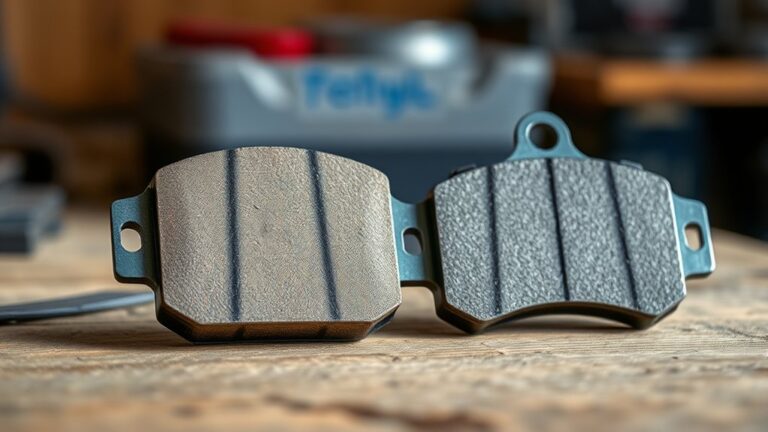
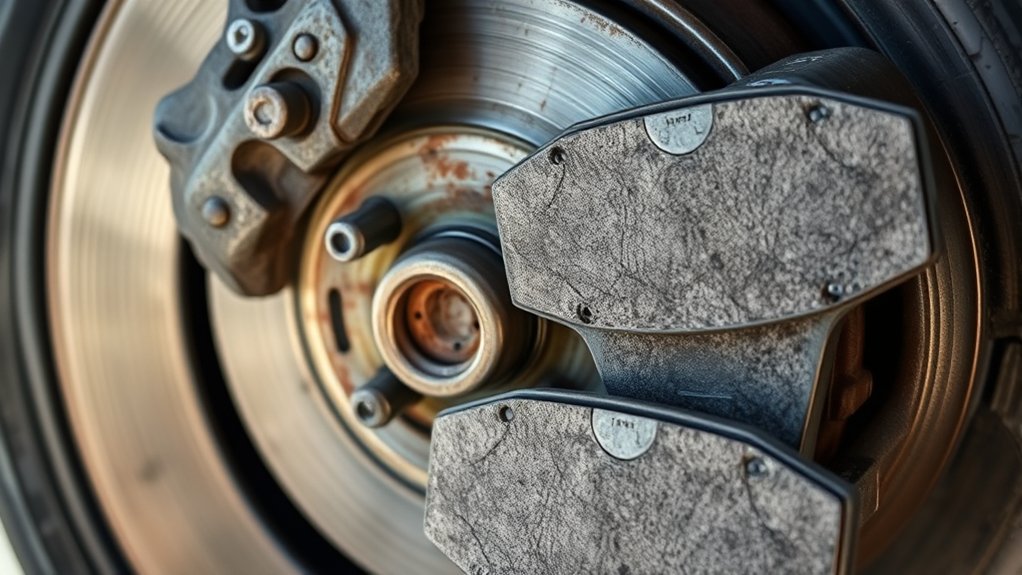
You’ll want to start by checking the thickness of your brake pads to ensure they haven’t worn below the manufacturer’s minimum specification. Next, look for uneven wear patterns that could indicate alignment or caliper issues. Finally, inspect the brake rotors for grooves or scoring that might affect braking performance.
Check Pad Thickness
How can you accurately determine if your brake pads need replacement? Start by visually inspecting the pad thickness through the wheel spokes or by removing the wheel for a clearer view.
Brake pads typically have a friction material thickness ranging from 8 to 12 millimeters when new. You should check thickness regularly, as pads worn down to about 3 millimeters or less require immediate replacement to maintain effective braking performance.
Pay close attention to the pad wear indicator, a groove or slot designed to show wear level. If this groove is no longer visible or the pad material is dangerously thin, it’s time to replace the pads.
Consistent monitoring of pad thickness helps prevent brake failure and ensures your vehicle’s safety on the road.
Look for Uneven Wear
Why does uneven wear on brake pads matter? Uneven wear indicates that brake pad thickness varies across the surface, which compromises braking efficiency and safety. When inspecting, you should identify if one side is thinner than the other or if patches show excessive wear. This can signal caliper malfunctions or misalignment.
| Issue | Potential Cause |
|---|---|
| Uneven pad thickness | Sticking caliper piston |
| One edge more worn | Misaligned caliper |
| Patches of wear | Contaminants or debris |
| Excessive inner wear | Worn hardware or guide pins |
| Rapid wear on one pad | Brake system imbalance |
Spotting uneven wear early helps you address underlying problems before brake pad replacement.
Inspect Brake Rotor Condition
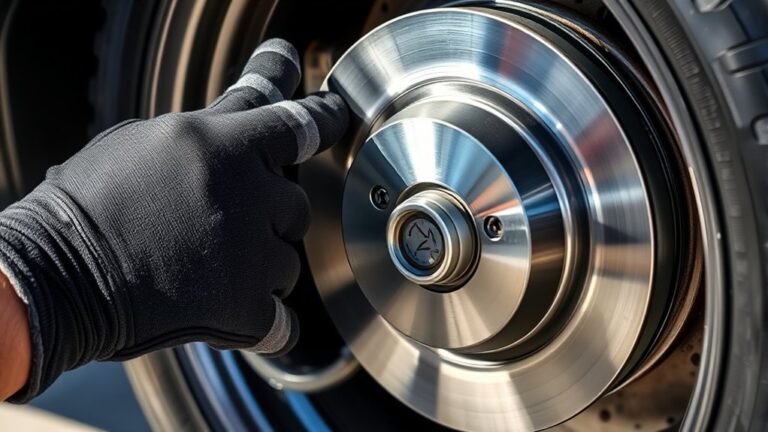
When inspecting brake pads, have you checked the condition of the brake rotors? A thorough brake rotor inspection is crucial because worn or damaged rotors can affect braking performance and pad longevity.
Start by visually examining the rotor surface for scoring, grooves, or uneven wear. Rotor surface scoring indicates excessive friction or debris trapped between the pad and rotor, which can reduce braking efficiency.
Also, check for warping or cracks, which may cause vibrations or noise during braking. Use a micrometer to measure rotor thickness and compare it against the manufacturer’s minimum specifications.
If the rotor is below the threshold or shows significant scoring, it’s time to resurface or replace it. Proper brake rotor inspection ensures your brake pads perform optimally and maintain vehicle safety.
How Often to Check and Replace Brake Pads
Regularly inspecting your brake pads is essential to maintaining vehicle safety and performance. The frequency of checks depends on your driving habits and the vehicle’s maintenance schedule. Aggressive driving or frequent stop-and-go traffic usually demands more frequent inspections.
Typically, you should check brake pads every 10,000 to 15,000 miles and replace them between 25,000 and 70,000 miles, depending on wear.
| Driving Habits | Inspection Frequency | Maintenance Schedule | Replacement Interval |
|---|---|---|---|
| Aggressive/Urban | Every 10,000 miles | Follow manufacturer’s guide | 25,000–40,000 miles |
| Highway/Light Use | Every 15,000 miles | Routine service checks | 50,000–70,000 miles |
Adhering to these intervals helps ensure optimal braking efficiency and safety.
When to See a Mechanic for Brake Pad Issues
If you notice persistent squealing, reduced braking performance, or a vibration when applying the brakes, it’s time to see a mechanic. These warning signs often indicate worn brake pads or other underlying issues that require professional inspection. A trained technician can accurately assess pad thickness and overall brake system condition to assure your safety.
Warning Signs To Watch
How can you tell your brake pads are failing before they cause serious issues? Listen for high-pitched squealing or grinding noises when braking, which indicate worn pads.
Notice if your brake pedal feels soft or sinks toward the floor. This signals hydraulic problems often linked to pad wear.
Also, pay attention to vibrations or pulsations during braking, which suggest uneven pad surfaces or rotor damage.
Avoid confusing these warning signs with unrelated maintenance topics like engine noise or tire wear. Focusing on brake-specific symptoms helps prevent misdiagnosis.
If any of these signs appear, don’t delay in addressing them. Ignoring early indicators risks brake failure, compromising safety and increasing repair costs.
Watching for these precise warnings ensures timely action before serious brake system damage occurs.
Professional Brake Inspection
When should you see a mechanic for brake pad issues? If you notice persistent noise, reduced braking efficiency, or vibration, it’s time to schedule a professional brake inspection. Mechanics evaluate brake pad materials, thickness, and wear patterns to determine if replacement is necessary. They also check for uneven wear that could indicate caliper or rotor problems.
Consider a professional brake inspection if you experience:
- Squealing or grinding sounds during braking
- Increased stopping distance or pedal softness
- Pulsation or vibration in the brake pedal
These symptoms suggest brake pad deterioration or failure risks. Timely inspection ensures safety and prevents costly damage. Trust a qualified technician to assess brake pad materials and overall system integrity accurately.
Frequently Asked Questions
What Materials Are Brake Pads Typically Made Of?
Brake pads typically consist of materials like semi-metallic, ceramic, and organic compounds. You’ll find brake pad composition includes metals, resins, and fibers, chosen to balance durability, noise reduction, and heat resistance for effective braking performance.
Can Brake Pads Affect Fuel Efficiency?
Yes, worn brake pads with uneven pad wear patterns increase friction, causing your engine to work harder and reducing fuel efficiency.
Brake noise often signals this wear, so monitoring it helps maintain optimal fuel economy and safety.
How Do Brake Pads Differ Between Car Types?
You’d think all brake pads are identical, but they vary wildly by vehicle type! Different materials handle brake pad wear uniquely, so you must tailor braking system diagnostics to your car’s specific demands for optimal safety and performance.
Are Ceramic Brake Pads Better Than Metallic Ones?
You’ll find ceramic brake pads offer less noise and produce finer dust, while metallic ones wear slower but can be noisier.
Choosing between ceramic vs metallic depends on your priority: quieter operation or durability.
Can DIY Replacement Void My Vehicle Warranty?
About 75% of DIY repairs don’t void warranties if done correctly. You must understand DIY warranty implications carefully; improper brake pad replacement can void warranty coverage, so follow manufacturer guidelines precisely to avoid issues.
Conclusion
Just like a ship’s captain trusts the sound of creaking timbers to signal danger, you should rely on brake noises and vibrations to know when your pads need replacing. Ignoring these signs can compromise your stopping power and safety.
Regular visual inspections and timely checks keep your brakes performing at their best. When in doubt, don’t hesitate to see a mechanic—your safety depends on it.
Stay vigilant, and keep your vehicle’s braking system shipshape. Knowing how to tell if you need new brake pads is essential for maintaining safe driving conditions.