How Does 360 Camera Work on Cars
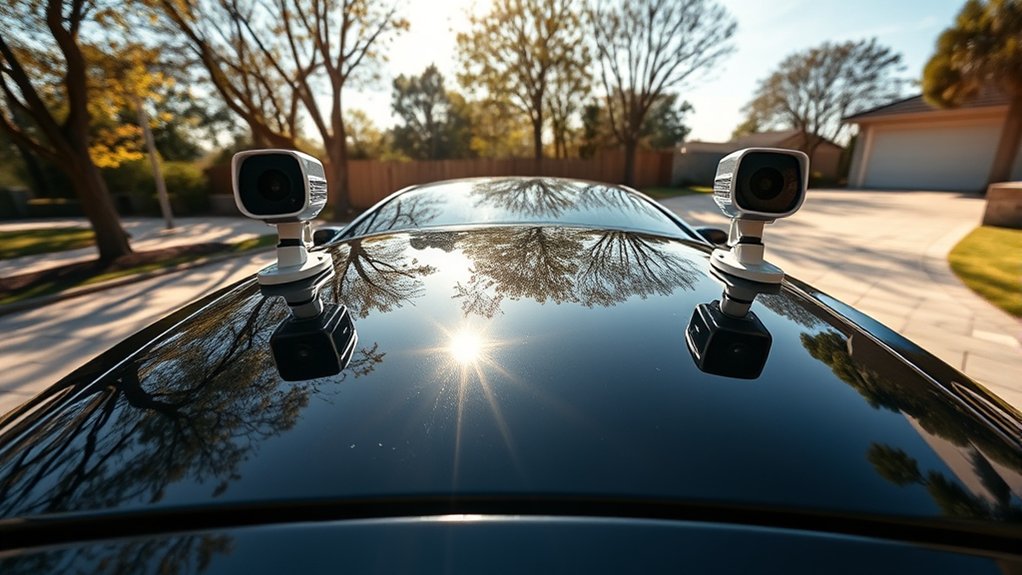
You rely on a 360 camera system on cars that uses multiple strategically placed wide-angle cameras around your vehicle to capture high-resolution images. Each lens’s distortion is corrected to improve image alignment, while real-time stitching fuses overlapping edges into a seamless 360-degree panoramic view.
This process employs advanced algorithms to maintain spatial coherence and fluid video output, enabling precise surround visualization. Your system also manages power and aerodynamics to guarantee performance and audio clarity.
Exploring further reveals how these technologies integrate for enhanced safety and convenience.
Key Takeaways
- Multiple wide-angle cameras around the car capture overlapping high-resolution images for a complete surround view.
- Real-time stitching software aligns, corrects distortion, and blends images to create a seamless panoramic or bird’s-eye view.
- Edge fusion techniques smooth overlapping camera boundaries, reducing visible seams and ensuring continuous image transitions.
- Cameras are strategically placed on the front, sides, and rear to cover blind spots and integrate with parking sensors.
- Real-time processing synchronizes multiple video feeds, providing immediate, fluid surround visualization to aid parking and safety.
How 360 Cameras Capture Your Car’s Surroundings
How exactly do 360 cameras capture your car’s surroundings with such all-encompassing detail? These systems rely on strategically placed wide-angle lenses that gather comprehensive visual data from every side of your vehicle.
Each camera sensor processes high-resolution images, which the system stitches together in real time to form a seamless panoramic view. To maintain consistent performance, especially when your car’s primary power fluctuates, 360 camera systems often incorporate alternate power sources, ensuring uninterrupted operation.
Additionally, the design minimizes wind noise interference by housing cameras in aerodynamic enclosures, which preserves audio clarity for integrated systems. This combination of precise hardware placement, robust power management, and noise reduction enables the 360 camera system to deliver accurate spatial awareness and reliable functionality in diverse driving conditions.
How Multiple Cameras Create a Bird’s-Eye View
You’ll find multiple cameras strategically placed around the car to capture overlapping views of its surroundings. The system then stitches these images together seamlessly, creating a continuous bird’s-eye perspective. Real-time software adjusts this composite view dynamically, ensuring accurate spatial orientation as you move.
Camera Placement Strategy
Where exactly are the cameras positioned to generate a seamless bird’s-eye view? The placement strategy is critical for accuracy and minimal interference. Typically, manufacturers mount cameras at key vehicle points:
1. Front grille or bumper
Offers a wide, clear forward view, integrating with parking sensors to enhance obstacle detection.
2. Side mirrors or fenders
Capture lateral views, carefully positioned to reduce wind noise and avoid blind spots.
3. Rear bumper or tailgate
Provides a comprehensive rear perspective, complementing reverse parking sensors for precise maneuvering.
Each camera must be flush-mounted or recessed to limit aerodynamic drag and wind noise, ensuring high-quality image capture without distortion. This precise distribution allows the system to stitch inputs into a unified overhead image, giving you an accurate, real-time bird’s-eye perspective while parking or navigating tight spaces.
Image Stitching Process
With cameras strategically placed around the vehicle, the system captures multiple perspectives simultaneously. These raw images undergo an image stitching process that aligns and merges them into a seamless bird’s-eye view. The algorithm prioritizes maintaining high image resolution while minimizing stitching latency to ensure real-time feedback.
This process involves:
| Step | Function |
|---|---|
| Image Alignment | Corrects distortion, aligns edges |
| Blending | Smooths overlaps, balances colors |
| Projection Mapping | Converts images to top-down view |
Each step must balance processing speed and visual fidelity. High image resolution enhances detail but increases computational load, potentially raising stitching latency. Advanced processors and optimized algorithms help you experience an accurate, continuous surround view without perceptible delay, critical for safe maneuvering and driver assistance.
Real-Time Perspective Adjustment
How exactly do multiple cameras collaborate to create a cohesive bird’s-eye view in real time? The system relies on real time perspective adjustment that dynamically calibrates each camera’s input to maintain spatial accuracy.
This process involves:
- Capturing overlapping images from multiple wide-angle cameras positioned around the vehicle.
- Applying dynamic calibration algorithms to correct lens distortion and align images based on the vehicle’s orientation and movement.
- Seamlessly stitching these corrected images into a unified, top-down perspective that updates continuously as you drive.
How Real-Time Stitching Creates a 360 Camera View
What enables a seamless 360-degree view from multiple cameras on a car? Real-time stitching software processes overlapping video feeds from cameras positioned around the vehicle. This software aligns images using key feature detection and geometric correction, merging them into a unified panoramic view.
It compensates for minor design flaws like lens distortion or misalignment to maintain visual consistency. The stitching algorithm runs continuously, updating the composite image as you drive, ensuring a live, distortion-free perspective.
However, this process requires transmitting and processing substantial visual data, raising concerns about user privacy. Manufacturers must implement secure data handling protocols to protect the captured footage. By efficiently combining feeds and addressing technical challenges, real-time stitching delivers a reliable, comprehensive 360 camera view without compromising accuracy or privacy.
How 360 Cameras Improve Safety and Parking
Why does a 360 camera system considerably enhance vehicle safety and parking precision? It provides a comprehensive, real-time surround view, reducing blind spots and enabling precise maneuvering. Here’s how it improves your driving experience:
- Accurate Spatial Awareness: The stitched images give you a bird’s-eye view, allowing you to detect obstacles and pedestrians that traditional mirrors miss.
- Enhanced Parking Precision: You can easily judge distances and angles, minimizing collisions and curb damage.
- Proactive Safety Alerts: Integration with your car’s software ensures timely updates, optimizing detection algorithms and maintaining system reliability.
Regular car maintenance including software updates keeps the system functioning flawlessly, ensuring consistent performance and safety. By relying on this technology, you mitigate risks and park with confidence, making 360 cameras an indispensable safety tool.
Technology Behind 360 Camera Systems
You need to understand how cameras are strategically placed around the vehicle to capture comprehensive views without blind spots. Then, sophisticated image stitching algorithms combine these multiple feeds into a seamless 360-degree perspective. This technology ensure you get an accurate, real-time visualization of your surroundings.
Camera Placement Strategies
Where exactly should cameras be positioned to deliver a seamless 360-degree view around a vehicle? Precise placement is crucial to optimize coverage while addressing privacy concerns and ensuring weather resilience. You need to mount cameras where they:
- Cover blind spots effectively, typically at the front grille, side mirrors, and rear bumper.
- Maintain unobstructed views, avoiding areas prone to dirt and water accumulation to enhance weather resilience.
- Respect privacy by avoiding direct capture of neighboring properties or pedestrians beyond vehicle surroundings.
Strategically positioning cameras at these locations maximizes image overlap for comprehensive coverage. This setup balances technical requirements with practical constraints like environmental exposure and legal privacy boundaries, ensuring the system delivers accurate, reliable, and lawful 360-degree imagery essential for driver assistance and safety.
Image Stitching Techniques
How do multiple camera feeds merge seamlessly to create a single, continuous 360-degree view around your car? The process hinges on sophisticated image stitching techniques.
First, distortion correction compensates for lens curvature, ensuring each camera’s output aligns accurately. Then, edge fusion blends overlapping areas to create smooth transitions without visible seams. This requires precise alignment algorithms and real-time processing power.
| Technique | Purpose | Outcome |
|---|---|---|
| Distortion Correction | Corrects lens-induced warping | Accurate image alignment |
| Edge Fusion | Blends overlapping boundaries | Seamless panoramic view |
| Real-Time Processing | Synchronizes multi-feed input | Immediate, fluid video output |
| Alignment Algorithms | Matches corresponding points | Minimizes stitching artifacts |
Together, these techniques deliver the flawless surround vision you rely on for safety and convenience.
Maintaining and Troubleshooting Your 360 Camera System
Why does your 360 camera system occasionally display distorted or unclear images? Typically, this results from environmental factors or hardware issues that disrupt image capture and processing.
Distorted or unclear 360 camera images often stem from environmental or hardware disruptions affecting capture and processing.
To maintain optimal performance, you should:
- Regularly clean camera lenses to remove dirt, moisture, or debris that can obscure vision and distort stitching accuracy.
- Inspect wiring and connectors for damage or corrosion, as electrical faults can degrade signal quality and cause image artifacts.
- Update the camera system’s firmware to fix bugs and improve image processing algorithms, ensuring consistent, clear visuals.
Troubleshooting systematically by addressing these factors helps you maintain the integrity of your 360 camera system, preventing misalignment and ensuring precise, reliable surround views while driving.
Frequently Asked Questions
Can 360 Cameras Work in Extreme Weather Conditions?
Yes, 360 cameras can work in extreme weather if they have enhanced sensor resilience and weatherproof housing.
However, heavy rain, snow, or fog may still reduce image clarity, so performance varies based on camera specifications and conditions.
Are 360 Camera Systems Compatible With All Car Models?
Think of 360 camera systems like universal adapters. While they strive for compatibility, model variance creates challenges.
You’ll face compatibility concerns, especially with older or less common cars. Technical assessments are required before installation to ensure seamless integration.
How Much Does It Cost to Install a 360 Camera System?
You’ll find the installation cost ranges from $200 to $1,200, depending on installation complexity. Factors like wiring, camera placement, and vehicle model influence pricing, so you should evaluate these technical aspects before proceeding with installation.
Do 360 Cameras Affect Car Battery Life?
You won’t notice significant high battery drain since 360 cameras use low power. Their weather durability ensures consistent performance without stressing your car’s electrical system.
This helps maintain battery life even in harsh environmental conditions.
Can 360 Cameras Record Video for Insurance Purposes?
Yes, your 360 camera can record video for insurance documentation, but you must verify the recording legality in your jurisdiction.
Ensure continuous recording settings and proper data storage to capture incidents accurately for claims.
Conclusion
Think of your 360 camera system as your car’s all-seeing eye, weaving together multiple perspectives into one seamless, real-time tapestry. It doesn’t just show you what’s around—it deciphers your surroundings with technological precision, enhancing safety and parking confidence.
By understanding how these cameras capture, stitch, and display, you empower yourself to maintain and troubleshoot effectively. This keeps your digital guardian sharp and reliable every time you hit the road.
Ultimately, knowing how a 360 camera works on cars helps you maximize its benefits and ensures your system operates smoothly when you need it most.