
How Far Can You Drive on a Flat Tire
You shouldn’t drive more than about a mile on a flat tire, and you need to keep speeds under 15 mph to minimize damage. Driving on a flat tire for longer distances causes extreme heat buildup, which quickly wears down your tire’s structure and risks rim bending or cracking.
This also affects your suspension and brake components, increasing safety hazards. If you continue, you’ll encounter indicators that signal when to stop and how to manage the situation effectively.
Key Takeaways
- Limit driving on a flat tire to less than one mile at speeds under 15 mph to minimize damage.
- Excessive heat from friction rapidly degrades the tire’s rubber and structural integrity.
- Driving beyond recommended distance risks rim bending, cracking, and suspension damage.
- Avoid sharp turns and heavy braking to reduce stress on the compromised tire and wheel.
- Stop immediately if you notice vibrations, noises, or handling issues and call for professional help.
What Damage Does Driving on a Flat Tire Cause?
How exactly does driving on a flat tire damage your vehicle? When you continue dangerous driving with a flat, the tire’s structural integrity rapidly degrades. Tire failure modes like sidewall collapse and bead separation occur, causing the tire to lose its shape and support.
This leads to uneven pressure on the wheel rim, which can bend or crack under stress. Additionally, the suspension and alignment take a hard hit, as the compromised tire fails to absorb shocks properly.
The increased friction generates excessive heat, accelerating damage to the tire and wheel. You risk damaging brake components and risking control loss, escalating safety hazards. Avoid driving on flats to prevent costly repairs and maintain vehicle stability.
How Far Can You Safely Drive on a Flat Tire?
When faced with a flat tire, determining the safe distance you can drive is critical to minimizing further damage. Generally, you should limit driving on a flat tire to less than a mile at very low speeds. Excessive tire temperature buildup accelerates rubber degradation and increases the risk of rim damage.
To drive safely on a flat tire:
- Maintain speeds under 15 mph to reduce friction and heat.
- Avoid sharp turns or heavy braking that stress the compromised tire and rim.
- Monitor tire temperature; if it rises rapidly, stop immediately to prevent rim deformation.
Driving beyond these limits significantly increases the chance of permanent rim damage and may lead to complete tire failure, compromising your vehicle’s safety and repair costs.
When Should You Stop Driving and Call for Help?
Why continue driving once you notice signs of tire failure? Continuing to drive on a flat or severely underinflated tire compromises tire pressure, leading to unsafe driving conditions.
If you feel vibrations, hear unusual noises, or notice vehicle instability, stop immediately. Driving on a flat tire can damage the wheel rim and suspension components, increasing repair costs and risking loss of control.
Also, if your tire pressure warning light activates, it signals critical pressure loss requiring prompt action. You should call for help when the tire is completely flat, the vehicle pulls to one side, or handling becomes erratic.
Prioritizing safety means avoiding further tire damage and preventing accidents. Stopping promptly and seeking professional assistance ensures you don’t exacerbate unsafe driving conditions.
How to Handle a Flat Tire Safely on the Road
What steps should you take immediately after detecting a flat tire to guarantee your safety and minimize vehicle damage? First, avoid inconsistent driving by maintaining steady control. Sudden maneuvers can worsen tire damage and destabilize your vehicle. Gradually reduce speed and activate your hazard lights to alert other drivers.
Next, safely pull over to a stable, flat surface away from traffic. Be aware that increased tire temperature from friction can accelerate tire degradation, so limit your driving distance on a flat tire.
Once stopped:
- Engage the parking brake and turn off the engine.
- Assess the tire condition and surrounding traffic.
- Use reflective warning triangles or flares if available.
Following these steps ensures your safety and prevents further mechanical issues.
Frequently Asked Questions
Can a Flat Tire Be Repaired or Must It Be Replaced?
You can often repair a flat tire if the damage is small and located on the tread.
However, replacement feasibility depends on sidewall damage or large punctures, which usually require full tire replacement for safety.
How Do Tire Pressure Monitoring Systems Detect a Flat Tire?
Think of tire pressure monitoring systems as your car’s vigilant heartbeat monitor. They detect a flat tire by measuring pressure drops via sensors, requiring precise sensor calibration to ensure accurate, real-time tire pressure readings and immediate alerts.
What Tools Are Essential for Changing a Flat Tire?
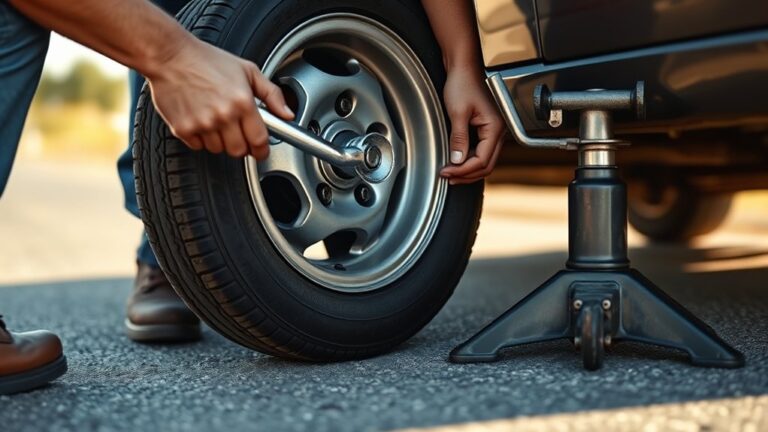
You’ll need a tire jack to lift your vehicle, a lug wrench to loosen and tighten the lug nuts, and a handheld inflator to restore tire pressure after mounting the spare. These tools ensure a safe, efficient tire change.
Are Run-Flat Tires a Good Investment?
Think of run-flat tires like a backup generator during power outages. Run flat feasibility ensures you keep moving safely.
When you conduct a cost benefit analysis, their higher price often pays off in convenience and emergency reliability.
How Often Should I Check My Tire Pressure?
You should check tire pressure monthly and before long trips. Regularly checking pressure prevents premature tire aging, guarantees safety, and maintains fuel efficiency.
Don’t forget to inspect for visible damage or uneven wear while checking.
Conclusion
Driving on a flat tire is like steering a ship through a storm—it’s risky and damaging. Even a short distance can harm your wheel, suspension, and safety systems. You should stop as soon as you feel instability or hear unusual sounds.
Call for help to avoid turning a small issue into a costly disaster. Handling a flat tire promptly ensures your vehicle remains a reliable vessel, keeping you safe on every journey ahead.
Knowing how far you can drive on a flat tire is crucial for preventing further damage and staying safe on the road.