
How Long Can You Drive on a Spare Tire
You can drive on a spare tire for up to 50 to 70 miles at speeds below 50 mph. Spare tires are designed for temporary use, with limited tread depth and durability. Exceeding these limits risks blowouts and poor handling.
Always check your spare’s air pressure before use to meet the correct PSI. Knowing why these limits exist and how to maintain your spare will help keep you safe on the road. It also prepares you for switching back to your regular tire properly.
Key Takeaways
- Spare tires are intended for temporary use, typically limited to 50 to 70 miles maximum.
- Driving speed on a spare tire should not exceed 50 mph to avoid safety risks.
- Compact spare tires have reduced durability and tread, increasing blowout risk if overused.
- Regularly check spare tire pressure before use to ensure it meets the specified PSI.
- Exceeding distance or speed limits can cause poor handling and damage to the spare tire.
How Long Can You Safely Drive on a Spare Tire?
How long can you safely drive on a spare tire? Typically, spare tire reliability is limited due to their design for temporary use. Most temporary spares, often called “donuts,” are not built for extended distances or high speeds.
You should adhere strictly to manufacturer guidelines, usually recommending no more than 50 to 70 miles at speeds under 50 mph. Tire pressure cautions are critical; underinflated or overinflated spares compromise safety and performance. Always check the spare’s pressure before use to ensure it meets specified PSI levels.
Since spare tires often lack the durability and tread depth of regular tires, prolonged use increases risks like blowouts or loss of control. Therefore, treat your spare as a short-term solution and replace it with a full tire promptly.
Why Do Spare Tires Have Distance and Speed Limits?
Why do spare tires come with strict distance and speed limits? Spare tires, especially compact ones, are designed for temporary use, affecting their spare tire longevity. Their construction differs from regular tires, offering less tread and reduced durability. Driving beyond limits risks blowouts or poor handling.
Additionally, their size mismatch disrupts tire rotation balance, impacting vehicle safety.
| Factor | Reason | Impact |
|---|---|---|
| Compact Design | Smaller, lighter than regular | Reduced grip and durability |
| Speed Limit | Typically max 50-55 mph | Prevents overheating |
| Distance Limit | Usually max 70-100 miles | Avoids premature wear |
| Lack of Tread Depth | Less rubber contact | Lower traction, higher risk |
| Disrupts Tire Rotation | Uneven wear on main tires | Compromises vehicle control |
Respect these limits to ensure safety and preserve your spare tire’s integrity.
When Does Your Spare Tire Need Replacement or Repair?
When should you consider replacing or repairing your spare tire? First, check the tire pressure regularly; a spare tire often loses air over time, and maintaining the proper pressure is critical for safety and performance.
Next, inspect the tread depth. If it’s below 2/32 of an inch, it’s time for replacement since worn tread compromises traction. Also, look for visible damage such as cracks, punctures, or bulges on the tire surface, which indicate structural weakness.
Even if the tread and pressure seem adequate, age plays a role. Manufacturers typically recommend replacing spare tires every six years due to rubber degradation. Neglecting these factors could lead to tire failure, so ensure your spare tire remains in optimal condition to avoid unexpected issues during use.
How Do You Switch Back to a Regular Tire Safely?
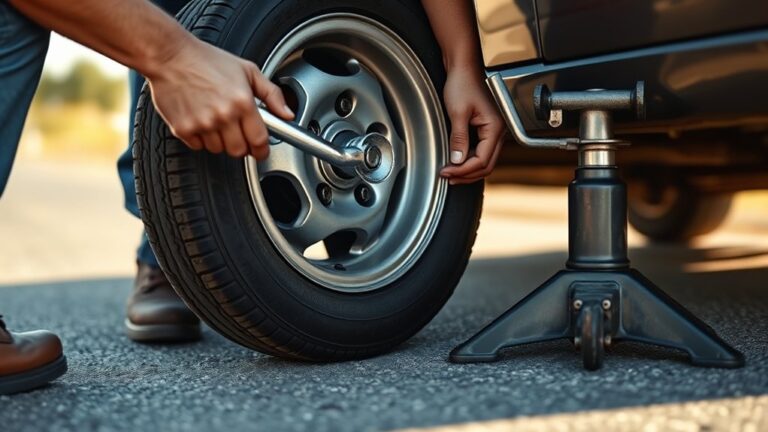
Switching back to a regular tire requires careful attention to safety and proper procedure. First, ensure the vehicle is parked on a flat, stable surface with the parking brake engaged to prevent movement.
Use a jack to lift the vehicle, following the manufacturer’s recommended lift points to avoid damage. Remove the spare tire by loosening lug nuts in a star pattern, then install the regular tire.
Tighten lug nuts by hand before lowering the vehicle. Once on the ground, use a torque wrench to secure lug nuts to the manufacturer’s specified torque, ensuring switching safety.
Finally, check tire pressure and inspect the regular tire for any damage. Proper tire maintenance after switching prevents premature wear and ensures optimal vehicle performance.
Frequently Asked Questions
Can I Use a Spare Tire on All Four Wheels?
You can’t use a spare tire on all four wheels due to size and performance differences. For extended use safety, replace it promptly.
Store your spare tire properly in its designated spare tire storage area.
Are Spare Tires Compatible With All Vehicle Types?
Imagine a compact car using a donut spare; spare tire compatibility varies widely across vehicle type differences. You’ll find some trucks need full-size spares, while motorcycles require specialized spares, so always check your vehicle’s manual first.
How Do I Check the Air Pressure in a Spare Tire?
To check air pressure in your spare tire, use a tire pressure gauge on the valve stem. Guarantee compatibility with your vehicle’s recommended PSI.
If available, rely on your air pressure monitoring system for accurate, real-time readings.
Can Weather Conditions Affect Spare Tire Performance?
Yes, weather conditions substantially impact your spare tire durability. Extreme temperatures and moisture increase weather sensitivity, accelerating rubber degradation and reducing performance.
You should regularly check your spare tire to ensure it remains safe and reliable under varying conditions.
Is It Safe to Drive on a Spare Tire in the Rain?
Think of your spare tire as a lifeboat, essential but limited. In rain, spare tire safety demands caution since reduced tread and rain driving hazards increase slip risk.
Drive slowly, avoid sharp turns, and replace it ASAP for full protection.
Conclusion
Think of driving on a spare tire like sprinting in a marathon—you can do it, but only for a short stretch. Most spares are rated for about 50 miles at speeds under 50 mph. Ignoring this risks tire failure and unsafe handling.
Just as a runner needs to switch to steady pacing, you should replace your spare with a regular tire promptly to guarantee safe, reliable driving. Don’t push your temporary solution beyond its limits.
To ensure your safety on the road, know how long you can drive on a spare tire and plan to get your regular tire fixed or replaced as soon as possible.