How Long Do Brake Pads Last
You can expect your brake pads to last between 30,000 and 70,000 miles, but this varies with your driving habits, vehicle type, and environment. Aggressive braking and heavy loads shorten their lifespan, while smooth driving and moderate terrain extend it.
Material choice—organic, semi-metallic, or ceramic— also impacts durability and heat management. Regular inspections and maintenance help maximize pad life. Understanding these factors will give you a clearer view of how to optimize your brake system’s performance.
Key Takeaways
- Brake pads typically last between 30,000 and 70,000 miles, depending on driving conditions and vehicle type.
- Aggressive braking and rapid acceleration significantly reduce brake pad lifespan.
- Ceramic brake pads generally offer the longest durability compared to organic and semi-metallic types.
- Regular inspections every 10,000 to 15,000 miles help monitor pad thickness and wear for timely replacement.
- Environmental factors like moisture, road salt, and terrain can accelerate brake pad wear.
How Long Do Brake Pads Typically Last?
How long do brake pads typically last? On average, brake pads endure between 30,000 to 70,000 miles, but this range varies depending on driving conditions and vehicle type.
Unlike interest rates that influence financial decisions, brake pad wear depends more on mechanical factors than external economic variables. You’ll also find that tire life and brake pad life are interconnected; aggressive braking shortens both, while smooth driving extends their longevity.
Monitoring brake pad thickness and responsiveness ensures timely replacement, preventing damage to rotors and maintaining safety. Regular inspections aligned with tire rotations optimize overall vehicle maintenance.
Understanding these typical lifespan metrics helps you plan maintenance schedules effectively, ensuring your braking system performs reliably without unexpected failures.
Key Factors That Affect Brake Pad Lifespan
Why do brake pads wear out faster in some vehicles than others? Several technical factors directly influence their lifespan, steering clear of any unrelated topic or off topic discussion. You need to consider:
- Material Composition: Different compounds, like organic or ceramic, wear at varying rates under stress.
- Vehicle Type and Weight: Heavier vehicles exert more force on pads, accelerating wear.
- Brake System Design: Ventilated discs versus solid rotors affect heat dissipation and pad degradation.
- Environmental Conditions: Frequent exposure to moisture, dust, and road salt increases corrosion and wear.
These elements are vital when evaluating brake pad longevity. Avoid blending in unrelated topic details or off topic discussion to maintain focus on what technically impacts your brake pads’ durability.
How Driving Habits Influence Brake Pad Wear
When do your driving habits cause brake pads to wear out faster? Aggressive driving, such as frequent hard braking and rapid acceleration, significantly accelerates brake pad wear. Poor driving etiquette like tailgating forces you to brake abruptly more often, which reduces pad lifespan.
Conversely, anticipating traffic flow and maintaining a safe following distance allows smoother, gradual braking that preserves brake pads. Efficient driving not only extends pad life but also improves fuel efficiency, as you avoid unnecessary stops and starts.
Habitual braking at high speeds creates excess heat, causing pads to degrade quicker. By adopting controlled, predictive driving habits, you minimize friction and heat buildup on the brake components. Ultimately, your driving style directly impacts how quickly brake pads wear, so practicing good driving etiquette is essential for maximizing their durability.
How Your Vehicle Type Affects Brake Pad Life
What factors inherent to your vehicle influence brake pad longevity? Several vehicle-specific characteristics directly impact how long your brake pads last. For instance, your vehicle’s weight determines the braking force required, accelerating pad wear.
Additionally, brake rotor coating plays a crucial role by reducing friction and heat, which can extend pad life. Surprisingly, even your vehicle color can hint at environmental conditions your car frequently encounters, indirectly affecting brake wear due to heat absorption variations.
Consider these elements:
- Vehicle weight and size, affecting braking load
- Brake rotor coating materials, influencing heat dissipation
- Typical driving environment linked to vehicle color’s heat retention
- Brake system design specific to your vehicle model
Understanding these factors helps you anticipate brake pad replacement intervals more accurately.
How Brake Pad Materials Impact Durability
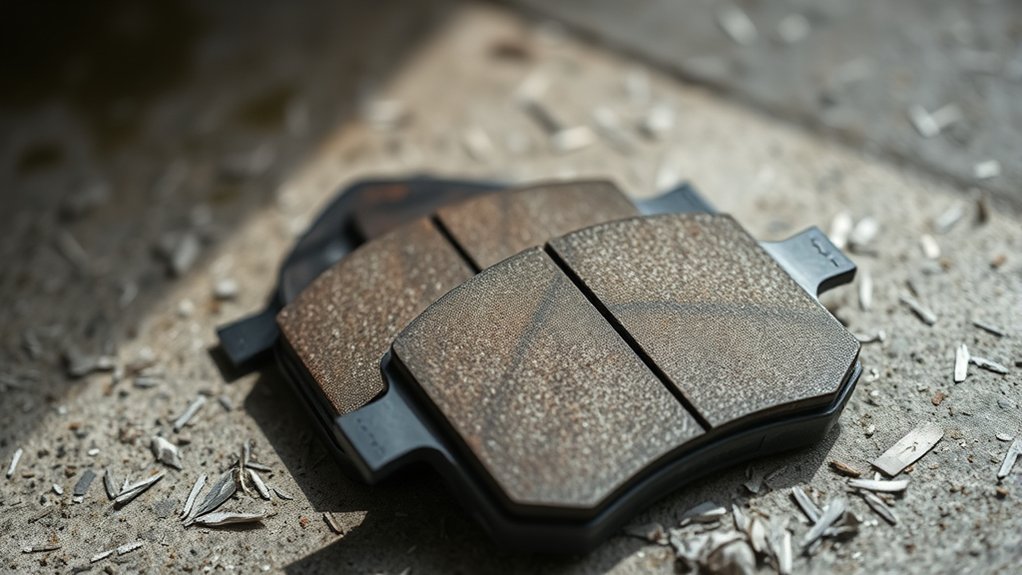
How do the materials used in brake pads determine their durability and performance? Brake pads are typically made from organic, semi-metallic, or ceramic materials, each affecting lifespan differently.
Organic pads, composed of fibers similar to those in kitchen appliances, offer quieter operation but wear faster, making them less ideal for frequent stops, such as in outdoor parks with heavy foot traffic.
Organic brake pads use appliance-like fibers for quiet braking but wear out quickly with frequent stops.
Semi-metallic pads contain metal fibers that improve heat dissipation and durability but may increase rotor wear.
Ceramic pads provide the best longevity and stable performance under varying conditions due to their dense composition, which manages heat like high-end kitchen appliances.
Choosing the right material depends on your driving environment and needs, as material composition directly influences how long your brake pads last and how they perform under stress.
Common Signs Your Brake Pads Need Replacing
You’ll notice your brake pads need replacing if you hear a consistent squeaking or squealing noise when braking. Reduced braking performance, such as longer stopping distances, also signals worn pads. Additionally, check for visible wear indicators on the pads, which show when they’ve reached their minimum thickness.
Squeaking or Squealing Noise
Why does your car emit a high-pitched squeal when braking? This sound often signals worn brake pads or issues within the braking system. Understanding squeal causes helps you identify when to act.
Common reasons include:
- Worn brake pad material exposing the metal backing plate
- Accumulated brake dust or debris on the rotor surface
- Glazed pads due to excessive heat reducing friction efficiency
- Lack of lubrication on contact points causing vibration-induced noise
To address these, apply effective squeaking remedies such as cleaning rotors, replacing worn pads promptly, and using brake lubricant on caliper slides. Ignoring these signs can worsen brake wear and compromise safety.
Recognizing and resolving squealing noises early ensures your braking system stays reliable and responsive.
Reduced Braking Performance
Squeaking noises often signal early brake pad wear, but a more pressing concern is reduced braking performance, which directly impacts your vehicle’s stopping power. When your brake pads thin, friction decreases, lengthening stopping distances and compromising safety.
This performance drop becomes evident during routine driving, especially if you notice your vehicle requires more pedal pressure to decelerate effectively. Proper driving etiquette includes adapting your braking to compensate for this decline, but relying on that isn’t safe long-term.
Additionally, tire warming during initial drives can mask subtle braking inefficiencies, so always assess brake responsiveness after the tires cool. Ignoring reduced braking performance risks brake fade and potential accidents.
Timely brake pad replacement ensures consistent friction levels, maintaining optimal stopping power and safeguarding both you and others on the road.
Visible Pad Wear Indicators
How can you quickly determine when your brake pads need replacing? Focus on the visible pad wear indicators, which provide a clear, immediate sign of brake pad condition. Brake pad visibility allows you to assess wear without disassembling the brake system.
Key points for indicator interpretation include:
- Look for the metal wear indicators embedded in the brake pads; when they contact the rotor, they create a squealing noise.
- Examine the pad thickness through the wheel spokes; if the pad material is less than 3mm, replacement is necessary.
- Observe uneven wear patterns on visible pads, which can signal caliper or rotor issues.
- Check for grooves or cracks on the brake pad surface, indicating excessive wear or damage.
Regularly monitoring these visible pad wear indicators helps maintain safe braking performance.
How to Check Your Brake Pads at Home
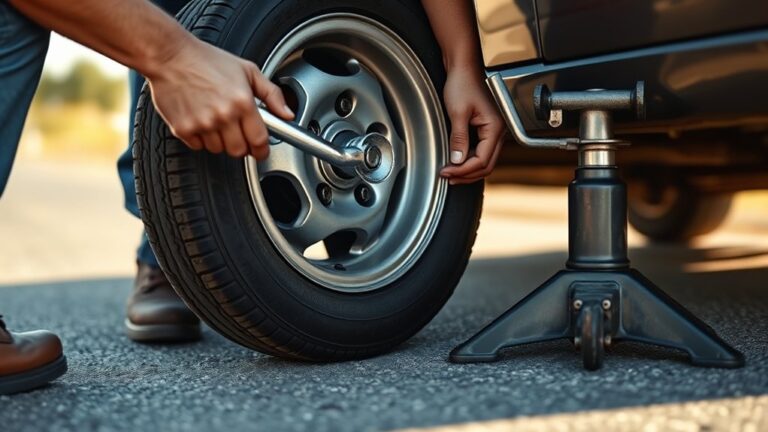
When was the last time you inspected your brake pads? Checking them at home is straightforward and crucial for safety. First, park your vehicle on a level surface and remove the wheel to access the brake assembly.
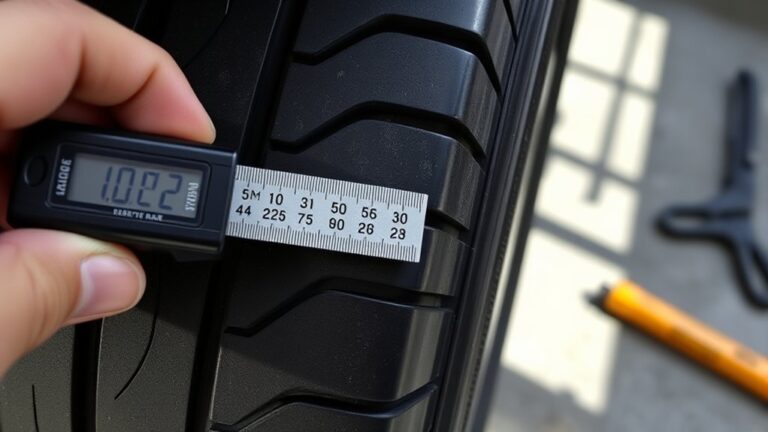
Look at the brake pad thickness through the caliper; new pads are about 10-12 mm thick. If the pad material is less than 3 mm, replacement is necessary. Don’t fall for the irrelevant assumption that brake noise alone indicates wear. This is an unrelated topic.
Also, avoid relying solely on the brake pad wear indicator; a visual inspection ensures accuracy. Use a flashlight to spot any uneven wear or damage. Regular inspections help you catch issues early, preventing costly repairs and maintaining optimal braking performance.
How Weather and Terrain Affect Brake Pad Lifespan
Why does your driving environment impact brake pad longevity? The weather impact and terrain effects directly influence how quickly your brake pads wear out. For example, wet or salty conditions accelerate corrosion, while steep or uneven terrain demands more frequent braking, increasing friction and heat.
Consider these factors:
- Moisture and salt exposure: Accelerates pad and rotor corrosion, reducing lifespan.
- Mountainous or hilly terrain: Requires constant braking, causing faster wear.
- Sandy or gravel roads: Introduce abrasive particles that degrade pad surfaces.
- Extreme temperatures: Affect pad material properties, impairing performance.
Understanding these variables helps you anticipate maintenance needs and optimize brake pad replacement intervals, ensuring safe and efficient braking.
Choosing Between OEM and Aftermarket Brake Pads
What factors should you consider when deciding between OEM and aftermarket brake pads? First, evaluate performance and compatibility. OEM vs aftermarket options differ in material composition and manufacturing standards, affecting durability and braking efficiency.
OEM pads typically match your vehicle’s specifications exactly, ensuring consistent performance. Aftermarket pads offer a wider range of materials, often highlighted by brake pad color codes indicating friction levels and heat tolerance.
You must also assess cost versus longevity; aftermarket pads can be cheaper but may wear faster or produce more brake dust. Additionally, consider warranty coverage and installation precision. OEM parts usually come with manufacturer guarantees.
Understanding these technical distinctions will help you choose brake pads that balance safety, cost, and performance effectively.
Tips to Extend Brake Pad Life With Regular Maintenance
You can considerably extend your brake pads’ lifespan by scheduling regular brake inspections to catch wear early and address issues promptly. Adopting proper driving habits, like gradual braking and avoiding unnecessary stops, also reduces pad stress. These maintenance strategies ensure prime brake performance and safety over time.
Regular Brake Inspections
How often should you have your brakes inspected to maximize the lifespan of your brake pads? Ideally, schedule inspections every 10,000 to 15,000 miles or during routine service intervals. Regular brake inspections enable early detection of wear and potential issues, helping you maintain optimal performance.
During inspections, technicians will:
- Examine brake pad materials for uneven wear or degradation
- Measure pad thickness to determine replacement needs
- Assess rotor condition and recommend rotor resurfacing if necessary to ensure smooth braking
- Inspect calipers and hardware for proper function and alignment
Proper Driving Habits
Regular brake inspections provide valuable insights into the condition of your brake pads, but the way you drive plays a significant role in how quickly they wear down. To extend brake pad life, adopt smooth acceleration and deceleration habits, minimizing abrupt stops that generate excessive friction and heat.
Understanding the specific brake pad materials in your vehicle, such as ceramic, organic, or semi-metallic, helps you tailor your driving to reduce wear. For instance, ceramic pads handle heat better and offer longer life under moderate driving.
Additionally, avoid riding the brakes and use engine braking when appropriate, which reduces direct load on the pads. These habits, combined with routine maintenance, ensure optimal contact between pads and rotors, maintaining braking efficiency and prolonging pad lifespan.
What Happens If You Ignore Worn Brake Pads?
What risks arise when worn brake pads go unchecked? If you ignore brake pads lifespan and overlook proper maintenance, you compromise your vehicle’s braking efficiency and safety. Neglecting worn brake pads can escalate problems rapidly, especially if you ignore driving habits that contribute to uneven wear.
Consequences include:
- Reduced stopping power, increasing the risk of accidents
- Damage to brake rotors, leading to costly repairs
- Squealing or grinding noises indicating metal-on-metal contact
- Longer braking distances, particularly in emergency situations
Ignoring these signs can cause system failure, endangering you and others. Stay vigilant about brake pad condition to maintain optimal performance and safety.
Frequently Asked Questions
Can I Reuse Brake Pads After Removing Them?
You generally shouldn’t reuse brake pads after removal due to reconditioning risks like uneven wear and reduced performance. Instead, focus on material recycling methods to safely dispose of old pads and ensure optimal braking safety and efficiency.
How Much Do Brake Pads Typically Cost?
You’ll typically pay $30 to $80 for brake pads, but cost vs wear varies due to material composition challenges. Ceramic pads cost more but last longer, while organic pads are cheaper but wear faster, affecting replacement frequency.
Are Brake Pads Recyclable or Eco-Friendly?
Yes, you can recycle brake pads through specialized recycling markets that handle metal components. Some manufacturers use eco-friendly materials, reducing environmental impact.
You should check local facilities to ensure proper disposal and promote sustainability effectively.
Can Brake Pads Cause Noise Without Being Worn?
Like a violin string vibrating without damage, brake pad noise can occur from non worn causes such as glazing, improper installation, or rotor issues.
You should inspect these factors before assuming pad wear is the problem.
Do Brake Pads Affect Fuel Efficiency?
Yes, your brake pads can affect fuel efficiency. Worn brake material durability increases friction, forcing your engine to work harder.
Additionally, poor pedal feel impact may cause unnecessary braking, further reducing fuel economy during driving.
Conclusion
Brake pads typically last between 30,000 to 70,000 miles, but your driving habits and conditions can drastically affect this. Imagine replacing pads twice as often if you frequently brake hard or drive in hilly terrain.
By understanding factors like material type and vehicle use, you can better maintain your brakes. Regular inspections and timely replacements aren’t just maintenance—they’re essential for safety and efficient performance.
Knowing how long brake pads last helps you avoid costly repairs and dangerous situations on the road. Proper care ensures your vehicle remains safe and reliable every time you drive.