How Often to Change Brake Pads
You’ll need to replace your brake pads when their thickness drops below 3 to 4 millimeters to ensure safe braking performance.
How often to change brake pads depends on your driving habits and vehicle type—aggressive braking and heavier vehicles wear pads faster.
Ignoring wear risks rotor damage, longer stopping distances, and costly repairs.
Regular inspections using a micrometer or wear sensors help prevent surprises.
Understanding proper pad selection and maintenance can further enhance your brake system’s longevity and performance.
Keeping an eye on brake pad condition is essential for safe and efficient driving.
Key Takeaways
- Replace brake pads when thickness falls below 3 to 4 mm or as recommended by the manufacturer.
- Inspect brake pads every 10,000 to 12,000 miles or sooner if you notice noise or reduced braking.
- Driving habits and vehicle type affect pad wear; frequent city driving requires more frequent changes.
- Squealing noises, vibrations, and reduced responsiveness signal the need for immediate brake pad replacement.
- Using wear sensors and regular measurements can help prevent unexpected brake pad failure.
When Should You Replace Your Brake Pads?
You should replace your brake pads whenever their thickness falls below the manufacturer’s recommended minimum, typically around 3 to 4 millimeters. Maintaining this threshold ensures optimal braking performance and safety.
Replace brake pads once thickness drops below 3 to 4 millimeters for safe, effective braking performance.
Ignoring this guideline risks damage to rotors, increased stopping distances, and potential brake failure. While some might joke about unrelated topic ideas to avoid the seriousness of brake maintenance, remember: braking humor won’t save you from worn-out pads.
Signs indicating replacement include squealing noises, reduced responsiveness, and vibration during braking. Regular inspections using a micrometer or visual gauge help monitor pad wear precisely.
Stick to these technical parameters to avoid costly repairs and maintain consistent vehicle control. Prioritize brake pad thickness over distractions or jokes to ensure reliable stopping power.
How Driving Habits and Vehicle Type Affect Replacement Timing
Brake pad wear doesn’t occur at a uniform rate; it varies considerably based on your driving habits and the type of vehicle you operate. Aggressive driving with frequent hard braking accelerates wear, while smooth, gradual stops prolong pad life. Similarly, city driving, characterized by stop-and-go traffic, demands more frequent replacements than highway driving.
Vehicle type also plays a crucial role: heavier vehicles and those equipped with performance brakes typically experience faster pad degradation due to increased stopping forces.
Adopting a maintenance mindset helps you anticipate these variables. Regularly reviewing topic ideas related to your specific driving patterns and vehicle specifications enables timely pad inspections and replacements. This proactive approach ensures braking efficiency and safety while preventing unexpected wear-related issues.
What Happens If You Delay Changing Brake Pads?
What risks arise when you postpone replacing worn pads? When you delay replacement, the brake pads wear down to the metal backing, causing metal-to-rotor contact. This accelerates rotor damage, leading to scoring or warping, which compromises braking efficiency.
What happens next is increased stopping distances and reduced control, elevating accident risk. Additionally, delayed replacement can strain calipers and brake lines, raising repair costs.
Increased stopping distances and strain on brake components raise accident risk and costly repairs.
You might also notice noise, such as squealing or grinding, and vibration during braking, clear signs of severe wear. Ignoring these symptoms can lead to complete brake failure, endangering your safety.
Consequently, timely brake pad replacement is essential to maintain optimal performance and prevent expensive damage. Understanding the consequences of delayed replacement helps you prioritize brake maintenance effectively.
Choosing Quality Brake Pads for Your Vehicle
How can selecting the right brake pads impact your vehicle’s safety and performance? Choosing quality brake pads ensures optimal friction, reducing stopping distances and maintaining consistent brake pad wear. Inferior pads may degrade quickly, causing uneven wear and compromising braking efficiency.
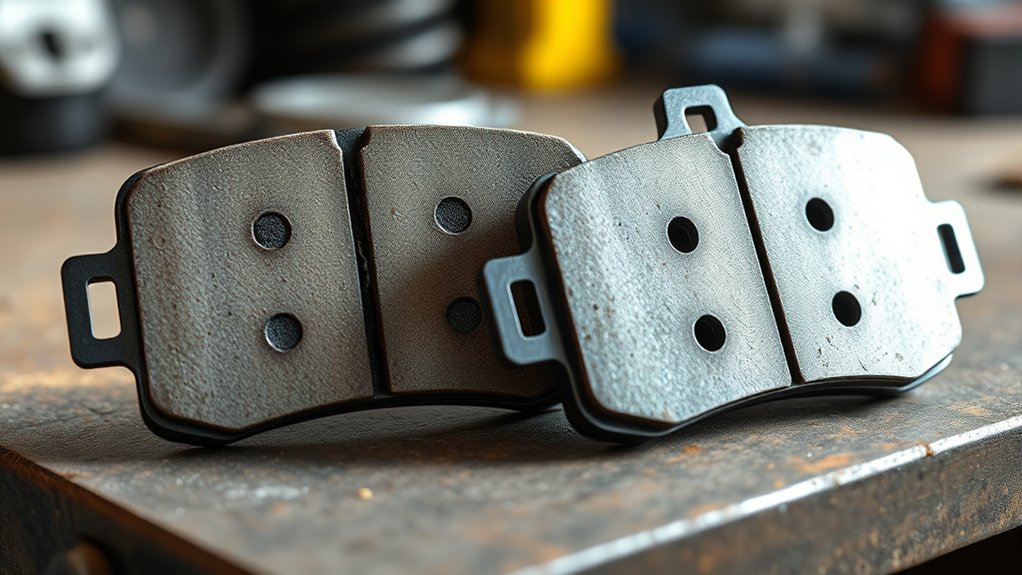
When selecting brake pads, consider material composition: ceramic, semi-metallic, or organic, each affecting durability and noise differently. High-quality pads resist heat buildup, preventing brake fade under heavy use. Additionally, precise fitment reduces vibration and maintains rotor integrity.
Prioritize pads meeting industry standards and manufacturer specifications to guarantee compatibility and safety. By choosing quality brake pads, you extend component lifespan, maintain reliable braking response, and protect your vehicle from premature damage caused by irregular brake pad wear. This informed choice is essential for maintaining overall vehicle safety and performance.
Essential Brake Pad Maintenance Tips
When should you inspect your brake pads to guarantee peak performance and safety? Regular inspections every 10,000 to 12,000 miles are essential, or sooner if you notice noise or decreased braking efficiency. Use a micrometer to measure pad thickness; replace pads once they reach the manufacturer’s minimum specification.
Incorporate new technology such as wear sensors, which alert you electronically before pads fail. Keep the calipers and rotors clean to prevent uneven wear and reduce environmental impact by properly disposing of worn pads containing hazardous materials.
Avoid aggressive braking to extend pad life and minimize particulate pollution. Performing timely maintenance not only guarantees reliable braking but also supports sustainability by reducing waste and emissions linked to brake pad degradation.
Frequently Asked Questions
Can I Change Brake Pads Myself or Should I Hire a Mechanic?
You can change brake pads yourself if you have proper tools and knowledge, but doing it yourself carries risks. A professional mechanic offers expertise and safety, so hire one if you’re uncertain about precise brake maintenance procedures.
What Tools Are Needed to Replace Brake Pads?
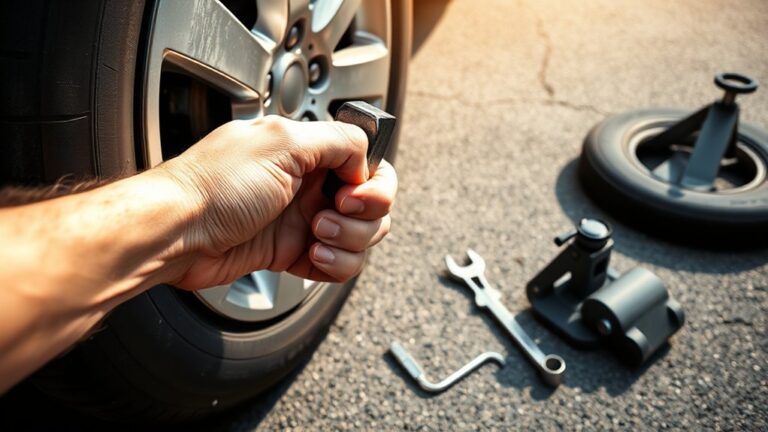
You’ll need a lug wrench, C-clamp, socket set, and jack stands as essential tools. Always follow safety precautions by securely lifting your car and wearing gloves and eye protection to prevent injury during brake pad replacement.
How Do Brake Pads Differ Between Front and Rear Wheels?
You’ll notice front vs rear design differences: front brake pads are larger for greater stopping power, while rear pads are smaller.
Also, brake pad wear patterns vary, with front pads wearing faster due to more braking force.
Are Ceramic Brake Pads Better Than Metallic Ones?
You’ll find ceramic brake pads produce 30% less dust, making them cleaner in the ceramic vs metallic debate.
This brake pad materials comparison shows ceramics offer quieter, longer-lasting performance, while metallic pads excel in heat dissipation.
How Do I Know if My Brake Rotors Also Need Replacing?
You’ll know your rotors need replacing if rotor wear indicators show deep grooves or scoring, or if brake pad thickness remains low despite new pads.
Also, vibrations or pulsations during braking signal rotor issues needing attention.
Conclusion
Think of your brake pads as the guardians of your safety, quietly wearing down as they protect you. Ignoring their wear is like letting a shield crack unnoticed—risking costly damage and danger.
By monitoring your driving habits and choosing quality pads, you guarantee your vehicle stops with confidence every time. Stay vigilant with regular maintenance, and you’ll keep your brake system performing at its best.
To ensure your safety and avoid unexpected repairs, regularly check how often to change brake pads. This simple step safeguards both your ride and your peace of mind.