How Often to Change Spark Plugs
You should change spark plugs based on your vehicle manufacturer’s recommended mileage, which is the key to proper spark plug maintenance. This range is usually between 20,000 and 100,000 miles.
Copper plugs need replacement more often, around 20,000-30,000 miles, while platinum and iridium plugs last longer—up to 60,000 and 100,000 miles or more. Driving conditions and style also affect wear, so adjust accordingly.
Regular replacement prevents misfires, improves fuel efficiency, and reduces emissions. Understanding spark plug types and maintenance can enhance your engine’s performance and longevity.
Key Takeaways
- Replace spark plugs based on manufacturer’s recommended intervals, typically between 30,000 and 100,000 miles.
- Copper spark plugs usually require replacement every 20,000 to 30,000 miles.
- Platinum plugs last longer, needing replacement around 60,000 miles.
- Iridium plugs offer the longest life, often lasting 90,000 to 120,000 miles or more.
- Adjust replacement timing based on driving conditions like city traffic, harsh environments, and driving style.
Why Spark Plugs Are Key to Your Engine’s Performance
Why do spark plugs matter so much to your engine’s performance? They create the crucial spark that ignites the air-fuel mixture inside each cylinder, enabling efficient combustion.
If your spark plugs are worn or fouled, misfires occur, reducing power and fuel efficiency. This leads to increased fuel consumption, raising your cost considerations significantly over time. Additionally, inefficient combustion results in higher emissions, negatively affecting the environmental impact of your vehicle.
Maintaining optimal spark plug function ensures consistent engine performance, better mileage, and lower pollutant output. You’ll want to monitor spark plug condition closely because neglecting them can escalate both repair costs and environmental harm. Proper spark plugs play a vital role in balancing engine efficiency, operational cost, and eco-friendly driving.
Recommended Spark Plug Replacement Intervals
You should follow your vehicle manufacturer’s recommended spark plug replacement intervals to maintain optimal engine performance. These guidelines typically specify mileage-based timing, often ranging from 30,000 to 100,000 miles depending on the spark plug type. Keep in mind, your driving conditions—like frequent stop-and-go traffic or extreme temperatures—can affect how quickly spark plugs wear out.
Manufacturer Guidelines Overview
When should you replace your spark plugs according to the manufacturer? Most manufacturers specify replacement intervals based on engine design, fuel type, and operating conditions, typically ranging from 30,000 to 100,000 miles. These guidelines are established through extensive testing to optimize performance and prevent premature wear.
Ignoring them or engaging in irrelevant topic discussions about random spark plug lifespans can lead to confusion and ineffective maintenance. It’s crucial to consult your vehicle’s owner manual or service guide to identify the exact interval recommended for your specific engine model.
Following manufacturer guidelines ensures you maintain optimal combustion efficiency, reduce emissions, and avoid potential engine misfires. Deviating from these precise instructions risks compromising engine reliability and fuel economy, making adherence essential for proper vehicle care.
Mileage-Based Replacement Timing
Although spark plug replacement intervals vary by engine type and usage, most manufacturers provide mileage-based recommendations to help you maintain optimal engine performance. Following these guidelines ensures you avoid issues related to worn plugs, such as misfires or reduced fuel efficiency.
While researching, steer clear of irrelevant topics or off-topic ideas that don’t focus on your vehicle’s specific needs. Typically, mileage-based intervals include:
- Standard copper plugs: replace every 20,000 to 30,000 miles
- Platinum plugs: replace every 60,000 miles
- Iridium plugs: replace every 100,000 miles or more
- Consult your owner’s manual for exact figures
Sticking to these intervals keeps your engine running smoothly and prevents costly repairs.
Driving Conditions Impact
Mileage-based intervals provide a solid foundation for spark plug replacement, but real-world driving conditions can substantially influence how often you should service your plugs. For example, stop-and-go traffic and short trips, a two word idea called “city driving,” increase combustion chamber deposits, accelerating plug wear.
Conversely, highway driving, another two word idea, typically results in more stable combustion and longer spark plug life. Harsh environments, such as dusty roads or extreme temperatures, also contribute to electrode erosion and misfiring.
If your driving involves frequent idling or towing, monitor your plugs more often than manufacturer recommendations. By factoring in these driving conditions, you can optimize spark plug replacement intervals, ensuring reliable ignition performance and preventing engine inefficiency.
Adjust your maintenance schedule accordingly to maintain engine health and fuel economy.
Signs Your Spark Plugs Need to Be Replaced
How can you tell if your spark plugs are ready for replacement? Recognizing the signs helps you avoid irrelevant topic or off topic discussion when diagnosing engine issues. Key indicators include:
- Engine misfires: Frequent misfires signal worn or fouled plugs disrupting combustion.
- Hard starts: Difficulty starting your engine points to weak or damaged spark plugs.
- Poor fuel economy: Noticeable drops in mileage often stem from inefficient combustion caused by degraded plugs.
- Rough idling: Irregular engine idle suggests inconsistent spark delivery.
These symptoms directly relate to spark plug condition. Monitoring them allows timely maintenance, preventing unnecessary confusion with unrelated engine problems. Being precise about these signs ensures you address the root cause without wasting time on irrelevant topic or off topic discussion.
Consequences of Delaying Spark Plug Replacement
If you delay replacing your spark plugs, your engine’s performance will steadily decline, leading to increased fuel consumption and higher emissions. Worn spark plugs cause incomplete combustion, resulting in misfires and rough idling.
Delaying spark plug replacement leads to poor engine performance, increased fuel use, and higher emissions.
This reduces engine efficiency, puts additional strain on ignition coils, and can damage catalytic converters over time. You might be tempted to focus on unrelated topics like cosmetic styling when assessing vehicle maintenance, but neglecting spark plug replacement has tangible mechanical consequences.
Ignoring this critical maintenance task compromises acceleration and overall drivability, increasing repair costs. Staying proactive ensures your engine runs smoothly and efficiently, preventing costly damage and environmental harm.
Prioritize timely spark plug replacement to maintain optimal engine function and avoid avoidable mechanical issues.
Differences in Spark Plug Lifespan: Copper, Platinum, Iridium
You’ll find copper spark plugs have the shortest durability, typically requiring replacement every 20,000 to 30,000 miles. Platinum plugs offer longer service life and better performance under high temperatures compared to copper. Iridium spark plugs provide the greatest longevity and consistent ignition efficiency, often lasting up to 100,000 miles.
Copper Spark Plug Durability
Copper spark plugs typically wear out more quickly than their platinum and iridium counterparts due to their softer metal composition and higher electrical conductivity. This affects copper durability, requiring more frequent replacements.
The softer copper core also means the electrode erodes faster, leading to increased spark plug grinding when trying to maintain the gap. When using copper spark plugs, consider these factors:
- Lifespan generally ranges between 20,000 to 30,000 miles.
- Electrode wear occurs faster, degrading performance.
- Requires more frequent gap adjustments due to erosion.
- Susceptible to spark plug grinding damage during maintenance.
Understanding these characteristics helps you maintain optimal engine performance and avoid premature spark plug failure when relying on copper spark plugs.
Platinum Spark Plug Benefits
While copper spark plugs require frequent replacement due to faster electrode wear, platinum spark plugs offer significant improvements in durability and performance. You’ll notice that platinum efficiency stems from the metal’s higher melting point and resistance to erosion, which allows the electrode to maintain its shape and gap longer.
This results in more consistent ignition and improved fuel economy over time. When performing a platinum installation, ensure proper torque to avoid damaging the delicate platinum tip, which is critical for optimal conductivity and lifespan.
Compared to copper, platinum plugs typically last twice as long, often reaching 60,000 to 100,000 miles before replacement. By choosing platinum, you reduce maintenance frequency while sustaining engine efficiency, making it a cost-effective upgrade for many vehicles.
Iridium Spark Plug Longevity
How long can you expect iridium spark plugs to last compared to other types? Iridium plugs generally offer superior longevity due to their hard, corrosion-resistant tip, significantly reducing irreversible degradation. While copper plugs last about 20,000 to 30,000 miles and platinum plugs last up to 60,000 miles, iridium plugs can reliably perform for 90,000 to 120,000 miles or more. This extended lifespan minimizes the risk of misfire caused by electrode wear.
Key advantages of iridium spark plugs include:
- Enhanced electrode durability resisting erosion
- Stable spark delivery over extended periods
- Lower risk of irreversible degradation under high heat
- Reduced frequency of replacement, saving long-term costs
You’ll benefit from consistent engine performance and fewer maintenance interventions with iridium spark plugs.
How Your Driving Style Affects Spark Plug Wear
Why does your driving style impact spark plug wear? Your acceleration habits, speed consistency, and idling time directly influence combustion conditions, affecting spark plug longevity.
Aggressive acceleration generates higher combustion temperatures, accelerating electrode erosion and reducing driving efficiency. Conversely, steady speeds promote optimal combustion, preserving plug integrity and supporting better fuel economy.
Frequent short trips prevent plugs from reaching ideal operating temperatures, causing carbon deposits that impair performance. Extended idling can also lead to fouling, diminishing spark effectiveness.
By adopting smooth acceleration, maintaining consistent speeds, and minimizing unnecessary idling, you optimize combustion, thereby extending spark plug life and enhancing fuel economy.
Understanding how your driving style affects spark plug wear helps you maintain engine performance and avoid premature replacements, ensuring your vehicle runs efficiently over time.
How to Check Spark Plugs for Wear and Damage
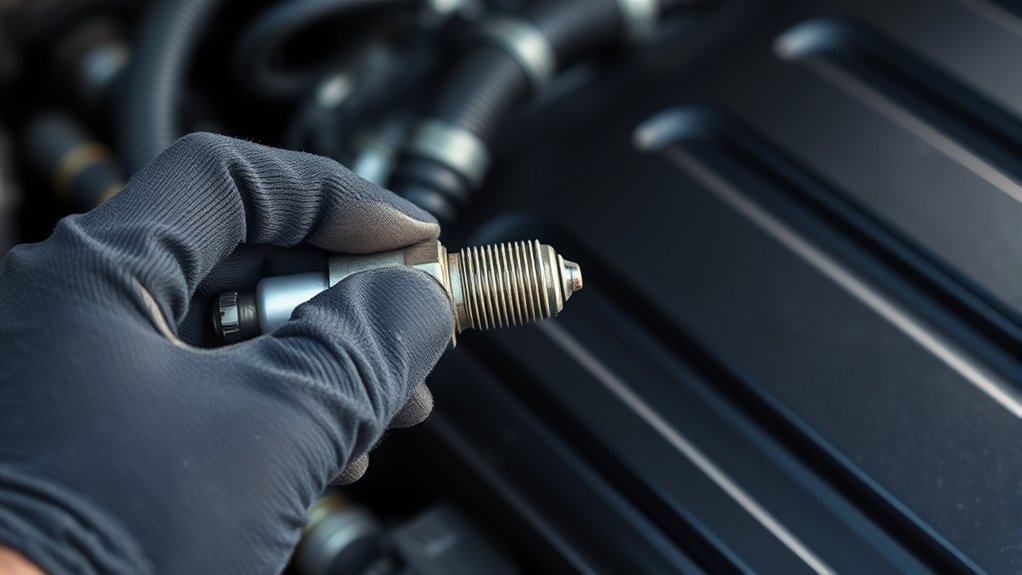
You’ll want to start by inspecting the spark plug’s electrode for signs of wear, such as rounding or erosion. Next, check for carbon deposits, which appear as black, dry soot and can indicate incomplete combustion. These observations help determine if your spark plugs need cleaning or replacement.
Inspecting Electrode Condition
When should you inspect the electrode condition of your spark plugs to ensure optimal engine performance? Regular inspection helps prevent topic drift into unrelated pairings like fuel system issues, keeping your focus precise. Here’s what to look for:
Electrode wear: Check for rounded or eroded edges, which reduce spark efficiency.
Gap size: Measure the distance between the center and ground electrode, ensuring it matches manufacturer specs.
Cracks or damage: Look for physical damage that can cause misfires or poor combustion.
Corrosion: Identify any rust or buildup that might affect conductivity.
Identifying Carbon Deposits
How can you tell if carbon deposits are affecting your spark plugs? Examine the electrode and insulator tip for dry, black, sooty buildup. This indicates incomplete combustion leading to carbon fouling.
Unlike an edge case in fatigue analysis, which deals with material failure, carbon deposits directly impair spark plug performance by reducing spark efficiency. Avoid confusing this with an unrelated concept such as electrode wear; carbon fouling is a surface contamination issue, not physical degradation.
Use a magnifying glass to inspect the plug carefully. Heavy deposits can cause misfires and poor fuel economy.
DIY Spark Plug Replacement Tools and Tips
What tools do you need to efficiently replace spark plugs yourself? Proper tools ensure precise car maintenance and help maintain optimal fuel efficiency. Here’s what you’ll need:
Spark plug socket: A deep socket with a rubber insert to grip the plug securely.
Ratchet wrench: Provides the torque necessary to loosen and tighten plugs without damage.
Torque wrench: Ensures you tighten spark plugs to manufacturer specifications, preventing over- or under-tightening.
Gap gauge: Measures and adjusts the spark plug gap for optimal combustion.
Before starting, disconnect the battery and clean around the spark plug area to avoid debris entering the cylinder. Carefully remove old plugs, check gaps on new plugs, and install them with the torque wrench. Following these tips preserves engine performance and prolongs spark plug life.
When to Hire a Mechanic for Spark Plug Replacement
Although replacing spark plugs can be a straightforward task with the right tools, you should consider hiring a mechanic if your engine has complex configurations or if you encounter signs of ignition system problems. Mechanics possess specialized diagnostic equipment to identify issues like misfires, wiring faults, or coil pack failures that go beyond simple plug replacement.
Attempting repairs without proper expertise risks causing damage or overlooking critical problems. Avoid off topic discussion about unrelated repairs or irrelevant topic details when consulting professionals; focus solely on the spark plug system to ensure efficient service.
If you notice persistent engine hesitation, rough idling, or decreased performance despite new plugs, it’s a clear signal to seek professional help. Prioritize safety and accuracy by trusting trained mechanics for complex spark plug replacement tasks.
How Regular Spark Plug Changes Save You Money
Knowing when to hire a mechanic for spark plug issues is important, but maintaining a regular replacement schedule can prevent many costly repairs in the first place. By changing your spark plugs on time, you optimize engine performance, reducing fuel consumption and emissions. This efficiency supports sustainable choices, much like urban gardening and solar power promote eco-friendly living.
Regular spark plug maintenance helps you:
- Avoid engine misfires that damage catalytic converters
- Improve fuel economy, saving on gas costs
- Extend the lifespan of ignition coils and other components
- Minimize unexpected breakdowns and towing expenses
Frequently Asked Questions
Can Bad Spark Plugs Cause Engine Misfires?
Yes, bad ignition caused by worn spark plugs can trigger engine misfires. When you perform a misfire diagnosis, checking spark plug condition helps identify ignition issues, ensuring accurate troubleshooting and restoring optimal engine performance promptly.
Do Spark Plugs Affect Fuel Efficiency?
Yes, worn spark plugs reduce combustion efficiency, lowering your fuel economy impact. Maintaining optimal spark plug longevity ensures consistent ignition timing, improving fuel efficiency and engine performance.
How Do Spark Plugs Influence Emissions?
You improve emissions estimation, you optimize combustion efficiency, and you reduce harmful pollutants by maintaining spark plugs. Faulty plugs cause incomplete combustion, increasing emissions, while clean plugs ensure precise ignition, promoting cleaner exhaust and better engine performance overall.
What Types of Spark Plugs Are Best for Cold Climates?
You’ll want spark plugs with a colder heat range for cold climates to prevent fouling. Choose ones with high corrosion resistance, like iridium or platinum, ensuring reliable ignition and longevity despite harsh weather conditions.
Can Using the Wrong Spark Plug Damage My Engine?
Back in the days of steam engines, you’d know using wrong plug materials today can seriously damage your engine.
You’ll face misfire risks, reduced performance, and increased wear, so always choose spark plugs designed precisely for your engine.
Conclusion
Regularly changing your spark plugs keeps your engine running smoothly and efficiently, preventing costly repairs down the road. Ignoring wear signs can lead to poor fuel economy and engine misfires—think of it as tuning your horseless carriage before a long journey.
Whether you choose copper, platinum, or iridium, sticking to recommended intervals maximizes performance. If you’re unsure, don’t hesitate to call a mechanic. Staying proactive saves you money and keeps your vehicle in prime condition.
To maintain optimal engine health and performance, knowing how often to change spark plugs is essential. Following the proper schedule ensures your car runs at its best and avoids unnecessary issues.