
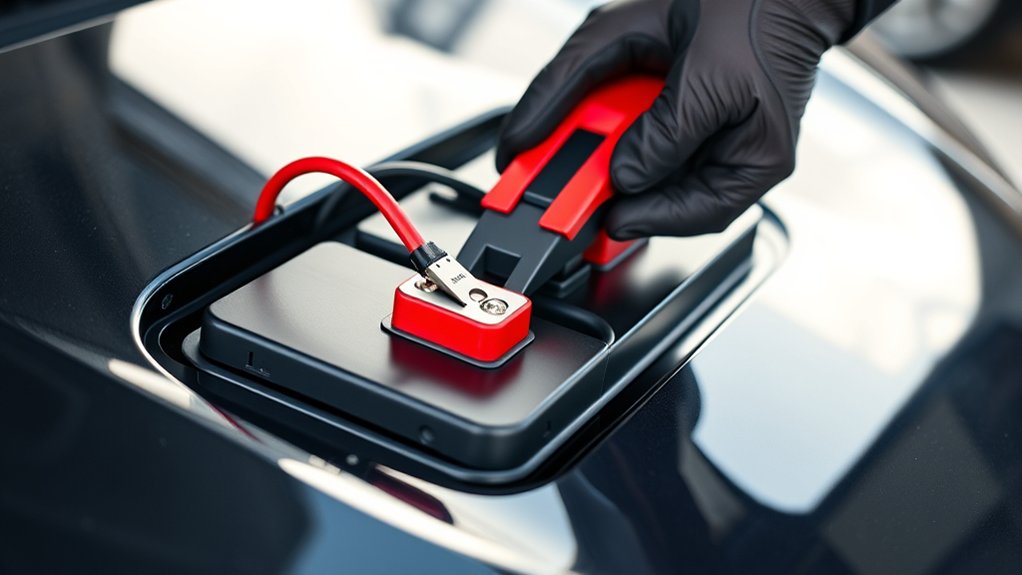
How to Battery Charger Car
To battery charger car, first choose a charger that matches your battery’s voltage and type—lead-acid, AGM, or lithium-ion. Wear gloves and eye protection, and clean the terminals to ensure good contact.
Connect the positive clamp to the positive terminal and the negative clamp to the negative terminal or grounded metal. Turn on the charger, monitor voltage and heat regularly, and avoid overcharging by following the manufacturer’s guidelines.
Proper setup and monitoring help extend battery life and prevent damage. Understanding detailed steps ensures safe, effective charging.
Key Takeaways
- Match the charger voltage and capacity to your car battery type to avoid damage and ensure efficient charging.
- Wear gloves and eye protection, then clean battery terminals with baking soda solution before connecting the charger.
- Connect the red clamp to the positive terminal and the black clamp to the negative terminal or grounded metal part securely.
- Turn on the charger only after clamps are attached. Monitor voltage and indicator lights regularly during charging for safety.
- Charge in a well-ventilated area, avoid sparks or flames, and disconnect once the battery reaches the recommended full charge voltage.
Choosing the Right Charger for Your Car Battery
How do you select the right charger for your car battery? Start by assessing your battery’s voltage and capacity, ensuring the charger matches these specifications to avoid overcharging or undercharging.
Begin by matching your charger to your battery’s voltage and capacity to ensure proper charging.
Consider car battery economics: investing in a charger with precise current control extends battery life, saving replacement costs. If you prefer eco-friendly options, explore solar charging units. These chargers harness solar panels to provide a steady, low-current charge, ideal for maintaining batteries over time without grid electricity.
Verify the charger’s compatibility with your battery type, such as lead-acid, AGM, or lithium-ion, as each requires specific charging algorithms. Look for features like automatic shutoff, voltage regulation, and reverse polarity protection for safe and efficient operation.
Selecting the correct charger optimizes battery performance and longevity, aligning with both economic and environmental goals.
Preparing Your Car Battery: Safety and Cleaning
After selecting the correct charger for your battery, you need to prepare the battery itself before connecting the charger. First, always wear appropriate safety gear, gloves and eye protection, to prevent acid burns or sparks.
Avoid discussing any unrelated topic or wrong context like engine repairs, as your focus is battery prep. Inspect the battery terminals for corrosion or buildup. Use a mixture of baking soda and water with a stiff brush to clean terminals carefully, neutralizing acid deposits.
Rinse with clean water and dry thoroughly. Ensure the battery is securely mounted and the area is well-ventilated to avoid gas accumulation. Confirm the battery’s vent caps are tight or removed if recommended by the charger instructions.
Proper preparation minimizes hazards and ensures efficient charging.
Step-by-Step Guide to Charging Your Car Battery Safely
Before you start charging, make certain your battery is fully prepared by checking for damage and cleaning the terminals. Next, connect the charger correctly, attaching the positive and negative clamps to the appropriate battery posts. Finally, monitor the charging process closely to avoid overcharging and guarantee safety throughout.
Preparing Your Battery
A essential step in charging your car battery safely is preparing it correctly to prevent damage and guarantee efficient charging. Begin by inspecting the car battery for cracks, leaks, or corrosion, especially on the terminals.
Clean any corrosion with a mixture of baking soda and water, using a brush to ensure a solid electrical connection. Verify the battery’s voltage with a multimeter to understand its current state before charging.
Remove any metal jewelry to avoid accidental shorts. Ensure the battery is securely mounted and the car is turned off.
Familiarize yourself with charging fundamentals, such as the difference between slow and fast charging and battery capacity ratings. Proper preparation minimizes risks and optimizes the charging process for your car battery.
Connecting Charger Correctly
How exactly do you connect your charger to guarantee safe and effective battery charging? First, ensure your portable power charger is switched off and unplugged. Identify the battery terminals: positive (+) and negative (–).
Attach the red clamp to the positive terminal securely, avoiding any contact with metal surfaces. Next, connect the black clamp to the negative terminal or a grounded metal part away from the battery to prevent sparks.
Confirm that clamps are tight and stable before plugging in and switching on the charger. Always follow charger safety protocols by wearing protective gear and keeping sparks or flames away.
These steps minimize risks, ensuring a controlled flow of current and protecting both you and the battery during the charging process.
Monitoring Charging Process
Once the charger clamps are securely attached and the unit is powered on, you need to closely monitor the charging process to ensure safety and effectiveness. Regularly check the charger’s indicator lights and voltage readings to prevent overcharging, which can damage the battery and compromise battery safety.
Keep the area ventilated to avoid gas buildup during charging. Follow this monitoring checklist to maintain proper car maintenance:
| Time Interval | Voltage Reading | Charger Indicator |
|---|---|---|
| 0 min | 12.0V | Power On |
| 10 min | 12.8V | Charging |
| 30 min | 13.2V | Charging |
| 60 min | 13.6V | Nearly Charged |
| End | 12.6V | Fully Charged |
Stay alert for abnormal heat or smells, and disconnect promptly when charging completes.
How to Monitor Your Battery While It Charges
You need to regularly check the battery’s voltage levels to ensure proper charging progress. Watch the charger’s indicators closely to confirm it’s operating within safe parameters. Also, monitor the battery temperature to prevent overheating and potential damage.
Checking Voltage Levels
Why is monitoring voltage levels essential during battery charging? Checking voltage ensures your battery charges correctly and prevents damage. Voltage reflects the battery’s state and varies depending on battery chemistry, such as lead-acid or lithium-ion types.
To accurately check voltage levels, follow these steps:
- Use a digital multimeter set to DC volts for precise measurement.
- Connect the multimeter probes to the battery terminals, red to positive, black to negative.
- Record voltage readings at regular intervals to track charging progress.
- Compare readings against the manufacturer’s recommended voltage range for your battery chemistry.
Consistent voltage monitoring helps you identify overcharging or undercharging early, safeguarding battery health and optimizing performance during the charging cycle.
Observing Charging Indicators
How can you effectively track your battery’s condition during charging? Start by closely watching the charger’s indicator lights or display panel, which provide real-time data on the charging status.
Different battery chemistry types, like lead-acid versus lithium-ion, require specific voltage and current thresholds. Ensure your charger matches these parameters.
Avoid common charging myths, such as the belief that a battery must be fully drained before charging or that faster charging always improves battery life. Instead, rely on the charger’s feedback to prevent overcharging or undercharging.
Regularly check for stable voltage readings and confirm the battery isn’t overheating. By attentively observing these indicators, you’ll maintain optimal battery health and extend its service life during the charging process.
Ensuring Safe Temperature
Temperature plays a critical role in battery charging safety and efficiency. To ensure safe temperature levels, you need to monitor the battery closely during charging. Implement continuous temperature logging to track fluctuations in real-time.
Proper heat dissipation is essential to prevent overheating, so position the charger and battery in a well-ventilated area. Follow these steps:
- Use a digital thermometer or thermal sensor to log temperature consistently.
- Check for abnormal temperature spikes every 10-15 minutes.
- Ensure the battery is placed on a non-flammable surface to aid heat dissipation.
- If temperatures exceed manufacturer recommendations, pause charging immediately to avoid damage.
Mistakes to Avoid When Charging Your Car Battery
When charging your car battery, what common errors should you steer clear of to ensure safety and efficiency? First, avoid connecting the charger clamps incorrectly. Positive to negative leads cause sparks and damage.
Don’t ignore your charger’s specifications; using incompatible voltage or current settings risks battery failure. Avoid charging in poorly ventilated areas to prevent gas buildup.
Never leave the charger unattended for extended periods to avoid overcharging. Also, don’t engage in irrelevant topics or off-topic ideas like unrelated car maintenance during charging, which distracts from proper procedure.
Finally, make sure the battery is clean and dry before charging to maintain optimal contact and prevent short circuits. By following these precise guidelines, you’ll minimize hazards and extend your battery’s lifespan effectively.
How to Troubleshoot Charging Problems
Even with proper charging techniques, you might encounter issues that prevent your battery from charging correctly. Troubleshooting dead batteries often starts with inspecting physical connections. Corroded terminals can obstruct the flow of current, so clean them using a wire brush and baking soda solution.
Troubleshooting battery issues begins with checking connections and cleaning corroded terminals for optimal current flow.
Next, ensure the charger clamps have a secure grip on the terminals. Check the battery’s voltage with a multimeter to determine if it’s holding a charge. Finally, verify the charger’s settings and cables for damage or faults.
- Inspect and clean corroded terminals.
- Confirm charger clamp connections.
- Measure battery voltage with a multimeter.
- Examine charger settings and cables for defects.
Following these steps will help you identify and resolve common charging problems efficiently.
How to Maintain Your Car Battery After Charging
How often should you check your car battery after charging to ensure its longevity? Ideally, inspect battery health monthly. Begin by cleaning terminals to prevent corrosion, which can impair performance.
Use a multimeter to measure voltage; a fully charged battery reads about 12.6 volts or higher. Monitor electrolyte levels if applicable, topping off with distilled water as needed.
To maintain optimal charge, consider using solar charging systems, especially if your vehicle sits idle for extended periods. Solar chargers provide a slow trickle charge, preventing discharge without overcharging.
Avoid deep discharges and extreme temperatures, as both degrade battery health. Regularly test your battery’s capacity with load testers to detect early signs of failure.
Frequently Asked Questions
Can I Charge a Completely Dead Car Battery?
You can charge a completely dead car battery, but follow tips for jump starting a dead battery carefully.
Avoid risks of overcharging while using a trickle charger by monitoring voltage and disconnecting once fully charged for safety and battery longevity.
How Long Does It Take to Fully Charge a Car Battery?
It takes 4 to 24 hours to fully charge a car battery, depending on charger type. Fast charging speeds up battery behavior but risks overheating, so monitor voltage and temperature carefully to ensure safe, complete charging.
Are There Specific Chargers for Different Battery Types?
Like choosing the right key for Excalibur, you need chargers tailored to different battery types. Always verify charger compatibility to prevent damage and ensure optimal charging performance, matching voltage, chemistry, and capacity precisely.
Can Charging Damage My Car’s Electrical System?
Yes, improper charger safety and ignoring electrical compatibility can damage your car’s electrical system. Always use a charger designed for your battery type, follow manufacturer instructions, and ensure voltage and current settings match your vehicle’s requirements.
Is It Safe to Charge a Battery in Cold Weather?
Charging a battery in cold weather isn’t a walk in the park, but you can do it safely. Keep the battery warm, use a charger with temperature compensation, and monitor battery health to prevent damage and guarantee efficiency.
Conclusion
By choosing the right charger and following safety steps, you can extend your battery’s life considerably. Did you know that about 40% of car battery failures result from improper charging? Monitoring your battery during charging helps prevent overcharging and damage.
Avoid common mistakes like charging in extreme temperatures, and troubleshoot promptly if issues arise. Regular maintenance after charging ensures peak performance and reliability.
Keeping these tips in mind will help you maintain a healthy battery and keep your vehicle running smoothly. Proper battery charger car use is essential for longevity and dependable performance.