How to Check Tire Tread
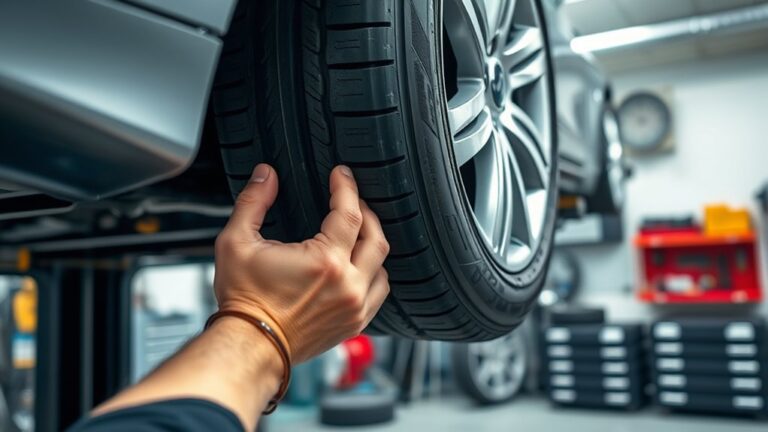
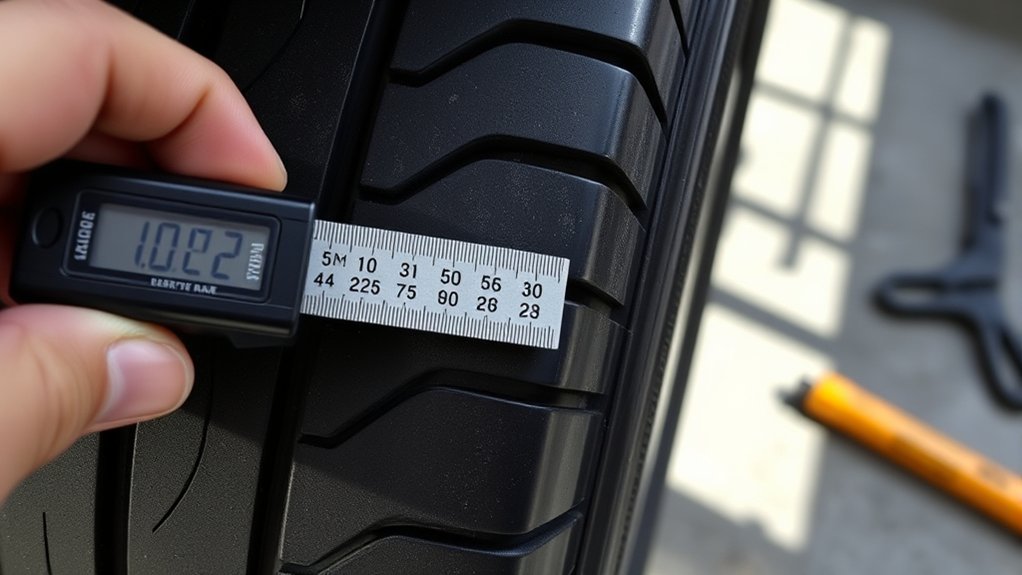
To check your tire tread, start by parking on a flat, cool surface. Use a tread depth gauge or a penny for a quick test to measure tread depth accurately.
Insert the gauge probe or penny into multiple tread grooves around the tire to ensure consistent measurements. Look for wear below 2/32 inch or tread wear indicators, which signal when it’s time to replace your tires.
Uneven tread wear can indicate alignment or inflation issues that need addressing. Maintaining proper tread measurement and recognizing wear patterns helps keep your tires safe and lasting longer. For more tips, explore additional ways to optimize your tire care.
Key Takeaways
- Use a tread depth gauge or a penny to measure tread depth on cool, flat-surfaced tires for accurate readings.
- Check tread depth in multiple spots around the tire to ensure consistent wear measurement.
- Inspect for uneven wear patterns indicating alignment, inflation, or suspension issues.
- Replace tires when tread depth reaches 2/32 inch or tread wear indicators are flush with the tread surface.
- Maintain tires by regular rotation, proper inflation, and avoiding harsh driving to promote even tread wear.
How to Measure Tire Tread Depth at Home
How do you accurately measure your tire tread depth at home? First, ensure your vehicle is parked on a flat surface and tires are cool. For home measurement, use a tread depth gauge, a small tool designed to provide precise readings.
Insert the gauge’s probe into the tread groove, pressing it down until the base rests on the tire’s surface. Read the measurement displayed on the scale; tread depth is typically measured in 32nds of an inch or millimeters. Check multiple spots around the tire to ensure consistency.
If you don’t have a tread depth gauge, a U.S. penny can be a quick substitute. Insert it into the groove with Lincoln’s head upside down. If you see the top of his head, tread depth is below the safe limit and tire replacement is needed.
Spotting Uneven Tire Tread Wear and What It Means
Why does your tire wear unevenly, and what can it indicate about your vehicle’s condition? Uneven wear typically signals alignment issues, improper inflation, or suspension problems.
To spot uneven wear, inspect the tread depth across the tire surface. If one side has significantly less tread depth than the other, it suggests misalignment. Center tread wear points to overinflation, while edge wear indicates underinflation.
Additionally, cupping or scalloping patterns can reveal worn suspension components. Regularly measuring tread depth in multiple spots helps you identify these discrepancies early.
Addressing uneven wear promptly not only extends tire life but also maintains vehicle safety and handling performance. Use a tread depth gauge to ensure consistent measurements and monitor changes over time for accurate diagnosis.
When to Replace Tires Due to Tread Wear
When should you replace your tires due to tread wear? You should replace them once the tread depth reaches 2/32 of an inch, the legal minimum in most regions. Use tread wear indicators, small raised bars molded into the grooves, to check this.
When these indicators become flush with the tire’s tread surface, it signals the end of the tire tread lifespan. Driving beyond this point reduces traction, increasing the risk of hydroplaning and accidents.
When tread indicators align with the surface, tire lifespan ends, risking traction loss and hydroplaning.
Regularly inspect all tires, as uneven wear can cause some to wear out faster. If you notice the tread wear indicators showing or if the tread feels notably shallow, replace your tires immediately to maintain optimal grip and safety on the road.
Don’t wait for visible damage; tread depth is a critical safety metric.
Tips for Maintaining Tire Tread Longer
To extend your tire tread life, rotate your tires regularly to ensure even wear across all tires. Keep your tires properly inflated according to manufacturer specifications to prevent uneven tread degradation. Also, avoid harsh driving habits like sudden acceleration and sharp turns, which accelerate tread wear.
Regular Tire Rotation
A consistent schedule for rotating your tires extends their lifespan by promoting even tread wear across all wheels. You should rotate your tires every 5,000 to 8,000 miles as part of regular maintenance. This process involves moving tires from front to back and side to side, depending on your vehicle’s drivetrain and tire type.
Uneven wear can lead to premature tire disposal, increasing costs and environmental impact. Always follow your vehicle manufacturer’s rotation pattern and torque specifications. Use a calibrated torque wrench to ensure lug nuts are tightened correctly after rotation.
Regular tire rotation not only maintains optimal tread depth but also improves handling and fuel efficiency. Keep a rotation log to track intervals and identify potential alignment or suspension issues early.
Proper Tire Inflation
How often do you check your tire pressure to ensure ideal tread life? Maintaining proper tire inflation is crucial for even tread wear and optimal performance.
Start by consulting your vehicle’s inflation checklist, usually found on the driver’s door jamb or owner’s manual. Use a reliable tire pressure gauge to measure pressure when tires are cold, as heat skews readings.
Inflate tires to the manufacturer’s recommended psi, avoiding both under- and over-inflation, which cause uneven tread wear and reduce tire lifespan. Incorporate tire pressure checks into your monthly vehicle maintenance routine, especially before long trips.
Consistently following this inflation checklist helps maintain tread integrity, improves fuel efficiency, and enhances overall safety on the road. Don’t overlook this simple yet essential step in tire care.
Avoid Harsh Driving
Minimize sudden acceleration, hard braking, and sharp turns to extend your tire tread life. These aggressive maneuvers cause uneven tread wear and reduce overall tire longevity.
Practice safe driving by maintaining smooth, controlled inputs to the accelerator, brakes, and steering wheel. When driving on winter tires, avoid harsh driving to preserve the specialized tread compounds and patterns designed for cold, slippery conditions. Abrupt actions can degrade the soft rubber compounds faster, compromising traction and safety.
Additionally, harsh driving increases heat buildup, accelerating tread wear. To maintain optimal tread depth, anticipate traffic flow and adjust speed gradually. Regularly adopting these driving habits ensures even tread wear, improves fuel efficiency, and enhances vehicle stability.
Ultimately, avoiding harsh driving is essential for maximizing tire tread life and maintaining safe driving conditions year-round.
Common Tire Tread Checking Mistakes to Avoid
Why do many tire tread inspections fail to provide accurate results? Often, you overlook the impact of tread design and tire materials, leading to incorrect assessments. Avoid these common mistakes to check your tire tread effectively.
| Mistake | Cause | Effect |
|---|---|---|
| Measuring unevenly | Ignoring varied tread design | Missed worn spots |
| Using incorrect tools | Improper depth gauges or coins | Inaccurate tread depth reading |
| Checking on dirty tires | Dirt obscures wear patterns | Misjudged tread condition |
| Neglecting sidewalls | Overlooking tire materials impact | Missing structural issues |
Why Tire Tread Matters for Your Safety
Accurate tire tread inspection reveals more than just wear levels. It directly impacts your vehicle’s grip, handling, and braking performance. Understanding tread depth basics is essential for preventing accidents caused by insufficient traction.
Don’t fall for safety myths like “bald tires are fine on dry roads.” Even minimal tread loss compromises control. Your safety depends on maintaining proper tread depth to secure optimal road contact, especially in adverse conditions.
Key reasons tire tread matters for your safety:
- Enhances water evacuation to prevent hydroplaning
- Improves braking distance on wet and slippery surfaces
- Maintains vehicle stability during cornering and sudden maneuvers
- Enables effective grip on uneven or loose terrain
Regularly check your tread to avoid hazards linked to worn tires and ensure consistent performance.
Frequently Asked Questions
What Types of Tire Tread Patterns Are Best for Different Weather Conditions?
You’ll want directional tread for wet traction, channeling water efficiently.
For snowy conditions, opt for deep, aggressive tread with sipes that grip ice and snow.
All-terrain patterns balance both, but specialize based on your needs.
How Does Tire Tread Depth Affect Fuel Efficiency?
Tread depth effects fuel economy by influencing rolling resistance; deeper treads increase resistance, reducing fuel efficiency.
You should maintain optimal tread depth to balance safety and minimize fuel consumption, ensuring your vehicle performs efficiently on the road.
Can Tire Tread Depth Be Repaired or Restored?
You can’t effectively perform tread repair or restoration on worn tire tread. Restoration feasibility is limited; once tread depth is compromised, replacement guarantees safety and performance.
No reliable method restores original tread integrity.
Do All Vehicles Require the Same Minimum Tread Depth?
Like varying sword lengths in battle, vehicles need different minimum tread depths based on design and use.
You must balance treadwear vs warranty and monitor tire aging to maintain optimal safety and performance.
How Do Winter Tires Differ in Tread Design From Summer Tires?
Winter tires feature deeper, more aggressive tread designs with wider grooves to enhance winter performance by improving snow and slush evacuation. You’ll notice softer rubber compounds and numerous sipes for better grip on icy surfaces compared to summer tires.
Conclusion
Regularly checking your tire tread can prevent dangerous situations. For example, imagine driving on a rainy highway with worn tread—your risk of hydroplaning spikes markedly. By measuring tread depth at home with a simple gauge and spotting uneven wear early, you can replace tires before they compromise safety.
Maintain proper tire pressure and alignment to extend tread life. Avoid common mistakes like relying solely on visual checks—accurate measurement is key to safe, confident driving.
In conclusion, knowing how to check tire tread properly ensures your safety and peace of mind on the road.