How to Fix a Flat Tire
If you suspect a flat tire, pull over safely, engage your hazard lights, and apply the parking brake. Fixing a flat tire starts with these safety steps to protect yourself and others on the road.
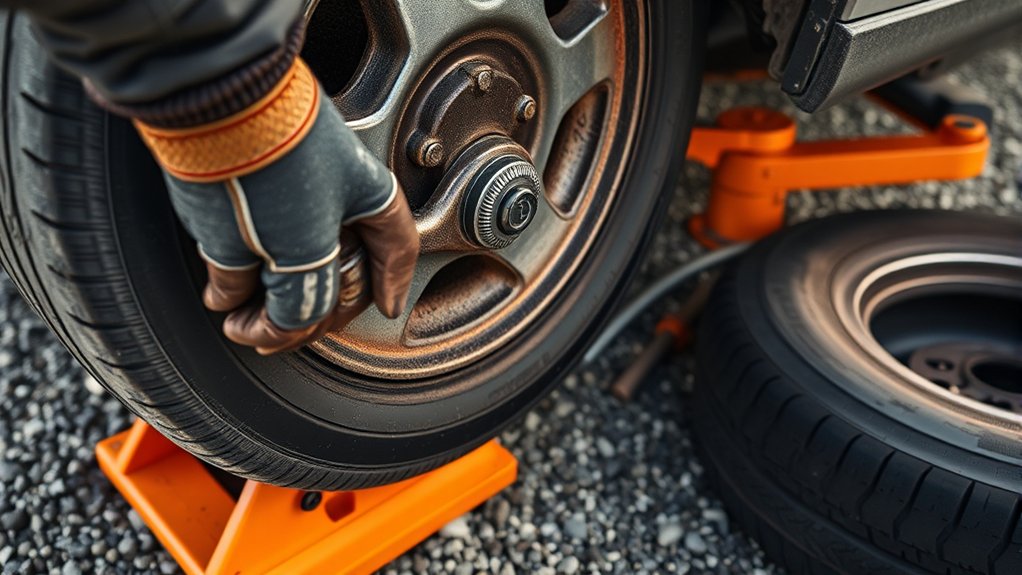
Loosen the lug nuts slightly before using a jack to lift the vehicle. Remove the flat tire, check alignment, then mount the spare. Tighten lug nuts by hand, lower the car, and fully tighten them in a star pattern.
Confirm the spare is properly inflated. For quick roadside repairs, a flat tire kit can plug punctures efficiently. More detailed steps will guide you through each phase.
Key Takeaways
- Recognize a flat tire by sudden steering changes, vibrations, and pressure drops, then pull over safely away from traffic.
- Engage hazard lights, apply the parking brake, and use wheel wedges to secure the vehicle before starting repairs.
- Loosen lug nuts slightly before jacking up the car, then remove the flat tire and mount the spare tire.
- Tighten lug nuts by hand, lower the vehicle, and fully tighten them in a star pattern to ensure even pressure.
- Use a repair kit to locate and plug punctures, then re-inflate the tire and check for leaks with soapy water.
Recognizing and Preparing for a Flat Tire
Before you can fix a flat tire, you need to recognize the signs quickly and prepare your vehicle for safe repair. Pay close attention to sudden changes in steering response, vibrating or thumping sounds, or a noticeable drop in tire pressure.
Regular tire maintenance, including pressure checks and tread inspections, helps you spot vulnerabilities before road hazards cause damage. Once you identify a flat, safely pull over to a stable, level surface away from traffic.
Engage your hazard lights and apply the parking brake. Position wheel wedges opposite the flat tire to prevent rolling. Gather your repair tools, ensuring your spare tire is inflated and in good condition.
Step-by-Step Guide to Changing a Flat Tire
How do you efficiently replace a flat tire to get back on the road safely? First, secure the vehicle using the parking brake and place wheel wedges. Next, loosen lug nuts slightly before lifting the car with a jack.
Remove the flat tire, inspect the wheel alignment, then mount the spare tire from your spare tire storage. Tighten lug nuts by hand, lower the vehicle, and fully tighten the nuts in a star pattern.
| Step | Important Tip |
|---|---|
| Loosen Lug Nuts | Do this before jacking up |
| Check Wheel Alignment | Misalignment causes uneven wear |
| Inflate Spare Tire | Ensure correct tire pressure |
If unsure, contact roadside assistance for help. Always verify tire pressure after replacement.
How to Use a Flat Tire Repair Kit on the Road
Where do you start when you discover a puncture and only have a flat tire repair kit? First, locate the puncture by inspecting the tire carefully. Use the flat tire kit’s tools to remove any debris, part of your road hazard cleanup.
Next, prepare the repair plug by inserting it into the insertion tool provided. Push the plug firmly into the puncture hole, ensuring a tight seal. Withdraw the tool, leaving the plug embedded.
Trim excess plug material flush with the tire surface. Then, re-inflate the tire using the kit’s compressor or a portable pump to the recommended pressure.
Finally, check for leaks by applying soapy water to the repair site. If no bubbles appear, the repair is secure and you can drive cautiously to a service center.
How to Stay Safe While Fixing a Flat Tire
When you find yourself fixing a flat tire, prioritizing your safety is critical. Before starting, assess the surrounding environment and weather conditions to minimize risks. Always equip proper safety gear, such as gloves and reflective vests, to protect yourself and increase visibility.
Follow these essential safety steps:
- Pull your vehicle off the road to a stable, flat surface away from traffic.
- Turn on hazard lights and set up warning triangles or flares.
- Wear safety gear to protect against sharp objects and poor visibility.
- Monitor weather conditions continuously; avoid working during storms or heavy rain.
Frequently Asked Questions
How Often Should I Check My Tire Pressure?
You should check your tire pressure at least once a month and before long trips. Incorporate tire pressure checks into your maintenance schedule and safety checks to ensure optimal performance and prevent premature tire wear or failure.
What Causes Tires to Go Flat Most Frequently?
The most common flat tire causes include punctures from sharp objects, valve stem leaks, and bead damage. You’ll prevent issues by performing regular tire maintenance, such as checking pressure and inspecting for wear or debris.
Can I Drive on a Tire With Low Air Pressure?
You shouldn’t drive on a tire with low air pressure, as it compromises driving safety and damages tire structure.
Prioritize tire maintenance by inflating tires to recommended levels promptly to ensure optimal performance and prevent accidents.
How Long Do Tire Sealants Last After Application?
Like a candle burning steadily, tire sealants typically last between 2 to 6 months after application.
You should monitor the application lifespan closely, as environmental factors can shorten their effectiveness and require reapplication.
When Should I Replace My Spare Tire?
You should perform spare tire replacement every 6-10 years, depending on manufacturer guidelines and tire condition.
Monitor tire safety timing closely, checking for cracks, wear, or damage to assure reliable performance when needed.
Conclusion
So, you never thought you’d become a roadside mechanic, right? But now you know exactly how to recognize, prepare for, and fix a flat tire—whether by changing it or using a repair kit. Just remember, staying safe isn’t optional; it’s critical.
Ironically, mastering this skill means you’ll never be helpless, even when your tire is. Next time you hear that dreaded hiss, you’ll handle it like a pro—no panic, just precision.
With these tips, fixing a flat tire will become second nature, ensuring you stay safe and on the road.