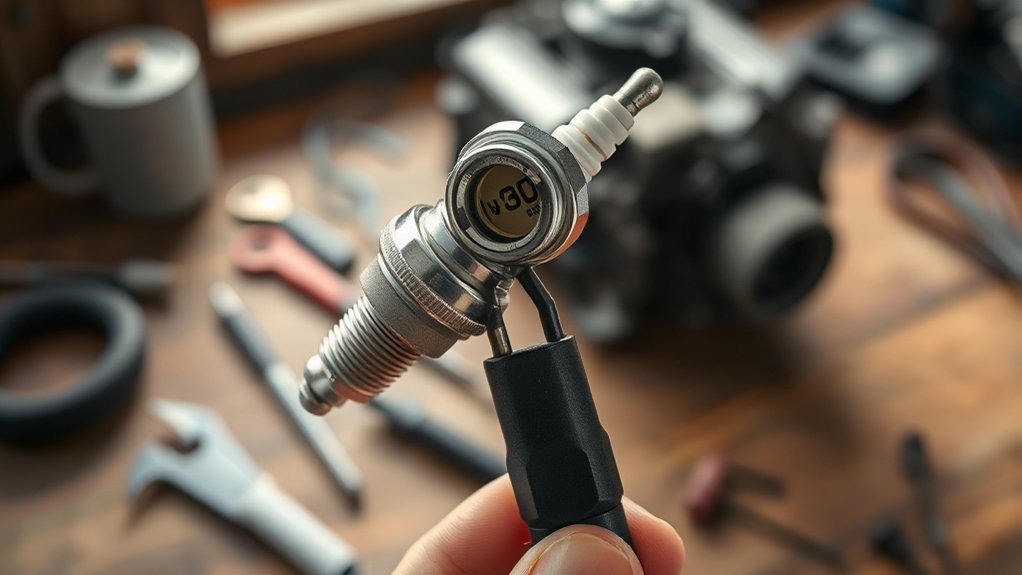
How to Gap Spark Plugs
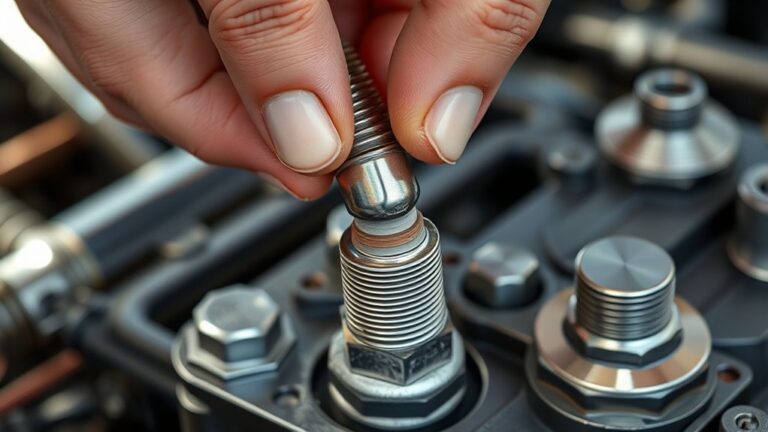
To gap spark plugs correctly, first check your vehicle manual for the exact specification. Use a feeler gauge or digital tool to measure the distance between electrodes.
If the gap is off, gently bend the ground electrode to adjust it—too narrow weakens the spark, too wide causes misfires. Always handle plugs carefully to avoid damage.
Proper gapping ensures reliable ignition and optimal engine performance. Keep going to uncover detailed methods, tools, and maintenance tips for lasting efficiency.
Key Takeaways
- Use a feeler gauge or digital gap tool to measure the distance between the center and ground electrodes accurately.
- Adjust the gap by gently bending the ground electrode to match the manufacturer’s specified gap for your engine.
- Always verify the recommended gap in your vehicle’s manual or manufacturer specifications before adjusting.
- Inspect spark plugs for electrode wear or deposits and replace if damaged rather than just re-gapping.
- Avoid makeshift tools; use proper gauges designed for your spark plug type to ensure precise and consistent gaps.
What Spark Plug Gap Is and Why It’s Crucial for Engine Performance
What exactly is a spark plug gap, and why should you care about it? The spark plug gap is the precise distance between the center and ground electrodes. This gap admissible range is critical because it directly influences the spark’s ability to ignite the air-fuel mixture efficiently.
If the gap is too narrow, the spark may be weak, leading to incomplete combustion. Conversely, an excessively wide gap demands higher voltage, risking misfires. Your engine’s ignition timing relies on this balance to ensure optimal firing.
Proper gap settings maintain consistent ignition timing, maximizing power and fuel efficiency while minimizing emissions. Ignoring the correct gap can cause engine hesitation, rough idling, and increased wear.
Understanding the spark plug gap ensures you maintain your engine’s peak performance and longevity.
Finding the Right Spark Plug Gap for Your Engine
How do you determine the correct spark plug gap for your engine? First, consult your vehicle’s owner manual or manufacturer specifications to find the precise gap measurement. This gap varies by engine type, combustion chamber design, and fuel system.
Consult your vehicle’s manual or manufacturer specs to find the exact spark plug gap for your engine.
Avoid relying on general recommendations or unrelated topic advice found in forums or off topic discussions, as incorrect gaps can cause misfires or inefficient combustion. Never assume a pre-gapped spark plug fits your engine without verification.
Accurate gap settings ensure the spark’s intensity and timing optimize performance and fuel efficiency. Stay focused on engine-specific data, and disregard any unrelated topic or off topic discussion that doesn’t address your engine model.
Precise gap measurement is vital to maintaining proper ignition and engine function.
Tools You Need to Check and Adjust Spark Plug Gaps
To accurately check and adjust spark plug gaps, you’ll need specific tools designed for precision measurement and fine adjustment. Understanding spark plug history helps appreciate why modern gap measurement tools are essential; early plugs lacked standardized gaps, making consistent ignition unreliable.
Today, feeler gauges and gap gauges are the primary instruments you’ll use. Feeler gauges consist of calibrated metal blades that measure gap width by sliding between electrodes. Gap gauges, often coin-shaped, flex to measure or adjust the gap by bending the ground electrode carefully.
Some digital gap measurement tools provide even greater accuracy, displaying exact measurements. Using these tools ensures the gap matches manufacturer specifications, optimizing engine performance and combustion efficiency. Avoid using makeshift tools, as improper gap measurement can lead to misfires and reduced engine life.
How to Adjust Spark Plug Gaps for Different Plug Types
You’ll start by measuring the existing gap using a feeler gauge or gap tool, ensuring it matches the manufacturer’s specifications for your specific plug type. Next, adjust the gap carefully—either by gently bending the ground electrode or using a specialized tool designed for that plug style. Proper measurement and adjustment techniques vary slightly depending on the plug design, so precise handling is essential.
Measuring Spark Plug Gaps
Why does measuring spark plug gaps accurately matter? Proper measurement ensures peak combustion, which directly impacts fuel economy and engine performance. Incorrect gaps can cause misfires, poor spark plug color, and reduced efficiency. Use a feeler gauge or gap tool designed for your specific plug type to get precise readings.
| Spark Plug Type | Recommended Gap (inches) | Notes |
|---|---|---|
| Copper | 0.030 – 0.035 | Common, requires frequent checking |
| Platinum | 0.028 – 0.032 | Longer life, stable gap |
| Iridium | 0.024 – 0.028 | High durability, precise gap needed |
Always check manufacturer specs and inspect spark plug color to confirm proper gap and combustion quality.
Adjusting Gap Techniques
Accurately measuring the spark plug gap sets the foundation, but adjusting that gap to the correct specification guarantees optimal engine function. When adjusting gaps, use a proper gap tool suited to the plug type: round feeler gauges for standard plugs and wire gauges for fine-wire or platinum plugs.
Avoid bending the electrode excessively, as this can damage the plug or alter performance. Press gently to widen the gap or carefully tap to close it.
How to Measure the Spark Plug Gap Accurately
How do you guarantee the spark plug gap meets the exact specifications? Accurate measurement is crucial for optimal engine performance and longevity testing. Start by using a feeler gauge or a specialized spark plug gap tool, ensuring precision down to thousandths of an inch.
This accuracy helps in the comparison of spark plug brands, as each may have slightly different gap requirements. Follow these steps:
- Select the correct measurement tool calibrated to your vehicle’s specifications.
- Insert the gauge between the center and ground electrode without forcing it.
- Confirm the gauge fits snugly, indicating the correct gap size.
Consistently precise measurement prevents misfires and supports reliable performance, especially during longevity testing where consistent gaps play a vital role.
Step-by-Step Guide to Adjusting Spark Plug Gaps
Once you’ve confirmed the spark plug gap meets the required specifications using a feeler gauge, you can proceed to adjust it if necessary. First, gently bend the ground electrode to increase the gap. Use a gap tool or a small flathead screwdriver to carefully pry the electrode outward.
Avoid applying excessive force, which risks damaging the electrode or insulator. Next, recheck the gap with the feeler gauge, ensuring it matches the manufacturer’s specs. Repeat the adjustment if needed, in small increments.
Signs Your Spark Plug Gap Might Be Wrong
Why does your engine hesitate or misfire under load? One common cause is an incorrect spark plug gap, which disrupts ignition timing and combustion efficiency. If the gap is too wide or too narrow, the spark energy may be insufficient or inconsistent, affecting engine performance.
Look for these signs to identify gap issues:
- Rough idling or stalling: An improper gap can cause incomplete combustion, leading to unstable engine operation.
- Poor fuel economy: Incorrect gaps reduce spark efficiency, causing wasted fuel.
- Difficulty starting: A faulty gap can delay ignition, especially in cold starts.
What Happens When Your Spark Plug Gap Is Wrong
If your spark plug gap is incorrect, you’ll likely experience engine performance issues like reduced power and hesitation. You’ll also notice increased fuel consumption because the combustion won’t be as efficient. Additionally, misfiring and rough idling can occur, causing your engine to run unevenly.
Engine Performance Issues
How does an incorrect spark plug gap affect your engine’s performance? Misjudging the gap disrupts optimal combustion chemistry, leading to inefficient ignition and reduced power output.
Contrary to common spark plug myths, a wider gap doesn’t always mean better sparks; too wide or too narrow gaps impair the spark’s ability to ignite the air-fuel mixture properly.
You may notice these issues when the gap’s off:
- Rough idling and engine misfires due to incomplete combustion
- Decreased acceleration and power as spark energy weakens
- Difficulty starting the engine caused by inconsistent spark delivery
Adjusting the spark plug gap precisely ensures reliable ignition timing and combustion efficiency, helping your engine perform at its best without falling victim to widespread spark plug myths.
Increased Fuel Consumption
When your spark plug gap is incorrect, your engine burns fuel less efficiently, leading to increased consumption. An improperly gapped spark plug disrupts the spark’s intensity and timing, causing incomplete combustion.
This inefficiency forces your engine to inject more fuel to maintain power output, directly reducing fuel efficiency. Regular gap testing ensures the electrode spacing matches manufacturer specifications, optimizing spark quality and combustion.
Even slight deviations in gap width can cause a weak or inconsistent spark, forcing the engine control unit to compensate by adjusting fuel delivery. By maintaining the correct spark plug gap, you ensure optimal fuel atomization and ignition, minimizing fuel waste.
Proper gap testing is a simple yet critical step to preserve fuel efficiency and reduce unnecessary fuel consumption.
Misfiring And Rough Idling
Why does your engine misfire or idle roughly? An incorrect spark plug gap disrupts the ignition timing, causing incomplete combustion. This leads to engine misfires and unstable idling.
When the gap is too wide, the spark weakens, failing to ignite the air-fuel mixture effectively. Conversely, a gap that’s too narrow can cause a weak or inconsistent spark.
For effective misfire troubleshooting, consider these key factors:
- Spark strength: A wrong gap reduces spark intensity, causing misfires.
- Ignition timing: Incorrect gaps alter timing, impairing combustion efficiency.
- Engine stability: Rough idling occurs due to inconsistent firing across cylinders.
Adjusting your spark plug gap to manufacturer specifications ensures proper ignition timing and smooth engine performance.
Tips for Maintaining Proper Spark Plug Gaps Over Time
Where should you focus your attention to keep spark plug gaps consistent over time? Start by regularly inspecting the electrode wear, as material erosion alters the gap, affecting ignition performance.
Use a precise feeler gauge to measure gaps rather than relying on visual estimates. Remember, spark plug history plays a role; older plugs may have deposits from combustion that influence gap size.
Clean electrodes carefully to remove carbon buildup without damaging them. Also, monitor changes in engine operating conditions, since heat cycles can cause metal expansion and contraction, subtly shifting gap dimensions.
Though automotive lighting is unrelated to spark plug gaps, understanding electrical system maintenance can enhance your overall approach to vehicle care. Consistent gap maintenance ensures optimal combustion efficiency and engine reliability.
When to Replace Spark Plugs Instead of Re-Gapping
You should replace spark plugs instead of re-gapping when you notice signs of wear like electrode erosion or heavy deposits. Performance issues such as misfires, rough idling, or poor fuel economy often indicate plugs are beyond adjustment. Always inspect for visible damage like cracked insulators or burnt electrodes before deciding to gap or replace.
Signs of Worn Plugs
How can you tell if a spark plug needs replacement rather than just re-gapping? When plugs show signs of wear beyond simple gap issues, replacement is necessary to maintain engine efficiency. This is especially important as eco friendly fuels can cause deposits that degrade plug performance faster, unlike electric vehicles that don’t use spark plugs at all.
Look for these signs to identify worn plugs:
- Electrode erosion: Rounded or melted electrodes reduce spark quality.
- Heavy deposits: Carbon buildup or oil fouling impairs ignition.
- Cracked insulator: Visible cracks cause misfires and poor combustion.
If you notice any of these, replacing the spark plugs ensures optimal ignition and avoids inefficiencies that re-gapping alone can’t fix.
Performance Issues Indicated
Beyond visible wear, certain performance issues clearly indicate that spark plugs need replacement rather than just re-gapping. If your engine misfires persist despite correct gap settings, it suggests electrode degradation, often seen in copper alloys where erosion alters spark consistency.
Additionally, if you notice orange notches or abnormal discoloration on the plug’s insulator, these signal combustion irregularities affecting performance. Reduced fuel efficiency and difficulty starting are further signs that re-gapping won’t resolve.
Since copper alloy plugs wear faster, frequent replacements ensure optimal ignition. When you experience these symptoms, it’s more effective to replace the spark plugs to restore engine performance fully, rather than attempting to adjust the gap on compromised components.
This approach prevents further engine strain and maintains reliable combustion.
Visual Damage Inspection
When should you replace spark plugs instead of just re-gapping them? A careful visual inspection reveals critical signs that gap wear alone can’t fix. You need to replace the plugs if you notice:
- Cracked or chipped insulators, which compromise spark delivery and engine performance.
- Excessive electrode erosion beyond typical gap wear, indicating the plug’s life is over.
- Heavy deposits or burnt electrodes, signaling combustion issues or overheating.
These defects go beyond simple gap adjustment. Re-gapping won’t restore proper function if the spark plug’s structural integrity is compromised. Always conduct a thorough visual inspection before deciding. If any damage is evident, replace the spark plugs to maintain engine efficiency and prevent further mechanical issues.
Frequently Asked Questions
Can Spark Plug Gaps Affect Fuel Efficiency?
Yes, incorrect spark plug gaps can reduce fuel efficiency by causing incomplete combustion. You’ll experience misfire causes linked to improper gap fuel delivery, which wastes fuel and lowers engine performance.
Maintaining the correct gap optimizes efficiency.
How Often Should I Check My Spark Plug Gaps?
You’d check your spark plug gaps every 30,000 miles to guarantee ignition reliability. Regular checking maintenance prevents misfires and improves performance, so don’t skip this precise task.
Keep your engine running efficiently and smoothly by maintaining the correct spark plug gaps.
Does Temperature Affect Spark Plug Gap Settings?
Yes, temperature effects can cause metal expansion, slightly altering spark plug gap settings. You should always perform tool calibration at operating temperature to ensure precise measurements and maintain optimal engine performance.
Can Improper Spark Plug Gaps Cause Engine Misfires?
Yes, an improper gap can cause engine misfires by disrupting the spark’s intensity and timing. You’ll experience incomplete combustion, reduced performance, and increased emissions if the gap isn’t set correctly for your engine’s specifications.
Are Aftermarket Spark Plugs Harder to Gap Correctly?
Yes, about 30% of mechanics report difficulty with aftermarket spark plugs due to inconsistent spark plug gaps. This two-word discussion idea, “gap precision,” shows aftermarket plugs often need extra attention to ensure prime engine performance.
Conclusion
Maintaining the correct spark plug gap is like fine-tuning a musical instrument—small adjustments make a big difference in engine performance. By regularly checking and properly setting your spark plug gaps, you ensure efficient combustion, better fuel economy, and smoother starts.
Don’t overlook signs of wear or incorrect gaps; they can lead to misfires or engine damage. Keep your tools handy, measure carefully, and replace plugs when needed.
Following these steps will help you keep your engine running at its best. Properly gapping spark plugs is essential for optimal engine performance and longevity.