How to Make Car Seat Covers
To make car seat covers, start by carefully measuring all seat dimensions with a tape measure for accuracy. Accurate measurements are essential to ensure a perfect fit. Choose durable, abrasion-resistant fabrics like neoprene or heavy-duty polyester for long-lasting protection.
Draft precise patterns with seam allowances, then cut fabric and add padding as needed. Use strong thread and appropriate stitches—straight for seams, zigzag for edges—to sew pieces together. Fit and secure covers with elastic straps, adjusting for a snug fit.
Following these steps ensures a professional finish and lasting protection. Additional tips are available for maintenance and troubleshooting to keep your car seat covers looking great.
Gather Materials and Tools for Seat Covers
Where do you begin when making custom car seat covers? Start by gathering all necessary materials and tools before you dive into the project. Think of it like grocery shopping: you need a precise list to avoid multiple trips.
Essential items include strong thread, durable fabric, foam padding, and fasteners. You’ll also require power tools such as a staple gun for securing fabric and a sewing machine with heavy-duty needles to handle thick materials.
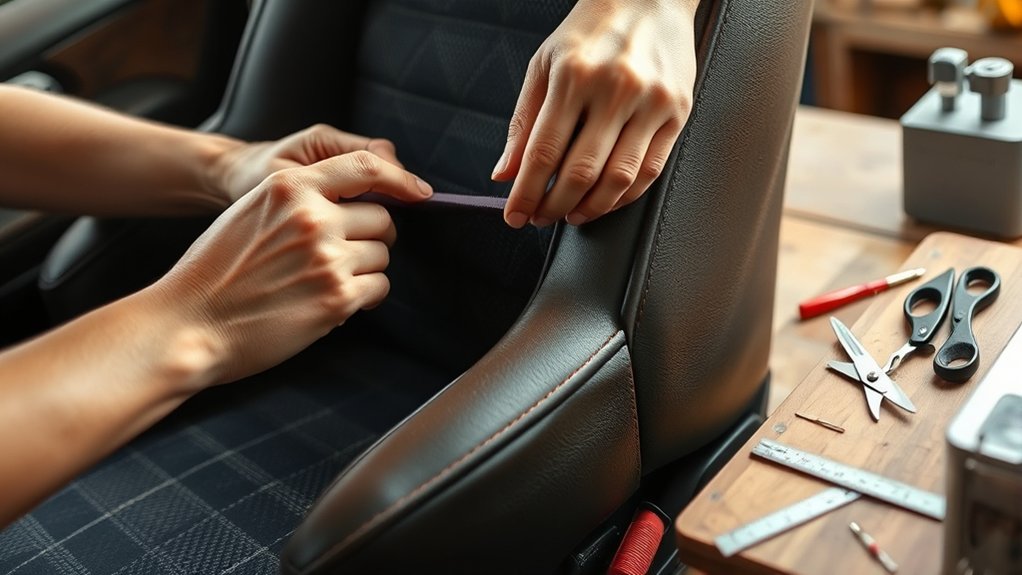
Measuring tape, scissors, and fabric chalk are basic but crucial tools for accuracy. Having everything ready streamlines your workflow, prevents interruptions, and ensures your covers fit perfectly.
Choose the Best Fabric and Materials for Durable Seat Covers
You’ll want to select fabrics that balance durability, comfort, and ease of cleaning. Common options include neoprene, leather, and heavy-duty polyester, each offering specific resistance to wear and moisture. Focus on materials with high tensile strength and UV resistance to ensure your seat covers last.
Fabric Types Overview
Which fabric will provide the best combination of durability, comfort, and ease of maintenance for your car seat covers? Synthetic fabrics like neoprene and polyester offer excellent resistance to wear and stains, making them ideal for long-term use.
Leather provides a premium look but requires careful fabric refinishing to maintain appearance over time. Canvas, though durable, demands frequent cleaning to avoid fading.
Conduct a thorough color analysis to ensure your fabric maintains its hue under UV exposure and cleaning agents. Consider blends that balance breathability and toughness.
Selecting the right fabric upfront minimizes future refinishing needs and extends the life of your covers. Prioritize materials engineered for automotive use, as they’re tested for abrasion, water resistance, and colorfastness, ensuring your seat covers stay functional and attractive.
Essential Material Qualities
Building on your fabric choice, focus on material qualities that directly impact durability and performance. Prioritize abrasion resistance to withstand daily friction and wear. Water repellency is essential to prevent stains and damage from spills.
Ensure the fabric has UV resistance, protecting it from sun fading and brittleness. Breathability helps maintain comfort, reducing moisture buildup. Additionally, consider tensile strength to avoid stretching and deformation over time.
Avoid irrelevant tangents or unrelated questions that don’t affect these core properties. Select materials with reinforced stitching capabilities for added longevity. Synthetic blends often offer a balanced mix of strength and flexibility.
Measure Your Car Seats Accurately for a Perfect Fit
How do you guarantee your car seat covers fit perfectly? Accurate measurements are essential. Avoid irrelevant chatter or off topic tangent when measuring; focus strictly on dimensions.
Use a tape measure to capture length, width, and depth precisely.
Here’s a quick reference table:
| Seat Section | Measurement Points |
|---|---|
| Seat Bottom | Width, Depth |
| Seat Back | Height, Width |
| Headrest | Height, Width |
| Armrests | Length, Width (if applicable) |
Record each measurement carefully. Measuring twice ensures accuracy.
This focused, technical approach eliminates guesswork, preparing you for the next step without wasted effort. Staying on point prevents mistakes and ensures a snug, custom fit for your seat covers.
Make a Simple Pattern for Your Seat Covers
Where do you start once you have your measurements? Begin with pattern drafting on kraft paper or pattern drafting paper. Lay out each seat section, such as the backrest, seat cushion, and headrest, transferring your exact measurements to form flat shapes that replicate the seat’s contours.
Include seam allowances of about 1/2 inch for stitching. Make sure to mark darts or curves where the fabric needs to contour smoothly. Keep the pattern pieces as simple as possible to avoid unnecessary complexity.
Cut Fabric Pieces According to Your Pattern
Choose a durable, stretch-resistant fabric suitable for automotive use to ensure longevity. Measure each pattern piece carefully, adding seam allowances before cutting. Use sharp fabric scissors or a rotary cutter for clean, accurate edges.
Choosing Fabric Types
Fabric selection plays an essential role in the durability and comfort of your car seat covers. You’ll want to choose materials that withstand wear and tear, resist stains, and provide comfort during long drives.
Consider fabric sustainability by opting for eco-friendly textiles like recycled polyester or organic cotton, which reduce environmental impact without compromising strength. Keep color psychology in mind; darker hues mask dirt better and convey ruggedness, while lighter tones create an airy, spacious feel but may require more upkeep.
Prioritize fabrics with high abrasion resistance and UV protection to prevent fading. Also, ensure the fabric has sufficient elasticity or flexibility to conform to seat contours.
Measuring And Cutting
How do you guarantee each piece fits perfectly when cutting your car seat covers? Start by ensuring measuring accuracy. Use a reliable measuring tape and double-check all dimensions against your pattern.
Lay your fabric flat on a clean surface to avoid distortions. Pin the pattern securely to the fabric to prevent shifting during cutting.
Employ sharp fabric scissors or a rotary cutter for cutting precision, following the pattern edges exactly. Cut slowly and steadily, avoiding jagged or uneven cuts that compromise fit.
Mark notches or alignment points on the fabric with tailor’s chalk or fabric markers to aid assembly. By maintaining strict measuring accuracy and cutting precision, you’ll produce fabric pieces that align perfectly, resulting in snug, professional-looking car seat covers.
Add Padding and Pockets to Customize Your Seat Covers
Why add padding and pockets to your car seat covers? Padding customization enhances comfort and durability by adding a cushioning layer tailored to your needs. Pocket design increases functionality, allowing you to store items conveniently while keeping your car organized.
To implement padding and pockets effectively, consider these elements:
| Padding Type | Thickness (inches) | Recommended Use |
|---|---|---|
| Foam | 0.5 – 1.0 | General cushioning |
| Memory Foam | 0.75 – 1.5 | Enhanced comfort |
| Polyester Batting | 0.25 – 0.5 | Lightweight padding |
| Pocket Style | Size (inches) | Placement |
| Zippered | 6 x 8 | Side of seat |
Select padding based on comfort needs and design pockets for accessible storage without bulk.
Sew Your Seat Covers Step-by-Step
Start by measuring your car seat dimensions accurately to guarantee a perfect fit for your covers. Next, focus on mastering key stitching techniques like straight and zigzag stitches to secure seams and add durability. Following these steps will help you construct seat covers that are both functional and tailored.
Measuring Car Seat Dimensions
When measuring your car seat dimensions, accuracy is essential for a proper fit. Start by using a flexible tape measure to record the seat width, height, depth, and contour details.
Measure each section separately: seat base, backrest, and headrest, ensuring you note any curves or bulges. Record measurements to the nearest millimeter to maintain measuring accuracy.
Document these dimensions systematically for pattern drafting, which will guide your cutting and assembly. Double-check all measurements before proceeding, as even small errors can compromise fit and function.
Avoid estimating; rely strictly on physical measurements. Precise measuring ensures your custom seat cover will align with the seat’s shape, securing a snug fit while allowing for seams and allowances. This step is crucial for professional-quality results.
Stitching Techniques Explained
Mastering the right stitching techniques is essential to ensure durability and a professional finish for your car seat covers. Begin with a straight stitch for strong seams, and always backstitch at the start and end to prevent unraveling.
Use a zigzag stitch or overlock for seam finishing to reinforce edges and reduce fraying. Adjust stitch length according to fabric thickness. Shorter stitches work better for heavy materials, while longer stitches suit lighter ones.
Press seams flat after stitching to improve appearance and fit.
| Stitch Type | Purpose |
|---|---|
| Straight Stitch | Main seam construction |
| Backstitch | Secures stitch ends |
| Zigzag Stitch | Seam finishing, prevents fray |
| Overlock Stitch | Professional edge finishing |
| Topstitch | Adds strength and style |
Apply these techniques carefully for durable, neat seat covers.
Install Your Custom Seat Covers Easily
Installing your custom seat covers requires careful alignment and secure fastening to guarantee a snug fit. To ensure a budget friendly and eco friendly installation, follow these steps:
- Align Precisely: Position the cover over the seat, matching seams with seat contours. Smooth out wrinkles to avoid uneven tension.
- Secure Fasteners: Use built-in elastic straps or hooks under the seat. Ensure they’re tight but not overstretched to maintain durability.
- Adjust and Check: Sit on the seat to test fit. Adjust straps or reposition fabric as needed to prevent slipping during use.
Maintain and Clean Your DIY Seat Covers
Although your custom seat covers are designed to be durable, regular maintenance and proper cleaning are essential to preserve their appearance and functionality. Begin with maintenance basics: vacuum frequently to remove debris and prevent fabric abrasion.
Inspect seams and fasteners periodically to ensure they remain secure and intact. For cleaning routines, spot-clean spills immediately using a mild detergent mixed with water.
Avoid harsh chemicals that can degrade fabric fibers. For a thorough clean, remove the covers and wash them according to the fabric’s care label, typically using a gentle cycle and cold water.
Always air-dry seat covers to prevent shrinkage or damage from high heat. Implementing these maintenance basics and cleaning routines will extend the life of your DIY seat covers and keep them looking professional.
Troubleshoot Common Seat Cover Problems
Regular upkeep and cleaning help prevent many issues with your DIY seat covers, but problems can still arise from wear, improper fit, or material defects. To troubleshoot effectively, consider these common challenges:
- Unrealistic Expectations: If your covers don’t fit perfectly, reassess your measurements. DIY projects rarely achieve factory precision, so expect minor adjustments.
- Compatibility Issues: Verify your materials suit the car seat’s shape and contours. Incompatible fabrics or fasteners cause slipping or bunching, reducing durability.
- Wear and Tear: Inspect for seams loosening or fabric thinning. Reinforce weak areas promptly to avoid further damage.
Frequently Asked Questions
Can I Use Waterproof Fabric for Outdoor Protection?
You can use waterproof fabric for outdoor protection, creating a barrier that repels rain like a sleek shield. This fabric guarantees durability and prevents moisture damage, making it an excellent choice for long-lasting, practical car seat covers.
How Do I Remove Seat Covers Without Damaging Them?
You carefully unfasten all clips and seams to remove seat covers without damage. Preserve fabric by handling gently, avoiding sharp tools.
For storage, fold covers neatly, place in breathable bags, and keep them in a cool, dry area.
Are Custom Seat Covers Compatible With Airbags?
Oh, absolutely. Airbags and custom seat covers get along perfectly, said no unsafe installer ever. You must ensure airbags are compatible with seat covers and follow strict installation safety.
This is essential to avoid compromising airbag deployment and passenger protection.
Can I Make Seat Covers for Motorcycle Seats?
Yes, you can make seat covers for motorcycle seats by focusing on motorcycle upholstery techniques. You’ll need to measure precisely, select durable materials, and incorporate proper seat cushioning to ensure comfort and longevity under various riding conditions.
What Are Eco-Friendly Fabric Options for Seat Covers?
You might expect synthetic fabrics for durability, yet eco-friendly fabric options like organic cotton, hemp, and recycled polyester outperform in sustainability. These materials balance strength and environmental impact, making them practical choices for seat covers that last responsibly.