How to Measure Brake Pads
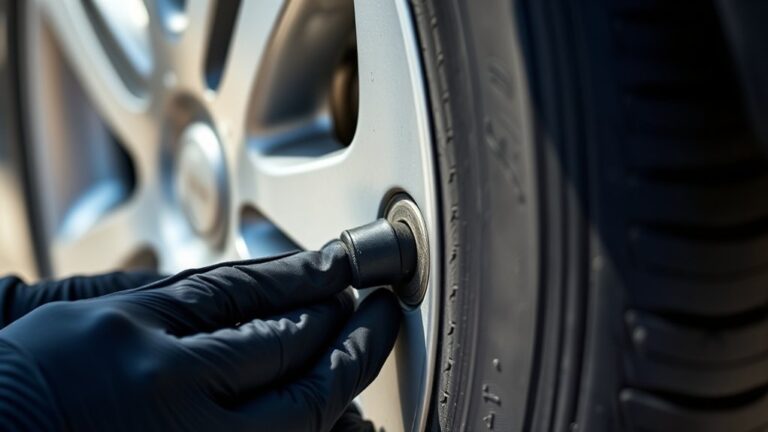
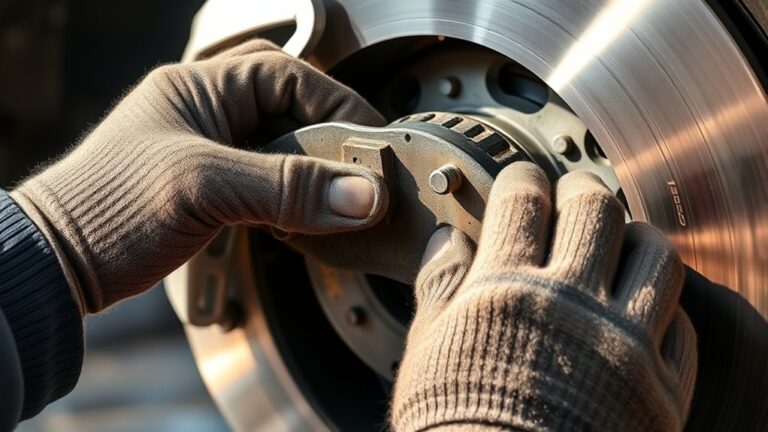
To measure your brake pads, first safely remove the wheel to expose the caliper and pads.
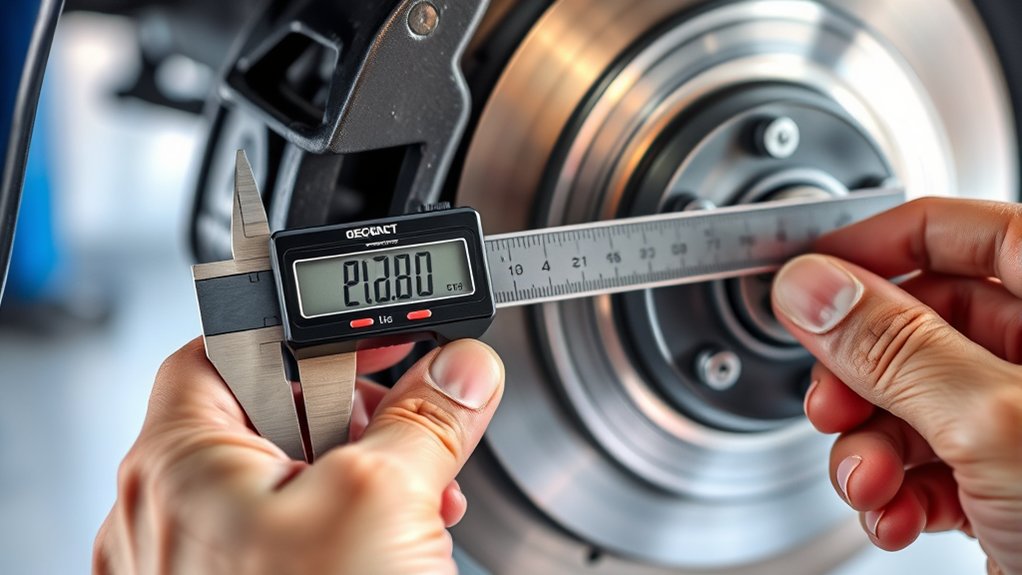
Measuring brake pads accurately is crucial for maintaining your vehicle’s braking performance. Use a digital caliper or brake pad gauge, placing it perpendicular to the pad’s friction surface for an accurate thickness reading.
Record measurements in millimeters and compare them against the manufacturer’s minimum specs, typically around 3 mm. Regular checks help prevent brake fade and ensure safety.
Understanding these steps equips you to maintain braking performance and plan timely replacements effectively.
Key Takeaways
- Remove the wheel and brake caliper carefully to access the brake pads for measurement.
- Use a digital caliper or brake pad gauge to measure the thickness of the friction material precisely.
- Place the measuring tool perpendicular to the pad surface for an accurate thickness reading.
- Record the pad thickness in millimeters or inches and compare it to the manufacturer’s minimum specification.
- Inspect all brake pads consistently and schedule replacements if thickness is below approximately 3 mm.
Finding Your Brake Pads
Where exactly are your brake pads located? They sit inside the brake caliper, which clamps onto the rotor attached to your wheel.
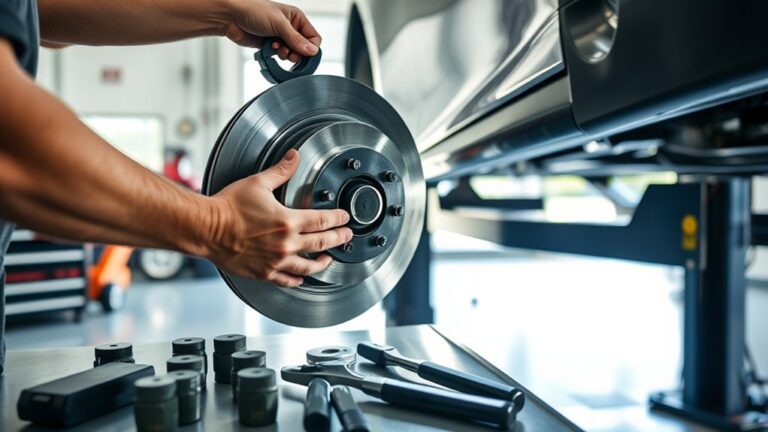
To access them, you’ll need to remove the caliper carefully, often requiring you to tackle finding obscure fasteners that secure it in place. These fasteners can vary widely depending on your vehicle model, so keep a proper toolset handy.
Before disassembly, evaluating pedal feel gives you an insight into potential pad wear; a spongy or low pedal often signals thinning pads.
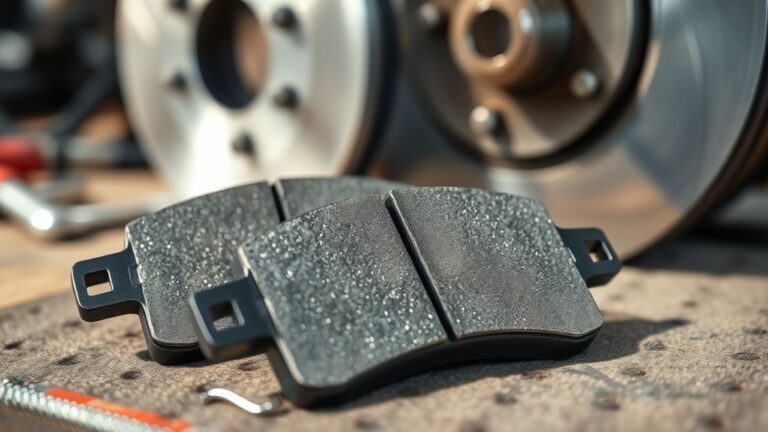
Once the caliper is off, you can clearly see the brake pads pressed against the rotor’s surface. This precise location allows you to measure pad thickness accurately and determine if replacement is necessary.
Essential Tools for Measuring Brake Pads
After removing the caliper and locating the brake pads, you’ll need the right tools to measure their thickness accurately. Start with a digital caliper or a brake pad gauge. Both provide precise readings essential for finding brake pad wear.
A ruler can work but lacks precision, risking misjudgment. When naming brake pad brands, note that some, like Bosch or Brembo, offer specific measurement recommendations or wear indicators that can complement your tools.
A flashlight is also handy to inspect pads clearly, especially in low-light conditions. Finally, keep a notepad or digital device ready to record measurements for comparison against manufacturer specifications.
Using these essential tools ensures you assess brake pad wear reliably and maintain optimal brake performance.
How to Measure Brake Pad Thickness
How do you accurately measure brake pad thickness to guarantee safe braking performance? First, remove the wheel and visually inspect the brake pads. Use a caliper or a brake pad gauge to measure the friction material thickness, avoiding incomplete topics like estimating wear by sight alone or unrelated concerns such as rotor condition.
Place the measuring tool perpendicular to the pad surface, ensuring precise contact with the backing plate and friction material. Record the thickness in millimeters or inches, comparing it to the manufacturer’s minimum specification.
Repeat this process on all pads for consistency. Avoid common mistakes like measuring the backing plate instead of the friction material. This focused approach provides reliable data for maintenance decisions without delving into unrelated concerns or incomplete topics that could compromise accuracy.
What Brake Pad Thickness Means for Safety
Why does brake pad thickness matter for your vehicle’s safety? Brake pad thickness directly influences your stopping power and overall brake system performance. Thicker pads provide better friction material, ensuring effective braking under various conditions.
As pads wear down, their ability to absorb heat diminishes, increasing the risk of brake fade and reducing control. Safety considerations include maintaining minimum thickness levels specified by manufacturers, typically around 3mm.
Ignoring these two word discussion ideas of “wear monitoring” and “material integrity” compromises your braking efficiency. Measuring pad thickness accurately helps you identify when pads approach unsafe limits, allowing timely replacement.
Prioritizing this measurement is crucial for preventing brake failure and ensuring consistent, reliable stopping capability, keeping you safe on the road.
Signs Your Brake Pads Need Replacing
Several clear signs indicate when your brake pads need replacing. One common symptom is a persistent brake squeal, caused by the wear indicator contacting the rotor. If you hear this high-pitched noise during braking, it signals that your pads have worn down considerably.
Another sign is finding rust on the brake pad backing plates or calipers, which can compromise performance and accelerate wear. Additionally, if you notice reduced braking responsiveness or a longer stopping distance, your pads may be too thin to function effectively.
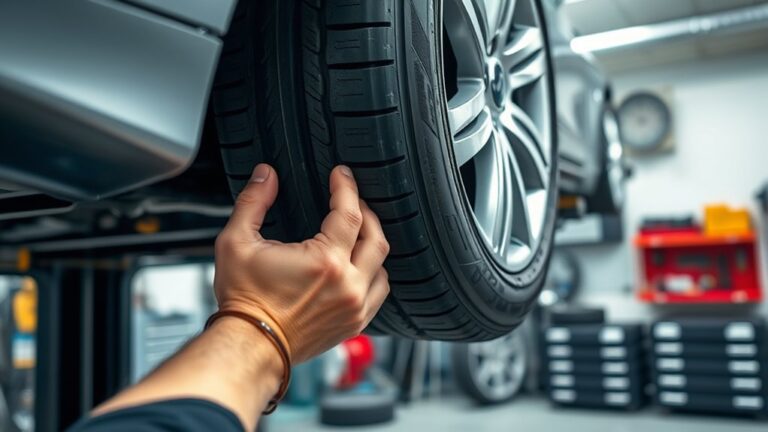
Visually inspect the pad thickness through the wheel spokes; if the friction material is less than 3 millimeters thick, replacement is necessary. Ignoring these signs can lead to rotor damage and unsafe driving conditions, so address worn brake pads promptly.
How Often to Check Brake Pads
Recognizing when brake pads need replacing depends on regular inspections to catch wear before it affects safety. You should check brake pads every 10,000 to 15,000 miles, or more frequently if your maintenance schedule suggests.
Regular brake pad inspections every 10,000 to 15,000 miles help prevent safety issues before they arise.
Factors like driving habits, terrain, and vehicle type influence how often you inspect. During each check, measure pad thickness and look for uneven wear or damage.
Refer to your vehicle’s manual for specific intervals and adhere strictly to them. Incorporating brake pad inspections into routine maintenance minimizes the risk of brake failure and costly repairs.
Staying proactive ensures pads maintain peak thickness, preserving braking efficiency. Remember, consistent monitoring aligns with best practices for vehicle safety and performance.
Don’t wait for warning signs. Schedule inspections regularly to maintain reliable braking.
Common Brake Pad Measurement Mistakes
How can you be sure you’re measuring brake pads accurately? One common issue is mistaken measurements caused by improper tool placement. Ensure your caliper or micrometer contacts the pad’s surface squarely, not at an angle, to avoid skewed readings.
Calibration errors are another frequent problem; always verify your measuring instruments against a known standard before use. Neglecting this step can lead to inaccurate thickness values, risking safety.
Additionally, measuring worn or glazed surfaces instead of the friction material can produce false results. Avoid measuring the backing plate or uneven pad areas, as they distort true thickness.
How to Choose Replacement Brake Pads
When choosing replacement brake pads, you need to compare material types like ceramic, semi-metallic, and organic for their performance and wear characteristics. Make certain the pads are compatible with your vehicle’s make and model to ensure proper fit and function. Finally, consider durability and braking efficiency to match your driving conditions and maintenance preferences.
Material Types Comparison
Why does the material of your brake pads matter? The right material affects performance, wear rate, and noise reduction. Choosing the proper type ensures safety and longevity while minimizing abrasive coatings that can damage rotors.
Consider these common brake pad materials:
- Semi-metallic: High durability, excellent heat dissipation, but may cause more abrasive coatings and noise.
- Ceramic: Offers superior noise reduction, lower dust, and gentle rotor wear.
- Organic (Non-asbestos): Quieter operation, less abrasive, but wears faster and handles heat less effectively.
- Low-metallic NAO: Balanced performance with moderate noise and dust.
- Carbon-fiber: High-performance option with excellent heat resistance and minimal noise.
Evaluate your driving style and priorities to select the material that best suits your needs without compromising safety or efficiency.
Compatibility With Vehicle
Which brake pads fit your vehicle’s specifications? To avoid compatibility issues, always cross-reference the exact make, model, and year of your vehicle with the brake pad part number. Different vehicles require specific pad shapes, thicknesses, and backing plate designs.
Using pads not designed for your vehicle can cause installation pitfalls such as improper fitment, uneven wear, or caliper damage. Consult your vehicle’s manual or a reliable parts database to ensure the replacement pads match OEM dimensions and mounting configurations.
Don’t overlook hardware compatibility; sometimes, new pads require corresponding clips or shims to function correctly. By confirming these details before purchase, you’ll prevent costly errors and ensure a precise fit that maintains your braking system’s integrity.
Performance And Durability
How do you select brake pads that balance performance and longevity effectively? Focus on materials and design that align with your driving ergonomics and minimize brake dust visibility. Consider these key factors:
- Material composition: ceramic, semi-metallic, or organic affect durability and noise
- Heat tolerance: ensures consistent performance under stress
- Wear indicators: alert you before pads reach critical thickness
- Brake dust visibility: choose low-dust pads for cleaner wheels
- Friction coefficient: impacts stopping power and pedal feel
Selecting pads with these attributes ensures reliable braking performance while extending pad life. Prioritize options tested for your vehicle’s conditions and driving style to maintain optimal control and safety over time.
Frequently Asked Questions
Can Brake Pad Material Affect Measurement Accuracy?
Yes, brake material can affect measurement accuracy since electric vehicle pads and different compounds wear uniquely.
Weather conditions impact wear rates, rotor wear, and cracked pads safety, so you must consider these factors for precise brake pad wear assessment.
Do Weather Conditions Impact Brake Pad Wear?
Think of brake pads like shoes in mud; weather impact accelerates wear considerably. Studies show wet, cold conditions cause more abrasion and material variance, so you’ll notice faster degradation and should monitor pads more frequently in harsh climates.
How Do Brake Pads Differ in Electric Vehicles?
Electric vehicles’ EV braking dynamics reduce brake pad wear, so you’ll find pad material chemistry optimized for lower friction and longer life.
You’ll notice pads use specialized compounds to handle regenerative braking’s unique demands efficiently.
Can Uneven Rotor Wear Affect Brake Pad Measurement?
Yes, uneven rotor wear can compromise measurement accuracy by causing inconsistent brake pad contact. You should inspect the rotor’s surface before measuring pads to ensure reliable thickness readings and maintain optimal braking performance.
Is It Safe to Drive With Cracked Brake Pads?
Cracked components compromise crack safety critically. You shouldn’t drive with damaged brake pads, as driving risks include reduced braking efficiency, increased stopping distance, and potential brake failure.
Prioritize prompt replacement to maintain maximum safety and performance.
Conclusion
Now that you know how to measure your brake pads accurately, staying on top of maintenance is a no-brainer. Remember, brake pad thickness isn’t just a number—it’s your safety’s lifeline. Don’t let worn pads catch you off guard; checking regularly keeps you ahead of the game.
By avoiding common measuring mistakes and choosing the right replacements, you ensure your brakes perform at their best, mile after mile. Proper measurement is key to maintaining reliable stopping power.
In conclusion, understanding how to measure brake pads correctly is essential for your vehicle’s safety and performance.