How to Plug a Tire
To plug a tire, first park on level ground, turn off your engine, and wear safety gear. This initial step ensures your safety and stability while working on the tire. Locate and clean the puncture thoroughly to prepare for the repair.
Next, insert a compatible plug fully into the puncture, trimming any excess flush with the tread. Apply sealant to assure an airtight seal and inflate the tire to the recommended pressure.
Test for leaks by using soapy water or submerging the tire briefly. Monitor the repair closely over time, and avoid plugging sidewall damage or large holes. Following the full process will help assure a safe, effective tire repair.
Key Takeaways
- Park on stable, level ground, engage the parking brake, and wear safety gear before starting the tire plug repair.
- Locate the puncture, remove debris, and prepare the hole by widening it slightly for better plug insertion.
- Insert a compatible plug fully into the puncture, trim excess material flush with the tire tread, and apply a sealing compound.
- Inflate the tire to recommended pressure, then test for leaks using soapy water or submersion to ensure airtight sealing.
- Avoid plugging sidewall punctures or holes larger than 1/4 inch. Seek professional help if internal damage is suspected.
Why Plugging a Tire Is a Quick Flat Fix
Why should you consider plugging a tire as a quick flat fix? Plugging a tire provides an immediate, effective seal against air loss, allowing you to continue driving without delay. This method prevents irreversible damage caused by driving on a flat tire, which can ruin the tire’s internal structure and wheel components.
When you encounter common road hazards, like nails or sharp debris, a plug stops air from escaping through the puncture, restoring tire integrity temporarily. By addressing the puncture swiftly, you minimize the risk of further deterioration.
While not a permanent repair, tire plugging is a precise, reliable solution to get you safely off the road and to a service center. You’ll avoid costly replacements by plugging early, safeguarding your tire’s functionality and your vehicle’s performance.
Getting Your Vehicle Ready Safely
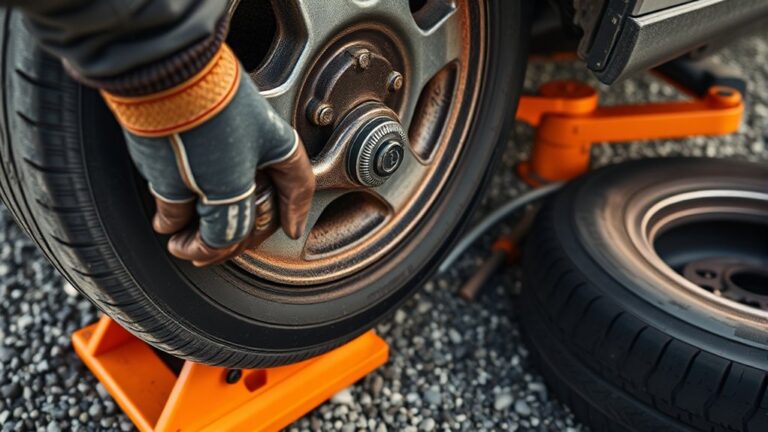
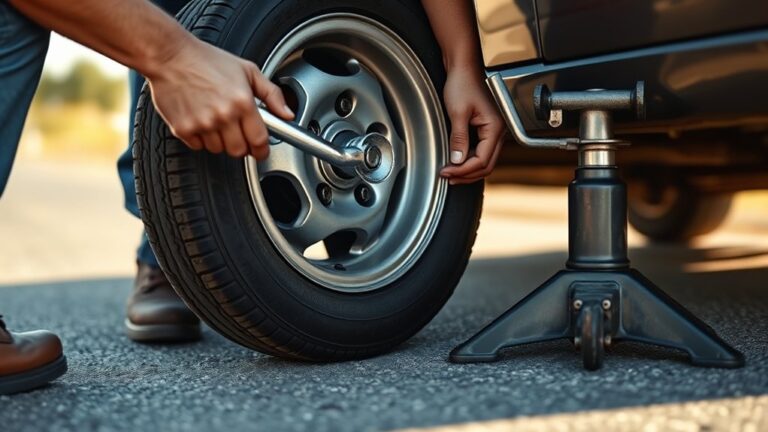
Before you start plugging the tire, park your vehicle on stable, level ground to prevent movement. Always put on safety gear like gloves and reflective vests to protect yourself and increase visibility. Finally, turn off the engine and engage the parking brake to ensure the vehicle stays secure while you work.
Park On Stable Ground
Where should you position your vehicle to guarantee safety when plugging a tire? Always park on stable, flat ground that prevents any movement during the repair. Avoid slopes, soft dirt, or uneven surfaces, as these increase the risk of the vehicle shifting or rolling.
Ensure the parking brake is engaged firmly. Disregard any irrelevant topic or extraneous discussion that might distract you from this critical step. Stability here is non-negotiable for your safety and the success of the plug.
If you can’t find a solid spot, move your vehicle until you do. This ensures your car stays securely in place while you work, preventing accidents and allowing precise tire repair. Prioritize stable ground before proceeding to the next steps in tire plugging.
Use Safety Equipment
Once your vehicle is securely parked on stable ground, equip yourself with the proper safety gear to protect against injury. Start by putting on durable gloves to shield your hands from sharp objects and chemicals.
Wear safety glasses to prevent debris from damaging your eyes during the repair. Consider reflective clothing if you’re working near traffic to increase visibility. These topic ideas for safety reminders ensure you stay protected throughout the tire plugging process.
Avoid loose clothing that could get caught in tools, and keep a first aid kit nearby in case of minor injuries. By using the correct safety equipment, you reduce risks and maintain control, allowing you to focus on the task efficiently and safely.
Prioritize these measures before proceeding further.
Turn Off Engine
Why should you always turn off your engine before starting a tire repair? Turning off your engine ensures your vehicle remains stationary, preventing accidental movement that could compromise driving safety.
It also reduces the risk of injury from moving parts during tire maintenance. Follow this step precisely to maintain control and safety.
| Step | Reason | Safety Tip |
|---|---|---|
| 1. Park Vehicle | Prevents rolling | Engage parking brake |
| 2. Turn Off Engine | Stops mechanical movement | Avoids injury |
| 3. Remove Key | Ensures no accidental restart | Keeps system off |
| 4. Use Reflectors | Alerts others | Enhances visibility |
| 5. Confirm Stability | Secure vehicle position | Prevents slipping |
Always prioritize turning off your engine for safe, effective tire maintenance.
How to Gather Tools to Plug a Tire
How do you guarantee you have everything necessary before plugging a tire? Start by assembling a tire repair kit, including a reamer tool, plug insertion tool, rubber plugs, and rubber cement.
Carry a reliable tire pressure gauge to monitor inflation before and after repair, ensuring you restore the correct tire pressure. Include a portable air compressor or a can of compressed air to reinflate the tire.
If your vehicle has alloy wheels, avoid harsh tools that could damage their finish. A pair of gloves and safety glasses will protect you during the process.
Lastly, keep a utility knife or scissors handy to trim excess plug material. By gathering these specific tools, you’re prepared to efficiently and safely perform a tire plug without risking damage or improper inflation.
Locating, Inspecting, and Cleaning the Puncture
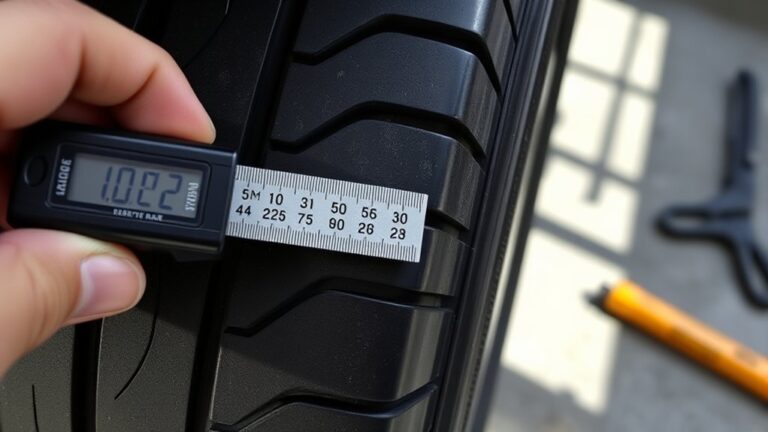
Where exactly is the puncture on your tire? Begin by carefully inspecting the tire’s surface, focusing on the tread depth to identify any irregularities. You can submerge the tire in water to spot escaping air bubbles, which precisely indicate the puncture location.
Once found, clean the area thoroughly to ensure a proper seal when plugging. Follow these steps:
- Remove any debris or foreign objects with pliers.
- Use a tire buffer or reamer tool to roughen and clean the puncture hole.
- Ensure the tire is deflated and positioned to maintain even balancing torque during the process.
Properly locating, inspecting, and cleaning the puncture sets the foundation for a secure and balanced tire repair.
Putting in a Tire Plug the Right Way
Start by preparing the puncture site to guarantee proper adhesion of the plug. Next, insert the plug firmly and evenly to fill the hole completely. Finally, seal the area and test the plug to confirm it holds air without leaks.
Preparing The Puncture Site
Why is preparing the puncture site essential before inserting a tire plug? Proper preparation ensures the plug adheres securely and prevents air leaks. Skipping this step risks a failed repair and wasted effort. Avoid common myths like “just shove the plug in” or relying solely on external inspection.
Follow these key steps for effective preparation:
- Clean the area: Remove dirt, debris, and rubber fragments from the puncture. Use a wire brush or reamer tool.
- Enlarge and roughen the puncture: Slightly widen the hole to create a consistent surface for the plug to grip.
- Dry thoroughly: Moisture compromises adhesion. Use a cloth or air blower to ensure the puncture is dry.
Using these neat tricks guarantees a solid foundation before you insert the plug, improving repair durability.
Inserting The Plug Correctly
Once you’ve properly prepared the puncture site, insert the plug by threading it through the insertion tool and pushing it firmly into the hole until only about half an inch remains outside.
Ensure the plug is centered and evenly compressed within the puncture to create a tight seal. Avoid pushing too shallow or too deep, as this compromises the repair.
This step is critical but often barely discussed in other guides, which sometimes introduce unrelated concepts that confuse the process. Focus solely on the mechanics of insertion: steady pressure, correct alignment, and maintaining the plug’s integrity.
Don’t twist excessively; a straight, firm push maximizes adhesion. Mastering this precise technique sets the foundation for a successful tire plug before moving on to sealing and testing.
Sealing And Testing Plug
How do you guarantee the plug stays securely in place and the tire holds air? You must seal and test the plug thoroughly to ensure driving safety and uphold tire ethics.
After inserting the plug, trim excess material flush with the tread. Then, follow these steps:
- Apply a rubber cement or vulcanizing adhesive around the plug to reinforce the seal.
- Inflate the tire to the recommended pressure and submerge it in water or spray soapy water on the repair area.
- Check closely for air bubbles indicating leaks; if any appear, remove and repeat the plugging process.
Sealing the Plug and Testing for Leaks
Where should you focus to guarantee the plug creates an airtight seal? Concentrate on the interface between the plug and the tire’s puncture site. Ensure the plug material compatibility with the tire’s rubber to prevent degradation under pressure.
Insert the plug fully, trimming any excess flush with the tread. Use a sealing compound compatible with the plug to enhance adhesion and fill microscopic gaps, respecting quick tire physics principles. Pressure and temperature changes affect seal integrity.
After sealing, inflate the tire to its recommended pressure and submerge the repaired area in water or apply soapy water. Look for bubbles indicating leaks. If no bubbles appear after several minutes, the seal is secure.
This testing confirms the plug’s effectiveness in maintaining tire pressure and safety during operation.
Troubleshooting Tire Plug Problems
Confirming a secure seal is only part of the process; you may still encounter issues with the tire plug’s performance. To troubleshoot effectively, focus on these critical points:
- Inspect the plug for proper insertion depth. Too shallow or too deep can cause leaks or dislodgement, especially in edge cases like sidewall punctures.
- Check for debris around the plug area. Even small particles can compromise the seal and cause pressure loss.
- Monitor air pressure consistently after plugging to detect slow leaks early, ensuring compliance with legal implications regarding tire safety standards.
Addressing these factors promptly maintains tire integrity and prevents failures. Remember, understanding these troubleshooting steps helps you avoid complications and ensures your repair meets safety regulations.
When to Avoid Plugging a Tire and Seek Professional Help
When should you avoid plugging a tire and instead seek professional assistance? You should never attempt a plug if the puncture is on the sidewall or shoulder, as these areas compromise structural integrity and pose safety risks.
Additionally, if the hole exceeds 1/4 inch in diameter or if there’s visible internal damage, professional evaluation is necessary. Avoid treating unrelated discussion or irrelevant topic such as cosmetic tire defects as reasons to plug a tire.
If the hole is larger than 1/4 inch or internal damage is visible, seek professional tire evaluation.
Also, if the tire has multiple punctures or shows signs of severe wear, plugging is inadequate. In these cases, a trained technician can assess whether repair or replacement is appropriate.
Prioritize safety by recognizing when a tire plug is insufficient and professional expertise is required for reliable, long-term performance.
How to Inspect and Maintain Your Plugged Tire
How often should you inspect a plugged tire to guarantee ongoing safety? Regular inspections are critical because insufficient guidelines on maintaining plugged tires can lead to a safety risk. You should check your tire at least once a week and before long trips.
Follow these steps to maintain your plugged tire:
- Visually examine the plug and surrounding area for cracks, looseness, or deterioration.
- Monitor air pressure to detect any slow leaks that indicate plug failure.
- Assess tread wear and tire integrity to ensure structural soundness.
If you notice abnormalities, replace the tire immediately. Adhering to these precise inspections minimizes safety risks associated with plugged tires and compensates for any insufficient guidelines. Your vigilance ensures reliable, safe driving performance.
Frequently Asked Questions
Can Tire Plugs Be Used on All Types of Tires?
You can’t use tire plugs on all tire materials; plug compatibility depends on the tire’s construction. They’re typically suited for tubeless tires made of rubber, but not for tires with inner liners or specialty materials.
How Long Does a Tire Plug Typically Last?
A tire plug typically lasts several months to a few years, depending on tire longevity and plug durability.
You should regularly inspect the plug to ensure it maintains an airtight seal and replace it if any damage occurs.
Are Tire Plugs Safe for High-Speed Driving?
Tire plugs can maintain high speed safety if installed correctly, preserving tire integrity by sealing punctures without compromising structure.
However, for critical high-speed use, inspect frequently and consider professional evaluation to ensure optimal performance and safety.
Can I Plug a Tire Without Removing It From the Rim?
You can plug a tire without rim removal for minor punctures, but remember, “a stitch in time saves nine.” Proper tire repair requires careful inspection to assure the damage isn’t near the rim or sidewall for safety.
What Are the Environmental Impacts of Tire Plugging?
You’ll reduce environmental impact by plugging instead of replacing tires, minimizing waste. However, plugged tires complicate recycling processes due to sealant materials, creating recycling challenges that require specialized treatment to properly handle and repurpose tire components.
Conclusion
Plugging a tire is your quick lifeline when faced with a sudden flat, but precision is key. By carefully prepping, plugging, and sealing, you restore safety and functionality like patching a small leak in a dam before it floods.
Remember, not every puncture is fixable—know when to call a pro. Regularly inspect your plugged tire to guarantee it holds strong, keeping you safely rolling down the road without a hitch.
Proper maintenance and timely action are essential for a lasting repair. Always follow the steps carefully when you plug a tire to ensure your safety and peace of mind.