How to Put Spark Plugs in
To put spark plugs in, first ensure your engine is cool and disconnect the battery. This safety step prevents any accidental electrical shorts.
Next, remove the old plugs using a properly sized deep well socket. Be careful not to damage the threads during removal.
Clean the threads thoroughly and check the gap on new plugs with a gauge, adjusting if needed. Applying a thin layer of anti-seize on plug threads helps prevent them from sticking in the future.
Then, hand-thread the new plugs carefully to avoid cross-threading. Use a calibrated torque wrench to tighten the plugs to manufacturer specifications for proper sealing and heat transfer.
Following this guidance will improve engine performance and help you avoid damage.
Key Takeaways
- Ensure the engine is cool and disconnect the negative battery terminal before starting spark plug installation.
- Hand-thread the spark plug carefully to avoid cross-threading and damage to the cylinder head.
- Use a gap gauge to check and adjust the spark plug gap according to manufacturer specifications.
- Apply a thin, even layer of anti-seize compound on the threads, avoiding electrode contact.
- Tighten the spark plug using a torque wrench set to the manufacturer’s recommended torque to prevent damage.
Picking the Right Spark Plugs for Your Car
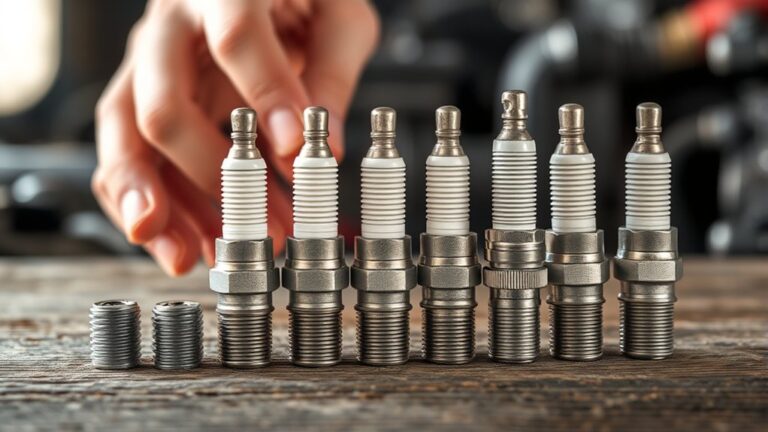
How do you determine the right spark plugs for your car? Start by consulting your vehicle’s manual to identify the exact specifications, including heat range and electrode type. Using the wrong spark plugs can disrupt the fuel system’s efficiency, causing misfires or poor combustion.
Avoid selecting plugs incompatible with your engine wiring, as this can lead to electrical issues or ignition failure. Pay attention to the plug gap, ensuring it matches manufacturer recommendations to maintain optimal spark timing.
Also, verify whether your engine requires platinum, iridium, or copper plugs, as each suits different engine designs and performance needs. Selecting the correct spark plugs prevents damage and ensures your engine runs smoothly, avoiding complications linked to the wrong fuel system or incorrect engine wiring compatibility.
How to Choose the Right Tools for Installing Spark Plugs
To install spark plugs correctly, you’ll need essential tools like a spark plug socket, ratchet, and extension. Selecting the right socket size ensures a secure fit without damaging the plug. Don’t skip using a torque wrench to tighten the plugs to the manufacturer’s specifications for optimal performance.
Essential Spark Plug Tools
Choosing the right tools for installing spark plugs guarantees a secure fit and prevents damage to both the plug and engine components. You’ll need a quality spark plug socket with a rubber insert to grip the plug securely, avoiding damage to the ceramic insulator.
A torque wrench is essential to apply the manufacturer’s specified torque, preventing over-tightening. When replacing wires or coil packs, insulated pliers and a spark plug boot puller help you remove and install components without causing damage.
Additionally, a gap gauge ensures the spark plug electrode gap matches specifications before installation. Using these precise tools, you’ll maintain integrity during installation, optimize engine performance, and reduce the risk of misfires or component failure.
Keep your tools clean and well-maintained for consistent results every time.
Socket Size Selection
Which socket size fits your spark plug perfectly? Selecting the right socket ensures a secure fit, prevents damage, and simplifies installation. Most spark plugs require either a 5/8-inch or 13/16-inch socket, but always check your vehicle’s manual.
Use a deep well socket designed specifically for spark plugs; these usually have a rubber insert to hold the plug safely. Proper socket size selection supports effective battery maintenance and fuel economy by ensuring the spark plug seats correctly, promoting optimal ignition.
A mismatched socket risks stripping the plug, just as incorrect tire pressure or oil viscosity can compromise engine performance. Measure your spark plug hex size before starting, and choose a socket that matches precisely to avoid any installation issues or damage during the process.
Torque Wrench Importance
After selecting the right socket size to fit your spark plug securely, ensuring you have the proper torque wrench is the next step for a precise installation. Torque accuracy is crucial to avoid over-tightening, which can damage threads, or under-tightening, which affects spark cleanliness and engine performance.
Choose a torque wrench calibrated for your vehicle’s specified torque range.
| Torque Wrench Type | Accuracy Range (ft-lbs) | Best Use Case |
|---|---|---|
| Click-type | ±4% | General automotive |
| Beam-type | ±5% | Budget-friendly |
| Digital | ±2% | High precision |
| Dial-type | ±3% | Workshop use |
| Split-beam | ±4% | Heavy-duty spark plug work |
Selecting the right tool ensures consistent spark plug seating and maintains optimal spark cleanliness.
How to Prepare Your Engine for Spark Plug Installation
How do you guarantee your engine is properly prepared before installing new spark plugs? First, ensure the engine is completely cool to prevent damage or injury. Disconnect the negative battery terminal to avoid electrical shorts.
Remove any components obstructing access to the spark plugs, such as ignition coils or wiring harnesses, using appropriate tools. Clean the spark plug wells thoroughly to eliminate dirt and debris that could hinder installation or cause misfires.
Inspect the spark plug holes for damage or corrosion and address any issues immediately. Applying anti-seize compound lightly on the plug threads helps with future removal.
Just like a creative advertising campaign demands a clear social media strategy, preparing your engine requires systematic steps for successful spark plug installation. Follow these precise actions to set the stage for optimal engine performance.
How to Remove Old Spark Plugs Step-by-Step
Once your engine is prepped and components are cleared, you’re ready to remove the old spark plugs safely and efficiently. Use a spark plug socket with a ratchet to loosen each plug by turning counterclockwise. Avoid off topic discussions or distractions to maintain focus. Handle each plug carefully to prevent damage.
| Step Number | Action | Tip |
|---|---|---|
| 1 | Disconnect ignition wire | Pull straight off, no twisting |
| 2 | Use spark plug socket | Ensure correct socket size |
| 3 | Turn counterclockwise | Use steady, controlled force |
| 4 | Remove plug carefully | Avoid dropping or damaging |
Following these two word ideas ensures a systematic removal process without errors or damage.
How to Check and Gap New Spark Plugs Correctly
Why is it important to check and gap new spark plugs before installation? Proper gap ensures the spark occurs at the correct ignition timing, optimizing combustion efficiency.
Start by consulting your vehicle’s service manual for the exact gap specification. Use a feeler gauge to measure the gap between the center and ground electrodes. If the gap is too wide or narrow, adjust it carefully by bending the ground electrode.
Avoid damaging the electrodes during this process. Incorrect gap affects ignition timing, leading to poor fuel economy and engine performance issues. Always double-check the gap after adjustment.
How to Install New Spark Plugs Without Damaging Threads
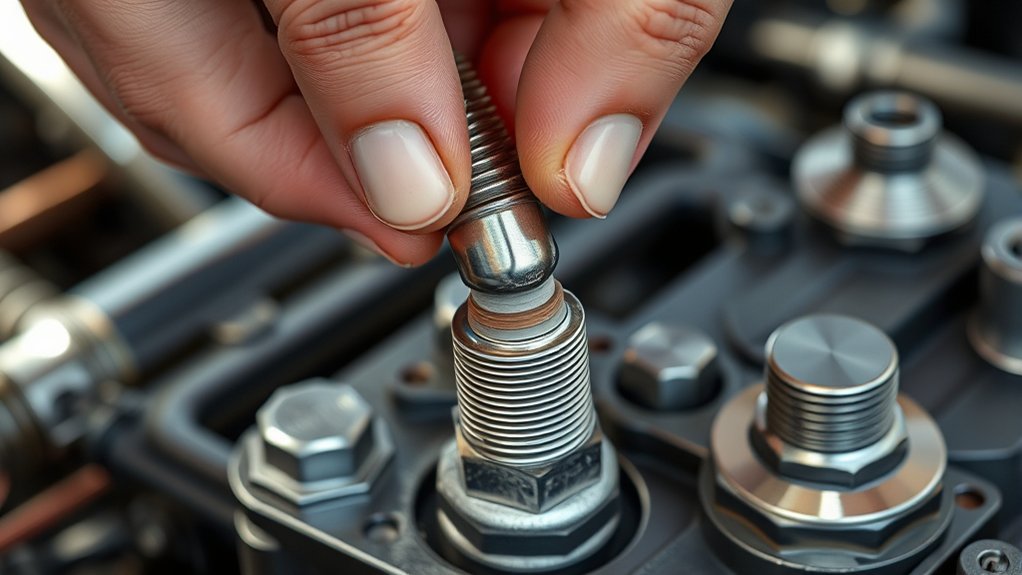
Before installing new spark plugs, make sure the threads are clean and free of debris. Apply a small amount of anti-seize compound to the threads to prevent galling, but avoid overuse. Finally, tighten the spark plugs using a torque wrench to the manufacturer’s specified torque to protect the threads and ensure proper seating.
Preparing Spark Plug Threads
How do you ensure spark plug threads remain intact during installation? First, inspect the cylinder head threads carefully for dirt, debris, or corrosion. Clean them using a thread chaser or a suitable tap to remove contaminants and restore thread integrity.
Avoid using excessive force, as cross-threading can cause irreversible damage that compromises the seal and reduces engine performance. Next, verify the spark plug’s thread size matches the cylinder head to prevent stripping.
When threading the spark plug by hand, turn it slowly and feel for resistance; if you detect any binding, back off and realign. Properly prepared threads ensure a secure fit, preventing compression leaks that negatively impact fuel efficiency and engine operation.
Taking these steps sets the foundation for a durable, efficient spark plug installation.
Using Anti-Seize Compound
Properly prepared threads reduce the risk of damage, but applying an anti-seize compound adds an extra layer of protection during spark plug installation. You’ll want to apply a thin, even layer of anti seize on the spark plug threads to prevent galling and seizing in the cylinder head. This also enhances heat dissipation, ensuring optimal spark plug performance.
| Step | Action | Tip |
|---|---|---|
| 1 | Clean threads | Use a wire brush |
| 2 | Apply anti seize | Thin, even coating |
| 3 | Avoid electrode contact | Prevent fouling |
| 4 | Insert spark plug | Hand-thread first |
| 5 | Check for resistance | Stop if torque increases suddenly |
This method preserves thread integrity and supports efficient heat transfer.
Proper Torque Application
Apply the correct torque when installing spark plugs to prevent thread damage and ensure a secure fit. Over-tightening can strip threads, while under-tightening risks poor performance.
Use a torque wrench calibrated to your vehicle’s specifications found in the maintenance schedule or spark plug selling points.
Follow these steps for proper torque application:
- Clean threads thoroughly before installation.
- Hand-tighten plugs until snug to avoid cross-threading.
- Set the torque wrench to the manufacturer’s recommended value.
- Tighten the spark plug with the wrench until it clicks or reaches the preset torque.
Adhering to torque specs preserves the cylinder head integrity and prolongs spark plug life. Always consult the maintenance schedule and product selling points for exact torque values to maintain optimal engine function.
How to Tighten Spark Plugs Properly to the Right Torque
A critical step in installing spark plugs is tightening them to the correct torque specification. Use a calibrated torque wrench to guarantee you don’t overtighten or undertighten the plugs.
Over-tightening risks damaging the threads or causing the plug to break, while under-tightening can lead to poor engine performance, potentially mimicking issues caused by wrong fuel type or battery maintenance neglect.
Begin by hand-threading the spark plug to avoid cross-threading, then apply torque gradually to the manufacturer’s recommended value. This precise torque ensures a proper seal and superior heat transfer.
Start by hand-threading the spark plug, then tighten gradually to the recommended torque for a perfect seal and heat transfer.
Avoid guesswork. Refer to your vehicle’s service manual for exact torque settings. Proper tightening helps maintain engine efficiency and longevity, preventing misfires and ensuring reliable ignition system performance.
How to Avoid Common Spark Plug Installation Mistakes
After tightening spark plugs to the correct torque, you need to watch out for common installation mistakes that can compromise engine performance. Avoiding these errors ensures spark plug safety and long-term reliability.
Here are key discussion ideas to keep in mind:
- Don’t cross-thread spark plugs; start threading by hand to prevent damage.
- Avoid over-tightening, which can strip threads or break the plug.
- Ensure the spark plug gap matches manufacturer specs; an incorrect gap causes misfires.
- Never reuse old spark plugs; always install new ones to maintain optimal function.
Following these guidelines prevents spark plug scenarios that can lead to engine issues or safety hazards. Stay precise during installation to protect your engine and maintain its peak efficiency.
How to Test Your Engine After Installing Spark Plugs
How can you confirm that your spark plug installation was successful? First, start the engine and listen carefully for smooth operation; irregular idling or misfires indicate issues. Next, use a diagnostic scan tool to check for error codes related to ignition. If codes appear, re-inspect your installation.
Don’t get distracted by irrelevant topics like unrelated engine noises or unused ideas unrelated to spark plugs. Measure engine performance metrics such as RPM stability and fuel efficiency to ensure optimum function. Additionally, check for excessive exhaust smoke or unusual vibrations, which can signal problems.
If all tests pass, your installation is sound. Remember, precise testing immediately after installation saves time and prevents damage, so avoid skipping these steps or considering irrelevant topics that don’t pertain to spark plug functionality.
Frequently Asked Questions
How Often Should Spark Plugs Be Replaced?
You should perform spark plug replacement every 30,000 to 100,000 miles, depending on your vehicle. Watch for signs of a faulty spark plug like misfires, poor fuel economy, or rough idling to time replacement accurately.
What Are the Signs of a Faulty Spark Plug?
Like spotting a telegram in the digital age, signs of wear include misfiring symptoms, rough idling, and reduced fuel economy. You’ll also notice ignition coil stress, which leads to engine performance issues and increased emissions.
Can Bad Spark Plugs Affect Fuel Efficiency?
Yes, bad spark plugs cause faulty ignition misfires, reducing combustion efficiency. You’ll notice bad fuel efficiency as incomplete burns waste fuel.
Replacing worn plugs restores proper ignition timing, improving engine performance and fuel economy effectively.
Are Spark Plugs Universal for All Car Models?
No, spark plugs aren’t universal; you need to check spark plug compatibility for your vehicle. Always follow model-specific recommendations to ensure proper fit and performance.
This helps avoid engine damage. Use OEM or trusted aftermarket parts.
What Is the Lifespan of Different Types of Spark Plugs?
Wondering how long spark plugs endure? Iridium plugs typically last 60,000 to 120,000 miles, while platinum lasts 30,000 to 50,000. You’ll want to contemplate heat range, as it considerably impacts longevity and performance.
Conclusion
Now that you’ve mastered installing spark plugs like a pro, your engine will purr like a finely tuned orchestra. Just like a skilled mechanic tuning a grand piano, precision and care guarantee optimal performance.
Remember to choose the right plugs, gap them correctly, and tighten to spec to avoid costly mistakes. Follow these steps, and your engine will run smoother, start easier, and deliver better fuel efficiency—keeping you confidently on the road ahead.
By putting spark plugs in properly, you ensure your vehicle operates at its best, making maintenance straightforward and effective.