How to Read Tire Size
To read tire size codes, start by identifying the first number, which indicates the tire width in millimeters. Next is the aspect ratio, showing the sidewall height as a percentage of the tire’s width. The letter “R” stands for radial construction, followed by the rim diameter measured in inches.
After that, you’ll see the load index and speed rating, which represent the tire’s maximum load capacity and safe speed limit. Getting these measurements right ensures the tire fits properly on your vehicle, while also maintaining safety and optimal performance.
Understanding how to read tire size codes can help you make informed decisions when selecting tires that meet your vehicle’s specific needs. This knowledge is key to enhancing both your driving experience and vehicle maintenance.
Key Takeaways
- The first number shows tire width in millimeters, while the aspect ratio indicates sidewall height as a percentage of width.
- The letter “R” means radial construction, and the following number specifies rim diameter in inches.
- Load index is a numerical code for maximum load capacity, and speed rating is a letter for maximum safe speed.
- Consult the owner’s manual or tire placard to find recommended tire sizes and specifications.
- Proper interpretation ensures correct fit, optimized safety, and performance by matching load index and speed rating to vehicle needs.
Breaking Down Tire Size Codes
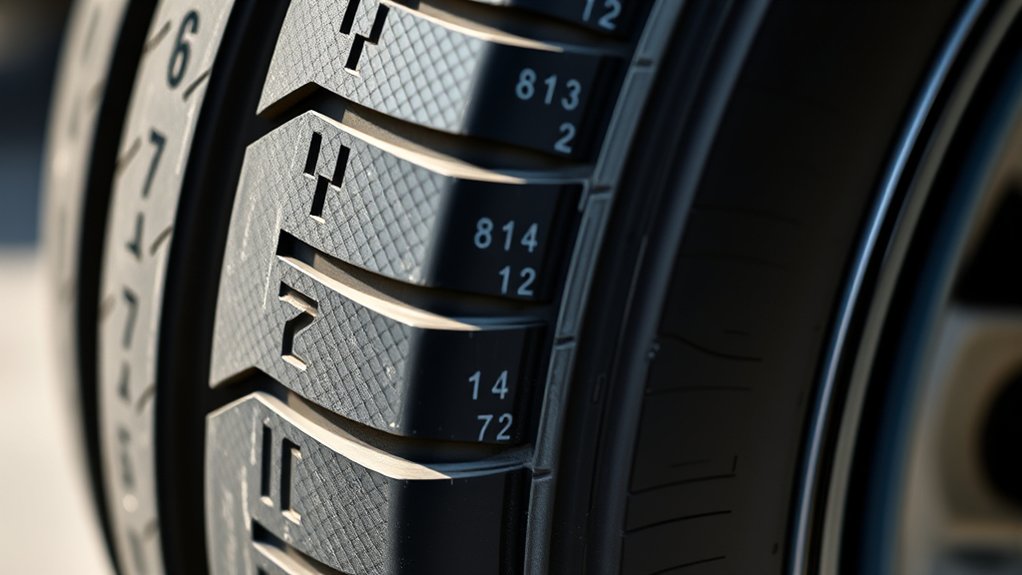
How do you decipher the numbers and letters stamped on your tire’s sidewall? Start by understanding tire labeling conventions. The first set of numbers indicates tire width in millimeters, followed by the aspect ratio, showing sidewall height as a percentage of the width.
Next, the letter “R” denotes radial construction. The number after indicates rim compatibility, specifying the wheel diameter in inches. Following this, you’ll find the load index, a numerical code representing maximum load capacity.
Adjacent to it is the speed rating, a letter indicating the tire’s maximum safe speed under optimal conditions. These performance metrics ensure your tire matches vehicle requirements precisely. Interpreting these codes correctly guarantees proper fit, safety, and performance, optimizing your driving experience without guesswork or errors.
How to Find the Right Tire Size for Your Car
Understanding tire size codes is only the first step; selecting the right tire size for your vehicle depends on several factors including manufacturer specifications, driving conditions, and vehicle type. Using the wrong wheel size or tire pressure can compromise safety and performance.
Always consult your owner’s manual or tire placard for recommended sizes.
| Factor | Description | Impact |
|---|---|---|
| Manufacturer Specs | OEM recommended tire dimensions | Ensures optimal fit and safety |
| Driving Conditions | Terrain and climate | Influences tread pattern choice |
| Vehicle Type | Car, SUV, truck | Determines load and speed ratings |
Comparing Tire Sizes When Shopping
When comparing tire sizes while shopping, what key measurements should you prioritize to ensure compatibility and performance? Focus on overall diameter, section width, and aspect ratio, as these affect fitment and handling.
Avoid tire mixing, which can lead to uneven tread wear and compromised traction, especially on all-wheel-drive vehicles. Check the load index and speed rating to match your vehicle’s specifications precisely.
Be wary of even slight differences in diameter; mismatched tires can strain suspension components and alter speedometer accuracy. Consider tread wear ratings to gauge durability and replacement intervals.
Even small diameter differences can stress suspension and affect speedometer accuracy; prioritize matching tread wear ratings.
Stick to manufacturer recommendations to maintain optimal performance and safety. By prioritizing these measurements, you ensure your new tires align with your vehicle’s design parameters, preventing mechanical issues and promoting consistent tread wear.
What Tire Size Numbers Say About Performance and Safety
Why do tire size numbers matter for your vehicle’s performance and safety? These numbers directly influence tire wear, fuel economy, traction, and handling.
A larger diameter can affect your speedometer accuracy and alter handling dynamics, potentially compromising safety. The width impacts traction; wider tires offer better grip but may increase rolling resistance, reducing fuel economy.
The aspect ratio, or tire profile, affects sidewall stiffness, influencing handling responsiveness and comfort. Incorrect tire size can cause uneven tire wear, shortening tire life and increasing replacement costs.
Load index and speed rating ensure your tires can safely support your vehicle’s weight and intended speeds. Understanding these numbers helps you select tires that maintain optimal performance and safety, balancing traction, durability, and efficiency tailored to your driving needs.
Frequently Asked Questions
How Often Should I Check My Tire Pressure?
You should check your tire pressure at least once a month and before long trips. How often you check prevents uneven wear, which causes poor handling and reduced tire lifespan, ensuring safe and efficient driving.
What Causes Uneven Tire Wear?
Uneven tire wear affects 70% of drivers due to improper tire pressure, misalignment, or suspension issues.
You should regularly check tire pressure and tread depth to ensure even wear and maintain optimal vehicle performance and safety.
How Do I Properly Recycle Old Tires?
You should take your tires to a certified recycling tire disposal center that specializes in eco friendly tire recycling. They’ll process tires safely, minimizing environmental impact and repurposing materials for sustainable use, ensuring proper, compliant disposal.
Can I Mix Different Tire Brands on One Vehicle?
When it comes to mixing brands, don’t throw caution to the wind. You can mix brands only if tire compatibility, like tread pattern and size, is guaranteed.
Otherwise, uneven wear and handling issues may arise, risking safety.
What Are the Signs of a Tire Needing Replacement?
You’ll know your tire needs replacement when tread depth signs show less than 2/32 inch, or tire wear indicators become flush with the tread.
Cracks, bulges, or uneven wear also signal it’s time for new tires.
Conclusion
Think of reading tire sizes like decoding a secret language that guarantees your car’s safety and performance. Just as a pilot relies on exact coordinates to navigate, you depend on precise tire measurements to drive smoothly and safely.
Remember, 85% of tire-related accidents stem from mismatched sizes. By mastering tire codes, you’re not just shopping smarter—you’re steering your vehicle toward ideal handling and security every time you hit the road.
Understanding how to read tire size is essential for maintaining your car’s safety and optimizing its performance on every journey.