Is a Highlander Bigger Than a 4runner
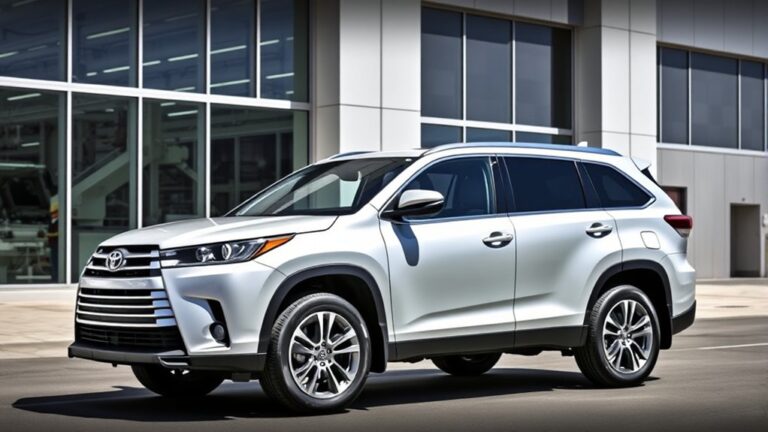
You’ll find the Highlander is bigger than a 4Runner in terms of interior space, offering seating for up to eight passengers. It has a roomier third row and greater cargo capacity, making it an excellent choice for families.
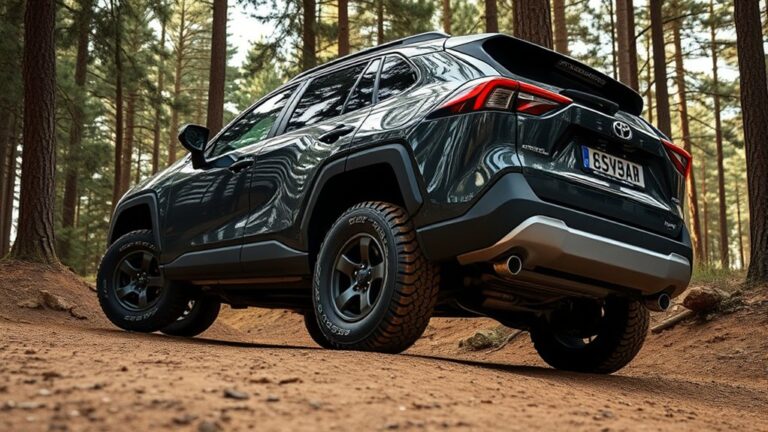
The 4Runner, although slightly shorter in length, stands taller and boasts a rugged design built for off-road durability. It features firm seats and less versatile cargo space compared to the Highlander.
Your choice depends on whether you prioritize passenger comfort and flexibility or off-road capability. Explore further to see which fits your lifestyle best.
Key Takeaways
- The Highlander is longer at 194.9 inches compared to the 4Runner’s 190.2 inches.
- The 4Runner is taller and has a more rugged, off-road profile than the sleeker Highlander.
- Highlander offers more rear legroom and a more spacious third-row seating than the 4Runner.
- Highlander provides larger and more versatile cargo space than the 4Runner.
- Overall, Highlander is bigger in length and interior space; 4Runner is bulkier in height and off-road design.
Highlander vs. 4Runner Exterior Size Comparison
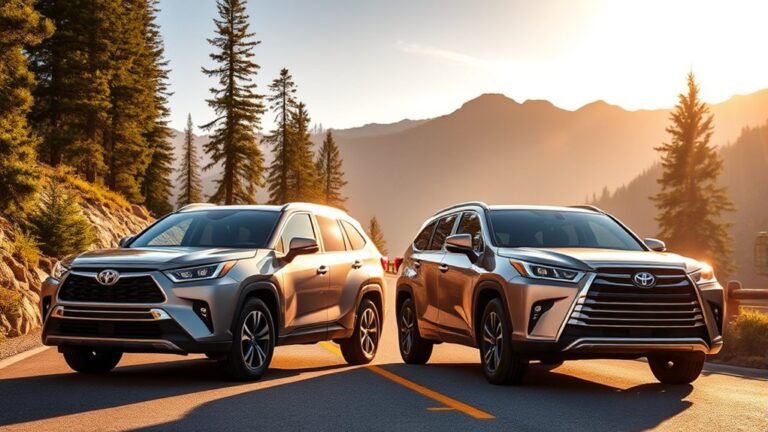
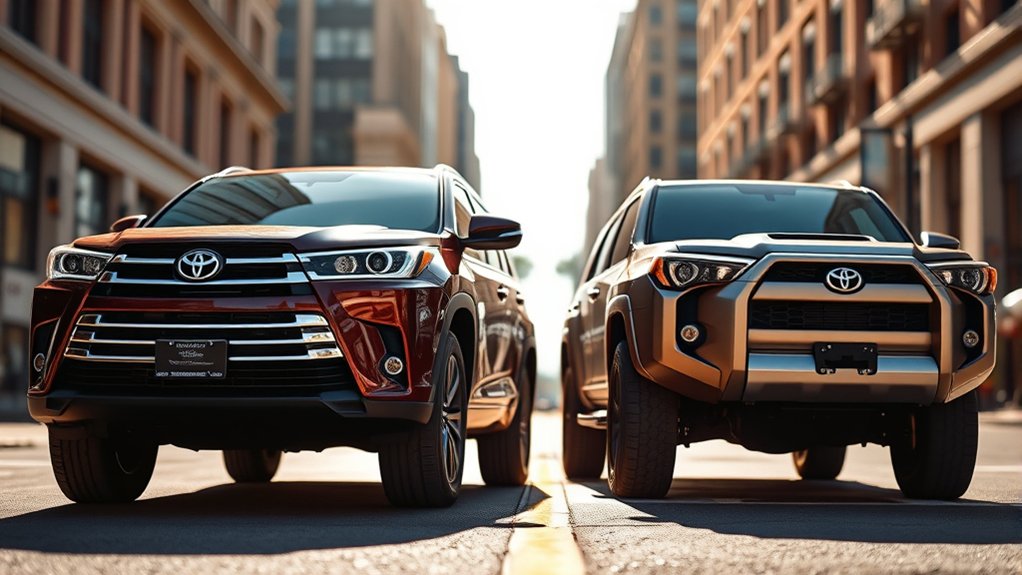
How do the Toyota Highlander and 4Runner compare when it comes to exterior size? The 4Runner is generally larger, offering a taller and more rugged profile, which suits off-road capabilities.
The Highlander, while slightly smaller, presents a sleeker design focused on urban driving and family comfort. You’ll notice the Highlander’s refined interior materials and a more modern infotainment layout, emphasizing user-friendliness and aesthetics.
In contrast, the 4Runner’s interior materials prioritize durability to match its adventurous exterior. Both SUVs have distinct exterior dimensions that reflect their intended purposes: the 4Runner leans toward robust utility, while the Highlander balances size with sophistication.
Your choice depends on whether you value exterior bulk and ruggedness or a polished, efficient design with thoughtful interior features.
Which SUV Offers More Interior Passenger Space?
You’ll want to compare front seat comfort and rear passenger legroom to see which SUV feels roomier inside. Also, consider how each model handles cargo space, especially if you often carry gear or luggage. These factors will help you determine which SUV offers more practical interior space for your needs.
Front Seat Comfort
When comparing front seat comfort between the Highlander and the 4Runner, interior passenger space plays an essential role. The Highlander offers softer front seat padding, providing a plush feel that supports longer drives comfortably.
In contrast, the 4Runner’s padding is firmer, catering to those who prefer a more supportive seating experience. Both vehicles feature thoughtfully designed dashboard layouts, but the Highlander’s layout feels more modern and ergonomic, putting controls within easier reach.
The 4Runner’s dashboard is more utilitarian, emphasizing durability over style. If you prioritize cushioned seating and a refined cockpit, the Highlander may suit you better. However, if you prefer a straightforward, rugged interior, the 4Runner holds its own.
Ultimately, your choice depends on the kind of front seat comfort you value most.
Rear Passenger Legroom
Wondering which SUV offers more rear passenger legroom, the Highlander or the 4Runner? When you slide into the back seat, the Highlander generally provides more legroom, making it a better choice if rear passenger comfort is a priority.
Its rear upholstery is designed to maximize space without compromising support, giving passengers a more comfortable ride on longer trips. The 4Runner, known for its rugged build, offers slightly less legroom but compensates with a more upright seating position.
Both SUVs maintain thoughtful cargo organization features behind the rear seats, but that doesn’t affect legroom directly. So, if you often carry rear passengers who need extra space to stretch, the Highlander edges out the 4Runner in rear passenger legroom and overall interior passenger space.
Cargo Space Availability
How much cargo space do you really get with the Highlander compared to the 4Runner? The Highlander offers around 16 cubic feet behind the third row, expanding to 84 cubic feet with the seats folded down. The 4Runner provides about 9 cubic feet behind the third row and nearly 47 cubic feet when folded.
If you prioritize cargo capacity for gear or groceries, the Highlander clearly leads. This difference can also impact your real world mpg since a more spacious interior often means added weight, affecting fuel efficiency. Additionally, consider maintenance costs. Larger cargo areas with complex folding mechanisms might demand more upkeep.
Ultimately, if cargo space is a priority alongside practical real world mpg and manageable maintenance costs, the Highlander tends to be the more versatile choice.
Highlander vs. 4Runner Cargo Capacity
What distinguishes the Toyota Highlander from the 4Runner in cargo capacity? The Highlander offers a more refined cargo area, ideal if you prioritize compact fuel efficiency alongside everyday practicality. Its cargo space, while not the largest in its class, is thoughtfully designed to maximize usability without compromising curb appeal.
On the other hand, the 4Runner provides a boxier, more rugged cargo area, which can handle bulkier items but may impact fuel economy due to its shape and weight. If you need flexible cargo space for occasional heavy loads, the 4Runner’s design suits you better.
However, if you want a balance between cargo capacity and a vehicle that’s easier on fuel with a sleeker look, the Highlander stands out in that regard.
How Seating Configurations Affect Interior Space
Does the seating configuration considerably shape the interior space you experience in the Toyota Highlander and 4Runner? Absolutely. The Highlander typically offers three rows accommodating up to eight passengers, providing flexible seating arrangements that prioritize passenger comfort and cargo versatility.
In contrast, the 4Runner often features a more rugged setup with off road suspension and a focus on durability, usually seating five or seven depending on trim, which may limit rear passenger space. Both vehicles’ interior designs, including elements like mirror housing that impact visibility and perceived openness, influence how roomy you feel inside.
While the Highlander emphasizes spaciousness through configurable seating, the 4Runner balances interior space with its off road capabilities, making your choice dependent on whether you value passenger capacity or rugged performance more.
Why Design Makes These SUVs Feel Bigger on the Road
Why do some SUVs appear larger on the road even when their dimensions are similar? It often comes down to design elements that influence perception. When you consider island aesthetics, these SUVs use visual cues like bold grilles and muscular contours that amplify their presence.
Design cues like bold grilles and muscular contours make SUVs appear larger despite similar dimensions.
Color options also play a role. Darker or vibrant hues can make a vehicle feel more substantial. Fuel economy comparisons may not seem related, but SUVs with optimized highway millage often have sleeker profiles that balance size and efficiency, subtly affecting how big they look.
Here’s why design impacts your perception:
- Bold front fascia commands attention.
- Raised ride height enhances road dominance.
- Strategic use of color deepens visual mass.
- Aerodynamic shapes improve fuel efficiency yet maintain a robust look.
These factors shape how big an SUV feels to you on the road.
Which SUV Feels Roomier for Families and Groups?
When you compare the Highlander and 4Runner, you’ll notice differences in interior space that impact comfort for families and groups. The Highlander typically offers more passenger room, while the 4Runner focuses on rugged utility with a different seating setup. Understanding their seating capacities helps you decide which SUV feels roomier for your specific needs.
Interior Space Comparison
How much space do you really need for your family or group when choosing between the Highlander and the 4Runner? Both SUVs offer practical interiors, but some differences stand out. The Highlander tends to feel roomier thanks to its thoughtful design and better interior acoustics, which reduce road noise and enhance comfort.
The 4Runner, meanwhile, emphasizes ruggedness, with seat upholstery durability that withstands rough use.
Consider these points to decide which suits you best:
- Highlander’s cabin offers a more refined, quieter ride.
- 4Runner’s seats use tougher materials, ideal for active lifestyles.
- Highlander provides slightly more legroom in the second row.
- 4Runner’s upright design may feel less spacious but offers good headroom.
Your choice depends on whether you prioritize comfort or rugged durability.
Seating Capacity Differences
Beyond interior comfort and materials, seating capacity plays a key role in determining which SUV feels roomier for families and groups. When you compare the Highlander and 4Runner, seating ergonomics and cargo organization significantly impact usability.
The Highlander typically offers three rows with flexible seating, prioritizing passenger comfort and accessible storage. The 4Runner also has three rows but provides a more rugged layout, which may feel tighter in the third row. Check the differences below:
| Feature | Toyota Highlander | Toyota 4Runner |
|---|---|---|
| Seating Capacity | Up to 8 passengers | Up to 7 passengers |
| Third-Row Comfort | More spacious, ergonomic | Slightly cramped |
| Cargo Organization | Flexible with under-floor storage | Basic, less versatile |
This table helps you decide which fits your family’s needs best.
How Off-Road Design Affects Size and Utility
Why do off-road features influence the overall size and utility of vehicles like the Highlander and 4Runner? Off-road design demands specific modifications that affect dimensions and functionality. When you consider these factors, you see clear trade-offs:
- Off road suspension systems add height and ground clearance, increasing vehicle size but enhancing rugged capability.
- Larger tires and reinforced undercarriages improve durability but consume more space and add weight.
- These enhancements often reduce fuel efficiency, as the vehicle works harder to handle tougher terrain.
- Storage and cargo space may be sacrificed to accommodate off-road gear and structural reinforcements.
Understanding how off-road design integrates with size and utility helps you appreciate why the 4Runner, built for rough terrain, differs notably from the Highlander’s more urban-focused design.
Which SUV’s Size Fits Your Needs?
Which SUV fits your size requirements depends largely on your lifestyle and priorities. If you need ample cargo space and a versatile infotainment layout for family trips, the Highlander might suit you better.
On the other hand, if tire durability and off-road capability matter more, the 4Runner’s rugged build could be your pick. Consider how you plan to use the vehicle daily.
| Feature | Highlander | 4Runner |
|---|---|---|
| Length | 194.9 inches | 190.2 inches |
| Cargo Space | 84.3 cubic feet | 89.7 cubic feet |
| Tire Durability | Moderate, road-focused | High, off-road optimized |
Analyze these traits to find which SUV’s size fits your needs best.
Frequently Asked Questions
How Do Fuel Efficiency Ratings Compare Between the Highlander and 4runner?
You’ll find the Highlander offers better fuel economy due to its efficient engine performance, while the 4Runner sacrifices some fuel efficiency for more robust power.
Both balance performance differently based on your priorities.
What Are the Safety Ratings for the Highlander Versus the 4runner?
You might think both SUVs have similar safety ratings, but the Highlander generally scores higher in crash tests.
Plus, its lower maintenance costs make it a smart choice if safety and budget matter to you.
Which SUV Has Better Technology and Infotainment Features?
You’ll find the Highlander offers more advanced tech interior features and a user-friendly infotainment system, while the 4Runner focuses on rugged reliability.
Both are solid, but Highlander leads in tech and comfort.
How Do Maintenance Costs Differ Between the Highlander and 4runner?
You might think maintenance costs for a Highlander and 4Runner are huge monsters, but they’re fairly reasonable. The Highlander’s lower upkeep often boosts resale value, while the 4Runner’s ruggedness keeps its resale value strong despite slightly higher costs.
Which Vehicle Holds Its Resale Value Better Over Time?
You’ll find the 4Runner holds its resale value better due to its rugged appeal, despite lower fuel economy.
The Highlander offers better fuel economy but tends to depreciate faster, affecting long-term resale value.
Conclusion
When you picture yourself behind the wheel, the Highlander wraps you in a sleek, spacious cabin, while the 4Runner commands attention with its rugged, boxy stance. You’ll notice the Highlander feels roomier inside, perfect for family trips, whereas the 4Runner’s off-road build adds bulk but excels in utility.
Choosing between them means matching their size and design to your lifestyle—whether you crave comfort or adventure, one fits your needs just right. In terms of overall dimensions, the Highlander is generally bigger than a 4Runner, offering more interior space and a smoother ride for daily driving.