Is the Civic Type R All Wheel Drive
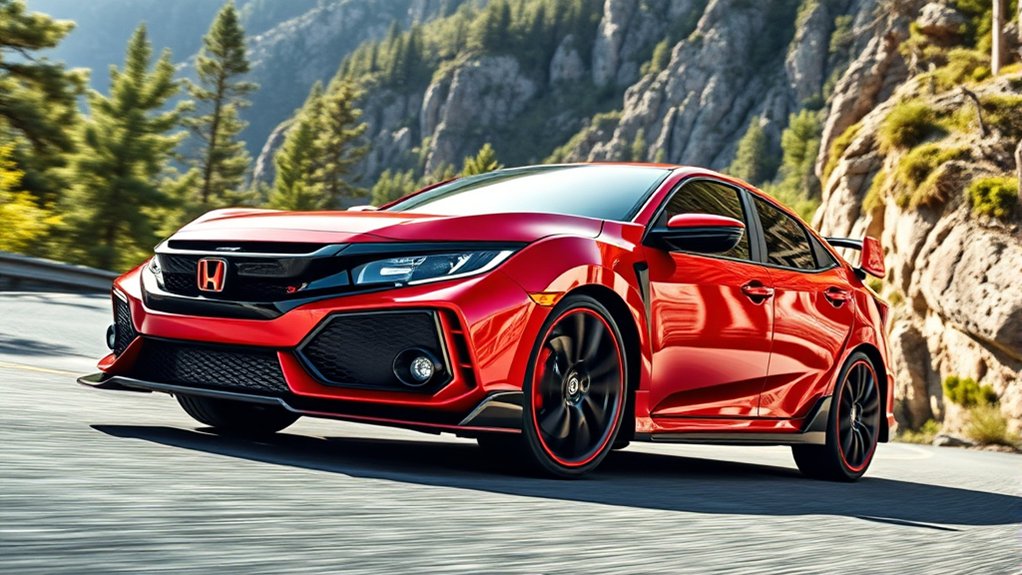
You won’t find an all-wheel-drive option on the Civic Type R because Honda designed it specifically for front-wheel-drive performance.
The Civic Type R AWD setup simply does not exist in Honda’s lineup.
This choice saves weight, simplifies mechanics, and prioritizes sharp handling through advanced FWD technology like limited-slip differentials.
While upgrading to AWD is technically possible, it involves complex, costly modifications that can compromise reliability and safety.
Understanding why Honda favors FWD helps clarify the car’s driving dynamics and what an AWD conversion would mean for its performance.
Key Takeaways
- The Honda Civic Type R is designed exclusively as a front-wheel-drive (FWD) vehicle with no factory AWD options.
- Honda prioritizes lightweight, driver-focused dynamics over the added complexity of an AWD system in the Type R.
- Upgrading the Type R to AWD is technically possible but requires extensive drivetrain, suspension, and chassis modifications.
- AWD conversions are costly, complex, and can negatively impact reliability, safety, and the car’s original handling balance.
- The Type R’s advanced FWD setup uses traction control and limited-slip differentials to maximize grip without AWD.
Does the Honda Civic Type R Have All-Wheel Drive?
Wondering if the Honda Civic Type R comes with all-wheel drive? It doesn’t. The Civic Type R exclusively features front-wheel drive, which plays a key role in its dynamic handling.
While all-wheel drive systems offer enhanced traction, the Type R focuses on delivering sharp, responsive steering through its front-driven configuration. Beyond performance, Honda invests in noise reduction techniques and premium interior materials to enhance your driving experience.
The cabin features sound-dampening insulation that minimizes road and engine noise, allowing you to enjoy a quieter ride despite the sporty nature of the vehicle. High-quality interior materials also contribute to comfort and durability, ensuring the Civic Type R’s interior matches its performance-focused engineering without the complexity or weight that all-wheel drive systems might introduce.
Why Honda Uses Front-Wheel Drive for the Civic Type R
Why does Honda stick with front-wheel drive for the Civic Type R despite the popularity of all-wheel drive in performance cars? Honda prioritizes weight savings, mechanical simplicity, and sharp wheel dynamics that a front-wheel-drive drivetrain offers. This setup allows precise handling and predictable cornering behavior, crucial for the Civic Type R’s sporty character.
| Aspect | Front-Wheel Drive | All-Wheel Drive |
|---|---|---|
| Weight | Lighter, better balance | Heavier, more complex |
| Drivetrain Layout | Simpler, efficient | Complex, increased drag |
| Wheel Dynamics | Direct front grip control | Distributed traction |
| Cost & Maintenance | Lower cost, easier upkeep | Higher cost, more upkeep |
This focused design choice reflects Honda’s commitment to delivering agility and driver engagement through front-wheel-drive dynamics.
How Front-Wheel Drive Impacts Civic Type R Performance
You’ll notice that front-wheel drive affects the Civic Type R’s traction by focusing power on the front tires, which has both benefits and limitations. It also shapes the handling dynamics, influencing how the car responds during cornering and acceleration. Additionally, weight distribution plays a key role in balancing performance and stability.
Traction Benefits And Limits
How does front-wheel drive shape the Civic Type R’s traction capabilities? You’ll find that FWD offers clear traction benefits on dry pavement, thanks to the engine’s weight over the driven wheels. This setup helps the Civic Type R launch quickly and maintain grip during acceleration.
However, front-wheel drive also has limits, especially in low-traction conditions like rain or snow. Despite common drivetrain myths suggesting AWD is necessary for superior grip, the Civic Type R’s advanced traction control and limited-slip differential mitigate many FWD shortcomings.
While AWD feasibility could improve traction further, it would add weight and complexity, impacting the car’s agility and efficiency. Understanding these traction dynamics helps you grasp why Honda continues to prioritize front-wheel drive for this performance model.
Handling Dynamics Explained
Front-wheel drive directly influences the Civic Type R’s handling characteristics, shaping the way it responds during cornering and high-speed maneuvers. You’ll notice that the front wheels manage both propulsion and steering, which affects how the car behaves on various circuit routing.
Tight corners demand precise front-end grip, making tire compounds critical in maintaining traction and minimizing understeer. The Civic Type R’s suspension and chassis tuning are optimized to counteract typical front-wheel drive limitations, such as torque steer, enhancing driver confidence.
While it may not match the balanced feel of all-wheel drive systems, the front-wheel drive setup offers predictability and agility. By focusing power delivery through the front tires, the Civic Type R provides a sharp, engaging experience tailored to aggressive driving styles and technical track layouts.
Weight Distribution Effects
What role does weight distribution play in the Civic Type R’s performance? In this discussion about subtopic, weight distribution substantially influences the front-wheel-drive system’s behavior.
The Civic Type R’s engine mounting at the front leads to a front-heavy bias, affecting weight transfer during acceleration and cornering. This front-biased weight distribution enhances traction for the driven wheels but can induce understeer in sharp turns.
You’ll notice that weight transfer to the front tires improves grip under acceleration but limits rear-end stability. These effects are integral to understanding why the Civic Type R’s handling differs from all-wheel-drive counterparts.
While this subtopic is essential for grasping the vehicle’s dynamics, it remains irrelevant to other H2s like drivetrain configurations or handling dynamics explained, focusing solely on how front-wheel-drive weight distribution impacts performance.
Comparing the Civic Type R’s Drivetrain to AWD Rivals
When evaluating the Civic Type R’s drivetrain against all-wheel-drive rivals, you’ll notice key differences in traction and handling dynamics. The Type R’s front-wheel-drive setup often sparks drivetrain misconceptions, with some assuming AWD would automatically offer superior grip.
However, AWD myths overlook that AWD systems add weight and complexity, which can impact agility and fuel efficiency. While AWD rivals may excel in low-traction scenarios, the Civic Type R compensates with advanced front-wheel-drive technologies like limited-slip differentials and torque vectoring.
These features enhance cornering and reduce understeer, challenging common assumptions about drivetrain performance. Understanding these distinctions helps you appreciate how the Type R’s design targets spirited driving rather than outright traction dominance typical of AWD competitors.
What Front-Wheel Drive Means for Civic Type R Traction and Handling
How does the Civic Type R’s drivetrain layout influence its traction and handling characteristics? Since it uses front-wheel drive (FWD), the car delivers power primarily to the front wheels, which impacts grip and cornering differently than all-wheel drive systems.
You’ll notice sharper steering response but may experience understeer in aggressive turns. Comparing it to AWD rivals with unrelated engines is often an irrelevant comparison, as drivetrain layout fundamentally changes vehicle dynamics.
| Aspect | Front-Wheel Drive (Civic Type R) |
|---|---|
| Traction | Limited on slippery surfaces |
| Handling | Agile, but prone to understeer |
| Weight Distribution | Front-heavy |
| Maintenance Complexity | Lower than AWD |
Understanding these traits helps you appreciate the Civic Type R’s unique performance profile.
Can You Upgrade the Honda Civic Type R to All-Wheel Drive?
You might wonder if upgrading your Civic Type R to all-wheel drive is possible, given its standard front-wheel drive setup. While there are no factory AWD options for the Type R, some aftermarket conversions exist but require extensive modifications. Before considering this, weigh how such changes could affect performance, reliability, and cost.
Type R Drivetrain Options
Why does the Honda Civic Type R come exclusively with front-wheel drive? Honda designed the Type R’s drivetrain to optimize weight distribution, handling, and cost-effectiveness.
You might encounter drivetrain myths suggesting all-wheel drive (AWD) inherently outperforms front-wheel drive (FWD). However, performance myths often overlook how the Type R’s FWD setup, combined with advanced suspension and limited-slip differential, delivers exceptional agility and responsiveness.
Honda prioritizes a lightweight, driver-focused experience rather than adding the complexity and weight of AWD. Currently, the Type R offers no factory AWD options, and its drivetrain is purpose-built for FWD dynamics.
Understanding these drivetrain choices helps you appreciate the car’s engineering focus instead of assuming AWD is always superior for performance driving.
AWD Conversion Feasibility
Is it possible to upgrade the Honda Civic Type R to all-wheel drive? Technically, converting a front-wheel-drive Type R to AWD is feasible but highly complex. It requires extensive modifications, including drivetrain, suspension, and chassis changes.
This undertaking goes beyond a simple upgrade, delving into an unrelated topic that diverges from the car’s original engineering. Considering the Type R’s design, AWD conversion becomes a tangential concept rather than a practical option.
You’d need custom parts and expert labor, making it costly and time-consuming. Additionally, such modifications could affect reliability and safety. So, while not impossible, upgrading a Civic Type R to AWD isn’t straightforward or recommended for most enthusiasts due to these significant technical and financial challenges.
Performance Impact Considerations
Considering the extensive modifications required for an all-wheel-drive conversion, it’s important to evaluate how such changes would affect the Civic Type R’s performance. You should understand that altering the drivetrain involves significant weight increases, which can negatively impact acceleration and handling.
Many drivetrain myths suggest AWD always improves traction and cornering, but in the Civic Type R’s case, the front-wheel-drive setup is finely tuned for optimum balance and responsiveness. When evaluating AWD feasibility, you must also consider the complexity of integrating new components like a rear differential and driveshafts, which can introduce drivetrain losses and reduce efficiency.
Ultimately, upgrading to AWD might compromise the Civic Type R’s agility and performance characteristics that enthusiasts appreciate, making it a less practical modification than it initially appears.
Frequently Asked Questions
What Is the Fuel Economy of the Honda Civic Type R?
You’ll find the Honda Civic Type R’s fuel economy varies: the manual transmission gets about 22 mpg city and 28 mpg highway. An automatic typically offers slightly better efficiency, balancing performance with fuel savings effectively.
How Much Does the Civic Type R Weigh?
Imagine holding power in your hands. The Civic Type R weighs around 3,117 pounds. Check the spec sheet for precise details and explore vibrant color options that perfectly match this beast’s dynamic weight and performance balance.
What Safety Features Come With the Civic Type R?
You’ll appreciate the Civic Type R’s advanced safety features, including adaptive cruise control, collision mitigation braking, and lane-keeping assist. These integrate seamlessly with its precise drivetrain dynamics to enhance overall control and driver confidence.
What Is the Warranty Coverage on the Civic Type R?
You get a 3-year/36,000-mile basic warranty and 5-year/60,000-mile powertrain coverage. When comparing AWD systems, focus on engine tuning vs. suspension setup. Type R’s suspension excels without AWD complexity, balancing performance and reliability.
Does the Civic Type R Have a Manual or Automatic Transmission?
You won’t find an automatic transmission in the Civic Type R; it comes exclusively with a manual transmission. This choice emphasizes driver engagement and control, appealing to enthusiasts who value precision over convenience.
Conclusion
So, no, the Civic Type R isn’t all-wheel drive—because who needs AWD when you can master the art of torque steer? Honda sticks with front-wheel drive to keep things sharp, light, and thrillingly challenging.
If you’re dreaming of AWD, you might want to look elsewhere or get ready for some serious mods.
But hey, if you enjoy a car that demands respect and skill, the Type R’s FWD setup has got you covered—just don’t expect the Civic Type R to be all-wheel drive.