Is It Easy to Change Brake Pads
You can change brake pads yourself if you have the right tools and follow exact procedures carefully. Changing brake pads is a manageable task for those prepared and cautious. You’ll need a reliable jack, wrench, socket set, and a tool to compress the caliper piston.
Safety gear and proper vehicle support are critical to avoid injury. The process demands precision to ensure effective braking and prevent damage. If you’re unfamiliar with brake systems or encounter complications, seeking professional help is wise.
Further guidance will help you prepare and execute the task correctly. Taking the time to understand each step can make the job smoother and safer.
Key Takeaways
- Changing brake pads requires specific tools and mechanical knowledge, making it moderately challenging for beginners.
- Proper safety gear and precautions are essential to avoid injury during brake pad replacement.
- Compressing the caliper piston and correctly aligning new pads can be difficult without experience.
- Identifying wear and potential rotor damage is crucial for effective brake maintenance and safety.
- Professional help is recommended if unfamiliar with brake systems or handling stubborn components.
What Are Brake Pads and Why They Matter
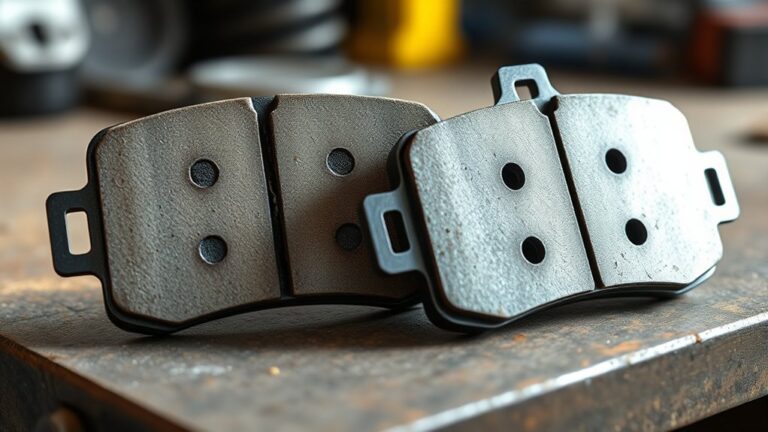
What exactly are brake pads, and why do they play a pivotal role in your vehicle’s safety? Brake pads are friction components that press against the brake rotors to slow or stop your vehicle.
They convert kinetic energy into heat, enabling controlled deceleration. Unlike non vehicular topics or unrelated maintenance areas, brake pads directly influence your car’s ability to respond promptly.
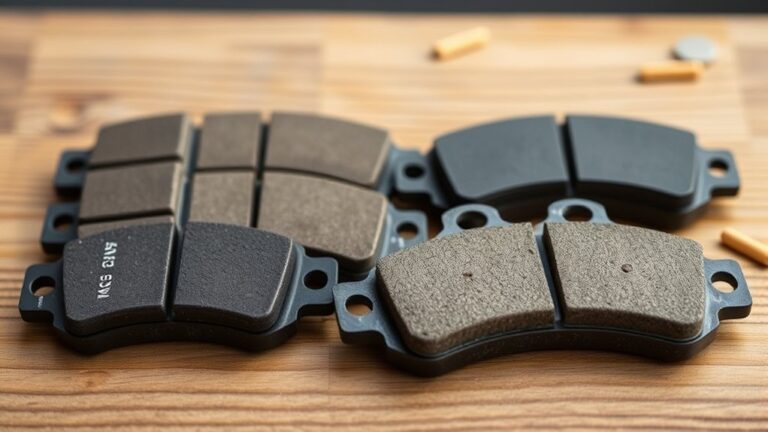
You must understand their composition, typically metallic, ceramic, or organic materials, to select the right type for your driving conditions. Proper brake pad function ensures efficient braking performance and prevents rotor damage.
Neglecting their condition can compromise safety and increase repair costs. Hence, knowing what brake pads are and why they matter sets the foundation for effective brake system maintenance and timely replacement decisions.
Signs You Need to Change Your Brake Pads
How can you tell when your brake pads need replacing? First, listen for a high-pitched screeching sound when you apply the brakes. That’s a built-in indicator signaling wear.
Next, check for reduced braking responsiveness or a longer stopping distance. Inspect the brake pads through the wheel spokes; if the pad thickness measures less than 3 millimeters, it’s time for replacement.
Avoid confusing unrelated topic sounds, like engine noise, with brake issues. Also, disregard random idea misconceptions such as brake dust always indicating worn pads. Dust can come from other components.
Pay attention to vibration or pulsation in the brake pedal during braking, which may suggest uneven pad wear. Timely identification prevents damage to rotors and ensures vehicle safety.
Essential Tools for Changing Brake Pads at Home
You’ll typically need a specific set of tools to change brake pads efficiently and safely at home. First, a reliable jack and jack stands are essential to lift and secure your vehicle. Use a lug wrench to remove the wheel nuts.
A C-clamp or brake caliper tool helps compress the caliper piston, preventing brake squeal caused by improper pad seating. You’ll also need a socket set and ratchet to remove caliper bolts.
Inspect the rotors for wear; if you notice deep grooves or uneven surfaces, rotor wear may require rotor resurfacing or replacement. Finally, a wire brush cleans the caliper bracket to ensure proper pad alignment.
Having these tools ready ensures a smooth brake pad replacement process while preventing common issues like brake squeal and rotor wear.
Step-by-Step Brake Pad Replacement Guide
Where do you start when replacing brake pads? Begin by ensuring your workspace is safe and your tool selection is appropriate for a newbie friendly experience.
Follow this precise step-by-step guide:
Loosen the lug nuts and lift the vehicle with a jack, securing it on stands.
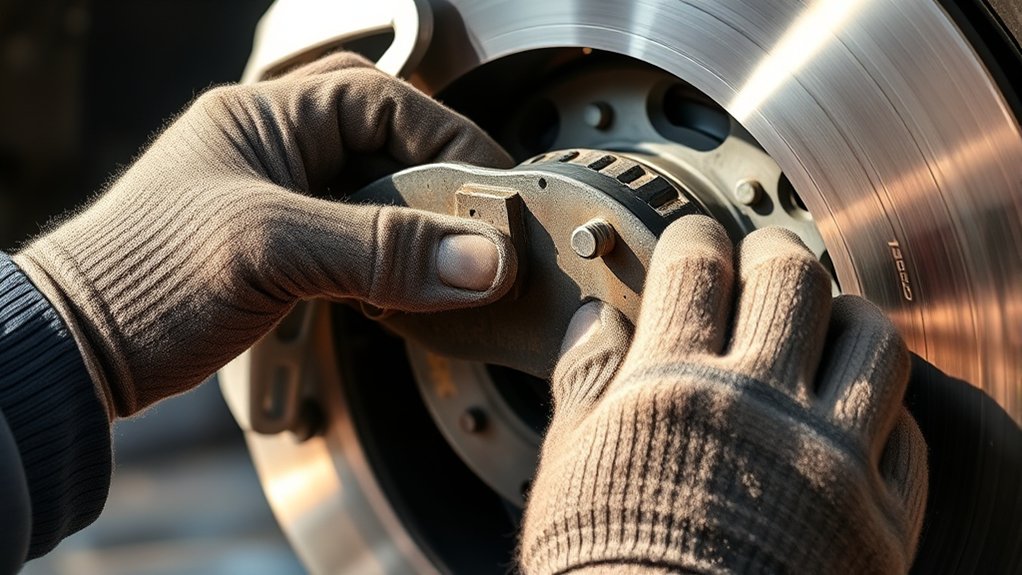
Remove the wheel to access the brake caliper and carefully unbolt it.
Compress the caliper piston using a C-clamp or brake tool, creating space for new pads.
Replace old brake pads with new ones, reassemble the caliper, and tighten bolts to manufacturer torque specs.
After reinstallation, lower the vehicle, tighten lug nuts, and test the brake pedal for firmness.
This methodical approach guarantees efficient and safe brake pad replacement without guesswork.
Is Changing Brake Pads Hard for Beginners?
Revising brake pads involves clear, sequential steps that simplify the task, even for those new to automotive maintenance. If you follow proper procedures, changing brake pads isn’t as hard as some how-to myths suggest.
You’ll need basic tools like a wrench, C-clamp, and jack, all of which require regular tool maintenance to ensure accuracy and safety. Start by securely lifting the vehicle, removing the wheel, and inspecting the caliper.
Compress the caliper piston carefully with the C-clamp, then remove and replace the brake pads. Precision and patience during each step are essential. By adhering to manufacturer guidelines and maintaining your tools well, you’ll avoid common pitfalls.
With focus and preparation, brake pad replacement becomes a manageable task, even for beginners.
Common Brake Pad Replacement Challenges and Solutions
You’ll need to accurately identify pad wear to know when replacement is necessary. Be prepared to manage stubborn calipers that may resist movement during removal. Finally, ascertain proper alignment when installing new pads to maintain braking efficiency and safety.
Identifying Pad Wear
How can you accurately determine when brake pads need replacing? Identifying wear is essential for safety and performance. Start by inspecting the wear indicators, small metal tabs that emit a squealing sound when the pad wears down to a critical level.
Additionally, visually check the pad thickness through the caliper. If it’s less than 3 millimeters, replacement is necessary. Other signs include:
- Uneven pad surface indicating potential rotor issues
- Visible scoring or grooves on the pad material
- Reduced braking responsiveness or increased stopping distance
Handling Stubborn Calipers
After confirming that your brake pads need replacement, you’ll often face the challenge of retracting stubborn calipers. Start by thoroughly inspecting calipers for corrosion, damage, or seized pistons, which can hinder retraction. Use a suitable caliper piston tool to apply even pressure and avoid damaging components.
Before lubricating sliding pins, verify lubricant compatibility with brake system materials. Silicone-based or synthetic brake grease typically works best. Avoid petroleum-based lubricants that can degrade rubber seals.
If calipers remain stuck, gently tap with a rubber mallet to free them without causing damage. Reinspect calipers after retraction to ensure smooth movement. Proper handling of stubborn calipers ensures safe brake pad installation and optimal braking performance, reducing risks of uneven wear or brake failure.
Ensuring Proper Alignment
Where should you position the brake pads to guarantee proper alignment during replacement? You must ensure the pads sit flush against the caliper bracket without any gaps or tilting. Conducting thorough alignment checks prevents rotor interference and uneven wear. Follow these steps:
- Place pads evenly in the caliper bracket slots, ensuring full contact.
- Visually inspect for any misalignment or gaps between pads and rotors.
- Rotate the rotor by hand to detect any rubbing or resistance indicating interference.
- Adjust pad positioning or caliper mounting bolts if any misalignment is detected.
Proper alignment ensures optimal braking performance and extends pad and rotor life. Skipping these checks risks damaging components and compromising safety. Always verify alignment before reassembling to avoid common brake pad replacement challenges.
When to Call a Professional Instead of DIY Brake Pad Replacement
If you notice unusual noises, fluid leaks, or uneven wear, these could indicate complex brake system issues beyond simple pad replacement. You should also consider calling a professional if you lack the proper tools or a safe workspace to perform the job. Prioritizing safety and accuracy is critical to ensure your braking system functions correctly.
Signs of Complex Issues
How can you tell when brake pad replacement exceeds a simple DIY task? If you encounter signs beyond basic wear, it’s time to reconsider handling it yourself. Complex issues often indicate underlying problems that require specialized tools and expertise.
Watch for these warning signs:
- Unusual noises like grinding or squealing that persist after pad replacement
- Brake fluid leaks near the caliper or master cylinder
- Uneven pad wear suggesting caliper or rotor malfunction
- Pulsation or vibration in the brake pedal during application
Ignoring these can lead to safety hazards and costly repairs. Unlike a random topic or an unrelated concept, these indicators directly impact brake system integrity. When they appear, calling a professional ensures proper diagnosis and repair beyond routine pad swapping.
Safety and Equipment Concerns
When should you step back from replacing brake pads yourself and call a professional? If you lack proper safety gear or experience handling brake components, it’s best to avoid risking injury or damage. Improper tool storage or using incorrect tools can also compromise the job’s safety and effectiveness.
Professionals have specialized equipment and training to manage complex brake systems safely.
| Concern | Reason to Call a Professional |
|---|---|
| Absence of safety gear | Risk of injury from brake dust or tools |
| Poor tool storage | Increased chance of tool damage or loss |
| Complex brake system | Requires advanced knowledge and tools |
| Unfamiliar with process | High risk of improper installation |
| Brake fluid handling | Needs careful management to avoid leaks |
Prioritize safety; don’t hesitate to seek expert help.
How Long Does Brake Pad Replacement Take?
Typically, replacing brake pads takes between 30 minutes and an hour for a skilled technician working with standard tools. The duration depends on factors such as vehicle type and prior maintenance. To optimize your maintenance scheduling, consider these key steps:
Replacing brake pads usually takes 30 to 60 minutes, depending on vehicle type and maintenance history.
- Perform a noise diagnosis to confirm brake pad wear before replacement.
- Remove the wheel and caliper to access the brake pads.
- Inspect rotors and hardware for wear or damage.
- Install new pads, reassemble components, and test brake function.
If you’re experienced, you might complete the task faster. However, unfamiliarity with the brake system or additional repairs can extend the time. Planning brake pad replacement during routine maintenance reduces downtime and ensures consistent braking performance.
Accurate timing also prevents damage caused by worn pads, enhancing safety and longevity.
Brake Pad Replacement Safety Tips
Replacing brake pads efficiently requires careful attention to safety protocols to prevent injury and ensure proper installation. First, always secure the vehicle with jack stands after lifting it; relying solely on a jack is unsafe.
Wear protective gloves and safety glasses to shield your hands and eyes from debris and brake dust. Avoid inhaling brake dust by working in a well-ventilated area and using a mask if necessary.
Use the correct tools to prevent slippage or damage. Before starting, review two word discussion ideas such as “torque specs” and “pad alignment” to stay focused.
Avoid distractions by steering clear of unrelated topics like engine repairs during this task. Following these safety tips ensures you complete the brake pad replacement effectively and securely.
How to Dispose of Old Brake Pads Properly
How should you handle old brake pads once they’ve been removed? Proper disposal is essential to avoid environmental harm and comply with regulations. Here are key steps to follow:
Identify local recycling programs accepting brake pads, as many contain metals suitable for recycling. Use designated hazardous waste disposal alternatives if your pads contain asbestos or other harmful substances.
Avoid discarding brake pads in regular trash to prevent contamination. Contact automotive shops or waste facilities for guidance on proper drop-off locations.
Frequently Asked Questions
What Types of Brake Pads Are Best for Different Driving Conditions?
You’ll want ceramic brake pads for quiet rides with minimal brake pad noise, semi-metallic pads for heavy-duty wear and heat resistance, and organic pads for light use.
Always check wear indicators to time replacements precisely.
How Do Brake Pad Materials Affect Braking Performance?
Brake pad composites directly impact braking performance by influencing heat dissipation and friction levels. You should monitor wear indicators to detect pad degradation early, ensuring consistent stopping power and preventing damage to rotors during maintenance.
Can Changing Brake Pads Affect Brake Fluid Levels?
As you replace brake pads, brake fluid levels often drop coincidentally due to piston retraction. Always check brake fluid maintenance, and watch pad wear indicators closely to ensure proper hydraulic pressure and optimal braking performance after service.
What Are the Environmental Impacts of Brake Pad Production?
You should know brake pad production has environmental impact due to manufacturing emissions and resource use. Toxic components cause issues during end-of-life disposal, while noise and dust generation contribute to pollution, requiring careful management and regulation.
How Do Brake Pads Influence Overall Vehicle Safety Ratings?
When it comes to vehicle safety, brake pads are the linchpin; you can’t cut corners. Monitoring brake pad wear ensures optimal braking reliability, directly improving your car’s safety ratings and helping you maintain control under critical conditions.
Conclusion
Changing brake pads is straightforward when you prepare correctly, follow each step carefully, use the right tools, and prioritize safety. You’ll inspect worn pads, remove old components, install new ones, and test your brakes confidently.
However, if you encounter stubborn parts, lack tools, or feel unsure, don’t hesitate to call a professional. Stay precise, stay safe, and keep your brakes performing optimally.
Remember, changing brake pads is easy when done right, but your safety and vehicle’s reliability depend on it.