What Are Brake Pads
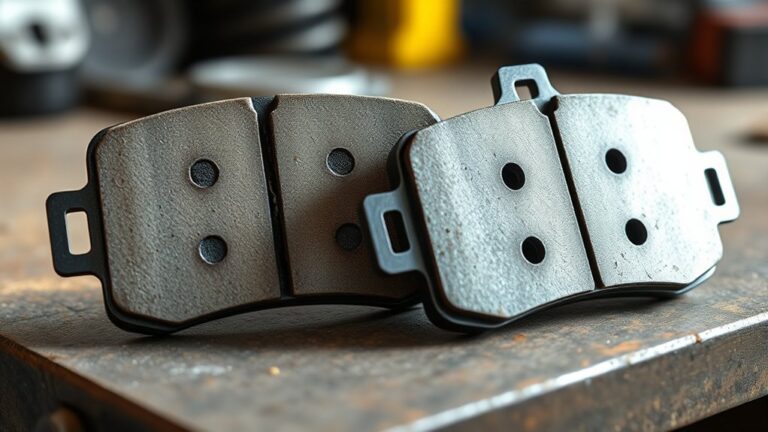
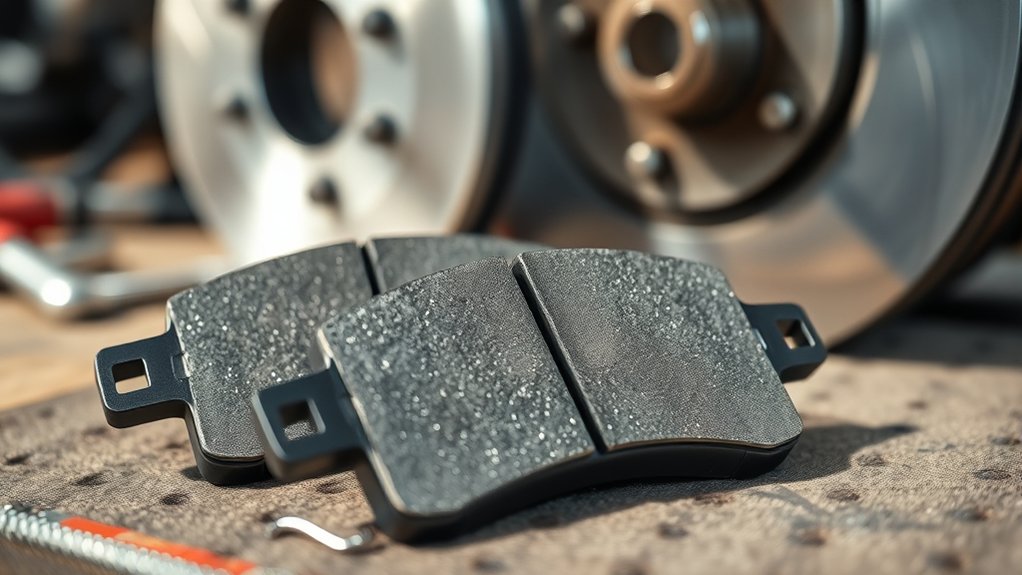
Brake pads are essential components in your vehicle’s braking system. These parts consist of a steel backing plate with a friction material designed to handle intense heat and pressure. Brake pads play a crucial role in ensuring your vehicle stops safely and effectively.
When you press the brake pedal, the brake pads clamp onto the rotors. This action converts your car’s kinetic energy into heat, slowing down the vehicle safely. Proper maintenance and timely replacement of brake pads are vital to avoid damage and maintain stopping power.
Understanding the different types of brake pads, recognizing wear signs, and knowing how to care for them helps you keep your vehicle secure. Regular attention to brake pads ensures your braking system performs at its best.
Key Takeaways
- Brake pads are components with a steel backing and high-friction material that press against rotors to stop a vehicle.
- They convert kinetic energy into heat through friction, slowing wheel rotation and enabling braking.
- Brake pads are designed to withstand extreme heat and pressure during braking for effective stopping power.
- Different materials, such as organic, semi-metallic, and ceramic, affect pad noise, durability, and performance.
- Proper maintenance and timely replacement prevent wear-related failures and ensure safe vehicle operation.
What Brake Pads Are and Why They Matter
Brake pads are essential components in your vehicle’s braking system that create the friction needed to slow down or stop your car. They consist of a steel backing plate and a high-friction material bonded to it, engineered to withstand extreme heat and pressure.
When you apply the brake pedal, the pads press against the brake rotors, converting kinetic energy into thermal energy. Understanding what brake pads are and why they matter is crucial for maintaining vehicle safety and performance.
Unlike discussion ideas unrelated to other headings, this subtopic focuses specifically on the composition, function, and importance of brake pads themselves. Proper maintenance and timely replacement prevent wear-induced failures, ensuring your braking system operates reliably.
Knowing these basics helps you identify issues before they escalate, keeping your vehicle safe on the road.
How Brake Pads Stop Your Car
When you press the brake pedal, the brake pads clamp against the rotors, generating friction that slows your car. This friction converts kinetic energy into heat, which the braking system must dissipate efficiently to maintain performance. Understanding how brake pads interact with rotors and manage heat is key to grasping how your vehicle stops safely.
Friction Creates Stopping Power
Friction plays a critical role in slowing your vehicle by converting kinetic energy into heat. When you press the brake pedal, the brake pads clamp onto the rotors, generating friction that resists the wheels’ rotation.
This process directly reduces your car’s speed without involving any irrelevant topic or stray concept. The effectiveness of friction depends on:
- The material composition of the brake pads
- The contact surface area between pads and rotors
- The pressure applied by the hydraulic system
- The condition and temperature of the braking components
Heat Dissipation Process
As your vehicle slows, the intense heat generated by the brake pads pressing against the rotors must be effectively managed to maintain stopping power and prevent component damage. Modern brake pads use advanced composites designed for optimal heat dissipation, unlike outdated materials that fail under high temperatures. Avoid irrelevant comparison with old designs; focus on materials engineered to transfer heat efficiently, reducing fade and wear.
| Component | Heat Dissipation Role | Material Example |
|---|---|---|
| Brake Pad Backing | Conducts heat away | Steel |
| Friction Material | Converts kinetic energy to heat | Ceramic composites |
| Cooling Vents | Enhance airflow | Cast iron rotors |
| Brake Fluid | Transfers heat from caliper | DOT 4 |
| Rotor Surface | Radiates heat | Carbon-ceramic |
This system ensures consistent braking performance under stress.
Interaction With Rotors
Every time you apply the brakes, brake pads press firmly against the rotors, creating the friction necessary to slow your vehicle down. This interaction depends heavily on rotor materials and brake rotor design, which influence heat management and wear resistance.
Rotors are typically made from cast iron or composite materials to balance durability and thermal conductivity. Brake rotor design, such as vented or drilled rotors, enhances cooling and maintains performance under stress.
Key factors in this interaction include:
- Friction coefficient between pad and rotor surfaces
- Heat dissipation efficiency via rotor design
- Durability of rotor materials under repeated stress
- Consistent contact pressure for effective braking
Understanding these aspects helps you appreciate how brake pads and rotors work together to ensure safe, reliable stopping power.
The Different Types of Brake Pads
How do you choose the right brake pads for your vehicle? You need to understand the different types based on pad material color and performance characteristics.
Organic brake pads, usually brownish, offer quiet operation with minimal non brake noise but wear faster. Semi-metallic pads, often dark gray, provide superior heat dissipation and durability but may generate more noise.
Organic pads are quiet but wear quickly; semi-metallic pads last longer with better heat dissipation but can be noisier.
Ceramic pads, identifiable by their light color, excel in reducing brake dust and noise while maintaining consistent performance across temperatures. Each type balances factors like longevity, noise levels, and braking efficiency differently.
Selecting the appropriate brake pad depends on your driving conditions and priorities, whether you value quiet operation, durability, or performance. Recognizing pad material color helps you anticipate these traits and make an informed choice.
Signs Your Brake Pads Need Replacing
When should you replace your brake pads to maintain superior safety and performance? Identifying worn brake pads early is crucial to prevent system failure. A thorough literature review in automotive maintenance highlights several definitive indicators aligned with principles found even in theoretical physics, where precision and measurable change are key.
Look out for these signs:
- Squealing or screeching noises during braking, indicating pad wear sensors are activated.
- Reduced braking responsiveness or increased stopping distance.
- Visual thinning of the brake pad material below 3mm.
- Vibration or pulsation felt through the brake pedal.
Recognizing these symptoms allows you to act before damage escalates, ensuring your vehicle operates within safe parameters. Applying systematic observation, much like in theoretical physics, ensures your brake system’s reliability and effectiveness.
How to Check Brake Pads Yourself
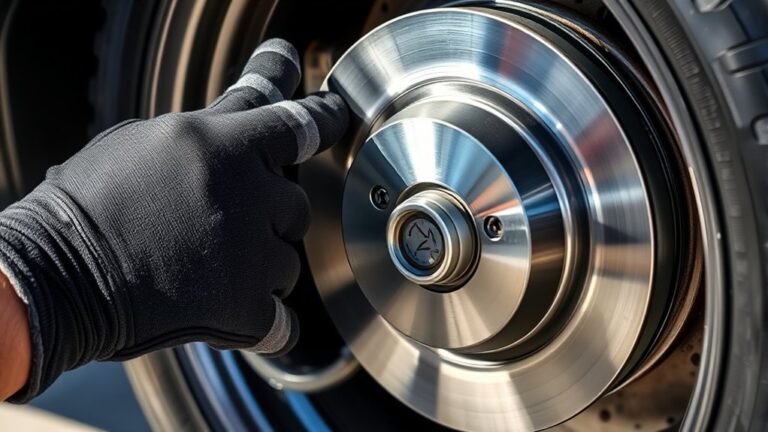
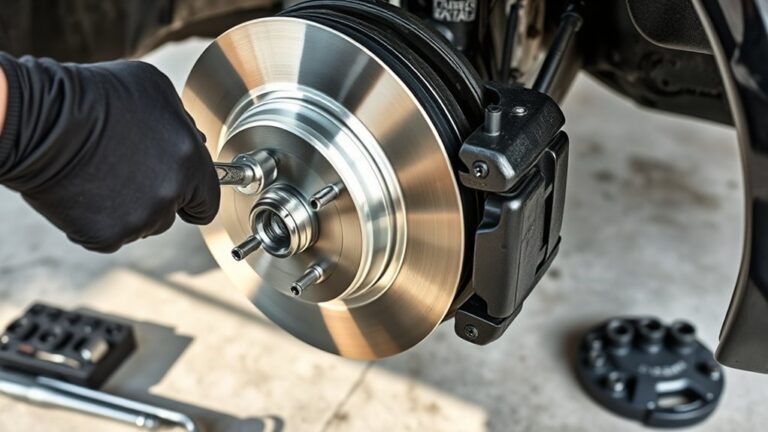
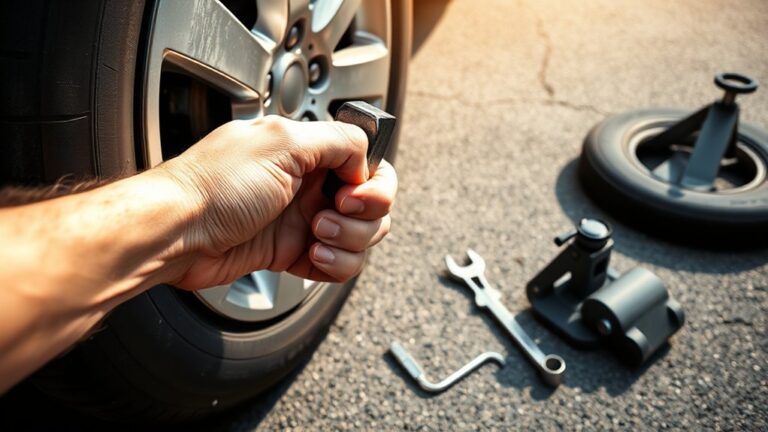
Recognizing the signs of worn brake pads is only the first step; inspecting them yourself guarantees an accurate assessment before issues worsen. Begin by safely lifting the vehicle and removing the wheel.
For disc brakes, visually check the thickness of the brake pad material. If it’s below 3mm, replacement is necessary. With drum brakes, remove the drum to examine the brake shoes; look for uneven wear or thinning lining.
Don’t forget to inspect the parking brakes, as their components can also wear and affect stopping power. While inspecting, check for cracks, glazing, or contamination on the pads or shoes.
Regular inspections help maintain braking efficiency and safety. Always refer to your vehicle’s manual for specific guidelines and torque settings when reassembling.
Consequences of Worn-Out Brake Pads
If you keep driving with worn-out brake pads, you’ll experience reduced braking efficiency, which increases stopping distances and compromises your safety. You also risk damaging critical brake components like rotors and calipers, leading to costly repairs. Understanding these consequences helps you prioritize timely brake maintenance.
Reduced Braking Efficiency
How does worn-out brake pads affect your vehicle’s braking performance? When brake pads wear down, they reduce the friction necessary for effective stopping, causing several issues that compromise safety and control. You’ll likely notice:
- Increased stopping distances due to insufficient friction
- Pedal pulsation caused by uneven pad wear or discs overheating
- Reduced responsiveness, making it harder to modulate braking force
- A fading brake pedal, indicating heat buildup and less effective braking
Discs overheating is particularly concerning, as excessive heat reduces braking efficiency and can lead to pedal pulsation, which you can feel as a vibration through the pedal. Addressing worn brake pads promptly ensures consistent braking performance and helps maintain vehicle control under various driving conditions.
Damage to Brake Components
What happens when worn-out brake pads go unchecked? You risk severe damage to critical brake components like rotors and calipers. As the pads wear thin, metal-to-metal contact occurs, causing rotors to develop grooves and heat spots.
This damage reduces rotor lifespan and necessitates costly replacements, far beyond simple non urgent maintenance. Additionally, caliper pistons can seize or leak brake fluid, impairing braking performance and safety.
Ignoring worn pads can also lead to vibrations and noise, which might be mistakenly attributed to unrelated vehicle systems, delaying proper diagnosis. Addressing brake pad wear promptly prevents cascading failures, ensures system integrity, and maintains optimal braking efficiency.
Regular inspections and timely pad replacement safeguard both the brake assembly and overall vehicle functionality.
How Brake Pads Keep You Safe on the Road
Why do brake pads play an essential role in vehicle safety? They convert kinetic energy into thermal energy, enabling your vehicle to decelerate efficiently. Properly functioning brake pads ensure consistent stopping power, reducing accident risks. You rely on their friction material to grip the rotors precisely, especially during sudden stops or adverse conditions.
Key safety functions of brake pads include:
- Maintaining optimal friction for reliable stopping distances
- Preventing brake fade under repeated use
- Dispersing heat to avoid component failure
- Minimizing environmental impact through low dust emission materials
When selecting brake pads, consider environmental impact and cost considerations to balance performance with sustainability and budget. Ultimately, well-maintained brake pads protect you and others by guaranteeing predictable braking response on the road.
How Often to Replace Brake Pads
You should replace your brake pads once you notice signs of wear, such as squealing noises or reduced braking efficiency. Typically, brake pads last between 30,000 to 70,000 miles, but this varies based on driving habits and conditions. Regular inspections help ensure timely replacement and maintain optimal braking performance.
Signs Brake Pads Wear
How can you tell when your brake pads need replacing? Recognizing brake pad wear is crucial for safety and vehicle performance. Don’t confuse unrelated topics like engine noise or tire wear as indicators. That’s an irrelevant concept here.
Instead, focus on these specific signs:
- Squealing or screeching sounds when braking, caused by wear indicators contacting the rotor.
- Reduced braking responsiveness or a longer stopping distance.
- A pulsating brake pedal, signaling uneven pad wear or rotor issues.
- Visual inspection revealing pad thickness below 3mm.
Monitoring these signs helps prevent brake failure and costly repairs. Ignoring them risks compromised braking efficiency, so always prioritize these technical indicators over unrelated or irrelevant symptoms.
Replacement Timeframes
Although brake pad lifespan varies based on driving conditions and vehicle type, most manufacturers recommend replacement between 30,000 and 70,000 miles. When you buy a new car purchase, the brake pads usually have a break-in period, but routine inspection is essential for budget friendly maintenance.
Factors like frequent city driving, heavy loads, or aggressive braking can reduce pad life, requiring earlier replacement. To maintain peak performance and safety, monitor pad thickness regularly and listen for squealing or grinding noises.
Delaying replacement risks rotor damage and costly repairs, negating any short-term savings. By adhering to manufacturer guidelines and addressing wear promptly, you guarantee consistent braking efficiency while managing maintenance costs effectively over your vehicle’s lifespan.
Selecting the Right Brake Pads for Your Vehicle
When choosing brake pads for your vehicle, what factors should you prioritize to ensure optimal performance and safety? First, consider the material composition, as it directly affects durability and heat dissipation.
Next, evaluate compatibility with your vehicle’s make and model to prevent premature wear. Also, factor in your driving conditions, such as urban, highway, or off-road, since each demands different friction characteristics.
Lastly, assess noise and dust levels for comfort and maintenance ease.
To select the right brake pads, focus on these key points:
- Material type: ceramic, semi-metallic, or organic
- Vehicle specifications and manufacturer recommendations
- Driving habits and environment
- Performance requirements including stopping power and longevity
These considerations align with discussion idea one and discussion idea two, ensuring you make an informed, technical choice.
Common Brake Pad Myths
Why do so many misconceptions about brake pads persist despite clear technical guidelines? You might encounter various mythical components or myths about brake pad aesthetics that cloud your judgment. Understanding these myths helps you make informed decisions.
| Myth | Reality |
|---|---|
| Brake pads wear out quickly if they’re visually worn | Visual wear alone doesn’t dictate performance; material quality matters |
| Expensive brake pads always outperform cheaper ones | Performance depends on compound and vehicle needs, not just price |
| Brake pad aesthetics impact braking efficiency | Appearance doesn’t affect functionality; material composition does |
Don’t let these myths mislead you. Focus on technical specifications and proven performance rather than appearances or common misconceptions when selecting brake pads.
Frequently Asked Questions
Can Brake Pads Affect Fuel Efficiency?
Yes, brake pad material and brake pad wear directly influence fuel efficiency impact. Worn or improper materials increase drag, reducing fuel efficiency.
Optimizing brake pads also lowers environmental impact by decreasing fuel consumption and emissions during driving.
Are Brake Pads Recyclable or Environmentally Friendly?
Yes, you can recycle brake pads, but you need to follow strict recycling standards to minimize environmental impact. Proper disposal and recycling reduce harmful waste, helping you support sustainability and comply with environmental regulations effectively.
How Do Brake Pads Perform in Extreme Weather Conditions?
You’d think brake pads freeze solid or melt in extreme weather, but rigorous performance testing proves they maintain consistent friction and durability. This ensures reliable stopping power whether scorching heat or icy conditions challenge their materials and design.
What Tools Are Needed to Replace Brake Pads Professionally?
You’ll need essential tools and safety gear like a jack, lug wrench, C-clamp, and gloves. Use quality materials for pads and test braking performance thoroughly to ensure proper installation and optimal safety during replacement.
Can Using the Wrong Brake Pads Damage Other Brake Components?
Using wrong pad compatibility can cause material wear impact and brake noise issues. You’ll risk lubrication concerns, accelerating damage to rotors and calipers, so always match pads precisely to maintain optimal brake performance and component longevity.
Conclusion
You rely on brake pads every time you hit the road, and those pads rely on friction, precision, and timely care to keep you safe.
When you spot wear, replace them promptly—and you’ll avoid costly damage. Choosing the right pads isn’t guesswork; it’s a calculated decision that protects you and your vehicle.
So, check, maintain, and select wisely—because your brake pads, your safety, and your car’s performance all depend on the same critical moment: stopping exactly when you need to. Brake pads are truly the unsung heroes of safe driving.