What Are Brake Pads Made of
Brake pads are made of organic compounds, semi-metallic alloys, or ceramics, each engineered to balance friction, durability, and heat management. These materials play a crucial role in how effectively a vehicle stops and how long the brake pads last.
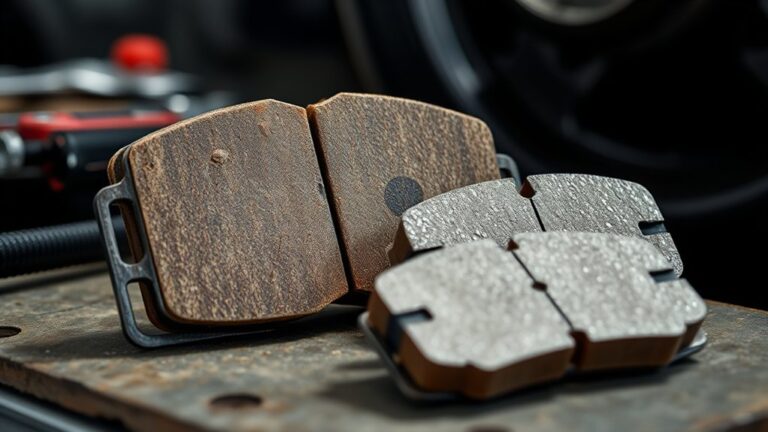
Organic pads use fibers and resins to provide quieter, softer braking but tend to wear faster. Semi-metallic pads incorporate metal fibers for better heat dissipation and stopping power, although they produce more noise and dust.
Ceramic pads deliver consistent friction, cause less rotor wear, and generate low dust, but they are generally more expensive. Exploring these material properties reveals how different brake pad compositions impact performance and longevity.
Key Takeaways
- Brake pads are made from organic compounds, metallic alloys, or ceramic materials, each offering distinct performance and durability characteristics.
- Organic brake pads consist of fibers, resins, rubber, and carbon compounds, providing quiet operation but lower heat tolerance.
- Semi-metallic brake pads include metal fibers and friction modifiers, offering superior heat dissipation and stopping power but with more noise and dust.
- Ceramic brake pads feature chemically stable materials that deliver consistent friction, minimal rotor wear, and reduced brake dust.
- Specialty brake pads for heavy-duty use combine high heat and stress-resistant composites to ensure durability and thermal stability under extreme conditions.
Types of Brake Pad Materials
What materials make up brake pads, and how do they affect performance? Brake pads primarily consist of organic compounds and metallic alloys, each influencing durability, heat resistance, and friction differently.
Organic compounds combine fibers, fillers, and resins to create pads with quieter operation and softer engagement but lower heat tolerance and faster wear. Metallic alloys, often steel or copper-based, enhance thermal conductivity and structural integrity, allowing for higher friction at elevated temperatures and longer lifespan, though they can increase noise and rotor wear.
Selecting a brake pad material means balancing these traits against your vehicle’s demands, whether you prioritize quiet operation, braking power, or longevity. Understanding these materials equips you to make informed choices, optimizing braking efficiency and safety under varying driving conditions.
How Organic Brake Pads Work and When to Choose Them
How do organic brake pads deliver their distinct performance characteristics? They rely on a pad composition primarily derived from organic chemistry principles, combining materials like resin, rubber, carbon compounds, and fibers. This blend creates a friction surface that generates adequate stopping power with minimal noise and dust.
The organic compounds in the pad composition also contribute to a smoother engagement and less wear on rotors compared to harder materials. You should choose organic brake pads if you prioritize quieter operation, gentle braking feel, and reduced rotor abrasion, especially for everyday driving or light-duty vehicles.
However, their organic chemistry-based materials typically limit their heat tolerance, so they’re less suitable for high-performance or heavy-load applications where consistent friction under extreme temperatures is critical.
Benefits and Drawbacks of Semi-Metallic Brake Pads
Why do many drivers and technicians favor semi-metallic brake pads for various vehicles? These pads combine metal fibers with friction modifiers, offering superior heat dissipation and consistent braking performance under stress. You benefit from enhanced durability and better stopping power, especially in demanding conditions.
However, the metal content raises concerns about material safety, as these pads can generate more brake dust and noise, potentially affecting sensitive components. Additionally, improper installation or use of semi-metallic pads may lead to warranty implications, so you must ensure compatibility with your vehicle’s specifications.
While they provide reliable performance, you should weigh these pros against drawbacks like rotor wear and noise, making semi-metallic pads a practical choice only when you prioritize performance over softer, quieter operation.
Why Ceramic Brake Pads Are Popular for Performance Cars
When selecting brake pads for high-performance vehicles, you’ll often find ceramic options leading the market due to their distinct advantages. Ceramic brake pads offer consistent friction levels, resulting in reliable stopping power under extreme conditions without significant fade.
They generate less brake dust, which minimizes environmental impact and keeps wheels cleaner. Additionally, ceramics handle heat efficiently, reducing the risk of ceramic failure that can compromise braking performance.
Their chemical stability also ensures minimal wear on rotors. However, you must consider that ceramic pads typically require precise engineering to maintain optimal thermal management.
Comparing Durability of Brake Pad Materials
What determines the lifespan of brake pads under varying driving conditions? It primarily hinges on the material’s ability to resist wear and maintain performance under heat and friction.
A durability comparison reveals that ceramic pads offer superior material longevity due to their stable composition and heat resistance, lasting markedly longer than organic pads. Semi-metallic pads, while durable, tend to wear faster than ceramics but outperform organic counterparts in longevity.
Organic pads, made from softer materials, wear out quickly under aggressive braking or high temperatures. When you assess material longevity, consider your driving style and environment. Ceramic pads excel in consistent, long-term durability, semi-metallic pads balance durability and cost, and organic pads suit low-demand conditions.
Understanding these differences helps you select brake pads that optimize lifespan and performance.
How Brake Pad Materials Affect Noise and Dust
You’ll notice that the material composition directly influences the noise levels produced during braking, with harder compounds often generating more sound. Dust generation varies based on the friction modifiers and fillers used in each formula, affecting both visibility and wheel cleanliness. Understanding these factors helps you select brake pads that balance performance with noise and dust control.
Material Composition and Noise
How do different brake pad materials influence noise levels and dust generation during braking? The composition directly impacts sound insulation and regulatory compliance. You’ll notice that:
- Organic pads provide excellent sound insulation, minimizing noise but may wear faster.
- Semi-metallic pads balance noise and durability but can generate moderate noise due to metal content.
- Ceramic pads excel in regulatory compliance for noise limits, producing minimal sound and dust.
Each material’s structure affects vibration patterns and friction coefficient, altering noise output. When you select a brake pad, consider how its formulation manages energy dissipation and surface roughness, critical factors in noise generation. Understanding these nuances helps you optimize braking comfort without compromising safety or environmental standards.
Dust Generation Factors
Why does dust generation vary so much between brake pad materials? It primarily depends on the composition and hardness of the friction material. Organic pads, made with softer compounds, tend to produce more dust because their particles wear away more rapidly under friction.
Semi-metallic pads, containing metal fibers, generate less dust but can increase noise impact due to their abrasive nature. Ceramic pads strike a balance, offering low dust generation and minimal noise impact thanks to their stable, non-metallic makeup.
The dust you see results from microscopic abrasion during braking, influenced by material cohesiveness and thermal stability. Understanding these factors helps you select brake pads that minimize both dust generation and noise impact, improving performance and maintenance requirements.
How Brake Pad Materials Influence Stopping Power
You’ll find that different brake pad materials—organic, semi-metallic, and ceramic—directly affect friction levels and stopping power. Each material’s heat resistance plays a vital role in maintaining consistent performance under braking stress. Understanding these factors helps you select pads that optimize safety and efficiency.
Types Of Brake Materials
What factors determine the effectiveness of brake pads in stopping your vehicle? The type of brake material plays a pivotal role, impacting performance through distinct characteristics. You’ll encounter three primary types:
- Organic Pads: These use soft fibers and resin binders, often featuring a specific surface coating that reduces noise. They’re quieter but wear faster.
- Semi-metallic Pads: Composed of metal fibers mixed with fillers, they provide reliable heat dissipation and durability. They usually come in various color options for easy identification.
- Ceramic Pads: Made from ceramic fibers and bonding agents, they offer superior longevity and consistent braking with minimal dust.
Understanding these materials helps you choose pads that balance stopping power, noise, and longevity, ensuring optimal vehicle safety and performance.
Material Impact On Friction
The type of brake pad material directly influences the friction generated between the pad and rotor, which determines stopping power. Different materials create varying friction coefficients, affecting how quickly and effectively your vehicle slows down.
For example, metallic pads offer high friction but can be noisy, while ceramic pads provide stable friction with less wear on rotors. Understanding this material impact on friction helps you make informed choices beyond non-technical, marketing角 claims that often highlight comfort or longevity without explaining stopping efficiency.
When you evaluate brake pads, focus on their friction characteristics rather than only promotional features. This technical insight ensures you select pads that meet your braking performance needs precisely, optimizing safety and control under various driving conditions.
Heat Resistance And Performance
Three critical factors determine how brake pad materials handle heat: thermal conductivity, heat capacity, and degradation temperature. When you choose brake pads, you’re directly affecting their ability to withstand heat cycling without losing performance.
If the material’s thermal conductivity is too low, heat builds up, causing excessive thermal expansion and warping. Conversely, a high heat capacity allows the pad to absorb and dissipate heat effectively, maintaining stopping power.
Degradation temperature marks the threshold beyond which the material breaks down, drastically reducing friction.
Consider these points:
- Brake pads with balanced thermal conductivity reduce heat buildup, preventing fade.
- High heat capacity materials endure multiple heat cycles, maintaining consistent performance.
- Materials with elevated degradation temperatures resist breakdown, ensuring reliable stopping power under stress.
Understanding these factors lets you pick pads that perform under intense conditions.
Specialty Brake Pads for Heavy-Duty Use
Why do heavy-duty vehicles require specialty brake pads engineered for extreme conditions? You need pads made from specialty composites that withstand intense heat and stress during heavy duty testing. These pads provide superior durability, friction, and thermal stability, critical for trucks or industrial machinery.
| Property | Specialty Composites | Heavy Duty Testing Outcome |
|---|---|---|
| Thermal Stability | High | Consistent performance |
| Friction Coefficient | Optimized for load | Minimal fade under pressure |
| Wear Resistance | Enhanced with reinforcements | Extended lifespan |
| Noise Reduction | Moderate | Acceptable for heavy use |
| Contaminant Tolerance | Elevated | Reliable in harsh environments |
Using these materials ensures brake pads deliver reliability and safety under the toughest conditions you’ll encounter.
Cost Differences Among Brake Pad Materials
How do different brake pad materials impact your overall cost? The types of materials used in brake pad composition directly influence price variations, maintenance frequency, and performance longevity. Here’s what you should consider:
- Organic Pads: These use simpler materials like rubber and resins, making them the most affordable but with shorter lifespan and quicker wear.
- Semi-Metallic Pads: Incorporating metal fibers in their composition, these offer a balance between cost and durability but can cause more rotor wear.
- Ceramic Pads: Made from advanced ceramic fibers and bonding agents, they come at a premium price but ensure extended durability and quieter operation.
Understanding these cost differences helps you anticipate expenses tied to material properties, ensuring you make financially sound decisions without compromising safety or performance.
How to Choose Brake Pads by Material
Choosing brake pads by material requires analyzing your driving habits, vehicle type, and performance expectations to match the pad characteristics effectively. If you frequently drive in stop-and-go traffic or tow heavy loads, consider semi-metallic pads for their durability and heat dissipation.
For everyday commuting, ceramic pads offer quieter operation and reduced dust, benefiting from advanced material sourcing that includes eco friendly compounds to minimize environmental impact. Organic pads, while softer and quieter, wear faster and suit lighter vehicles.
Evaluate the trade-offs between friction performance, longevity, and environmental considerations. Prioritize suppliers who disclose material sourcing transparency and incorporate eco friendly compounds, ensuring compliance with evolving regulations.
This approach guarantees optimal braking performance tailored to your needs while supporting sustainable practices in brake pad manufacturing.
Frequently Asked Questions
How Are Brake Pads Manufactured?
You start by mixing an abrasive composition with binders, then press and mold it under heat. The manufacturing processes include curing, grinding, and quality checks to ensure the brake pads meet performance and safety standards precisely.
What Environmental Impact Do Brake Pads Have?
You’ll find brake pads contribute to environmental impact through metal and dust emissions during wear. Proper disposal considerations are essential, as improper handling can release harmful substances into soil and water, demanding regulated recycling practices.
Can Brake Pads Cause Damage to Rotors?
Yes, brake pad wear can cause rotor surface impact by creating grooves or uneven wear on the rotor. You’ll need to monitor pad condition closely to prevent damage and maintain optimal braking performance and rotor longevity.
How Should Brake Pads Be Properly Disposed Of?
Think of brake pads as worn tools. Once spent, you should follow disposal guidelines carefully, handling abrasive formulations with care to avoid contamination.
Always take them to certified recycling centers to guarantee safe, environmentally sound disposal practices.
Are There Any Health Risks Handling Brake Pad Materials?
Yes, you face health risks handling brake pad materials due to dust exposure. Proper disposal methods minimize environmental impact, so you should use protective gear and follow regulations to limit hazards during handling and disposal processes.
Conclusion
When choosing brake pads, remember that ceramic pads can last up to 30% longer than organic ones, offering superior durability and performance. Your choice directly impacts stopping power, cost, and wear on your rotors. By understanding the material differences—from organic to semi-metallic and ceramic—you can make a precise, informed decision that matches your driving needs and budget.
Prioritize performance and longevity to guarantee optimal safety and efficiency on every drive. Knowing what brake pads are made of helps ensure you select the best option for your vehicle’s specific requirements.