What Do Brake Pads Look Like
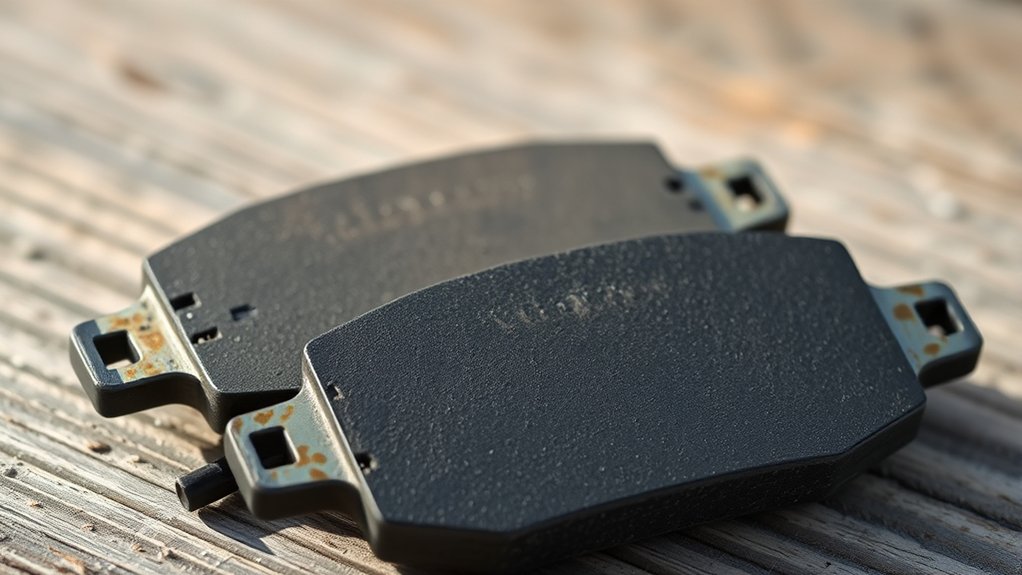
Brake pads are rectangular or curved friction components bonded to a metal backing plate, usually found inside the brake caliper on either side of the rotor.
When you look at what brake pads look like, new pads typically have a smooth surface.
Semi-metallic pads show a metallic sheen, ceramic pads appear lighter, and organic pads are darker and matte.
These pads are designed to press against the rotor to create friction and slow your vehicle.
Understanding their appearance helps guarantee proper maintenance and performance.
Explore further for detailed identification and upkeep tips to ensure your brakes function safely and efficiently.
Key Takeaways
- Brake pads are rectangular or curved with friction material bonded to a metal backing plate.
- Friction material varies: semi-metallic pads have a metallic sheen, ceramic pads are smooth and light, and organic pads are matte dark.
- New pads show thick friction material, while worn pads appear thinner with possible cracks or glazing.
- Pads are mounted inside the brake caliper on either side of the rotor, with friction material facing the rotor.
- Size and shape vary by vehicle, designed to fit precisely for uniform contact and effective braking.
What Are Brake Pads and Why Do They Matter?
What exactly are brake pads, and why do they play a crucial role in vehicle safety? Brake pads are friction components that press against the brake rotor to slow or stop your vehicle. Their material composition directly influences the brake pad lifespan and the pedal feel you experience during braking.
As you apply pressure to the brake pedal, the pads generate the friction necessary to decelerate your wheels efficiently. Over time, wear reduces pad thickness, compromising braking performance and altering pedal feel, which can signal the need for replacement.
Understanding brake pads’ function helps you appreciate their vital role in preventing accidents by ensuring consistent stopping power. Proper maintenance and timely replacement safeguard your vehicle’s braking system and maintain optimal driving control.
How to Find and Identify Brake Pads on Your Vehicle
Locating brake pads on your vehicle starts with accessing the wheel assembly, where these components sit adjacent to the brake rotor. Once you remove the wheel, you’ll see the brake caliper housing the pads.
Carefully inspect the pads for wear indicators and ensure the hardware aligns correctly. Identification mistakes often happen when misaligned hardware mimics damage or wear, so check that clips and pins are properly seated.
Avoid confusing the backing plate with the friction material; the friction side faces the rotor. Use proper lighting and tools to distinguish worn pads from new ones.
Common Shapes and Sizes of Brake Pads to Know
How do you determine which brake pad shape and size fit your vehicle? Brake pads come in various common shapes, such as rectangular, curved, and semi-metallic designs, each tailored to specific caliper types.
Sizes vary significantly, affecting the contact area and braking efficiency. You’ll notice distinct friction material patterns on the pads, designed to optimize heat dissipation and wear.
Brake pad sizes and friction patterns crucially impact contact area, heat dissipation, and overall braking efficiency.
These patterns are critical; they ensure consistent braking performance and contribute directly to your vehicle’s safety by preventing uneven wear and reducing noise. To select the correct pad, reference your vehicle’s make and model specifications, as mismatched sizes or shapes can compromise braking power.
Understanding these technical details helps you maintain optimal safety and performance on the road.
What New Brake Pads Look Like: A Visual Guide
When you examine new brake pads, you’ll notice they consist of a dense friction material bonded to a metal backing plate. Their size and shape vary depending on the vehicle’s make and model, so it’s important to identify the correct design for your brakes. Understanding these visual details helps you confirm you have the right replacement parts before installation.
Appearance And Material
What exactly do new brake pads look like, and what materials are they made from? New brake pads typically feature a flat, rectangular friction surface attached to a metal backing plate. The appearance differences among pads primarily depend on material composition, which influences color, texture, and density.
Common materials include semi-metallic, ceramic, and organic compounds. Semi-metallic pads show a metallic sheen due to steel fibers, while ceramic pads appear smoother and lighter-colored, often white or gray. Organic pads, made from resin and fibers, have a darker, matte finish.
Understanding these appearance differences helps you identify the pad type, which affects performance, noise, and wear. The friction material is bonded or riveted to the backing plate, ensuring durability. This precise material composition defines the pad’s effectiveness and longevity.
Size And Shape Variations
A brake pad’s size and shape vary substantially depending on the vehicle’s make, model, and braking system design. You’ll find that some pads are rectangular with chamfered edges, while others feature curved or contoured profiles to match specific rotor designs.
Thickness also differs, affecting braking performance and lifespan. This subtopic unrelated to other H2s highlights how you must select pads precisely tailored to your vehicle’s specifications.
When comparing two word discussion ideas like “pad dimensions” or “shape profiles,” you’ll notice that even slight variations can impact fit and function. Understanding these size and shape variations helps you identify correct replacements and ensures optimal braking efficiency.
Always consult manufacturer guidelines or part catalogs to verify compatibility before installation.
How to Spot Worn or Damaged Brake Pads
How can you determine if your brake pads need replacing before they cause further damage? You need to inspect them carefully for visual cues and specific wear patterns. Here’s how to spot worn or damaged brake pads:
Inspect your brake pads regularly for visual signs and wear patterns to prevent further damage.
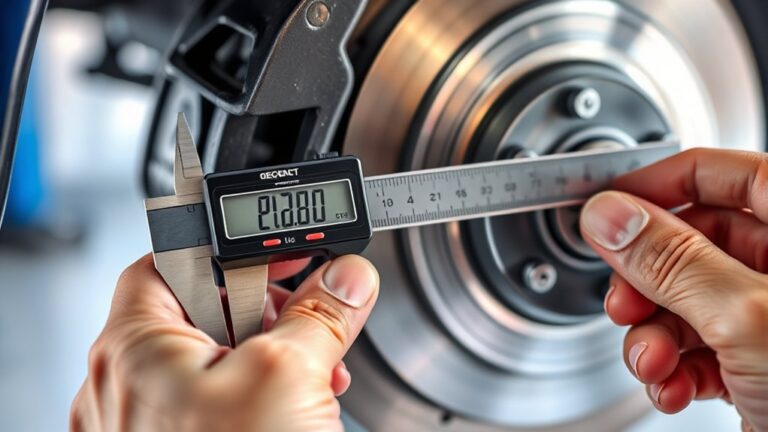
- Thickness Check: Measure the pad material; if it’s less than 3mm, replacement is necessary.
- Uneven Wear: Look for irregular wear patterns, which indicate misalignment or caliper issues.
- Cracks or Glazing: Identify surface cracks or a shiny glazed finish, signs of overheating or contamination.
- Noise Indicators: Listen for squealing or grinding noises, often caused by worn pads triggering built-in wear indicators.
Brake Pad Materials and How They Look
Inspecting the condition of your brake pads involves more than just checking wear; understanding the materials they’re made from can help you identify performance characteristics and lifespan. Brake pads typically use organic, semi-metallic, or ceramic friction materials, each with distinct friction material appearance.
Organic pads feature a softer, fibrous surface, often dark brown or black, which may wear faster under high stress. Semi-metallic pads contain metal particles, giving them a rougher, metallic gray look, and they dissipate heat efficiently but may cause more brake pad wear on rotors.
Ceramic pads have a smoother, light gray or white friction surface, offering quieter operation and longevity. By recognizing these material traits and relating them to brake pad wear, you can better assess when replacement is necessary for optimal braking performance.
Differences Between Front and Rear Brake Pads
Why do front and rear brake pads differ in design and function? The differences between front vs rear brake pads stem from their distinct roles and stresses during braking. Here are key contrasts:
- Size and Shape: Front pads are generally larger to handle more braking force, while rear pads are smaller.
- Pad Material Differences: Front pads often use higher friction materials for greater stopping power; rear pads use materials optimized for longevity and heat resistance.
- Wear Rates: Front pads wear out faster due to greater load and heat exposure, requiring more frequent replacement.
- Heat Dissipation: Front pads are designed to dissipate heat more efficiently since the front brakes do most of the work.
Understanding these differences helps you select the right pads for each axle, ensuring optimal brake performance and safety.
Where Brake Pads Fit in Your Braking System
You’ll find brake pads positioned inside the calipers, directly adjacent to the rotors. When you apply the brakes, the pads clamp onto the rotors, creating friction that slows your vehicle. Understanding this interaction is key to grasping how your braking system functions.
Brake Pads Placement
Where exactly do brake pads fit within your vehicle’s braking system? They’re positioned inside the brake calipers, directly adjacent to the rotors. Understanding their placement helps debunk common brake pad myths, such as assuming pad color indicators always signal immediate replacement.
Here’s a clear view of their placement:
- Mounted inside the brake caliper housing.
- Positioned on either side of the brake rotor.
- Secured by caliper brackets to prevent movement.
- Aligned to press uniformly against the rotor when brakes engage.
This precise location allows brake pads to convert kinetic energy into heat through friction, slowing your vehicle efficiently. Recognizing their placement clarifies how pad color indicators relate to wear and prevents misconceptions about their function.
Interaction With Rotors
How do brake pads interact with rotors to ensure effective braking? When you press the brake pedal, the brake pads clamp onto the rotors, creating friction that slows your vehicle. This friction converts kinetic energy into heat, allowing you to decelerate safely.
The difference between new vs old brake pads is critical here: new pads provide optimal friction and grip, while old pads often wear unevenly and may deposit metal shavings on the rotors. These metal shavings can cause scoring, reducing rotor efficiency and leading to vibrations or noise.
Maintaining clean rotors and timely replacing brake pads keeps the interaction smooth and effective. Proper rotor and pad contact ensures consistent braking performance and extends your braking system’s lifespan.
When to Replace Brake Pads: Visual Signs to Watch
When should you replace brake pads to ensure optimal safety and performance? Monitoring brake pad wear is crucial since worn pads compromise rotor interaction and braking efficiency. Visual inspection helps you identify the right time to replace them.
Regularly inspect brake pads to maintain safety and optimal braking performance before wear compromises effectiveness.
Look out for these signs:
- Pad thickness below 3mm indicates severe brake pad wear.
- Deep grooves or scoring on the rotor signals improper rotor interaction.
- Metal wear indicator contact produces a high-pitched squeal when pads are too thin.
- Uneven pad surface causes inconsistent rotor contact and reduced braking power.
Regular checks prevent rotor damage and maintain brake responsiveness. Replacing pads promptly ensures safe operation and prolongs rotor lifespan.
Frequently Asked Questions
How Do Brake Pads Affect Braking Performance?
You’ll notice brake pad wear directly reduces braking performance by lowering friction material composition effectiveness.
As the friction material depletes, your stopping power weakens, increasing braking distance and compromising overall safety and control.
Can Worn Brake Pads Damage Other Brake System Parts?
If you ignore wear symptoms, worn brake pads can damage your rotors, increasing repair costs. Conduct a risk assessment regularly to catch issues early, preventing rotor warping and ensuring your braking system remains safe and efficient.
Are There Eco-Friendly Brake Pad Options Available?
Yes, you can choose eco-friendly brakes made from sustainable materials like organic fibers and non-toxic resins. These reduce environmental impact while maintaining performance, helping you support greener automotive practices without sacrificing safety or durability.
How Long Do Brake Pads Typically Last?
You’ll never believe it, but brake pads typically last between 30,000 to 70,000 miles. Your brake longevity depends on pad material, driving habits, and pad material eco friendliness, which influences wear rates and performance.
What Tools Are Needed to Replace Brake Pads?
You’ll need a lug wrench, C-clamp or brake caliper tool, socket set, and screwdriver. Choose tools based on brake pad materials, such as ceramic, semi-metallic, or organic, ensuring proper tool selection for safe, precise brake pad replacement.
Conclusion
Brake pads are the silent guardians of your safety, their wear revealing the story of your journeys. By recognizing their shapes, materials, and signs of wear, you can ensure your vehicle’s heart beats strong. Don’t let worn pads symbolize neglect—see them as the urgent signal to act.
Staying vigilant means you’re not just maintaining parts but protecting lives, including your own. Trust what your brake pads show you; they speak the language of safety. Understanding what brake pads look like is essential to keeping your vehicle safe and reliable.