What Do Tire Sizes Mean
Tire sizes provide key details you need to pick the right tire for your vehicle. Understanding tire sizes is essential because they tell you important information about the tire’s dimensions and suitability. The numbers show tire width in millimeters, aspect ratio (height to width), and wheel diameter in inches.
Letters like P or LT indicate passenger or light truck tires, affecting load capacity and sidewall stiffness. These details influence handling, safety, and fitment. Matching your vehicle’s exact specs ensures optimal performance and prevents risks.
Understanding these basics helps you make smarter tire choices. Knowing what tire sizes mean gives you confidence when selecting tires that fit your driving needs and vehicle requirements.
Key Takeaways
- Tire size includes width (mm), aspect ratio (height to width), and wheel diameter (inches) to define overall dimensions.
- “P” indicates passenger vehicle tires, while “LT” denotes light truck tires with higher load capacity.
- Radial construction is shown by “R” in the size, indicating tire design type.
- Correct size matching ensures safety, handling, and proper tire inflation for the vehicle.
- Load index and speed rating must align with manufacturer specifications for optimal performance.
Understanding Tire Size Codes: What Numbers and Letters Mean
How do you decode the numbers and letters stamped on a tire’s sidewall? These codes provide essential information about the tire’s specifications. For instance, a code like P215/65R15 breaks down as follows: “P” indicates passenger vehicle tires, “215” is the tire’s width in millimeters, “65” represents the aspect ratio (height to width), “R” means radial construction, and “15” is the wheel diameter in inches.
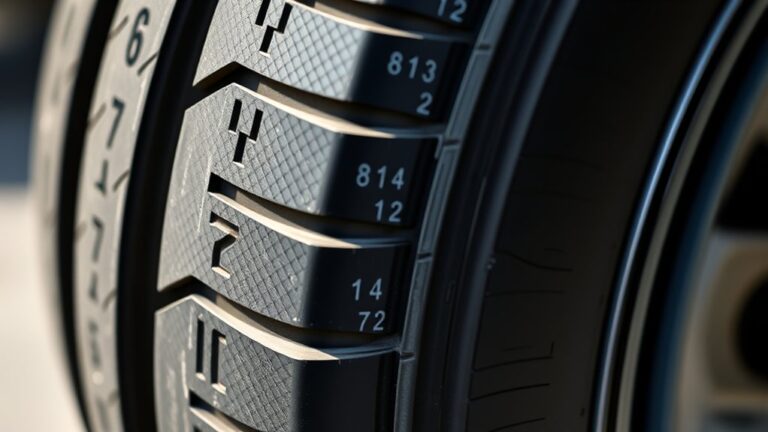
Understanding these codes helps you assess tire texture and tread depth, crucial for grip and safety. The tread depth, often measured in 32nds of an inch, reflects how much rubber contacts the road, affecting traction. Tire texture, influenced by tread design, impacts handling and wear.
Decoding these details ensures you select tires that meet your vehicle’s performance and safety needs.
How to Find the Correct Tire Size for Your Vehicle
Where can you find the exact tire size your vehicle requires? Start by checking the tire information placard, usually located on the driver’s side door jamb or inside the glove box. This placard lists the manufacturer-recommended size, essential for finding tire compatibility.
Find your vehicle’s exact tire size on the placard inside the driver’s door jamb or glove box.
If unavailable, consult your owner’s manual or existing tires’ sidewall markings.
When selecting fitment alternatives, ensure you:
- Match the recommended tire width, aspect ratio, and diameter precisely.
- Confirm the load index and speed rating meet or exceed original specifications.
- Verify overall diameter and circumference to avoid speedometer inaccuracies or clearance issues.
What Do P-Metric, LT, and Metric Tires Mean?
You’ll encounter P-Metric, LT, and Metric tires when selecting the right tire for your vehicle. P-Metric tires are designed primarily for passenger vehicles, LT tires serve light trucks with higher load capacities, and Metric tires use a different sizing system common in older models. Understanding these distinctions helps guarantee you choose tires that match your vehicle’s performance and load requirements.
P-Metric Tire Definition
What distinguishes P-metric tires from LT and standard metric tires lies in their design specifications and intended applications. You’ll find P-metric tires primarily on passenger vehicles, engineered to balance performance, comfort, and durability. Their tread depth is optimized for everyday driving, ensuring efficient traction without sacrificing ride quality.
When examining tire branding, P-metric tires are clearly marked with a “P” prefix, indicating compliance with passenger vehicle standards.
Here are three key points to remember about P-metric tires:
- They’re designed for passenger cars and light SUVs, focusing on smooth handling and comfort.
- Their tread depth supports normal road conditions without the heavy-duty requirements of LT tires.
- Tire branding clearly differentiates P-metric tires from others, helping you select the right fit.
LT Tire Characteristics
How do LT tires differ from P-metric tires in design and application? LT, or Light Truck tires, are built to handle heavier loads and more rugged conditions than P-metric tires, which are primarily for passenger vehicles.
You’ll notice this difference in tire labeling. LT tires include a higher load index to indicate their enhanced load-carrying capacity. Unlike P-metric tires, LT tires feature stiffer sidewalls and tougher construction, making them ideal for trucks, SUVs, and off-road use where durability and strength matter.
When checking tire labeling, the “LT” prefix signals these characteristics, so you can select tires that match your vehicle’s demands. Understanding the load index on LT tires helps you ensure safety and performance under heavier loads and rougher terrain.
Metric Tire Differences
Why do tire labels like P-metric, LT, and metric matter when selecting tires for your vehicle? These classifications influence performance, safety, and compatibility. Understanding metric tire differences ensures you choose the right fit.
- P-Metric Tires: Designed primarily for passenger vehicles, they balance ride comfort and handling, offering better tire aesthetics with lower sidewalls.
- LT Tires: Built for light trucks, they handle heavier loads and rough terrain, prioritizing durability over refined ride quality.
- Metric Tires: Older sizing standards often found on vintage or specialty vehicles; they may differ in load capacity and pressure requirements.
Also, consider seasonal pricing fluctuations when buying tires. Selecting the appropriate type affects not just safety but also your vehicle’s look and cost efficiency.
How Tire Sizes Affect Driving Performance
When selecting tires, have you considered how their size directly influences your vehicle’s handling, fuel efficiency, and safety? Larger tire diameters can improve handling by increasing the contact patch, enhancing grip during cornering, but they may also generate more tire noise due to increased road interaction.
Conversely, smaller tires typically reduce tire noise but might compromise stability. Additionally, tire width affects braking distance; wider tires generally offer shorter braking distances by distributing braking forces over a larger surface area. However, excessively wide tires can increase rolling resistance, negatively impacting fuel efficiency.
Sidewall height also plays a role. Lower profile tires provide sharper steering response but may transmit more road vibrations. Understanding these factors helps you balance performance characteristics tailored to your driving needs.
Why Choosing the Right Tire Size Matters for Safety and Performance
Choosing the right tire size directly affects how your vehicle handles on different road conditions, ensuring stability and control. If the tire size doesn’t fit properly, it can cause uneven wear and compromise safety. You’ll also reduce the risk of mechanical issues by matching tire dimensions to your vehicle’s specifications.
Impact On Vehicle Handling
How does tire size influence your vehicle’s handling characteristics? Choosing the right tire size directly affects your car’s responsiveness, stability, and safety. Incorrect sizes can alter the contact patch, impacting grip and control. Consider these points:
- Steering Precision: The correct tire width ensures optimal contact with the road, enhancing your steering accuracy and reducing understeer or oversteer.
- Cornering Stability: Proper tire diameter maintains the designed suspension geometry, so your vehicle handles corners safely and predictably.
- Braking Efficiency: Tire pressure and tread depth play critical roles; mismatched sizes can compromise braking distances and traction.
Tire Fitment And Wear
Why does tire fitment matter so much for your vehicle’s safety and performance? Proper tire size ensures optimal contact with the road, maintaining correct tire pressure and even tread depth wear. Incorrect fitment can lead to uneven tread wear, compromised handling, and increased risk of blowouts.
| Tire Size | Tire Pressure (psi) | Expected Tread Depth Wear (mm/1000 miles) |
|---|---|---|
| OEM Spec | 32-35 | 0.8 |
| Too Large | 28-30 | 1.2 |
| Too Small | 34-37 | 1.0 |
Choosing the right tire size helps maintain consistent tire pressure, prolongs tread life, and ensures your vehicle performs safely under various conditions.
Tips for Comparing and Replacing Tire Sizes Without Guesswork
When comparing and replacing tire sizes, what key factors should you focus on to assure compatibility and performance? Avoid guessing by prioritizing these technical considerations:
- Exact Size Matching: Confirm the new tire’s dimensions match your vehicle’s specifications to prevent issues like wrong tire inflation topics that can cause uneven wear or safety risks.
- Load and Speed Ratings: Verify the replacement tire supports your vehicle’s load and speed requirements to maintain ideal handling and safety.
- Wheel Compatibility: Use tires compatible with your wheel materials; unrelated wheel materials can lead to mounting difficulties, imbalance, or premature wear.
Frequently Asked Questions
How Often Should I Check My Tire Pressure?
You should check your tire pressure at least once a month and before long trips.
Consistent pressure monitoring is essential for effective tire maintenance, ensuring safety, fuel efficiency, and extending your tires’ lifespan.
Can Tire Size Affect Fuel Efficiency?
Changing your tire size can slash fuel economy like a lightning bolt, impacting tire wear and rolling resistance. Larger tires often increase drag and weight, reducing efficiency, while smaller tires generally improve fuel economy and minimize tire wear.
What Is the Lifespan of a Typical Tire?
You can expect a typical tire’s lifespan to range between 40,000 and 60,000 miles, depending on tread wear and tread depth.
Regularly checking tread depth helps you gauge when replacement becomes necessary for safety and performance.
How Do Seasonal Tires Differ From All-Season Tires?
You won’t believe how seasonal tires crush all-season ones in winter performance! Their specialized tire construction boosts grip on snow and ice.
All-season tires juggle weather but lack that sharp seasonal performance edge you need.
Are Run-Flat Tires Worth the Extra Cost?
Run-flat tires can be worth the extra cost if you prioritize safety and convenience. They maintain tire load capacity after a puncture.
You must ensure wheel width compatibility for optimal performance and handling.
Conclusion
Now that you know how to decode tire sizes, you’re equipped to make smart choices that fit your vehicle perfectly. Remember, picking the right tire size isn’t just about numbers—it’s the backbone of your car’s safety and performance.
Don’t let incorrect sizing steer you off course; instead, use this knowledge to drive confidently and efficiently. Like tuning a fine instrument, the right tires keep your ride smooth and in harmony with the road.
In conclusion, understanding what tire sizes mean is essential for maintaining optimal vehicle performance and safety. Use this insight to choose the best tires and enjoy a safer, smoother ride every time.