What Do Worn Brake Pads Look Like
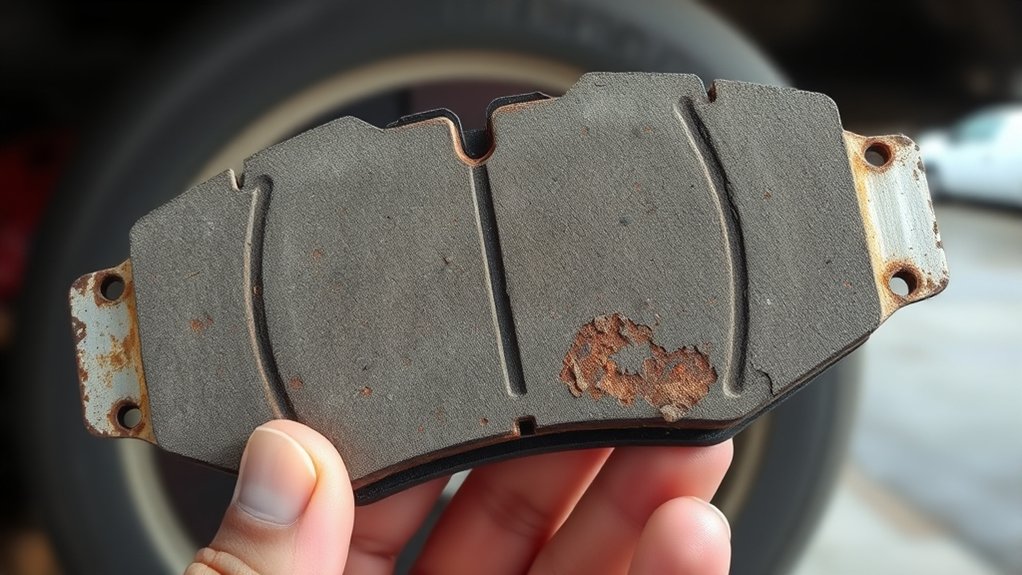
You can spot worn brake pads by checking the friction material through your wheel spokes—if it’s thinner than 3 millimeters, it’s time to replace them. Worn brake pads often show color changes like dark spots, uneven shading, or a faded, chalky surface, which indicate wear or degradation.
Listen for high-pitched squeals or grinding sounds that signal severe wear. Ignoring these signs risks damage and safety issues.
Understanding these indicators helps you maintain optimal braking performance and safety.
Key Takeaways
- Brake pads with less than 3 millimeters of friction material visible through wheel spokes indicate they are worn and need replacement.
- Dark, uneven color or discoloration on the pads signals excessive wear or material degradation.
- Rust or faded, chalky surface on pads suggests moisture exposure or glazing from wear.
- Light or dark spots on the pad surface reveal uneven wear or breakdown of the braking compound.
- Visual inspection during routine maintenance helps detect worn pads early before braking performance declines.
How to Quickly Identify Worn Brake Pads
How can you quickly identify worn brake pads before they compromise your vehicle’s safety? First, visually inspect the pad thickness through the wheel spokes; if the friction material measures less than 3 millimeters, it’s time to replace them.
Listen for high-pitched squealing, caused by the built-in wear indicators rubbing against the rotor. Also, notice any reduced braking responsiveness or increased stopping distances during operation.
While two word ideas like “visual inspection” or “auditory cue” help emphasize methods, avoid mixing unrelated topics such as engine performance or tire wear in this assessment.
Checking these indicators regularly ensures your brake system maintains optimal function, preventing dangerous situations caused by degraded pad material. Quick, precise evaluation saves you from costly repairs and unsafe driving conditions.
What Brake Pad Color Changes Tell You
You’ll notice that brake pad color changes can signal different issues. A dark or uneven color often indicates excessive wear, while rust or discoloration suggests moisture exposure or material degradation. Paying attention to these visual cues helps you assess pad condition accurately.
Color Indicators Of Wear
Why does the color of your brake pads matter? It serves as a clear indicator of their condition. Typically, new brake pads have a consistent dark gray or black hue.
When you notice color variations like lightening or dark spots, it often signals uneven wear or material degradation. Uneven wear may cause certain areas to appear lighter due to the thinning friction material, compromising braking efficiency.
Meanwhile, material degradation can manifest as a faded or chalky surface, indicating the brake pad compound is breaking down under heat and friction stress. By monitoring these color changes, you can accurately assess pad health and prevent failure.
Ignoring such signs risks reduced stopping power and costly repairs, so timely inspection and replacement based on color cues are crucial for safe vehicle operation.
Rust And Discoloration Signs
When do rust and discoloration on brake pads become a critical concern? Rust signs often indicate moisture exposure and potential corrosion, which can reduce braking efficiency.
Discoloration signs, such as blue or dark patches, typically signal overheating or glazing, impairing friction material performance. You should inspect these color changes promptly to prevent brake failure.
| Condition | Appearance | Implication |
|---|---|---|
| Surface Rust | Reddish-brown patches | Corrosion risk, weaker pads |
| Overheating | Blue or dark discoloration | Reduced friction, glazing |
| Uneven Coloration | Patchy, inconsistent hues | Uneven wear, potential warping |
Identifying rust signs and discoloration signs early helps maintain brake safety and performance.
Why Thin Brake Pads Affect Your Car’s Safety
How does having thin brake pads compromise your vehicle’s safety? Thin brake pads reduce the friction material necessary for effective stopping power, directly increasing your car’s stopping distance. When the pads wear down, they generate less friction against the rotors, which diminishes braking efficiency and can lead to brake fade under heavy use.
Thin pads also expose metal backing plates, risking damage to the rotors and costly repairs. It’s essential to avoid unrelated topic or off topic discussion about brake components here; focus strictly on how pad thickness impacts braking performance.
Neglecting this can lead to compromised control during emergency stops, increasing accident risk. Monitoring pad thickness and replacing them timely ensures your braking system performs at its best and maintains your safety on the road.
What Common Sounds Reveal About Brake Pad Wear
What noises should you listen for that indicate your brake pads are wearing down? Common sound patterns include a high-pitched squealing or screeching, caused by wear indicators embedded in the pads. This sound signals that the pads have reached a critical thinness.
Additionally, a grinding noise suggests the pads are completely worn, allowing metal-to-metal contact, which damages rotors. Pay attention to changes in pedal feedback; a pulsating or soft brake pedal often accompanies worn pads, indicating uneven pad wear or glazing.
These auditory cues, combined with pedal feedback, provide reliable early warnings before brake performance deteriorates significantly. Recognizing these sound patterns promptly helps you address brake pad wear effectively, maintaining safety and preventing costly repairs.
Causes and Effects of Uneven Brake Pad Wear
Uneven brake pad wear often results from issues like caliper malfunctions, improper installation, or misaligned rotors. This irregular wear compromises your vehicle’s braking efficiency and safety by reducing contact surface and increasing stopping distances. To prevent this, you should regularly inspect your brake system and ensure proper maintenance.
Common Causes Explained
Why do brake pads wear unevenly, and what impact does this have on your vehicle’s braking performance? Uneven brake pad wear typically results from misalignment issues and caliper problems. When the caliper piston or slide pins seize, it causes uneven pressure distribution on the pads, leading to one side wearing faster than the other.
Additionally, improper rotor surface condition can cause inconsistent pad contact, accelerating uneven wear. This uneven wear pattern compromises braking efficiency, causing vibration or pulling during stops.
The two word discussion idea 1, “brake caliper,” is often at fault due to corrosion or lack of lubrication. Meanwhile, the two word discussion idea 2, “pad material,” also influences wear rates since softer compounds degrade faster under high heat, further contributing to uneven wear. Addressing these causes promptly ensures optimal braking performance.
Impact on Vehicle Safety
How does uneven brake pad wear compromise your vehicle’s safety? When brake pads wear unevenly, it causes inconsistent braking force, increasing stopping distances and destabilizing your vehicle during sudden stops. This uneven wear often results from caliper issues or improper installation, two word discussion ideas critical to understanding the problem. Ignoring these signs leads to brake fade or pull, unrelated topics that still impact control.
| Cause | Safety Effect |
|---|---|
| Caliper Sticking | Uneven pad pressure |
| Improper Installation | Reduced braking efficiency |
| Misaligned Components | Vehicle pulling during braking |
Addressing uneven brake pad wear is essential to maintain balanced braking and avoid compromised safety, ensuring your vehicle responds predictably under all conditions.
Preventive Maintenance Tips
When should you inspect your brake pads to prevent uneven wear? Ideally, perform a thorough check every 6,000 miles or during routine oil changes. Uneven brake pad wear often results from factors like misaligned calipers, sticking slide pins, or warped rotors, all common causes you can address with preventive maintenance.
Regularly lubricate slide pins and ensure caliper pistons retract smoothly to maintain even pad contact. Tire pressure and suspension issues also contribute, so include these in your two word discussion ideas when diagnosing wear patterns.
Ignoring uneven wear leads to compromised braking efficiency and costly repairs. By implementing scheduled inspections and addressing mechanical irregularities promptly, you’ll extend brake pad life and enhance vehicle safety effectively. Preventive maintenance is your best strategy to avoid uneven wear consequences.
When Should You Replace Your Brake Pads?
At what point do brake pads require replacement? You should replace your brake pads when the friction material wears down to about 3 millimeters or less. Ignoring this threshold risks damage to the rotors and reduces braking efficiency.
Listen for screeching or grinding noises; these are two word discussion idea1 signals indicating worn pads. Additionally, if you experience a spongy brake pedal or reduced stopping power, it’s time to inspect.
Visual inspection during your two word discussion idea2 routine maintenance helps catch wear early. Delaying replacement increases repair costs and compromises safety.
Always refer to your vehicle’s manufacturer specifications for precise intervals, but frequent checks are crucial if you drive in stop-and-go traffic or mountainous terrain. Replacing brake pads promptly ensures optimal braking performance and prolongs component lifespan.
Frequently Asked Questions
How Do Brake Pad Materials Affect Vehicle Braking Performance?
You’ll notice brake pad composition directly impacts braking performance by influencing heat dissipation and friction. Different materials wear uniquely, so wear indicators help you monitor pad life precisely, ensuring optimal safety and consistent stopping power.
Can Worn Brake Pads Damage the Brake Rotors?
Yes, worn pads damage your rotors by causing uneven rotor wear and heat buildup. This reduces braking efficiency and can lead to costly repairs.
Replacing pads promptly prevents rotor wear and maintains optimal brake performance.
Are Ceramic Brake Pads Better Than Semi-Metallic Ones?
Like choosing Excalibur over a trusty blade, ceramic pads offer quieter, cleaner braking with less dust. But in a semi metallic comparison, you’ll find semi-metallic pads excel in heat tolerance and durability under heavy use.
How Does Driving Style Impact Brake Pad Lifespan?
Your driving habits directly influence brake wear patterns; aggressive braking causes uneven, rapid wear, while smooth, gradual stops extend pad life.
Adapting your style reduces heat buildup and friction, preserving brake pads and improving overall performance.
What Are the Environmental Impacts of Brake Pad Wear?
Like silent clouds of dust, brake pad wear debris contributes considerably to environmental impact by releasing metallic particles and harmful compounds into the air and water. This affects ecosystems and human health through persistent pollution and contamination.
Conclusion
You might think worn brake pads only show up as thin linings or strange noises, but noticing these signs coinciding with color changes or uneven wear tells a deeper story about your car’s safety. Ignoring these clues can compromise your braking system, risking your safety and others’.
So, when your brake pads show any of these symptoms together, don’t hesitate—replace them promptly to maintain precise control and reliable stopping power every time you hit the brakes. Recognizing what worn brake pads look like is essential to keeping your vehicle safe on the road.